日本語で読む | This is the English version of a bilingual article.
Today’s Pairing
- Sake: Daishichi Junmai Kimoto — brewed with Gohyakumangoku rice, rice-polishing ratio (seimai buai) 69%, 15% alcohol / Daishichi Sake Brewery Co., Ltd. (1-66 Takeda, Nihonmatsu City, Fukushima Prefecture)
Official site: https://www.daishichi.com/ - Kayoukyoku (classic Japanese popular song): “Chieko-sho” by Columbia Rose II, 1964
YouTube: https://www.youtube.com/watch?v=O6wsLHTQj3o
▶ If the player above doesn’t play, open it on YouTube
The Story of the Brewery
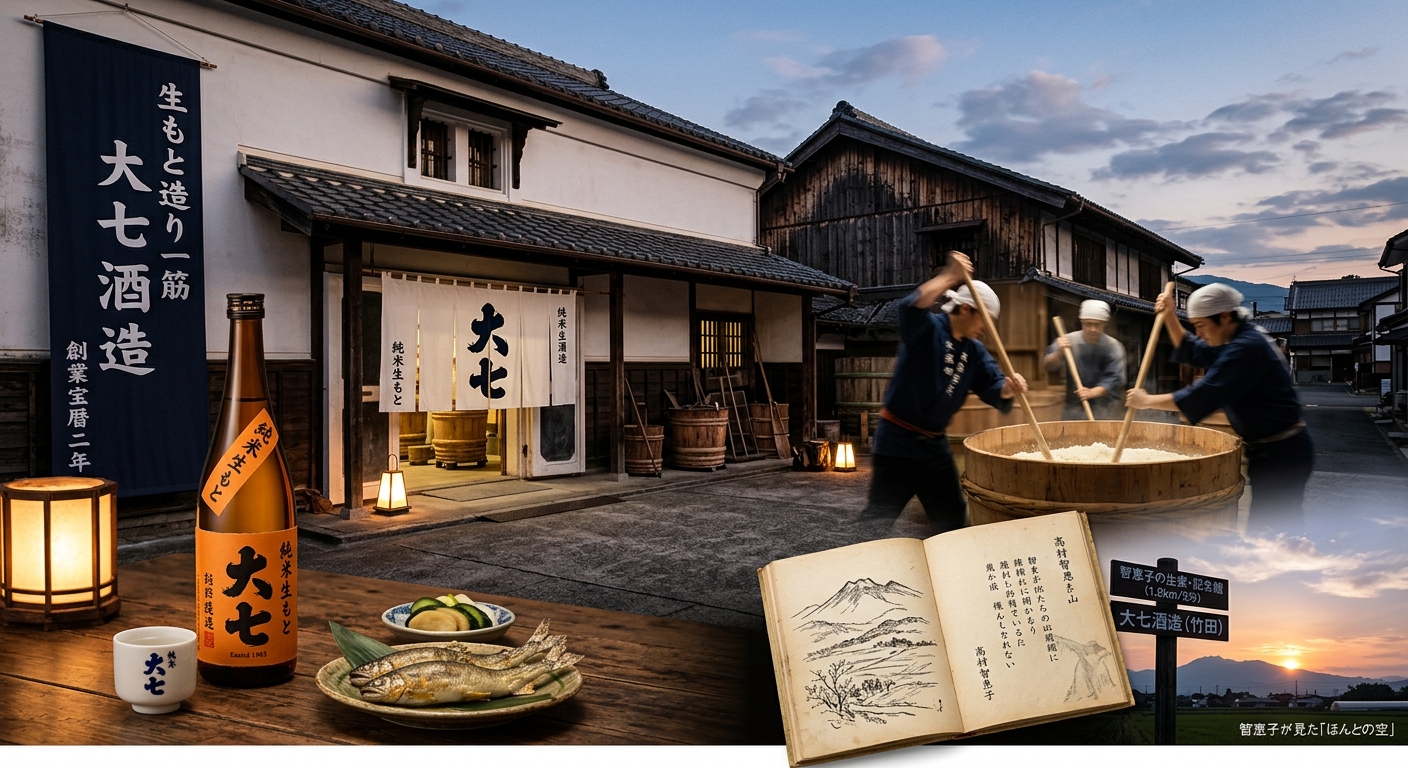
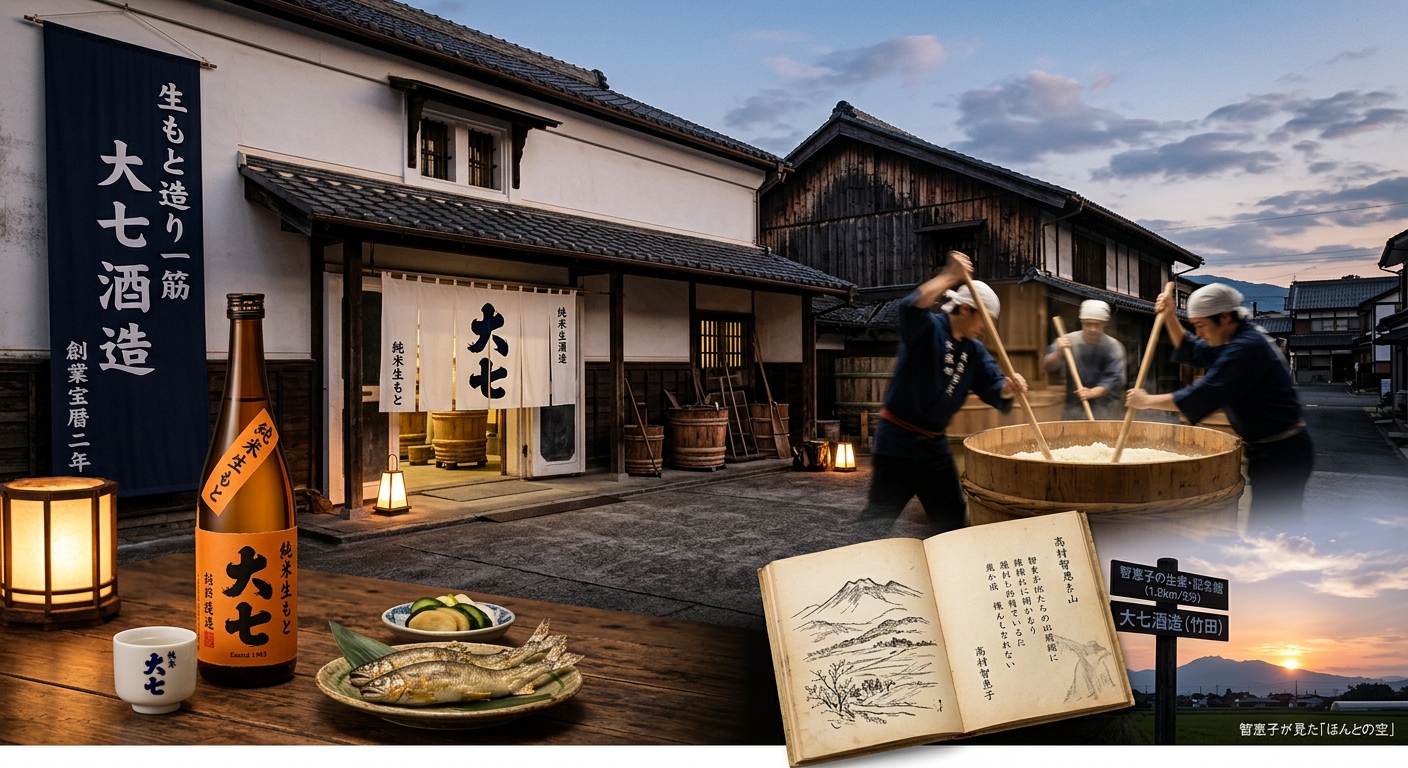
Daishichi Sake Brewery was founded in 1752 by its first-generation head, Ota Sanroemon, in what is now Nihonmatsu City, Fukushima. The sake was originally sold under a different brand name (大山), but the eighth-generation head renamed it “Daishichi,” after the brewery itself. The turning point came in the closing years of the Meiji era, when the Ministry of Finance’s brewing research institute developed simpler methods of preparing yeast starter — yamahai and sokujo — and breweries across Japan switched over to them one after another. The eighth-generation head tried sokujo as well, but decided “this can’t produce the sake I’m after,” and chose instead to keep brewing the more labor-intensive kimoto way. Daishichi has focused solely on kimoto brewing ever since, and it holds the distinction of being the first brewery in the history of Japan’s National New Sake Awards to win a gold medal for a kimoto-brewed junmai sake. Its current head, Ota Shichiemon, took on that name as the tenth generation on July 7, 2025.
The bottle in this pairing, Junmai Kimoto, was first released in 1983. It’s brewed with Gohyakumangoku rice polished to a seimai buai of 69%, at 15% alcohol. The brewery’s own website recommends it as food-friendly sake “served at around 15°C (room temperature), warmed gently (nurukan), or even hot (atsukan) if you prefer” — a sake whose gentle acidity and rounded umami, both distinctive of kimoto brewing, come through at any of those temperatures.
The Story of the Land
Nihonmatsu City is also the hometown of the painter Takamura Chieko. Born and raised in the former village of Yui, Adachi District (now Yui, Nihonmatsu City), Chieko’s family ran a sake brewery that made a label called “Hanagasumi,” trading under the name “Komeya.” The house Chieko grew up in was, itself, a sake brewery.
From Daishichi’s brewery in the Takeda district, it’s only a 3-minute, roughly 1.2-km drive to Chieko’s birthplace and memorial museum. The sake her family once brewed, and the sake Daishichi still brews today, sit under the very same Nihonmatsu sky — not a story from some distant place at all.
The Story of the Song
“Chieko-sho” is the title of a collection of poems published in 1941 by the sculptor and poet Takamura Kotaro, Chieko’s husband. It contains a well-known passage in which Chieko, living in Tokyo, laments that “Tokyo has no sky,” and longs only for the blue sky over Mt. Adatara back in her hometown of Nihonmatsu — the only sky she calls “the real sky.” Taking that poetry collection as its subject, Columbia Rose II released the kayoukyoku “Chieko-sho” in 1964. The lyrics are by Oka Toshio, with music and arrangement credited to Totsuka Mihiro (戸塚三博) and Fukuda Tadashi (福田正) respectively. The song follows Chieko turning away from Tokyo’s grey sky and longing for Mt. Adatara back home, and it became the song that carried Columbia Rose II to her first appearance on NHK’s Kohaku Uta Gassen that same year.
Columbia Rose II, whose real name was Mune Noriko, was born in 1942. She debuted in 1962 with “Shirobara Benibara,” and “Chieko-sho,” released in 1964, became her signature song. She moved to the United States in 1975 and continued performing out of Los Angeles. She died on August 16, 2020, at the age of 78.
Takamura Chieko herself was born in 1886 into the “Komeya” sake brewery in Yui village. She devoted herself to Western-style painting at Japan Women’s University, then began married life with Takamura Kotaro in 1914 (their marriage was formally registered in 1933). In her later years she fell ill, and from around 1937 she created what are said to be well over a thousand paper cutouts from her hospital room, before she died in 1938 at the age of 52.
Why This Pairing
The “real sky” Chieko longed for is the very same Nihonmatsu sky over the brewery where her own family once made sake. That family brewery no longer exists, but just a 3-minute drive away, Daishichi has kept brewing the labor-intensive kimoto way for more than 270 years, against the grain of the times.
If Chieko were here today, what would she feel tasting sake still brewed under that same sky over Mt. Adatara? Let the homesickness at the heart of “Chieko-sho” sit alongside a bottle still made in the place she was born, and taste it with that in mind.
Where to Find This Bottle
The Rakuten Ichiba link below is an affiliate link.
- Brewery’s official site: https://www.daishichi.com/
- Buy on Rakuten Ichiba: View the product page (720ml, ¥2,420)
Note: the links above lead to Japan-based retailers. They’re most convenient for readers in Japan, or for those elsewhere who are able to arrange international shipping. Stock and availability change over time, so if you’re near a specialty sake shop, it’s well worth asking for this label by name.
Pairing Dishes Worth Trying
- Zakuzaku
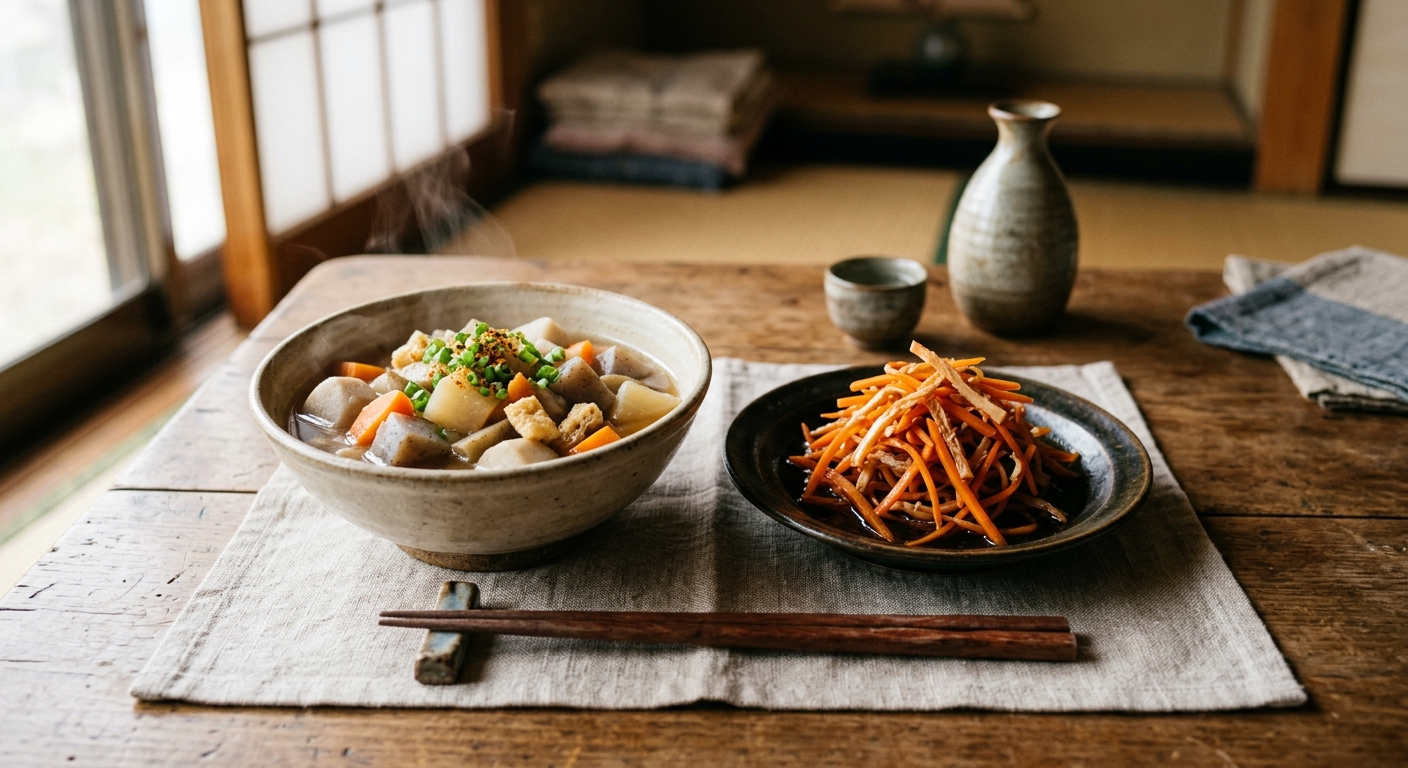
A Nihonmatsu home-style dish: taro, daikon, carrot, burdock root, and konjac, all diced small and simmered in a soy-sauce broth. Originally served at weddings, funerals, and other family gatherings, it’s still served today at the Nihonmatsu Lantern Festival. The mild, dashi-soaked sweetness of the root vegetables pairs naturally with the gentle acidity and body of kimoto brewing.
Recipe (in Japanese): JA Group, “Zakuzaku” - Ika Ninjin
A Fukushima specialty of dried squid and julienned carrot marinated in a sweet soy-and-mirin sauce, traditionally kept as a preserved dish through the region’s snowy winters. The squid’s umami and the sweet-savory marinade echo the complex acidity and rice-derived umami of kimoto brewing.
Recipe (in Japanese): Kurashiru, “Fukushima’s Ika Ninjin”
A note on the science: the yeast starter in kimoto brewing is built up through natural lactic-acid fermentation, giving the sake plenty of lactic acid and amino acids. That gentle acidity resonates with the glutamic and succinic acid umami in root-vegetable dashi and soy-based marinades, adding depth to the overall flavor — while the acid also keeps the vegetables’ sweetness and the seafood’s richness from feeling heavy.
Visiting the Brewery
Daishichi Sake Brewery
1-66 Takeda, Nihonmatsu City, Fukushima Prefecture. About a 6-minute drive (roughly 1.8 km) from JR Nihonmatsu Station.
Founded in 1752, the brewery has focused solely on kimoto brewing ever since.
Sights Nearby
- Chieko’s Birthplace & Memorial Museum / Yui, Nihonmatsu City | ~3 min, ~1.2 km by car from Daishichi
The restored childhood home of painter Takamura Chieko — once a sake brewery that made a label called “Hanagasumi,” trading under the name “Komeya.” The museum behind it displays Chieko’s paper cutouts and oil paintings. Open 9:00–16:30 (last entry 16:00), closed Wednesdays (or the following day if a holiday) and over New Year (Dec 28–Jan 3); adult admission ¥410. - Kasumigajo Park (ruins of Nihonmatsu Castle) / Nihonmatsu City | ~3 min, ~1.2 km by car from Daishichi
The ruins of Nihonmatsu Castle, laid out in 1643. Free to enter, and known for about 2,500 cherry trees in bloom each spring.
Hot Springs Nearby
- Dake Onsen / Dake Onsen, Nihonmatsu City | ~20 min, ~15.4 km by car from Daishichi
A hot spring town at the foot of Mt. Adatara. The official Dake Onsen Tourism Association site has a dedicated day-trip bathing page, and several inns accept day-use bathers. Hours and prices vary by inn, so check ahead.
Opening hours, closing days and day-use bathing availability can change. Please check each facility’s official information before visiting.
A Quick Glossary of Sake Terms
- Junmai: Sake made only from rice, rice koji, and water, with no added brewing alcohol, letting the rice’s own umami come through directly.
- Seimai buai (rice-polishing ratio): The percentage of the original grain remaining after milling. The lower the number, the more the rice has been polished down.
- Kimoto: A traditional, labor-intensive method of building the yeast starter (moto) by cultivating naturally occurring lactic acid bacteria, rather than adding lactic acid directly.
Sources
- Daishichi Sake Brewery – Official Site
- Company Profile – Daishichi Official Site
- Brewery History – Daishichi Official Site
- Junmai Kimoto – Daishichi Official Site
- Chieko’s Birthplace & Memorial Museum – Nihonmatsu City Official Site (Japanese)
- Takamura Chieko – Wikipedia (Japanese)
- “Chieko-sho” lyrics & credits – Uta-Net (Japanese)
- Day-trip bathing – Dake Onsen Tourism Association Official Site (Japanese)
If you notice any errors in this article, please don’t hesitate to reach out at info@soundrecords.jp.
Read this article in Japanese: ほんとの空は、蔵の屋根の上にある