日本語で読む | This is the English version of a bilingual article.
Today’s Pairing
- Sake: Harushika “Junmai Chokarakuchi” (Extra Dry) — brewed with Gohyakumangoku sake rice, rice-polishing ratio (seimai buai) 60%, 15% alcohol, sake meter value (nihonshu-do) +12 / Imanishi Seibei Shoten Co., Ltd. (24-1 Fukuchiin-cho, Nara City, Nara Prefecture)
Official site: https://www.harushika.com/ - Kayoukyoku (classic Japanese popular song): “Mahoroba” by Masashi Sada (from the album “Yume Kuyo,” 1979)
YouTube: https://www.youtube.com/watch?v=5FMqPIybTZQ
▶ If the player above doesn’t play, open it on YouTube
The Story of the Brewery
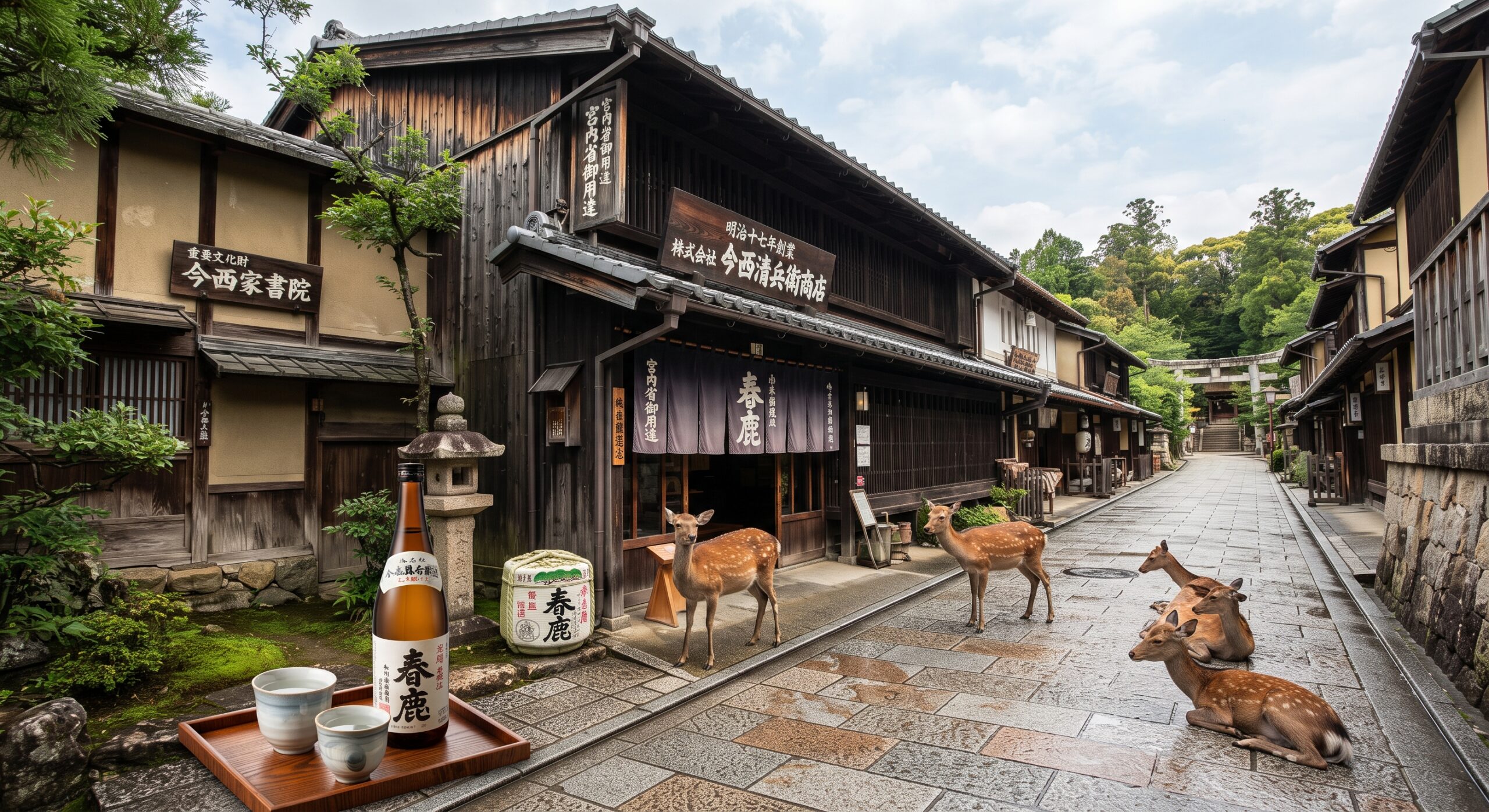
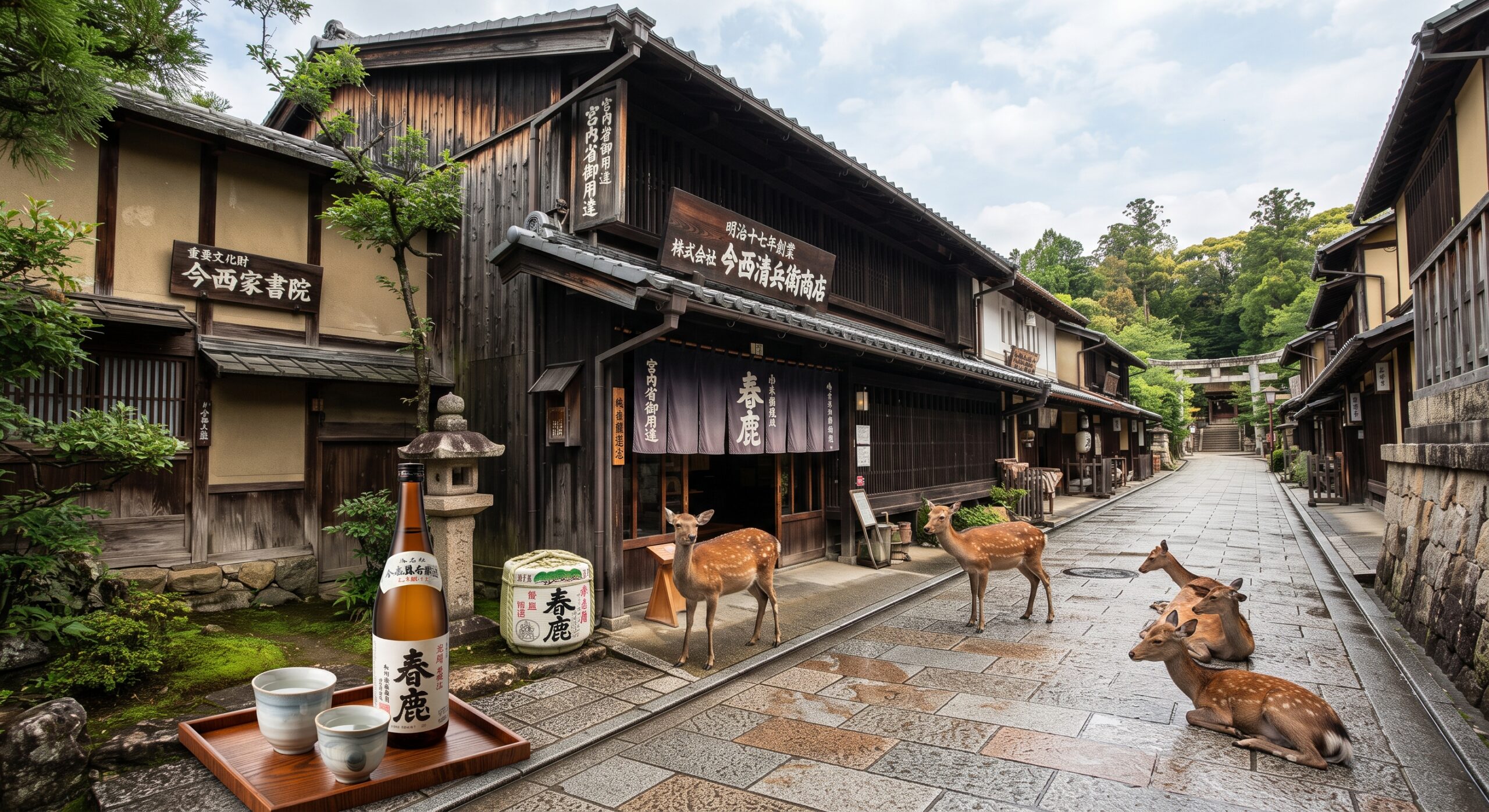
Imanishi Seibei Shoten Co., Ltd. began in 1884, when Imanishi Seiichi started producing sake, mirin, and arare-zake (a rice-cracker-based liqueur). In 1894, Emperor Meiji purchased its arare-zake, and the brewery was granted the honor of becoming a purveyor to the Imperial Household Ministry. Its current president is Imanishi Kiyotaka. The brewery still stands in Fukuchiin-cho, in the heart of Nara-machi, where fermentation continues in traditional wooden vats on the building’s second floor, alongside exports to more than a dozen countries overseas.
The brand name, Harushika (“spring deer”), comes — according to the brewery itself — from the legend that the deities of Kasuga rode into this land on the backs of deer. The bottle in this pairing, Junmai Chokarakuchi, is brewed with Gohyakumangoku, a sake rice grown widely around Hyogo and elsewhere, polished to a seimai buai of 60%, at 15% alcohol with a sake meter value of +12. It’s a dry sake where rice-derived umami and a mineral-tinged crispness coexist — one that works equally well for dry-sake fans and for first-time sake drinkers.
The Story of the Land
Fukuchiin-cho, where the brewery stands, sits right in the middle of Nara-machi, where Edo- and Meiji-era townhouses still line the streets. Next door, at 24-3 Fukuchiin-cho, stands Imanishi-ke Shoin, an Important Cultural Property. It originally belonged to the Fukuchiin family, stewards (bokan) for the Daijo-in branch of Kofuku-ji Temple, before the Imanishi family acquired it in 1924 and has maintained it ever since. As an example of early-Muromachi-period shoin-zukuri architecture, it became, in 1937, the first privately owned building in Japan designated a National Treasure, later redesignated an Important Cultural Property in 1950 under the new Cultural Properties Protection Law.
Kasuga Taisha Shrine, the source of the Harushika name’s legend, stands in Kasugano, about a 20-minute walk from the brewery. The deer that live throughout this area have long been cherished as sacred messengers of Kasuga Taisha. The Kasugano landscape that Masashi Sada’s “Mahoroba” describes is the very same place where the name Harushika was born.
The Story of the Song
“Mahoroba” is the fifth track on side A of “Yume Kuyo,” Masashi Sada’s fourth original solo album, released on April 10, 1979. Both lyrics and music are by Sada himself, with arrangement by Toshiyuki Watanabe. Built around a waka poem by Empress Iwa no Hime from the “Man’yoshu” (Japan’s oldest poetry anthology), the song is said to depict the scenery of Kasugano alongside a quiet emotional rift between a man and a woman. It was never released as a single, but it remains one of the staples of Sada’s live repertoire to this day.
Masashi Sada was born on April 10, 1952, in Nagasaki City, Nagasaki Prefecture. In 1972 he formed the folk duo Grape with Masami Yoshida, and their 1974 song “Shoryo Nagashi” became a major hit. After the duo disbanded in 1976, he continued as a singer-songwriter, producing hit after hit: “Amayadori” (1977, No. 1 on the Oricon chart), “Kanpaku Sengen” (July 1979, selling over 1.5 million copies), and “Kita no Kuni Kara ~Haruka Naru Daichi Yori~” (1981), among others.
Why This Pairing
The name Harushika comes from a legend that the deities of Kasuga rode into this land on deer. “Mahoroba,” meanwhile, is set in that very same Kasugano where the gods are said to have descended, quietly singing of an emotional rift between a man and a woman against a backdrop borrowed from the ancient Man’yoshu. Trace either the sake’s name or the song’s setting back far enough, and both arrive at the same place: Kasugano.
Despite carrying the name “extra dry,” this sake opens with a gentle wave of umami from its Gohyakumangoku rice before closing on a mineral-tinged crispness — a quiet resonance beneath the dryness that echoes the way “Mahoroba” unfolds its scenery calmly, borrowing from ancient poetry rather than reaching for drama. Neither is flashy, but the more you listen, and the more you drink, the more of Nara’s depth comes into view.
Where to Find This Bottle
The Rakuten Ichiba link below is an affiliate link.
- Brewery’s official site: https://www.harushika.com/
- Buy on Rakuten Ichiba: View the product page (720ml, ¥2,544)
Note: the links above lead to Japan-based retailers. They’re most convenient for readers in Japan, or for those elsewhere who are able to arrange international shipping. Stock and availability change over time, so if you’re near a specialty sake shop, it’s well worth asking for this label by name.
Pairing Dishes Worth Trying
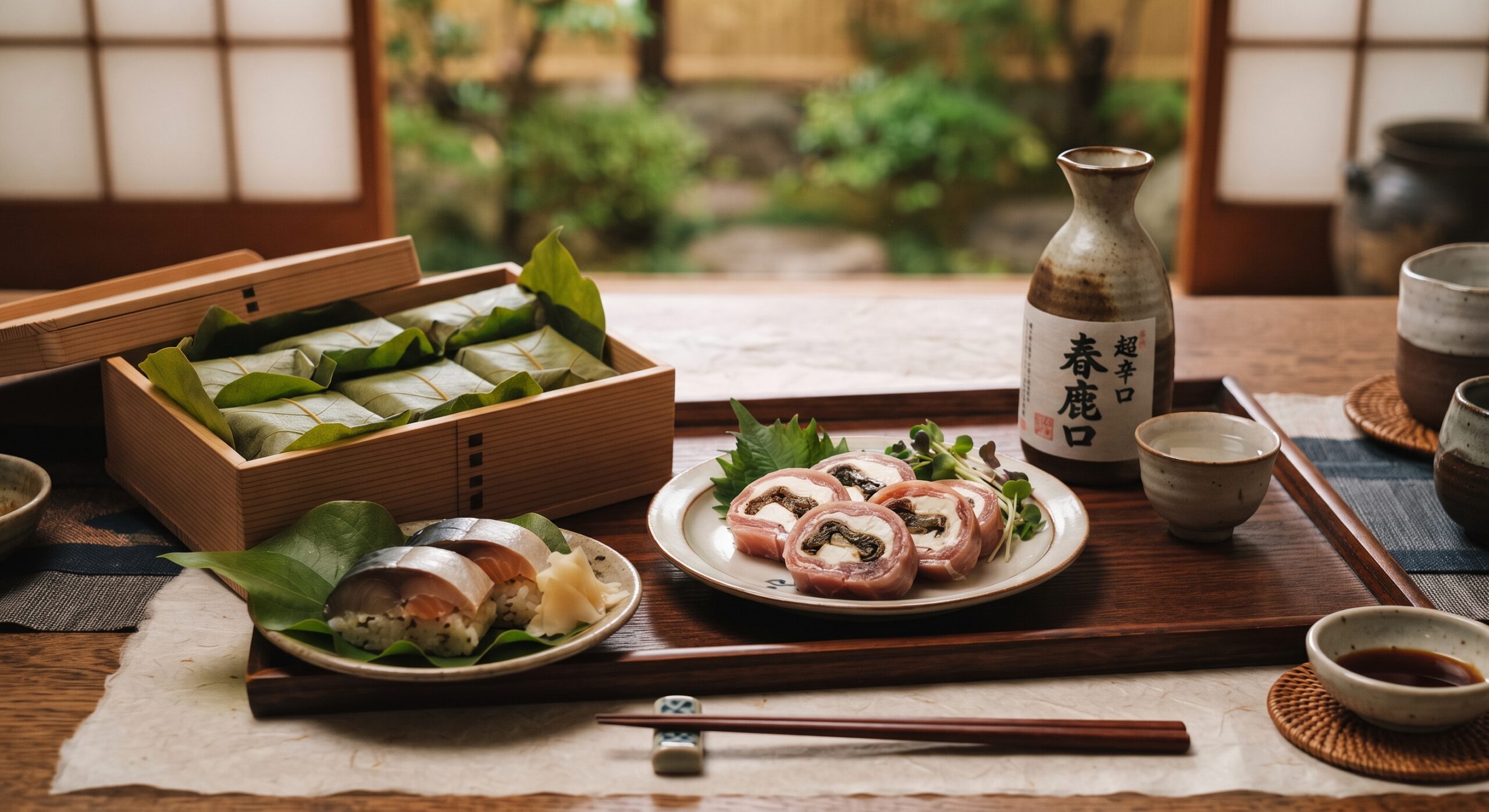
- Kakinoha-zushi (persimmon-leaf sushi)
A signature dish of Nara Prefecture: vinegared mackerel or salmon pressed together with sushi rice and wrapped in persimmon leaves, born of the need to preserve sea fish in this inland, mountainous region. The tartness of the vinegared rice and the umami of the fish pair naturally with the crisp finish of an extra-dry sake.
Recipe (in Japanese): Rakuten Recipe, “Kakinoha-zushi” - Narazuke and cream cheese wrapped in prosciutto
Narazuke is a Nara specialty made by pickling vegetables in sake lees — a fermented food born, in a sense, from sake itself. Layering its aroma with the saltiness of prosciutto and the richness of cream cheese lets it resonate naturally with a junmai sake, which shares the same fermentation-derived aromatic compounds.
Recipe (in Japanese): Kurashiru, “Narazuke and Cream Cheese Wrapped in Prosciutto”
A note on the science: the acidity in kakinoha-zushi’s vinegared rice resets the palate when paired with a crisp, dry sake like this one. Narazuke carries aromatic compounds (such as esters) produced by fermentation in sake lees, and those aromas echo the fermentation-derived notes in the sake itself, letting the two blend naturally.
Visiting the Brewery
Harushika (Imanishi Seibei Shoten)
24-1 Fukuchiin-cho, Nara City, Nara Prefecture. About a 1-minute walk from the “Fukuchiin-cho” bus stop (Nara Kotsu bus from JR Nara Station), or about 15 minutes on foot from Kintetsu Nara Station.
Right next door (24-3 Fukuchiin-cho) stands “Imanishi-ke Shoin,” an Important Cultural Property the Imanishi family has maintained since 1924.
Sights Nearby
- Imanishi-ke Shoin / Fukuchiin-cho, Nara City | ~1 min on foot, right next to Harushika
An early-Muromachi-period shoin-zukuri residence. It originally belonged to the Fukuchiin family, stewards (bokan) for the Daijo-in branch of Kofuku-ji Temple, before the Imanishi family acquired it in 1924. In 1937 it became the first privately owned building in Japan designated a National Treasure (redesignated an Important Cultural Property in 1950) and the Imanishi family still maintains and opens it today. Open Thursday–Sunday, 10:30–16:00 (last entry 15:30; closed in summer, New Year, and for private events); admission ¥500. Check opening days before you go. - Gangoji Temple / Chuin-cho, Nara City | ~5 min on foot (~400m) from Harushika
A UNESCO World Heritage temple that preserves roof tiles and building materials said to date back to its origins in Asuka. It’s the closest major sight to the brewery, in the heart of Nara-machi. - Kasuga Taisha Shrine / Kasugano-cho, Nara City | ~20 min on foot (~5 min, ~2km by car) from Harushika
The name “Harushika” (“spring deer”) comes from the legend that the deities of Kasuga rode in on deer. Kasugano, the very area this shrine stands in, is also the setting of Masashi Sada’s “Mahoroba.”
Hot Springs Nearby
- Nara Kenko Land / Kahata-cho, Tenri City | ~30 min (~13.6km) by car from Harushika
A 24-hour day-use hot spring facility with a natural-hot-spring bathhouse and a floor-heated relaxation room (ganbanyoku). A late-night surcharge applies in the small hours, but day-use bathing is available any time (¥2,200 for adults). Check rates and crowding on the official site before you go.
Opening hours, closing days and day-use bathing availability can change. Please check each facility’s official information before visiting.
A Quick Glossary of Sake Terms
- Junmai: Sake made only from rice, rice koji, and water, with no added brewing alcohol. It lets the umami of the rice come through directly.
- Seimai buai (rice-polishing ratio): The percentage of the original grain remaining after milling. The lower the number, the more the rice has been polished down.
Sources
- Imanishi Seibei Shoten (Harushika) – Official Site
- Company Profile – Harushika Official Site
- About Imanishi-ke Shoin – Harushika Official Site
- Harushika Brewery Interview – City of Nara Official Site
- Masashi Sada – Wikipedia (Japanese)
- Yume Kuyo – Wikipedia (Japanese)
If you notice any errors in this article, please don’t hesitate to reach out at info@soundrecords.jp.
Read this article in Japanese: 神鹿の伝説が今も流れる酒