日本語で読む | This is the English version of a bilingual article.
Today’s Pairing
- Craft beer: Kirishima Highlands Beer Bohemian Blonde — Czech-style pilsner, about 4% ABV, 330ml bottle / Kirishima Highlands Beer Co., Ltd. (Mizobe-cho, Kirishima City, Kagoshima)
Official site: https://kirishimahighlands-brewery.jp/ - Music: “Kanpai” (“A Toast”) by Tsuyoshi Nagabuchi (1980)
YouTube: https://www.youtube.com/watch?v=xBQ5uLBcQzw
▶ If the player above doesn’t play, open it on YouTube
The Story of the Brewery
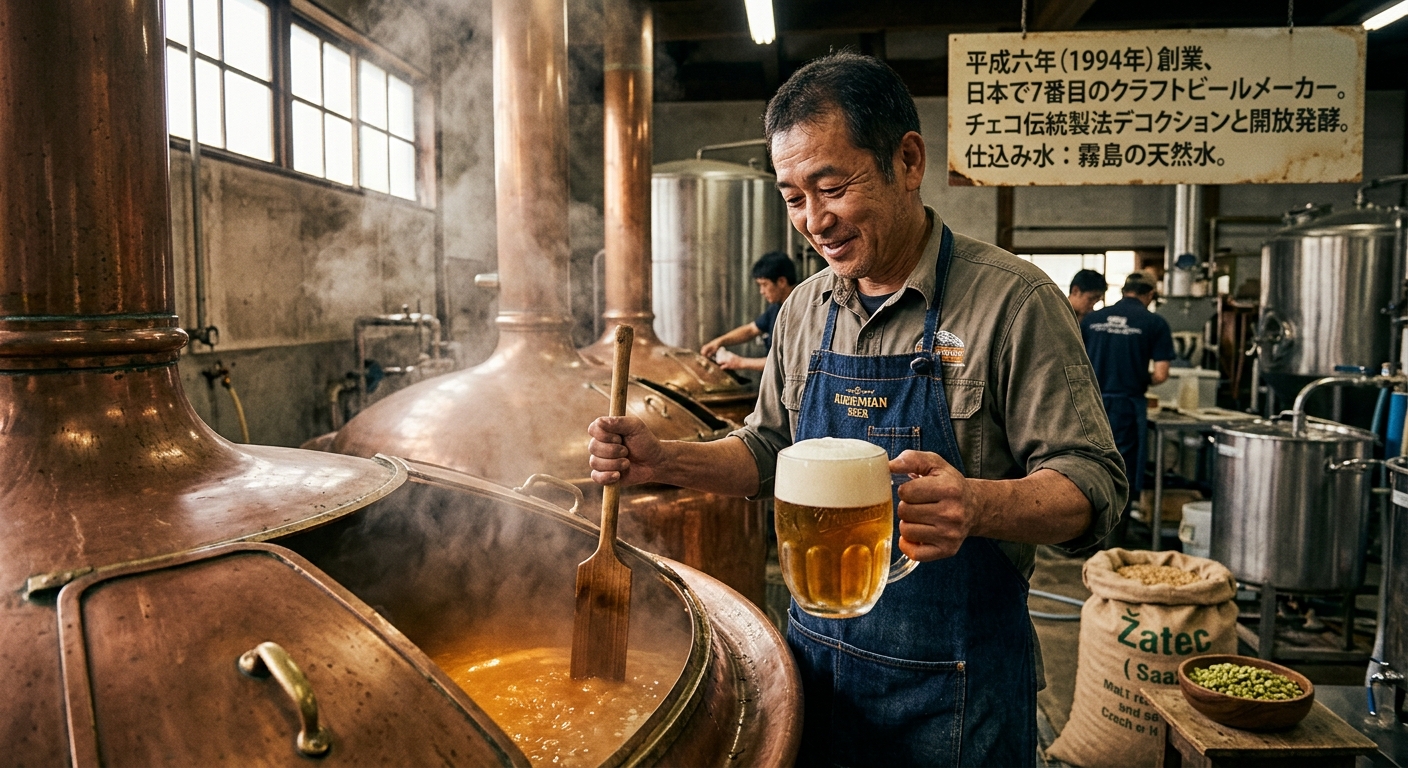
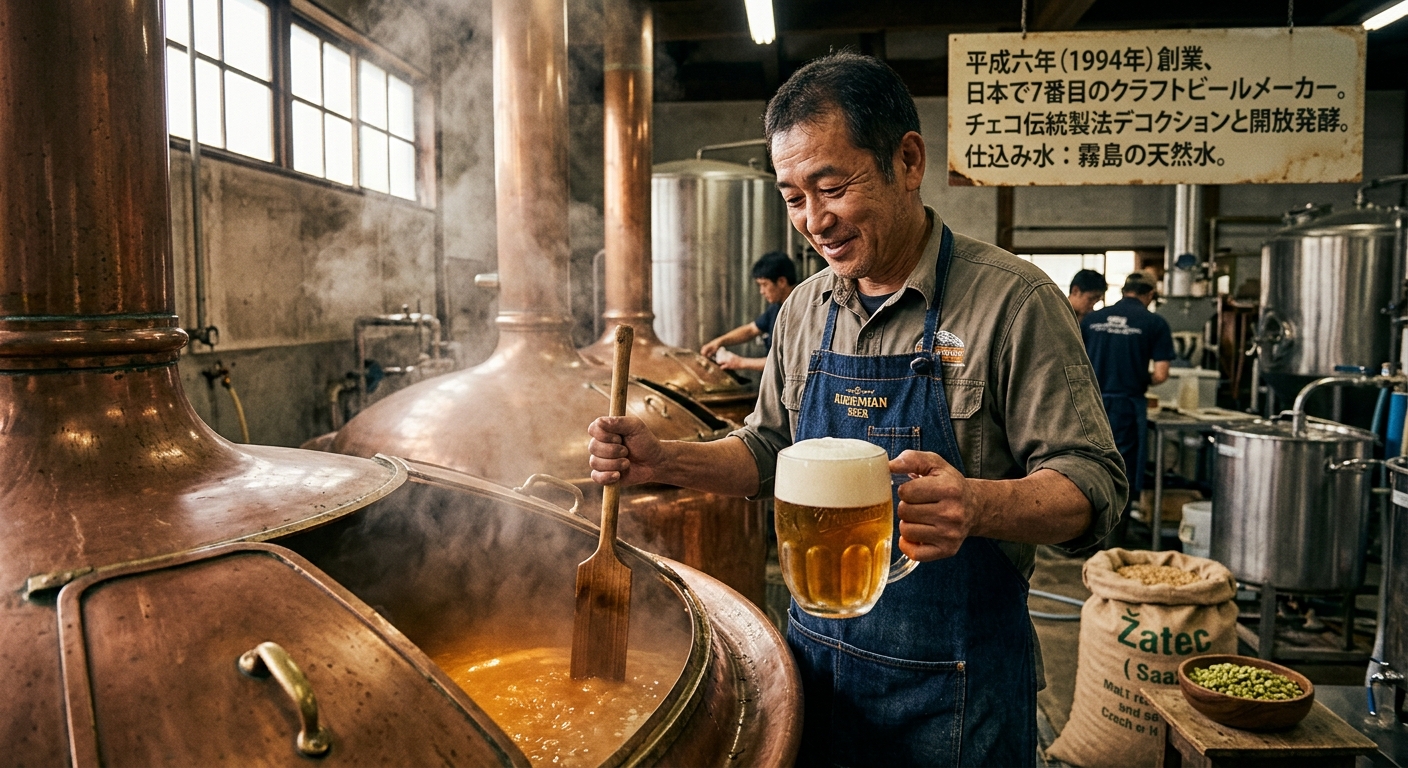
Kirishima Highlands Beer was founded in October 1994. When that year’s revision to Japan’s liquor tax law opened the door to small-scale brewing, craft beer makers — then called “ji-biru” — sprang up across the country one after another, and this brewery was the seventh in Japan, one of the very earliest. In a message shared when it exhibited at a 2025 craft beer event, the brewery described itself this way: “Thirty years since we opened as Japan’s seventh craft beer maker in 1994, we have kept on making pilsner.”
What sets this brewery apart is how little it uses that isn’t Czech. The malt, the hops (Saaz, from Žatec), even the brewing equipment, are all imported directly from Czechia. The method follows the same path: decoction mashing and open fermentation tanks, the old-fashioned way it’s still done there. The Bohemian Blonde featured here is a Czech-style pilsner brewed by that method — about 4% ABV, with a body rich enough and a hop freshness clean enough to keep the glasses coming.
The Story of the Land
The brewery sits in the Mizobe district of Kirishima City — right next to Kagoshima Airport, as it happens. Within walking distance in the same neighbourhood are Saigo Park, home to what is said to be the largest statue of Saigo Takamori in Japan at 10.5 metres tall; Takaya-no-Sanjo, a burial mound recorded in the Nihon Shoki as the tomb of the deity Hikohohodemi-no-Mikoto; and a natural hot-spring footbath called “Oyattosā” on the airport’s first floor.
And Kirishima itself is the setting for a well-known story. In 1866, Sakamoto Ryoma — wounded in the Teradaya Incident — travelled to Kirishima with his wife Oryo to recuperate, staying 29 days. They soaked at Shiohitashi Hot Spring to heal his wounds and climbed Mt. Takachiho together; the trip is remembered as Japan’s first honeymoon. The ground this brewery draws its water from is also the ground where someone else’s new beginning once took place.
The Story of the Song
Tsuyoshi Nagabuchi was born in Ijuin, Hioki District, Kagoshima Prefecture (now Hioki City), and raised in Kagoshima City. He placed in the Yamaha Popular Song Contest in 1976, debuted on Victor Records the following year, and moved to Toshiba EMI in 1978, re-debuting with “Junrenka.”
“Kanpai” (“A Toast”) was written in 1980, during a train ride on tour. The story goes that Nagabuchi wanted to give a song to a friend who was about to get married, and wrote the whole thing in a few hours on the Chuo Line between Nagano and Nagoya. It wasn’t meant to be a hit of his own — it was an intensely private gift for one friend. Eight years later, on February 5, 1988, a self-cover single version was released and became a million-selling smash. It was embraced by people who felt out of step with Japan’s bubble-era exuberance, and in 1991 it was even used in a TV commercial for Kirin Lager Beer.
Why This Pairing
Kirishima is the place Sakamoto Ryoma and Oryo visited on what’s remembered as Japan’s first honeymoon. “Kanpai” is likewise a song Nagabuchi wrote not for his own celebration, but for a friend’s wedding. Both exist because of someone choosing to celebrate someone else’s new beginning, rather than their own.
And this song carries a second connection to beer: in 1991 it was used in a commercial for Kirin Lager, which means a song written as a wedding gift eventually became, by a roundabout path, a song about raising a glass. It found its way back to the moment the glass goes up.
The beer doesn’t chase excitement either. Brewed with malt and hops ordered directly from Czechia, it has kept the same method for thirty years regardless of trends. A beer that chose being reliable over being flashy, and a song written quietly for a friend — both were made for someone else, and both ended up loved for a long time as a result.
Where to Find This Beer
The Rakuten Ichiba link below is an affiliate link.
- Brewery official site:https://kirishimahighlands-brewery.jp/
- Buy on Rakuten Ichiba: View the product page (¥5,940)
These are Japanese storefronts. If you are visiting the brewery, drinking it fresh at their own taproom is by far the best option.
Pairing Dishes Worth Trying
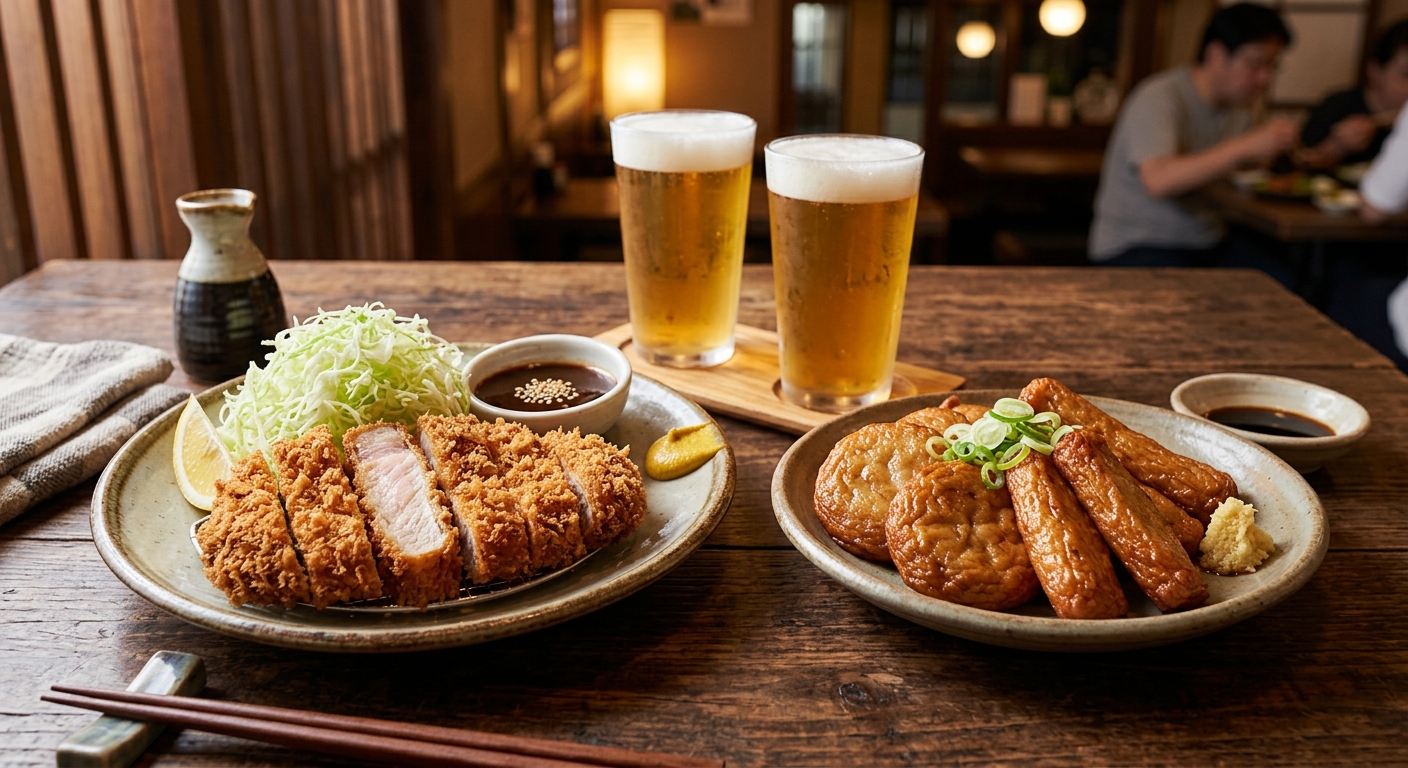
- Kagoshima kurobuta tonkatsu (breaded pork cutlet)
Made with kurobuta, Kagoshima’s signature black pork breed. The pilsner’s light bitterness and carbonation cut cleanly through the rich, sweet fat of the pork. - Homemade satsuma-age (fried fish cake)
A Kagoshima home-style dish of fried fish paste, sweet and salty with a soft, fluffy texture. The pilsner’s crisp carbonation and hop aroma sit well alongside it.
A note on the science: the iso-alpha acids that carry hop bitterness, together with carbonation, strip away the oily film that fried food leaves on the palate and reset it for the next bite. The inosinic acid in the fish paste of satsuma-age amplifies the malt’s own sweetness when the two are layered together, each lifting the other’s flavour.
Visiting the Brewery
Kirishima Highlands Beer Co., Ltd.
876-15 Fumoto, Mizobe-cho, Kirishima City, Kagoshima — within walking distance of Kagoshima Airport.
Malt, hops and brewing equipment are imported directly from Czechia, and the brewing water is drawn from Kirishima’s natural springs.
Sights Nearby
- Saigo Park / Mizobe-cho, Kirishima City | Same neighbourhood as the brewery, ~5 min walk from Kagoshima Airport
A free park centred on what is said to be the largest statue of Saigo Takamori in Japan — 10.5 m tall and 30 tonnes. It also displays Edo-era prints depicting the Satsuma Rebellion and materials on the Meiji Restoration. Open 8:30-17:30. - Takaya-no-Sanjo Mausoleum / Mizobe-cho, Kirishima City | Same neighbourhood as the brewery, ~5 min by car from Kagoshima Airport
A kofun burial mound recorded in the Nihon Shoki as the tomb of Hikohohodemi-no-Mikoto (Yamasachihiko). It sits atop a 390m-high hill in a cedar grove, reached by climbing more than 200 stone steps.
Hot Springs Nearby
- Kagoshima Airport Natural Hot Spring Footbath “Oyattosā” / Mizobe-cho, Kirishima City | Same neighbourhood as the brewery
Said to be the first natural hot-spring footbath built at a Japanese airport. A sodium bicarbonate spring at 46.7°C. Free, open 9:00-19:30 year-round (towels available for ¥300). This is a footbath, not a full bathing facility.
Opening hours, closing days and day-use bathing availability can change. Please check each facility’s official information before visiting.
A Quick Glossary of Beer Terms
- Craft beer: Beer made by small breweries that put the character of the maker front and centre, as opposed to the uniformity of mass production.
- Pilsner: A pale lager born in Pilsen, Czechia, known for its clear golden colour and refined hop bitterness. The most widely drunk style in the world.
- Malt: Germinated barley. It forms the foundation of a beer’s sweetness, colour and body; how deeply it is roasted determines colour and toastiness.
- Hops: The cones of a climbing plant, which give beer its bitterness and aroma. Depending on the variety, that aroma can read as citrus, tropical fruit or open grassland.
- Ji-biru: The name given to the beers that appeared across Japan after the 1994 liquor tax reform opened small-scale brewing. Today most of them are simply called craft beer.
Sources
- Kirishima Highlands Beer official site
- Kirishima Highlands Beer official site — Company profile
- 0423 Craft Beer Expo 2025 — Exhibitor profile, Kirishima Highlands Beer
- Kirishima City official site — Sakamoto Ryoma’s Honeymoon
- Tsuyoshi Nagabuchi — Wikipedia (Japanese)
- On Tsuyoshi Nagabuchi’s “Kanpai” — Gendai Media
- Saigo Park — Rurubu & More
- Takaya-no-Sanjo Mausoleum — Wikipedia (Japanese)
- Kagoshima Airport Natural Hot Spring Footbath “Oyattosā”
If you notice any errors in this article, please don’t hesitate to reach out at info@soundrecords.jp.
Read this article in Japanese: 乾杯は、いつも誰かのために