日本語で読む | This is the English version of a bilingual article.
Today’s Pairing
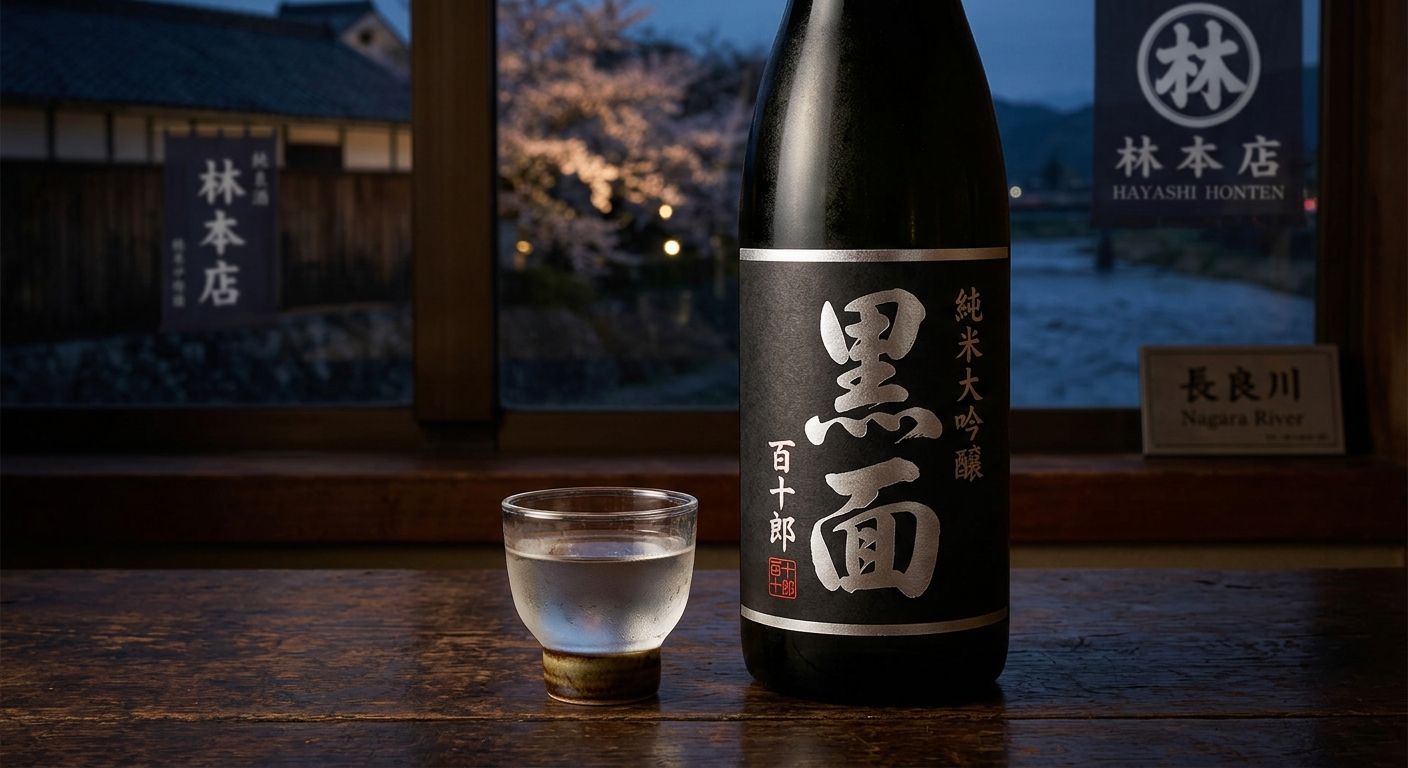
- Sake: Hyakujuro Junmai Daiginjo “Kuroduzura” (黒面) / Hayashi Honten Co., Ltd. (Kakamigahara City, Gifu Prefecture)
Official site: https://www.eiichi.co.jp/ - Kayoukyoku: “Yozakura Oshichi” by Sakamoto Fuyumi (1994)
YouTube: https://www.youtube.com/watch?v=K7M3r6Y0Lf0
▶ If the player above doesn’t play, open it on YouTube
The Story of the Sake Brewery
Hayashi Honten was founded in 1920 (Taisho 9). Its founder, Eiichi Hayashi, was a rice farmer who dreamed of “making the finest sake from rice I grew myself,” and so he built a brewery to see that dream through. For more than a century since, the family has continued brewing sake in Kakamigahara City, Gifu Prefecture.
Today the brewery is led by its fifth-generation owner, Rieko Hayashi. In 2010, alongside the brewery’s existing labels, she launched a new brand called “Hyakujuro,” distilling the brewery’s spirit into something fresh. The lineup itself carries a playful touch unique to this brewery: sake with different “faces” — Aozura (blue face), Akazura (red face), Kuroduzura (black face), and Hiyori — each named as though it were a mask worn by the sake itself. Among them, “Kuroduzura” is a Junmai Daiginjo. Its hallmark is an exquisite balance of faint sweetness and gentle acidity, finishing crisp and clean when served chilled.
The brewing draws on two local treasures: Hatsushimo, a rare rice grown only in the Mino region of Gifu, and the underground water fed by the Nagara River, a river recognized as a Globally Important Agricultural Heritage System. At its core lies a grounded philosophy — that sake should be brewed from the blessings of the local land alone.
.jpg)
The Story of the Land
Kakamigahara City, home to the brewery, sits in Gifu’s Mino region — a land famous for cormorant fishing on the clear Nagara River. The brand name “Hyakujuro” comes from Ichikawa Hyakujuro, a kabuki actor with deep ties to this land. Roughly 90 years ago, he donated 1,200 cherry trees to his hometown; they have since grown into the “Hyakujuro Cherry Trees,” now a celebrated spot for cherry-blossom viewing.
“I wanted to make a sake people could enjoy happily beneath the Hyakujuro cherry trees in full bloom” — that wish is woven into the very name of the brand. A row of cherry trees left behind by a kabuki actor now, a century later, draws people together again in the form of sake. That cycle itself is the story of this land.
The Story of the Song
Sakamoto Fuyumi’s “Yozakura Oshichi” was released in 1994, written by Amari Hayashi and composed by Takashi Miki. Drawing on the legend of Oshichi, a girl said to have committed a grave crime for love during the Edo period, the song is a portrait of a single-minded passion burning beneath the night cherry blossoms. Its dramatic vocal delivery — restrained at first, then suddenly unleashed — has been likened to watching a single act of theater unfold, and it remains one of Sakamoto Fuyumi’s signature songs.
Why This Pairing
The brand “Hyakujuro” itself is a story born from cherry trees left behind by a kabuki actor. And “Yozakura Oshichi” is a song about a woman’s passion burning beneath the cherry blossoms at night. Both share the same bloodline: cherry blossoms and theater.
Consider the color of night that the name “Kuroduzura” (literally, “black face”) evokes. A flavor where a crisp, sharp acidity hides just beneath a faint sweetness — quietly, yet unmistakably, it captures both the sensual beauty of cherry blossoms at night and the fierce passion concealed within them. It never announces itself loudly; instead, its emotion deepens the more you drink, echoing the song’s own restrained-yet-burning vocal style.
Where to Find This Bottle
The Rakuten Ichiba link below is an affiliate link.
- Brewery’s official site: https://www.eiichi.co.jp/
- Search on Rakuten Ichiba: Hyakujuro “Kurozura” Junmai Daiginjo
Note: Stock and availability change over time. If you happen to visit a local sake shop, it’s well worth asking for this label by name. Please also note that the Rakuten and Amazon links above lead to Japan-based retailers — most useful for readers in Japan, or those who can arrange international shipping.
A Pairing Dish Worth Trying
.jpg)
- Salt-grilled ayu (sweetfish) from the Nagara River
Ayu raised in the very same Nagara River that supplies the brewery’s water. The skin turns crisp while the flesh carries an elegant bitterness and richness — qualities that Kuroduzura’s faint sweetness and gentle acidity bring beautifully into focus. It’s a dish worth savoring precisely because the land and the sake are connected by the same river.
Recipe (in Japanese): クラシル「アユの塩焼き」 - Hoba miso
A local Gifu dish of miso and seasonings grilled on a magnolia leaf. Against the fragrant, robust flavor of the miso, Kuroduzura’s clean finish settles in comfortably, resetting the palate with each sip.
Recipe (in Japanese): クラシル「朴葉味噌焼き」
A scientific note: the smoky aroma of the ayu’s skin and the depth of the miso combine with the sake’s faint sweetness to create a layered, three-dimensional aroma, while its acidity lightly washes away the richness of the fat.
A Quick Note (Sake Terms)
- Junmai Daiginjo: A grade of pure rice sake (junmai) made from rice milled down to 50% or less of its original size, representing the pinnacle of aromatic, refined junmai sake.
Visiting the Brewery
Hayashi Honten (Hyakujuro, Eiichi)
2239 Naka-shinkanou-cho, Kakamigahara City, Gifu. About a 5-min walk from Shinkanou Station (Meitetsu Kakamigahara Line).
The label “Hyakujuro” is named after Ichikawa Hyakujuro, a kabuki actor with local ties.
Sights Nearby
- Cherry blossoms along the Shinsakai River (Hyakujuro Zakura) / Kakamigahara City | ~5 min, ~2 km by car from the brewery
About 1,000 cherry trees donated by Ichikawa Hyakujuro line both banks of the Shinsakai River for some 4 km. One of Japan’s “100 best cherry-blossom spots,” and the source of the sake’s name. - Gifu-Kakamigahara Air and Space Museum / Kakamigahara City | ~15 min, ~8 km by car from the brewery
A specialist museum showing real aircraft and rockets. Weekdays 10:00-17:00, weekends & holidays 10:00-18:00, closed the 1st Tuesday; ¥800 for adults, free for junior-high age and younger.
Hot Springs Nearby
- Kakamigahara Onsen Megumi no Yu / Kakamigahara City | ~15 min, ~7 km by car from the brewery
A day-use bathhouse using the local spring water “Gozen-sui,” with herbal baths and saunas. Open 8:00-23:00, year-round.
Opening hours, closing days and day-use bathing availability can change. Please check each facility’s official information before visiting.
Sources
Related Articles
If you notice any errors in this article, please don’t hesitate to reach out at info@soundrecords.jp. We’d be grateful for the correction.
Read this article in Japanese: 夜桜の下で、静かに燃える色