日本語で読む | This is the English version of a bilingual article.
Today’s Pairing
- Sake: Dassai Junmai Daiginjo 45 / Dassai Co., Ltd. (Shuto-cho, Iwakuni, Yamaguchi Prefecture)
Official site: https://dassai.com/ - Kayoukyoku (classic Japanese popular song): “Etto Tsubame” (“The Swallow That Wintered Over”), performed by Mori Masako (1983)
YouTube: https://www.youtube.com/watch?v=SHE4SQjdzAU
▶ If the player above doesn’t play, open it on YouTube
The Story of the Brewery
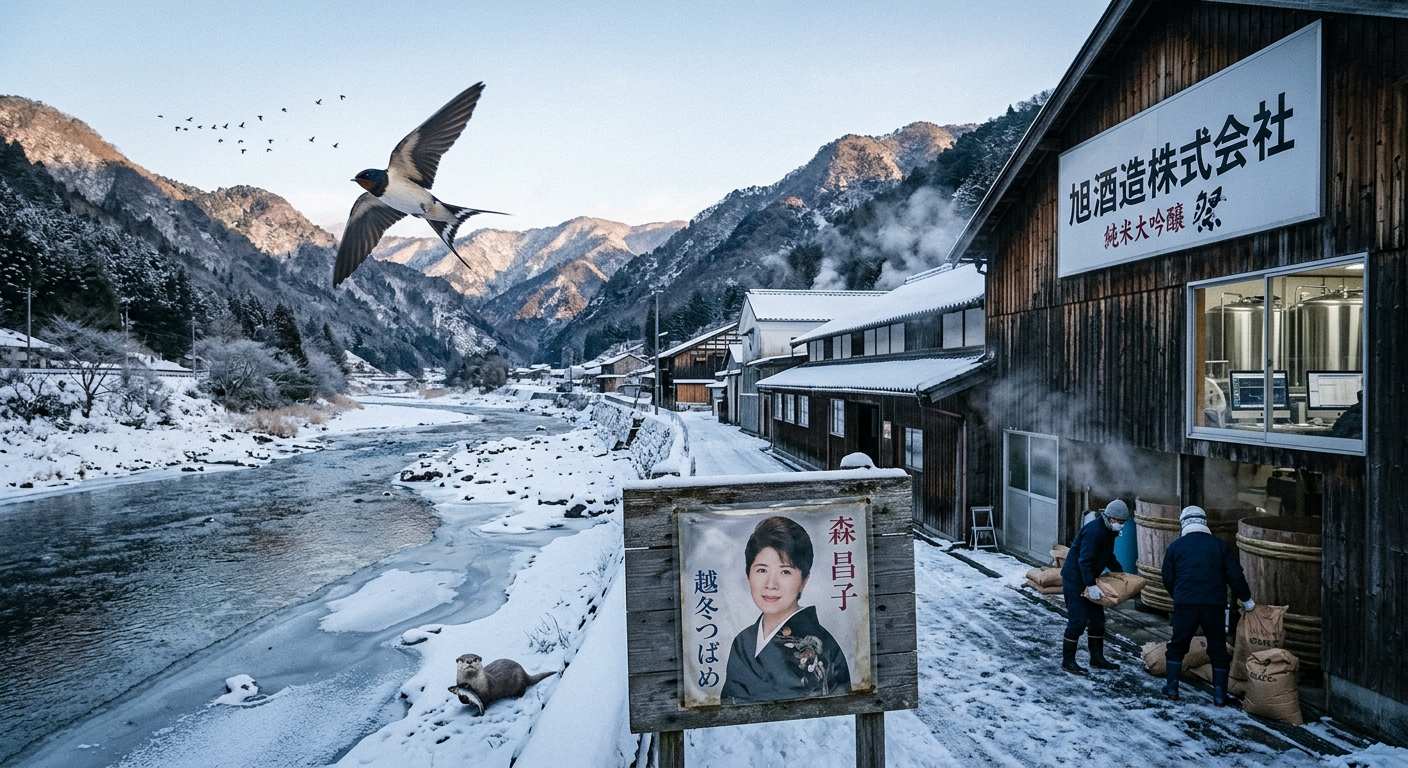
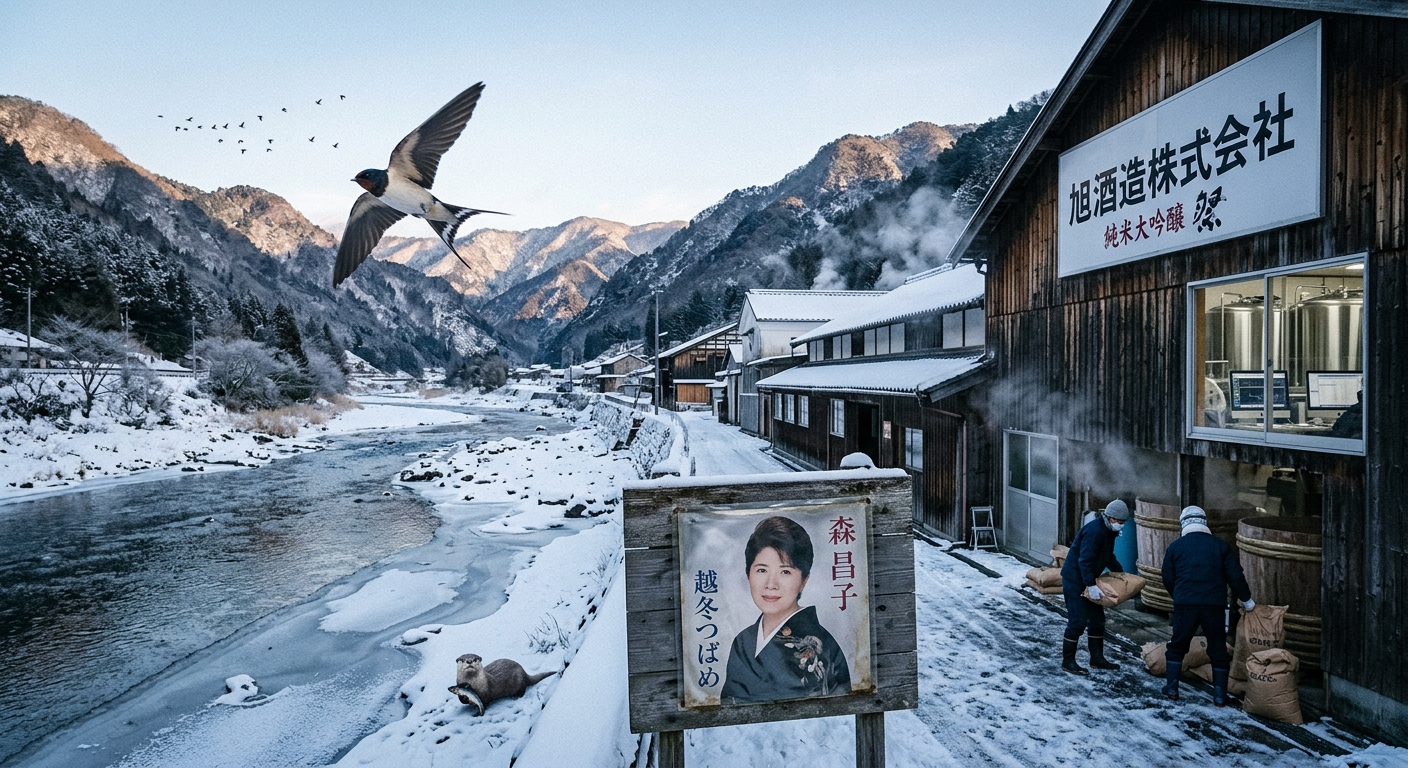
Dassai Co., Ltd. (known as Asahi Shuzo Co., Ltd. until May 2025), the brewery behind Dassai, was founded in January 1948. It stands in Osogoe, a small hamlet in Shuto-cho, further up into the hills from central Iwakuni, Yamaguchi Prefecture.
Sakurai Hiroshi, the third-generation owner, took over the brewery in 1984 after his father’s sudden death. At the time the brewery was barely getting by on a modest futsushu (ordinary-grade sake) called “Asahifuji,” with sales down to 85% of the previous year. Things got worse in 1987, when a restaurant venture and a local craft-beer business both failed, leaving the brewery deep in debt. The toji (master brewer), who disagreed with Sakurai over the direction the brewing should take, gave up on the brewery’s future and left.
With no toji left, the only way forward was one that didn’t rely on a craftsman’s experience and intuition. Sakurai had seen how well a junmai sake polished to a seimai buai of 50% was received, and he turned to something unheard of at the time: brewing guided by data rather than a toji’s instinct. After six years of trial and error, the junmai daiginjo “Dassai” was born in 1990, followed in 1992 by “Migaki Nisshi Sanbu,” polished down to a seimai buai of 23%. Today the brewery can brew through all four seasons, and Dassai has grown into a label enjoyed around the world.
The name “Dassai” draws on Osogoe, the place name where the brewery stands, and on “Dassai Shooku Shujin,” a pen name once used by the haiku poet Masaoka Shiki. It’s said to carry the wish that the sake be made not simply to get drunk on, but to be savored and appreciated.
The Story of the Land
Shuto-cho, in Iwakuni, is a quiet valley about thirty minutes by car up into the mountains from the city center — hardly an easy place for a brewery, one that had already watched its toji and brewery workers leave.
And yet from this land came a new path that didn’t depend on the traditional toji system: brewing guided by data, which went on to reach the whole world. It’s a place with a story of its own — that even from an unfavorable position, the right approach can carry you a long way.
The Story of the Song
Mori Masako’s “Etto Tsubame” was released on August 21, 1983, her 41st single. The lyrics are by Ishihara Shinichi, the music by Shinohara Yoshihiko (the birth name of the singer-songwriter Madoka Hiroshi), and the arrangement by Ryuzaki Koji. The song won the Best Vocal Performance award at the 25th Japan Record Awards that year, and at the 34th NHK Kohaku Uta Gassen the same year, Mori was visibly moved to tears while singing it.
As the title suggests, it’s a song about a swallow that chooses to winter over rather than fly south. For Mori, who had made her singing debut at thirteen through the talent show “Star Tanjo!” and had built her career as a bright, endearing idol, this song marked a turning point toward establishing herself as a serious enka singer.
Why This Pairing
Asahi Shuzo in the mid-1980s had lost its toji and was carrying heavy debt. Its decision to let go of the traditional way of doing things and press forward on its own path echoes the single swallow that leaves the flock and winters over rather than migrating.
Just as “Dassai” was born in 1990 after six years of trial and error, “Etto Tsubame” was a song for Mori Masako at the very moment she was remaking herself from idol into a serious enka singer. Both share the same underlying story — a clear view waiting on the far side of a hard season.
Where to Find This Bottle
The Rakuten Ichiba link below is an affiliate link.
- Brewery’s official site: https://dassai.com/
- Search on Rakuten Ichiba: Dassai Junmai Daiginjo 45
Note: both Rakuten and Amazon links above lead to Japan-based retailers. They’re most convenient for readers in Japan, or for those elsewhere who are able to arrange international shipping. Stock and availability change over time, so if you’re near a specialty sake shop, it’s well worth asking for this label by name.
A Pairing Dish Worth Trying
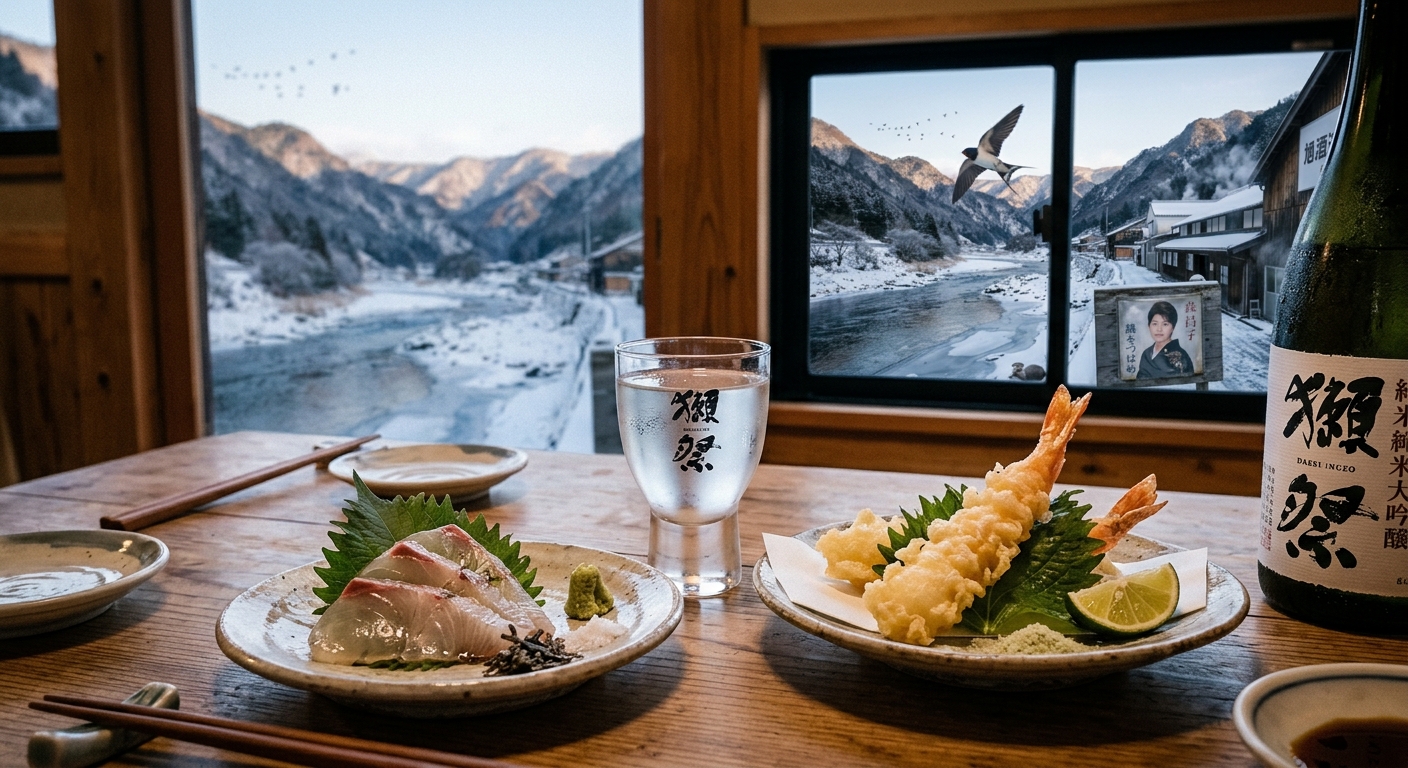
- Sea bream cured with kombu
A refined dish where the umami of kombu and sea bream overlap. It settles quietly alongside Dassai’s full, rounded rice umami.
Recipe (in Japanese): Kurashiru, “Easy Kombu-Cured Sea Bream with Shio Kombu” - Shrimp tempura
The crisp batter and the sweetness of the shrimp meet Dassai’s clean, crisp finish, which lightly resets the palate.
Recipe (in Japanese): Cookpad, “Straight, Simple Shrimp Tempura Anyone Can Make”
A note on the science: kombu and sea bream are a classic case of umami synergy, where the kombu’s glutamic acid and the fish’s inosinic acid amplify each other — a pairing that harmonizes well with a rice-forward junmai daiginjo. The oil in the tempura is cut through by the ginjo sake’s showy aroma compounds and clean finish, resetting the palate and making the next bite taste fresh again.
A Quick Glossary of Sake Terms
- Junmai Daiginjo: The top grade of junmai (pure rice) sake, brewed from rice polished down to a seimai buai of 50% or less — fragrant and refined.
- Seimai buai (rice-polishing ratio): The percentage of the original brown rice grain remaining after polishing. The lower the number, the more the rice has been polished down.
Sources
- Dassai brewery – Dassai Co., Ltd. Official Site
- Dassai (company) – Wikipedia
- Sakurai Hiroshi – Wikipedia
- Etto Tsubame – Wikipedia
If you notice any errors in this article, please don’t hesitate to reach out at info@soundrecords.jp.
Read this article in Japanese: 冬を越えてこそ、澄みわたる