日本語で読む | This is the English version of a bilingual article.
Today’s Pairing
- Sake: Junmai Ginjo “Kanuma Musume” — 100% Kanuma City-grown rice, rice-polishing ratio (seimai buai) 55%, 16% alcohol / Kobayashi Jozo Co., Ltd., Mae-Nikko Brewery (393-1 Kamikasuo, Kanuma City, Tochigi Prefecture)
Official site: https://smallforest.co.jp/ - Kayoukyoku (classic Japanese popular song): “Ishimatsu Otoko-bushi” (“Ishimatsu’s Man’s Ballad”) by Guts Ishimatsu, 1974
YouTube: https://www.youtube.com/watch?v=K1Z2PHint48
▶ If the player above doesn’t play, open it on YouTube
The Story of the Brewery
Mae-Nikko Brewery is run by Kobayashi Jozo Co., Ltd., which grew out of Kobayashi Saketen, a sake retailer founded in Kanuma City in 1955. Kobayashi Ichizo, the shop’s second-generation owner, studied fermentation science at Tokyo University of Agriculture and had long dreamed of running his own brewery. In 2021, he took over Ikeshima Shuzo, a brewery in Otawara City, Tochigi, founded in 1907 under the label “Ikenishiki,” whose owner had been searching for a successor. The company was renamed Kobayashi Jozo. Ikeshima Shuzo’s founding family motto — “the master should enter the brewery himself” — is still honored at the new brewery today.
In March 2023, the license to brew sake was transferred from Otawara City to Kanuma City. According to the Shimotsuke Shimbun newspaper, this marked the first time in 37 years that clear sake was brewed within Kanuma City itself, and, by some accounts, the first new sake-brewing license granted anywhere in Tochigi Prefecture in 51 years. In July 2024, the brewery began operating out of the gymnasium of Kanuma’s former Kamikasuo Elementary School, which had closed in 2017. Inside the red, barrel-roofed gym — about 550 square meters — a wooden koji room, brewing refrigerators, and even a rice-polishing facility are packed into a compact space. The doors of the new koji room were taken directly from Ikeshima Shuzo’s old one.
The brewery’s main business is custom-order brewing, where clients can choose their own yeast, rice-polishing ratio, and sweetness or dryness, in batches roughly a tenth the size of a typical regional brewery’s. And “Kanuma Musume,” a private-label brand Kobayashi Saketen had sold for years, has also been reborn here. The Junmai Ginjo in this pairing is brewed entirely from rice grown within Kanuma City, polished to 55%, using water drawn from Konomine Shrine. It comes in at 16% alcohol with a sake meter value (nihonshu-do) of +3.0 — on the dry side — and a fruity, fresh character.
The Story of the Land
Kamikasuo, where the brewery stands, was once its own village called Kasuo. In 1955, the villages of Awano, Kasuo, Nagano, and Kiyosu merged to form a new town, also named Awano. In 2006, that town of Awano was itself absorbed into Kanuma City.
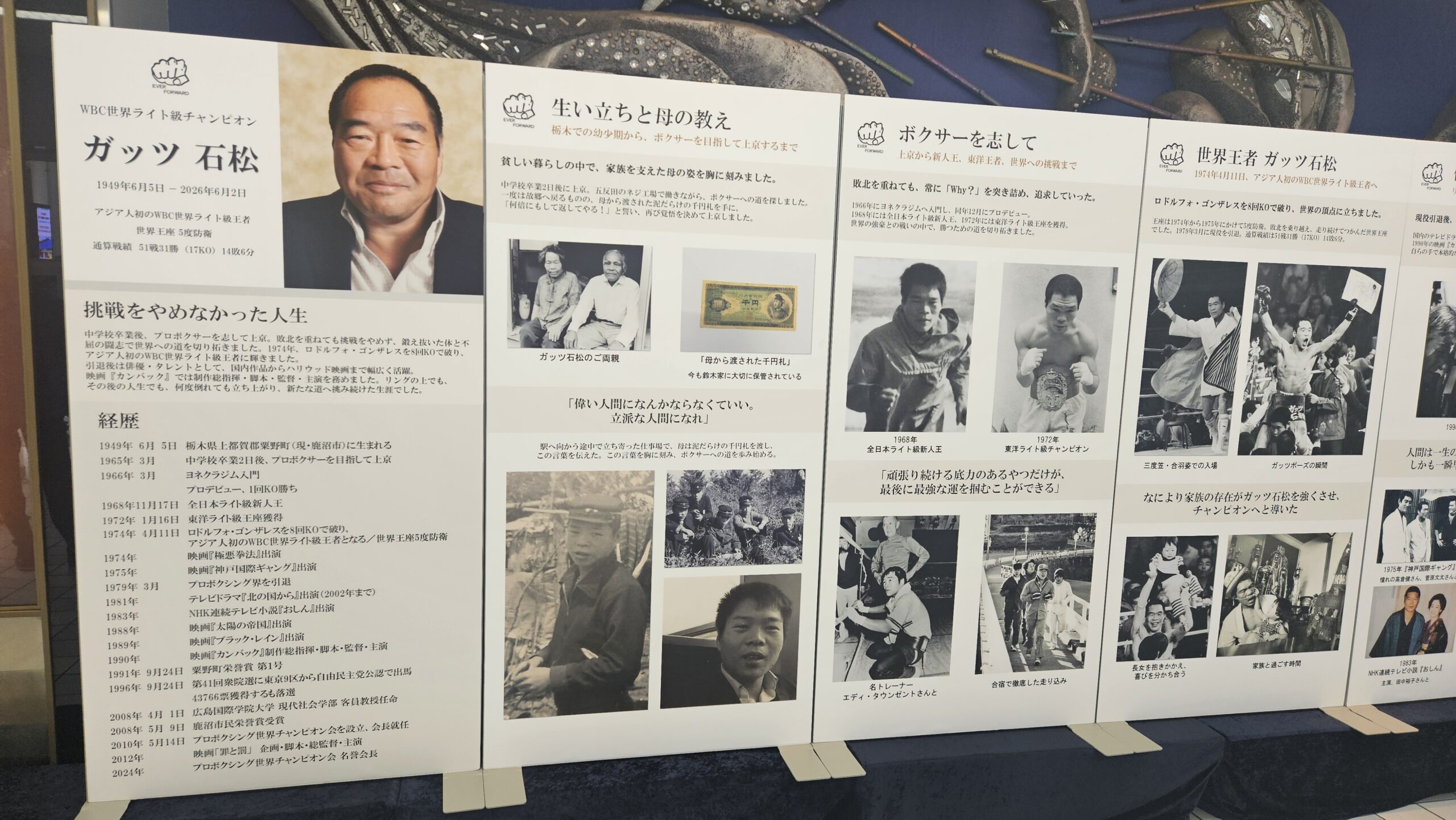
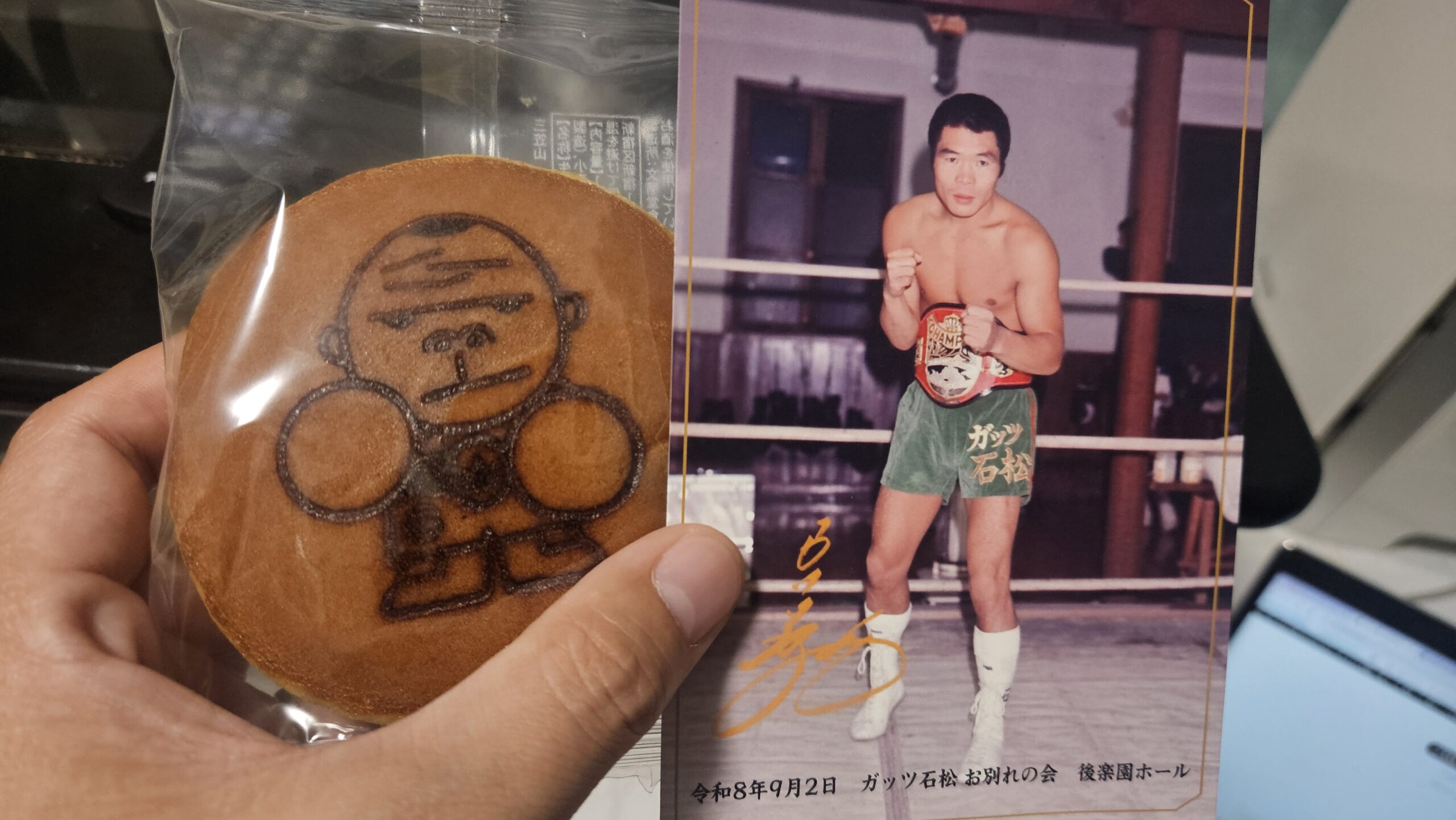
Kiyosu village is where Guts Ishimatsu (born Suzuki Yuji), who died in June 2026 at age 76, was born. Kamikasuo and Kiyosu began as separate villages, but for roughly half a century, from 1955 to 2006, they shared the same town name of Awano. The water used to brew this sake flows down from the same foothills of the Nikko mountains where Guts spent his boyhood.
The Story of the Song
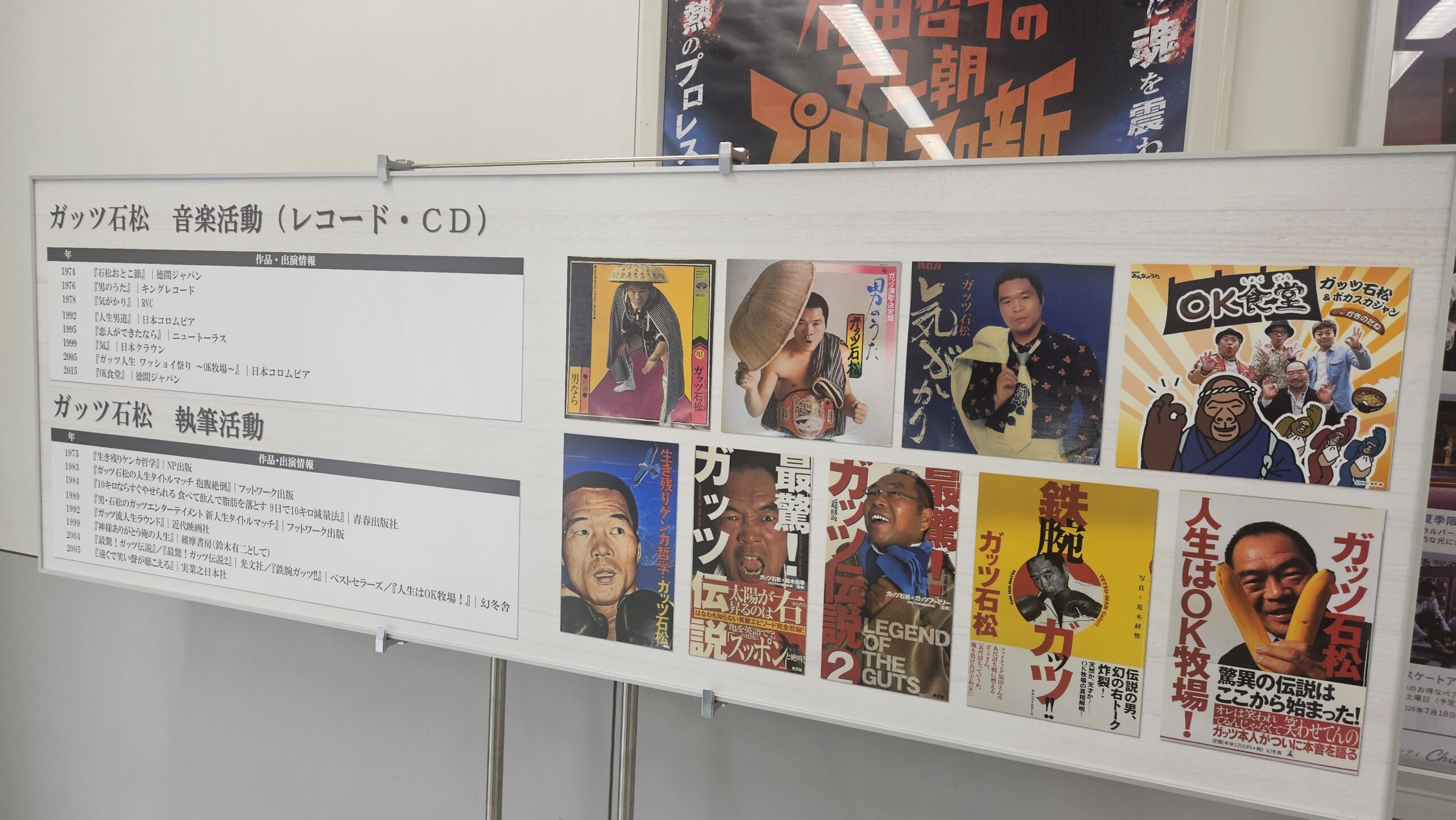
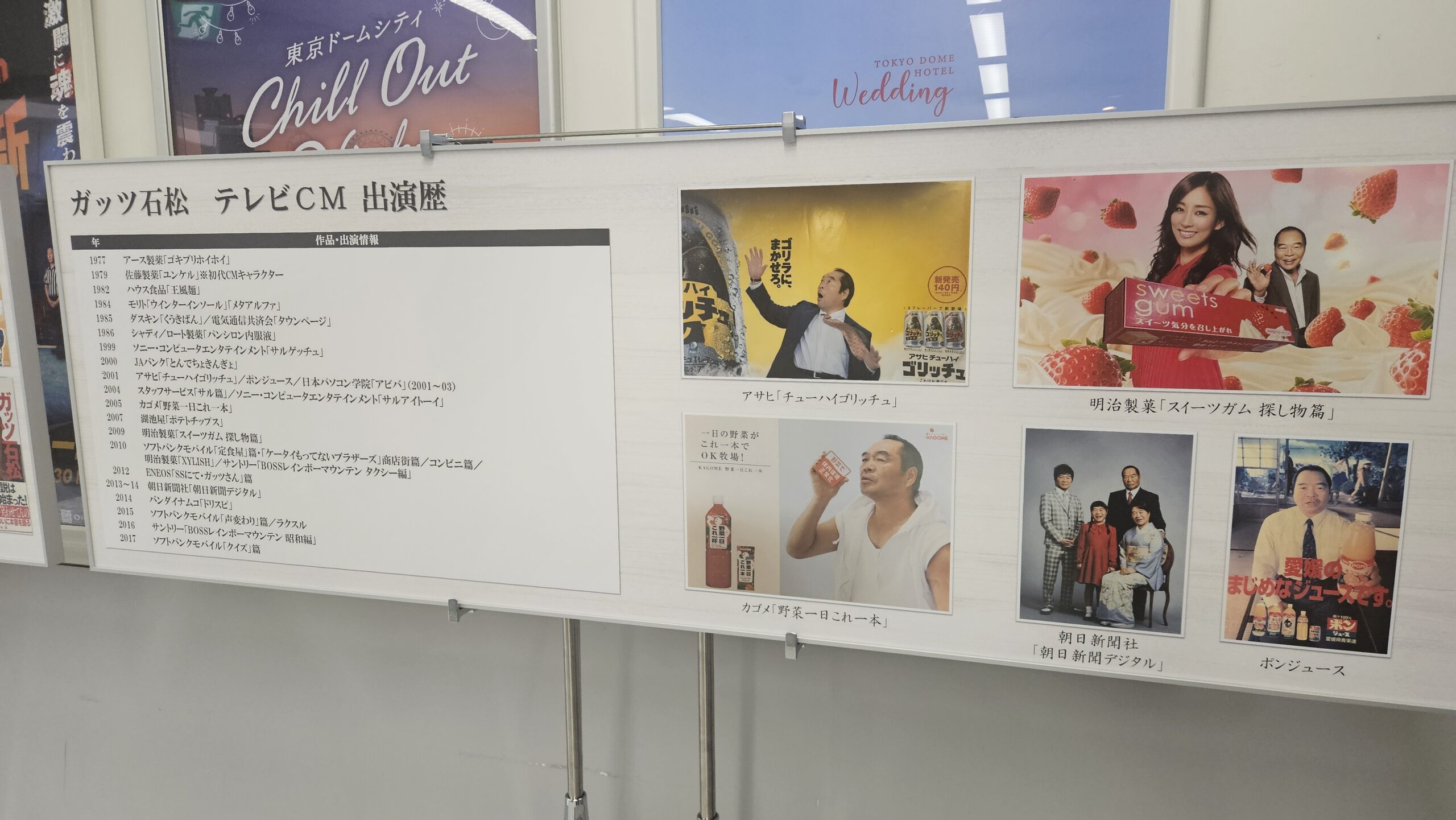
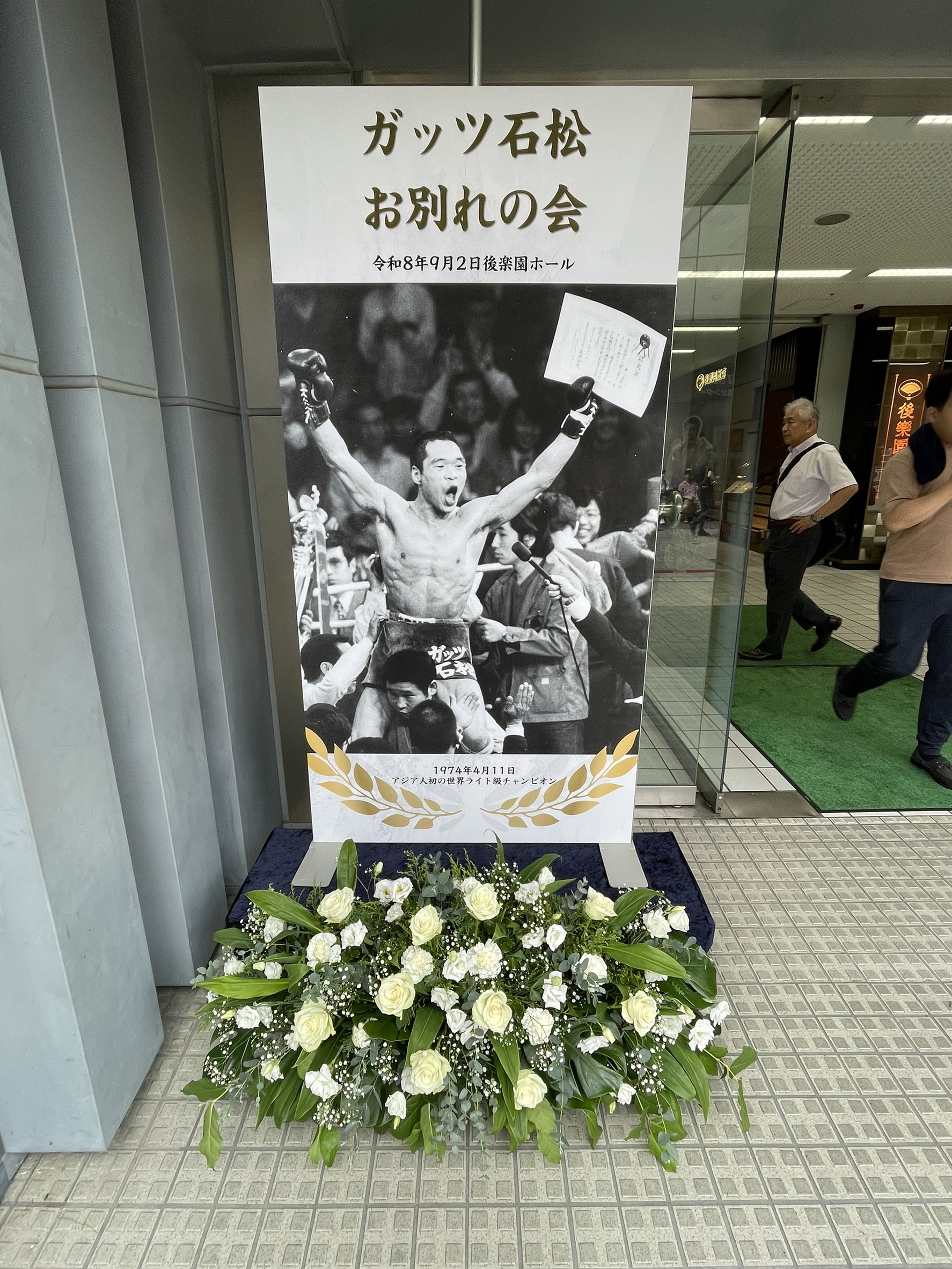
Guts Ishimatsu debuted as a professional boxer in 1966, training at the Yonekura Boxing Gym. On April 11, 1974, he knocked out Mexico’s Rodolfo Gonzales in the eighth round to win the WBC world lightweight title — becoming the first Asian boxer ever to hold that title.
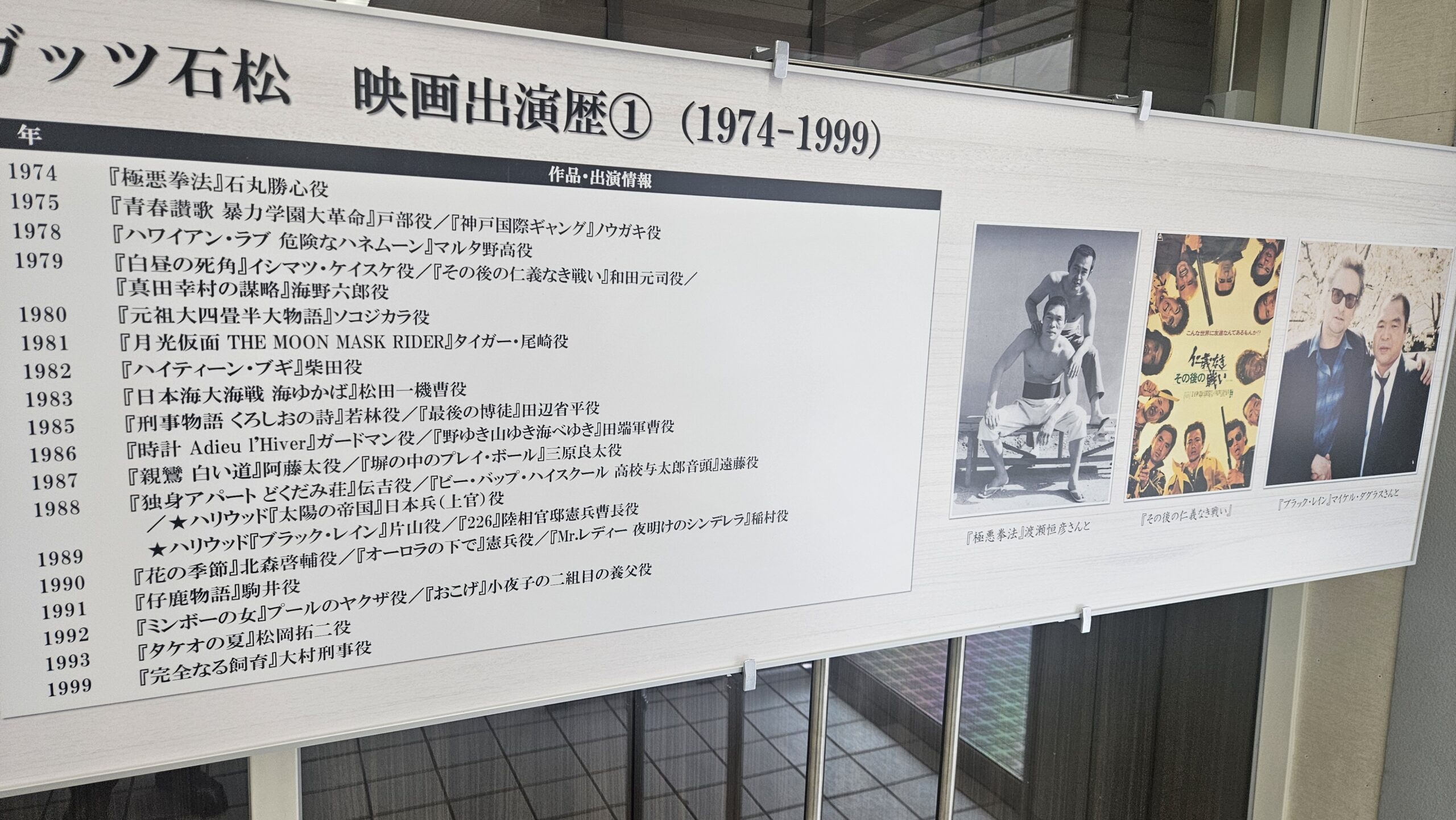
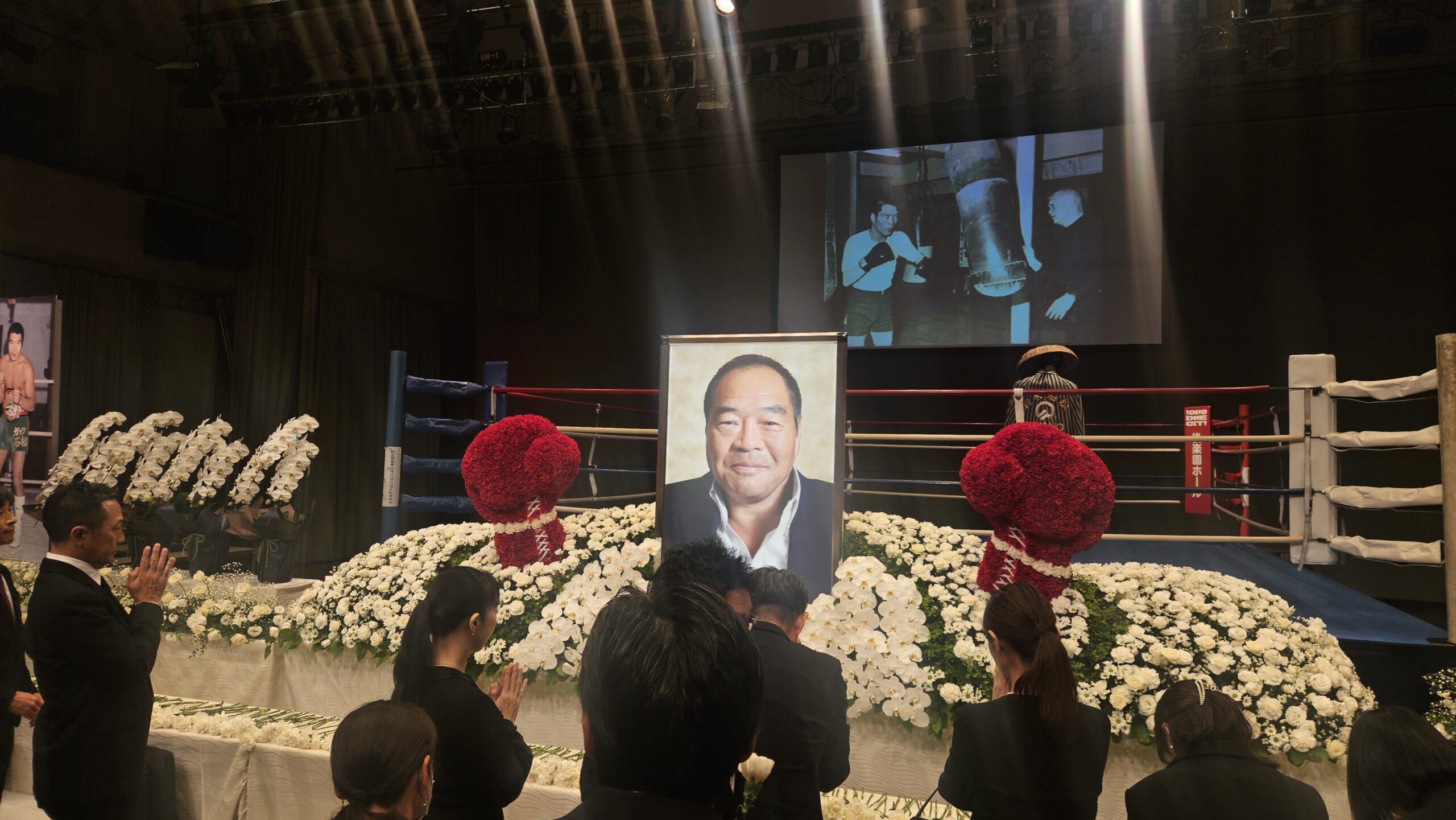
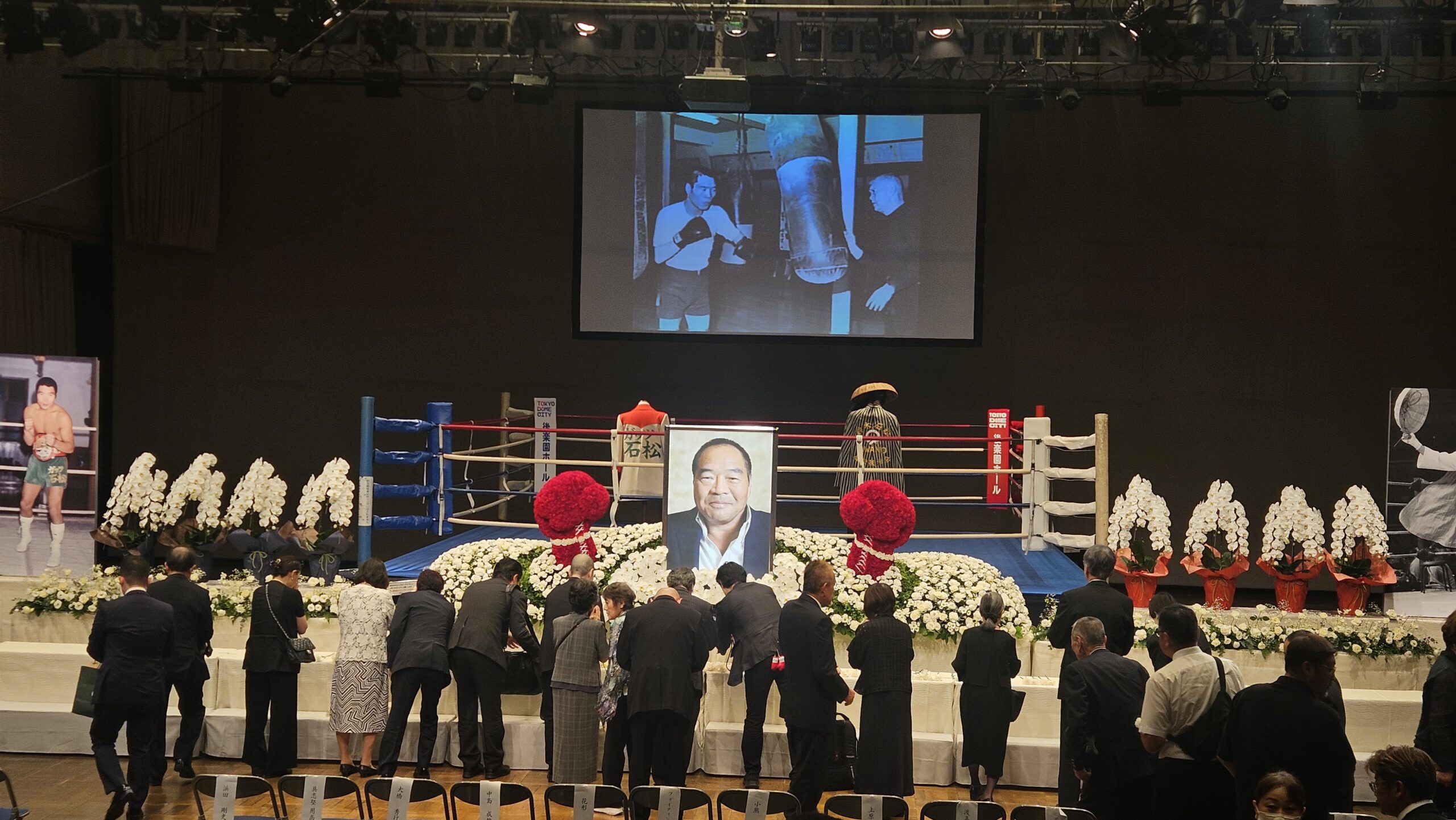
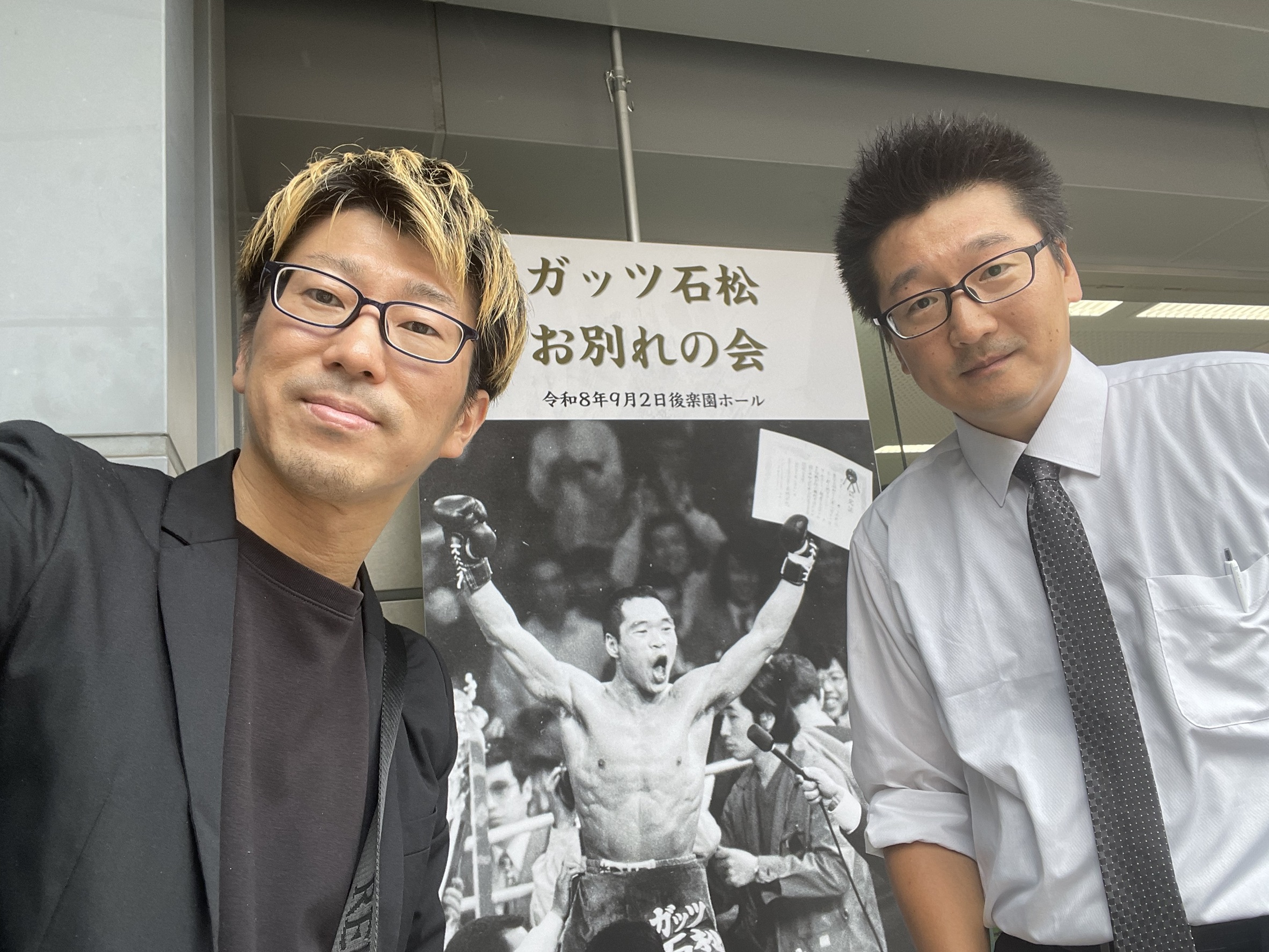
“Ishimatsu Otoko-bushi” (lyrics by Fujita Masato, music by Sone Koumei) was released later that same year, on September 1, 1974 — a record made in the immediate afterglow of becoming a world champion, and a document of a young man at the height of his powers. Guts later became a beloved fixture of Japanese variety television, but 1974, the year this song was born, was, unmistakably, the year he stood at the top of the boxing world. He died of pneumonia on June 2, 2026, at age 76. On September 2, a memorial gathering was held at Tokyo’s Korakuen Hall, attended by more than 40 current and former world champions.
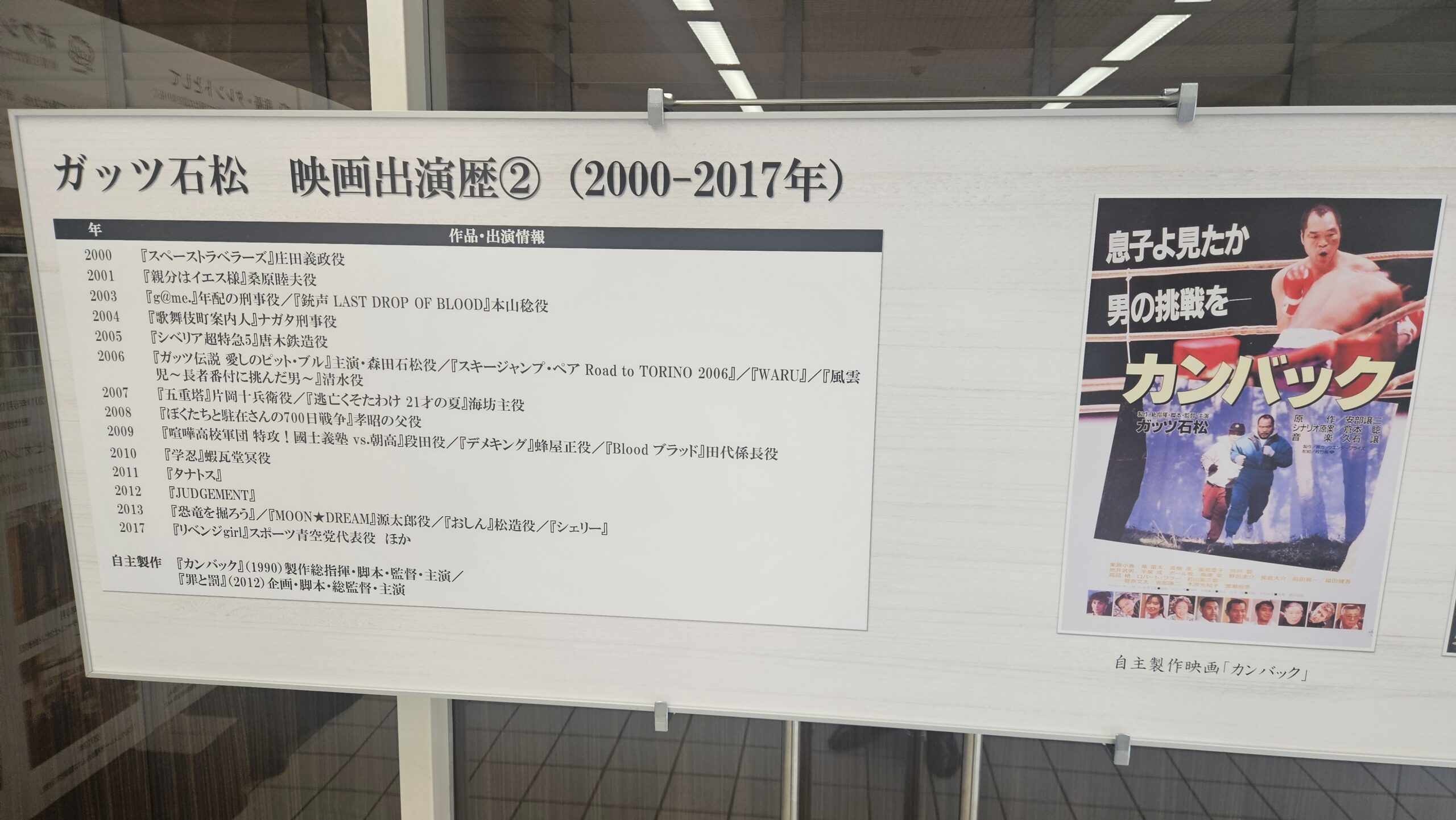
A film I was lucky enough to work on as music producer while he was alive.
▶ If the player above doesn’t play, open it on YouTube

At the preview screening he took it upon himself to host the event — a genuinely kind man.
Why This Pairing
Kamikasuo and Kiyosu: two places that once shared the name of the same town, Awano. In one, sake brewing, once lost, has quietly returned after nearly half a century. In the other, a man born there passed away in 2026. One thing came back; the other will not. Raising a glass of sake from a place that shares its name with his birthplace feels like a way to hold both of those facts at once.
“Ishimatsu Otoko-bushi” is a proud record from the single year Guts Ishimatsu stood at the peak of his life. It’s easy to lose sight of behind the comic persona he later became known for, but listening to it now, you can still feel the heat of a young man from the hills of Tochigi reaching the top of the world. A sake that has returned to its hometown, and a man who left his hometown for the world — quietly, but deliberately, this felt like a pairing worth setting side by side.
Where to Find This Bottle
The Rakuten Ichiba link below is an affiliate link.
- Brewery’s official site: https://smallforest.co.jp/
- Search on Rakuten Ichiba: See search results for “Kanuma Musume”
Note: the links above lead to Japan-based retailers. They’re most convenient for readers in Japan, or for those elsewhere who are able to arrange international shipping. Stock and availability change over time, so if you’re near a specialty sake shop, it’s well worth asking for this label by name.
Pairing Dishes Worth Trying
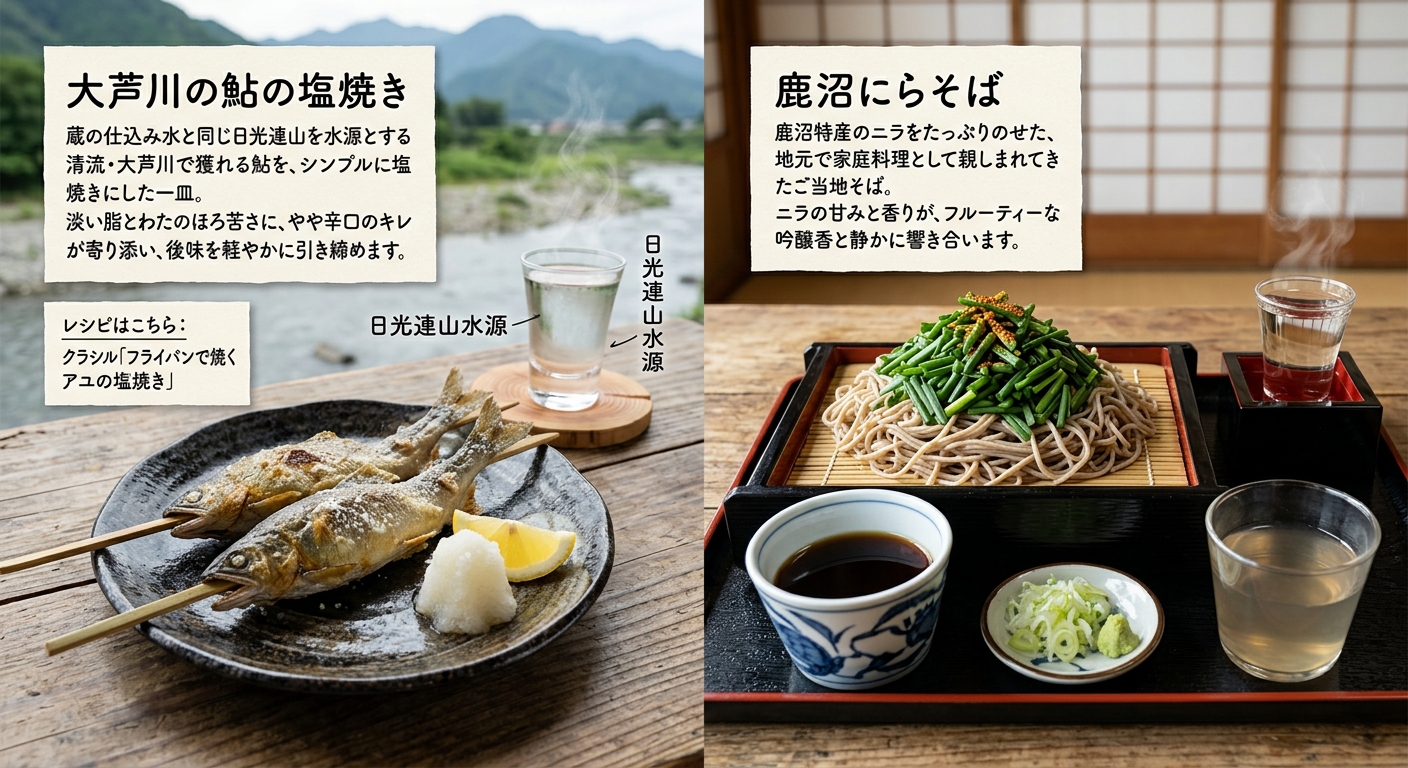
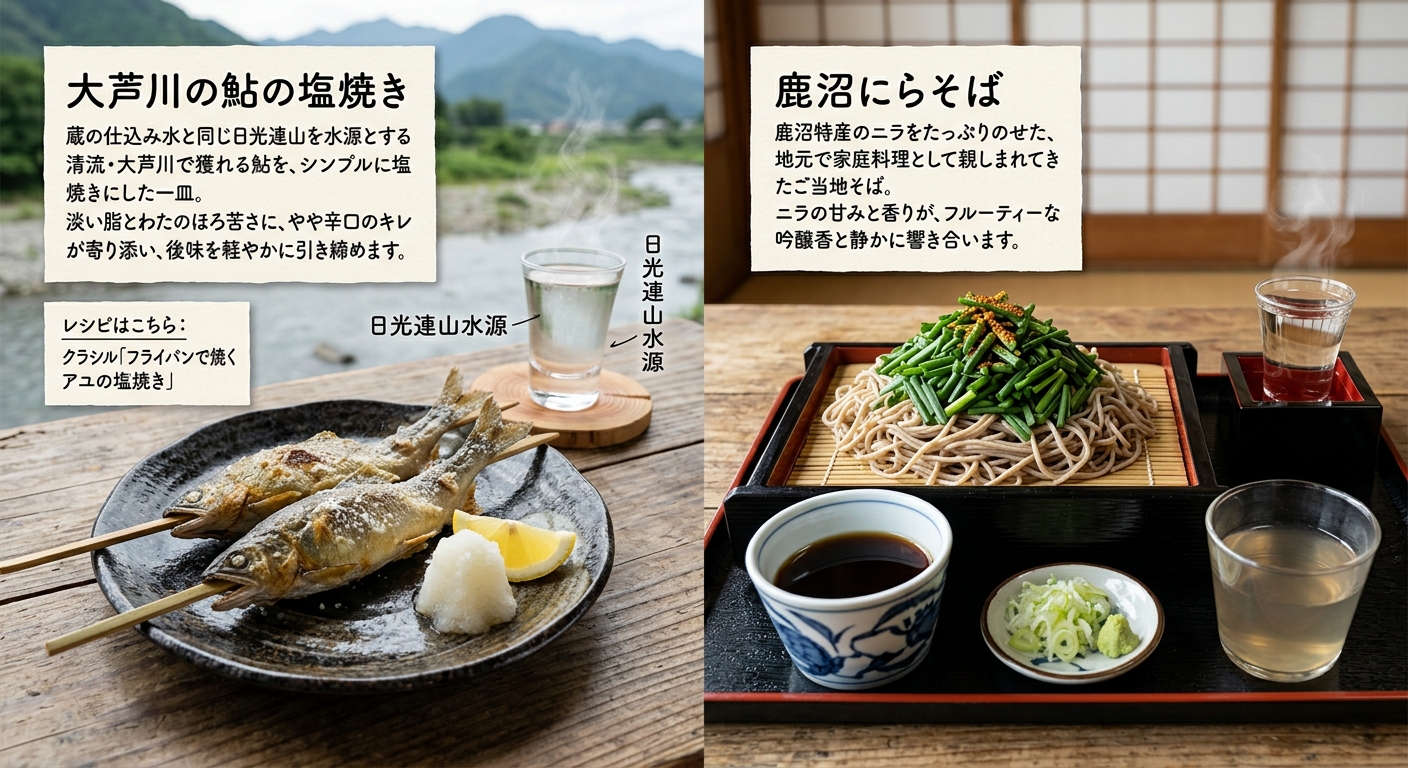
- Salt-grilled ayu from the Oashi River
Ayu (sweetfish) caught in the Oashi River, which flows down from the same Nikko mountains as the brewery’s water source, simply grilled with salt. The fish’s delicate fat and the faint bitterness of its innards are met by the sake’s dry, clean finish.
Recipe (in Japanese): Kurashiru, “Pan-Grilled Salted Ayu” - Kanuma-style nira soba
A local specialty: cold soba noodles topped with a generous helping of boiled nira (garlic chives), a crop Kanuma is known for. The chives’ sweetness and aroma echo the sake’s fruity ginjo fragrance.
A note on the science: the faint bitterness in ayu’s innards and the savory aromatics created by grilling resonate well with the bright aromatic compounds found in ginjo-style sake, softening the fish’s distinct river taste. The sulfur compounds found in alliums like nira turn sweeter-smelling once heated, pairing well with the sake’s crisp, dry finish and leaving a clean aftertaste.
Visiting the Brewery
Maenikko Brewery (Kobayashi Jozo)
393-1 Kamikasuo, Kanuma City, Tochigi (the former Kamikasuo Elementary School). About 40 min by car from Kanuma IC on the Tohoku Expressway.
A brewery in a converted school gymnasium, up in the hills.
Sights Nearby
- Komine Shrine and Kohoen Garden / Kanuma City | ~20 min, ~13 km by car from the brewery
A shrine dedicated to Yamato Takeru, also known as a shrine of the tengu. Its stroll-style Japanese garden, “Kohoen,” is open to walk through.
Hot Springs Nearby
- Maenikko Tsutsuji-no-Yu / Kanuma City | ~10 min, ~6 km by car from the brewery
A wooden day-use hot spring set against the Maenikko mountains. An alkaline simple sulfur “beauty bath,” with an open-air bath looking out over deep-mountain scenery. 10:00-18:00, closed Tuesdays, ¥600 for adults.
Opening hours, closing days and day-use bathing availability can change. Please check each facility’s official information before visiting.
A Quick Glossary of Sake Terms
- Junmai Ginjo: A junmai (rice-only, no added alcohol) sake made from rice polished to 60% or less and fermented slowly at low temperatures, prized for its fragrant aroma.
- Seimai buai (rice-polishing ratio): The percentage of the original grain remaining after milling. The lower the number, the more the rice has been polished down.
Sources
- Mae-Nikko Brewery – Official Site
- Junmai Ginjo “Kanuma Musume” 720ml – Mae-Nikko Brewery
- First New Sake Brewery in Tochigi Prefecture in 51 Years – Shimotsuke Shimbun (Japanese)
- Guts Ishimatsu – Wikipedia (Japanese)
- Awano, Tochigi – Wikipedia (Japanese)
If you notice any errors in this article, please don’t hesitate to reach out at info@soundrecords.jp.
Read this article in Japanese: 生まれた場所は、変わらない