日本語で読む | This is the English version of a bilingual article.
Today’s Pairing
- Sake: Amanosake “Tokubetsu Junmai Rei” — brewed with Gohyakumangoku rice, rice-polishing ratio (seimai buai) 60% or less, 16.4% alcohol, sake meter value (nihonshu-do) +2.0 (1800ml) / Saijo Godo Kaisha (12-18 Nagano-cho, Kawachinagano City, Osaka Prefecture)
Official site: https://www.amanosake.com/ - Kayoukyoku (classic Japanese popular song): “Naniwa Koi Shigure” (“A Naniwa Love, in the Drizzle”) by Miyako Harumi & Oka Chiaki, 1983
YouTube: https://www.youtube.com/watch?v=o8HaWWi8908
▶ If the player above doesn’t play, open it on YouTube
The Story of the Brewery
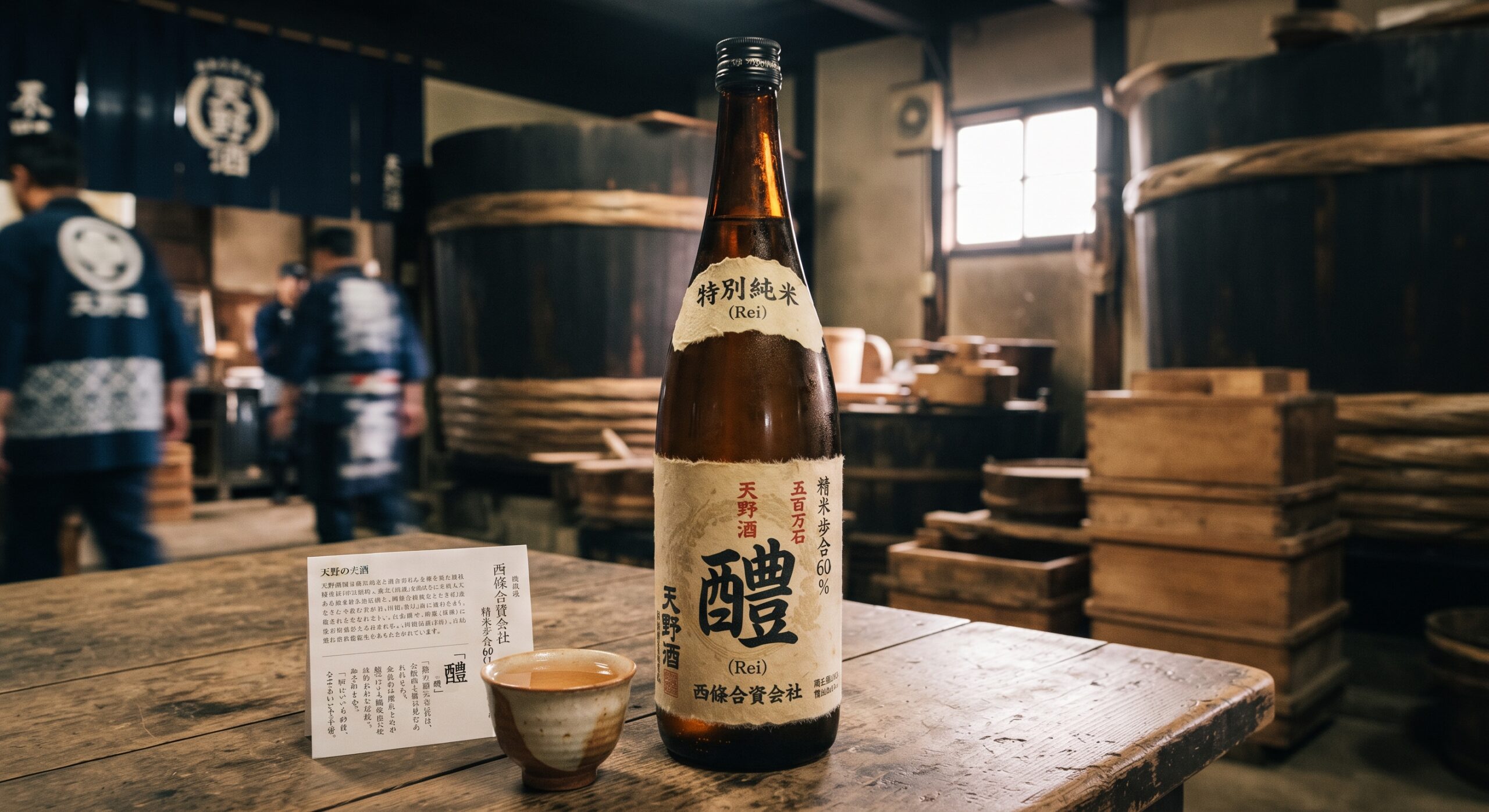
Saijo Godo Kaisha was founded in 1718 in Nagano-cho, Kawachinagano City, Osaka Prefecture. From its founding until the end of the Meiji era, its sake went by the name “Miki Masamune,” and through the Taisho and Showa eras it was known as “Naminotsuru.” Then in 1971 — with the goodwill of Amanosan Kongo-ji, the temple whose name inspired Amanosake in the first place, and the encouragement of the local community — the brewery revived an older, deeper name tied to this land: Amanosake. Today the brewery is led by its 10th-generation head, Saijo Yozo.
The name “Amanosake” traces back to the Muromachi period, when monks at Amanosan Kongo-ji brewed a temple-made sake known as sobo-shu. Praised in its day as “peerless” and “beyond words in its excellence,” it was, according to the Osaka prefectural government, beloved above all by Toyotomi Hideyoshi, who repeatedly sent messengers to purchase it and issued a vermillion-seal document (shuinjo) to Kongo-ji ordering the monks to devote themselves to fine sake brewing. But by the end of the Momoyama period, as the waterways around Sakai changed and Sakai itself was caught up in the fighting of the Siege of Osaka, Amanosake is said to have gradually faded from the historical spotlight. The Saijo family kept the region’s sake-brewing memory alive under the names “Miki Masamune” and “Naminotsuru,” and it was only with the community’s support that the brewery was able to reclaim its original name.
The bottle in this pairing, “Tokubetsu Junmai Rei,” takes its name from an old character, 醴 (rei), which once referred to a sweet, lightly fermented sake resembling amazake, rice grains and all. Brewed from Gohyakumangoku rice polished to 60% or less, this junmai is built around a gentle sweetness, a nostalgic aroma, and the fullness of the rice itself — and named, deliberately, with that ancient character.
The Story of the Land
Kawachinagano City sits in southeastern Osaka Prefecture, spreading out at the northern foot of the Kongo mountain range. Several branches of the Koya Kaido, the historic pilgrimage road from Kyoto and Osaka to Mt. Koya, converged here into a single route, with further roads branching off toward Yamato and Kumano — making it a hub along these historic routes. It is home to two major temples, Amanosan Kongo-ji and Kanshin-ji, which drew a steady stream of pilgrims and travelers through the centuries. The temple-brewed sake that gave Amanosake its name is one example of medieval Japan’s monastery-based sake brewing, said to stand alongside the bodaimoto techniques developed at temples in Nara as one of the foundations of sake brewing as it’s practiced today.
A sake once sought after by the great figures of the Warring States period, born in this town, faded from history for a time, and was then quietly called back by a temple and its neighbors — the story of Kawachinagano itself is a story about the quiet groundwork that lies behind every moment in the spotlight.
The Story of the Song
“Naniwa Koi Shigure” was released on May 21, 1983, a duet single by Miyako Harumi and Oka Chiaki. The lyrics are by Takatakashi, the music by Oka Chiaki, and the arrangement by Saito Tsuneo. Modeled on the unconventional life of the pre-war kamigata rakugo superstar Katsura Harudanji I and the devotion of his wife, Ohama, who supported him quietly behind the scenes, it peaked at No. 3 on Oricon’s weekly chart and remained a long-running hit inside the top 20 all the way through the following February. That same year it won the Special Gold Award at the 25th Japan Record Awards along with the 16th Japan Cable Broadcasting Award and the 16th All Japan Cable Broadcasting Award, and the duo performed it at the 34th NHK Kohaku Uta Gassen.
Miyako Harumi was born February 22, 1948, in Kyoto City. She debuted in March 1964, and that same year’s “Anko Tsubaki wa Koi no Hana” became a million-seller, winning her the Best New Artist award at the 6th Japan Record Awards. Known for a powerful vocal style nicknamed “Harumi-bushi,” she became one of the defining enka singers of the late Showa era, winning the Japan Record Award’s Grand Prix in 1976 for “Kitaguni no Haru kara” (“From the Inn in the Northern Country”). She’s also remembered for abruptly announcing her retirement in March 1984, at the height of her popularity, before returning to singing in 1990. Oka Chiaki, for his part, was born December 7, 1950, in Hinase (now part of Bizen City), Okayama Prefecture. He debuted as a composer in 1970, and built his reputation writing hits including Itsuki Hiroshi’s “Nagaragawa Enka,” which won the Grand Prix at the 26th Japan Record Awards; he began performing in earnest as a singer himself in 1983, through his duets with Miyako Harumi, known for his distinctively low, husky voice.
Why This Pairing
“Naniwa Koi Shigure” tells the story of Katsura Harudanji I, who spent his life in the spotlight on stage, and his wife Ohama, who held that spotlight up from the shadows. His unconventional art and life were only possible because of the foundation she provided.
Amanosake follows a remarkably similar shape. Once beloved by great historical figures like Toyotomi Hideyoshi and celebrated in its own historical spotlight, it lost its name for a time, quietly carried on under “Miki Masamune” and then “Naminotsuru.” Reclaiming its original name required more than the brewery’s own effort — it took the goodwill of Amanosan Kongo-ji and the encouragement of the local community, a kind of support from the shadows.
In a sweet sake named for an old character meaning something close to amazake, you can taste the quiet, unglamorous work of the people who kept this sake alive behind the scenes of its own glittering history. Behind everything shining at center stage, there is a sweetness that held it up. Let that thought settle in as you raise your cup.
Where to Find This Bottle
The Rakuten Ichiba link below is an affiliate link.
- Brewery’s official site: https://www.amanosake.com/
- Buy on Rakuten Ichiba: View the product page (1800ml, ¥4,013)
Note: the links above lead to Japan-based retailers. They’re most convenient for readers in Japan, or for those elsewhere who are able to arrange international shipping. Stock and availability change over time, so if you’re near a specialty sake shop, it’s well worth asking for this label by name.
Pairing Dishes Worth Trying
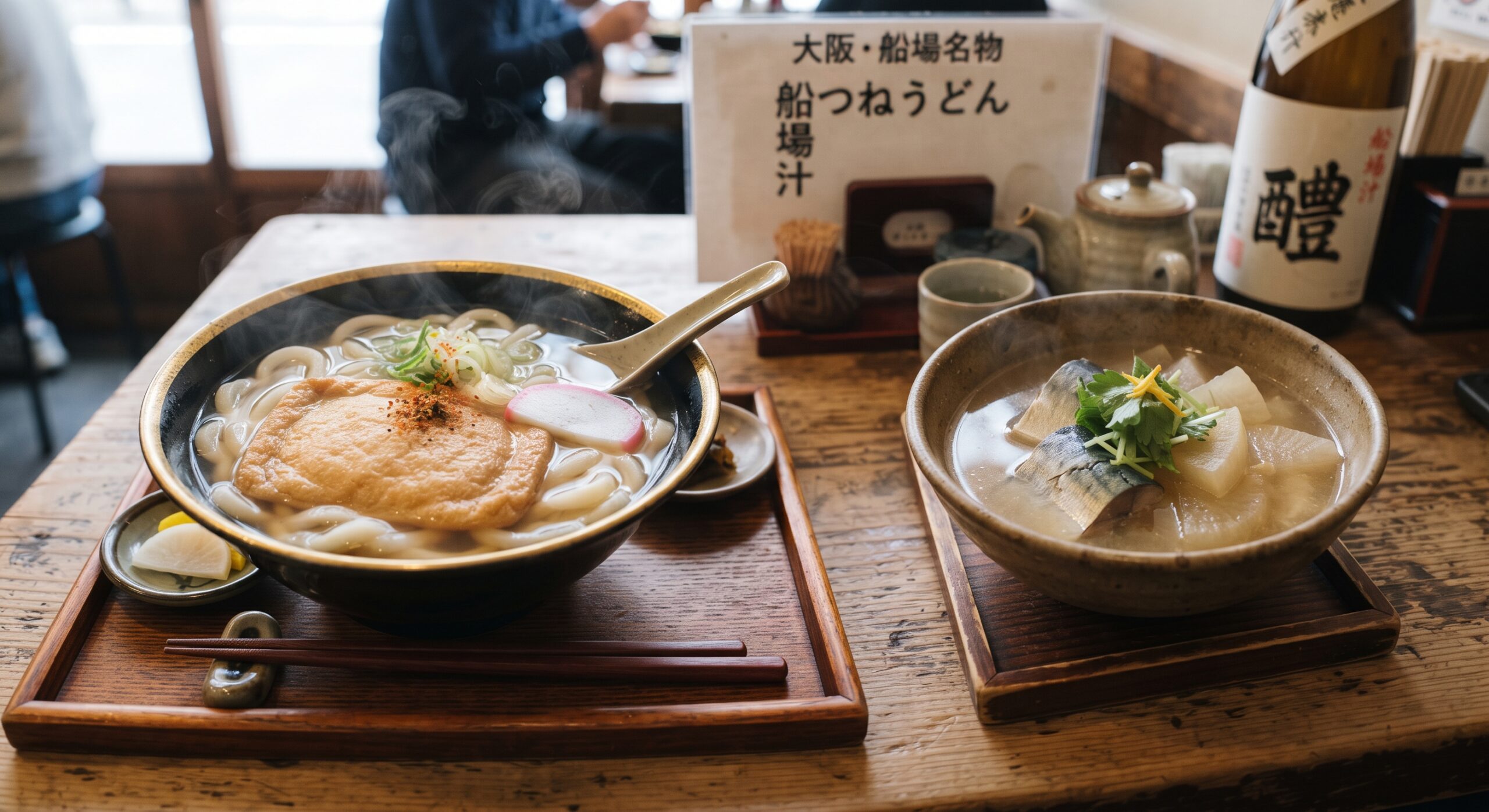
- Kitsune udon
Kitsune udon is said to have originated in 1893 at the udon shop Matsubaya (today’s Usamitei Matsubaya) in Semba, Osaka’s old merchant district. Born from the same Osaka food culture as the old-town atmosphere depicted in “Naniwa Koi Shigure,” the sweet-savory fried tofu (aburaage) on top resonates naturally with Rei’s gentle sweetness.
Recipe (in Japanese): Kurashiru, “Chef Horiuchi’s Kitsune Udon” - Semba-jiru
A humble home-cooked soup handed down among the old merchant houses of Semba, Osaka’s wholesale district: nothing more than salted mackerel trimmings and daikon, simmered together. Simple as it is, the dashi runs deep — and Semba itself is the same old-town Osaka setting depicted in “Naniwa Koi Shigure.”
Recipe (in Japanese): Kurashiru, “Semba-jiru in a Hurry, with Canned Mackerel”
A note on the science: the inosinic acid in fish dashi (like salted mackerel), along with the umami compounds in daikon and fried tofu, resonate with the amino-acid umami in sake for a synergistic boost of savoriness. A sake with pronounced sweetness, like Rei, gently wraps around dashi’s faint saltiness and bitterness, rounding out the whole mouthful.
Visiting the Brewery
Amanosake (Saijo Godo Kaisha)
12-18 Nagano-cho, Kawachinagano City, Osaka. About a 3-min walk from Kawachinagano Station on the Nankai Koya Line / Kintetsu Nagano Line.
Founded in 1718, the brewery is now run by its 10th-generation head, Saijo Yozo.
Sights Nearby
- Amanosan Kongo-ji Temple / Amano-cho, Kawachinagano | ~12 min, ~6 km by car from Amanosake
The temple said to have received a vermillion seal document from Toyotomi Hideyoshi, who praised its sake as “unmatched,” ordering the monks to devote themselves to fine sake brewing. Home to a National Treasure main hall and pagoda. Open 9:00–16:30; admission to the temple grounds is ¥200 for adults. Check the official site before visiting. - Kanshin-ji Temple / Teramoto, Kawachinagano | ~10 min, ~4 km by car from Amanosake
Home to a National Treasure seated Nyoirin Kannon statue (a hidden Buddha shown only on April 17–18 each year) and associated with the medieval warrior Kusunoki Masashige. Open 9:00–17:00; admission ¥300 for adults.
Hot Springs Nearby
- Natural Hot Spring Ikoi no Yado Kawachinagano-so / Suehiro-cho, Kawachinagano | ~8 min on foot, ~3 min by car from Amanosake
Offers day-use bathing plans (e.g. a bath-and-meal package, walk-in reception 11:30–14:00, no reservation needed). Please confirm current hours and offerings before visiting.
Opening hours, closing days and day-use bathing availability can change. Please check each facility’s official information before visiting.
A Quick Glossary of Sake Terms
- Tokubetsu Junmai (“special junmai”): Junmai sake (made only from rice, rice koji, and water, with no added brewing alcohol) brewed using a special method or rice variety that the brewery discloses on the label.
- Seimai buai (rice-polishing ratio): The percentage of the original grain remaining after milling. The lower the number, the more the rice has been polished down.
Sources
- Amanosake (Saijo Godo Kaisha) – Official Site
- Company Profile – Amanosake Official Site
- Tokubetsu Junmai “Rei” 1800ml – Amanosake Official Online Store
- Places Associated with Toyotomi Hideyoshi – Osaka Prefecture (Official)
- Naniwa Koi Shigure – Wikipedia (Japanese)
- Miyako Harumi – Wikipedia (Japanese)
- Oka Chiaki – Wikipedia (Japanese)
- Amanosan Kongo-ji Temple – Official Site
- Kanshin-ji Temple – Official Site
If you notice any errors in this article, please don’t hesitate to reach out at info@soundrecords.jp.
Read this article in Japanese: 舞台の華は、陰で支えた甘さゆえに