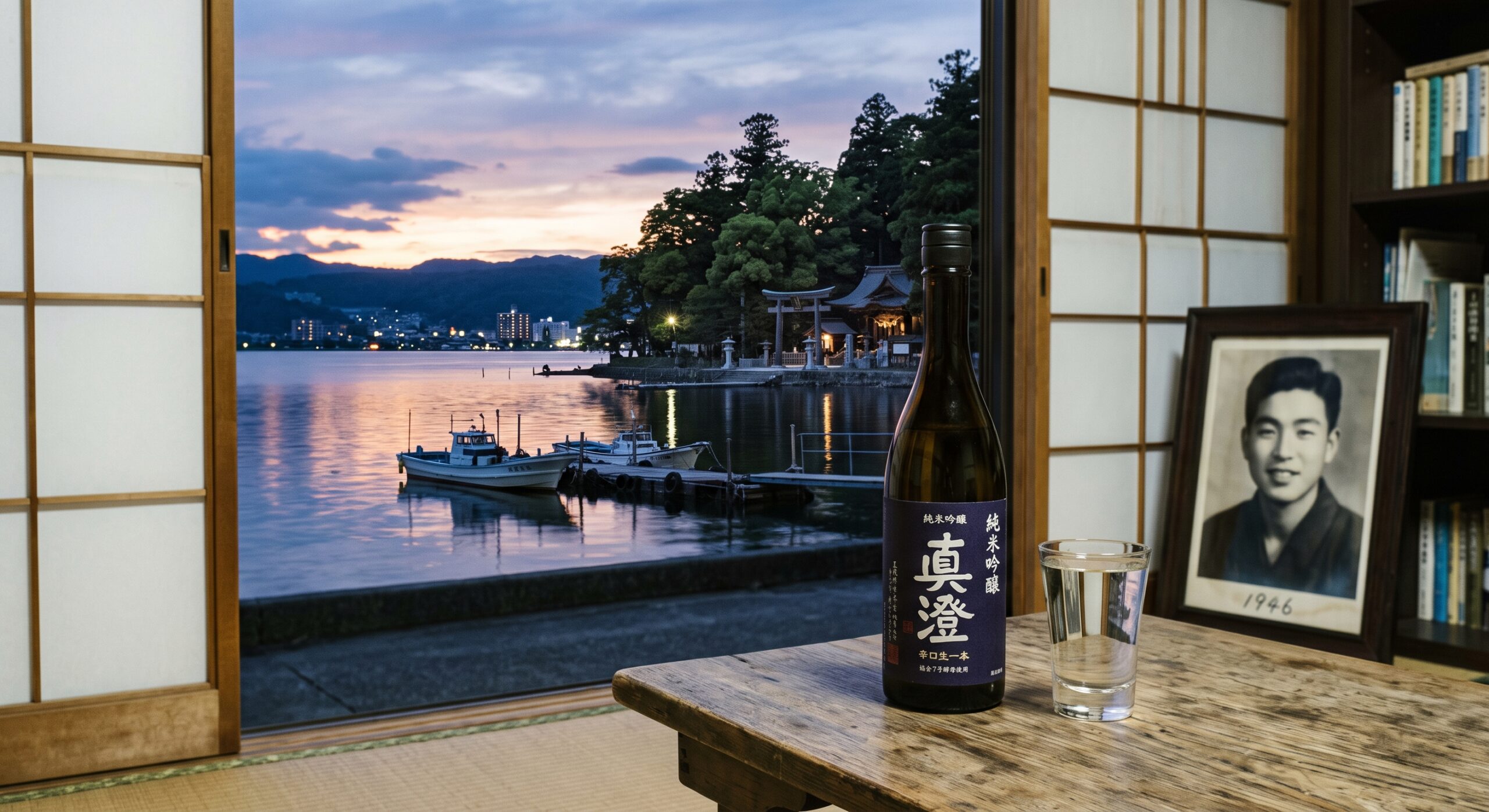
日本語で読む | This is the English version of a bilingual article.
Today’s Pairing
- Sake: Masumi “Karakuchi Kiippon” Junmai Ginjo — brewed with Miyamanishiki, Sankeinishiki and Hitogokochi rice (all grown in Nagano) plus Yamadanishiki rice from Kato City, Hyogo, rice-polishing ratio (seimai buai) 55%, 15% alcohol / Miyasaka Brewing Co., Ltd. (1-16 Motomachi, Suwa City, Nagano Prefecture)
Official site: https://www.masumi.co.jp/ - Kayoukyoku (classic Japanese popular song): “Sasoriza no Onna” (“Scorpio Woman”) by Mikawa Kenichi, 1972
YouTube: https://www.youtube.com/watch?v=tT65DBJTJzI
▶ If the player above doesn’t play, open it on YouTube
The Story of the Brewery
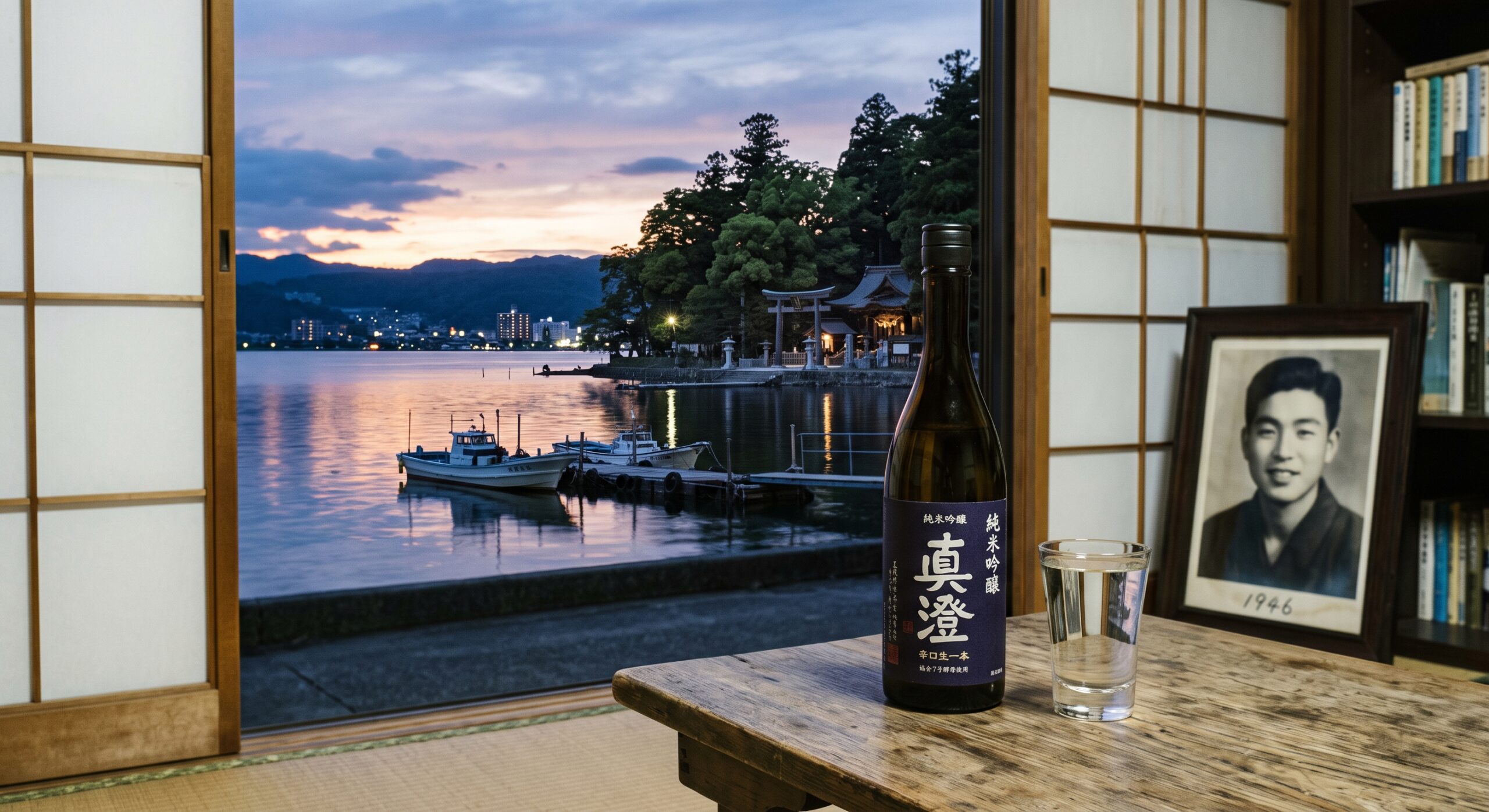
Miyasaka Brewing was founded in 1662 in Suwa City, Nagano Prefecture. The Miyasaka family had once served as retainers governing the Suwa region during the Sengoku (Warring States) period, but caught up in the conflicts surrounding the Takeda and Oda clans, they are said to have set down their swords and become sake brewers instead.
What put this brewery’s name on the map nationwide happened in 1946. Masumi had already caught researchers’ attention after taking first place at the National New Sake Competition in 1943. Then Dr. Yamada Shoichi of the Ministry of Finance’s Brewing Research Institute discovered a new strain of yeast in the fermenting mash at Masumi’s Suwa brewery, and named it “Brewing Society Yeast No. 7.” It hadn’t been artificially bred — it was a wild strain that had simply made its home in the brewery. Yeast No. 7 spread rapidly to breweries across Japan, and more than 70 years after its discovery, it’s still used by the majority of Japan’s sake breweries today. Many of Masumi’s flagship sakes today are brewed with the brewery’s own proprietary strains descended from that same No. 7 lineage.
The bottle in this pairing, “Karakuchi Kiippon” Junmai Ginjo, is brewed from Miyamanishiki, Sankeinishiki and Hitogokochi rice grown in Nagano, blended with Yamadanishiki rice from Hyogo, polished to a seimai buai of 55%, at 15% alcohol. It opens with a fruity aroma reminiscent of apple nectar and white peach, moves through a soft sweetness and a pleasant bitterness, and finishes crisp and dry.
The Story of the Land
Suwa City sits on the shore of Lake Suwa, and Miyasaka Brewing’s own building stands right on that shoreline, next to the Kamisuwa Onsen hot spring district. Around the lake are the four shrines that make up Suwa Taisha, one of the oldest and most venerated shrines in Japan. Buildings from the city’s era of prosperity in the silk-reeling industry, spanning the Taisho and early Showa periods, still stand along the lakeshore — among them Katakura-kan, a hot-spring bathhouse designated an Important Cultural Property.
In this same city of Suwa, on May 15, 1946, a boy was born: Momose Yuichi, who would later become known by his stage name, Mikawa Kenichi. As it happens, that was the very same year Masumi’s brewery yielded up Yeast No. 7. Trained by the composer Koga Masao, Mikawa debuted as a singer in 1965 with “Dakedo Dakedo Dakedo.” The following year, 1966, his song “Yanagase Blues” became a massive hit, selling 1.2 million copies and turning him into a star overnight.
The Story of the Song
One of Mikawa Kenichi’s signature songs, “Sasoriza no Onna” (“Scorpio Woman”), was released on December 20, 1972, his 25th single. The lyrics are by Saito Ritsuko, the wife of a hotel owner in Yokohama for whom songwriting wasn’t her main profession; the music is by Nakagawa Hiroyuki, the arrangement by Umakano Toshikazu. It had originally been planned as a B-side track, but Mikawa liked the song so much that he personally appealed to the record company to release it as the A-side instead. The gamble paid off: it peaked at No. 23 on the Oricon chart and sold 97,000 copies, becoming, alongside “Yanagase Blues,” one of his signature songs.
The song has been performed on NHK’s Kohaku Uta Gassen a total of seven times, including four years running from 2006 to 2009. Each time, Mikawa changed both arrangement and costume — opera-style, para-para dance style, samba style, Indian style — making the song a symbol of the elaborate costume rivalry between him and fellow singer Kobayashi Sachiko.
Why This Pairing
Mikawa Kenichi and Yeast No. 7 both trace back to the very same year, 1946, and the very same city of Suwa. And yet the paths they went on to take could hardly be more different.
Mikawa Kenichi has kept singing “Sasoriza no Onna” center stage at Kohaku, changing costume and arrangement nearly every year, always in full view — the undisputed star of a flashy production. Yeast No. 7, on the other hand, is a name almost no sake drinker ever thinks about. Deep inside fermentation tanks in breweries all across Japan, it has gone on quietly — but reliably — shaping the flavor of countless sakes.
A performer who kept shining center stage, and a yeast strain that kept working quietly deep inside the brewery: two entirely different kinds of “success,” both rooted in the same hometown. Let that thought settle in as you raise this glass.
Where to Find This Bottle
The Rakuten Ichiba link below is an affiliate link.
- Brewery’s official site: https://www.masumi.co.jp/
- Buy on Rakuten Ichiba: View the product page (720ml, ¥2,299)
Note: the links above lead to Japan-based retailers. They’re most convenient for readers in Japan, or for those elsewhere who are able to arrange international shipping. Stock and availability change over time, so if you’re near a specialty sake shop, it’s well worth asking for this label by name.
Pairing Dishes Worth Trying
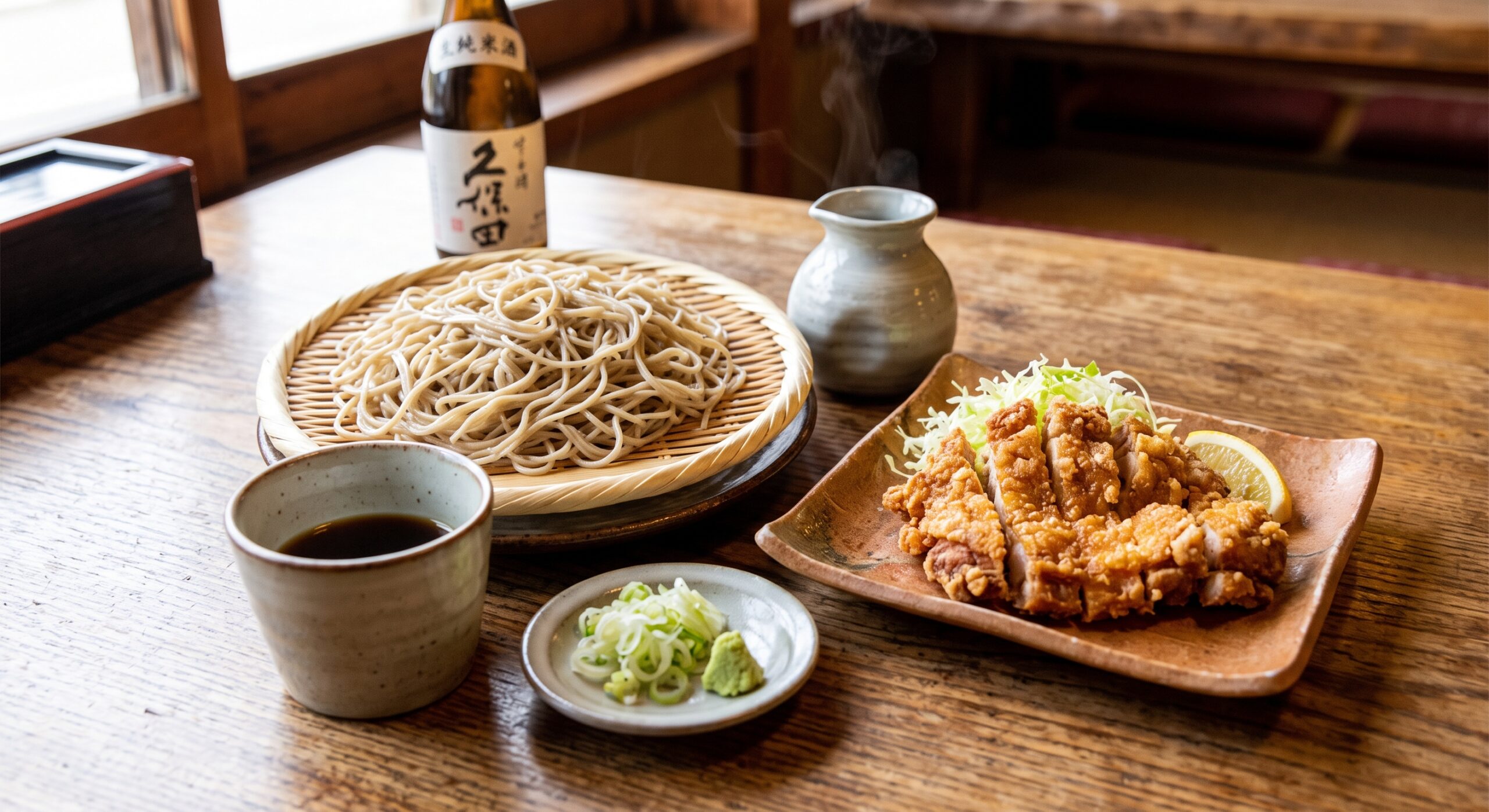
- Shinshu soba (mori-soba, cold buckwheat noodles)
In Nagano’s cool highlands, where rice has long been hard to grow, buckwheat noodles have been a staple food for generations. With nothing but a simple dipping sauce and a few condiments, the dish lets the crisp, dry finish of Karakuchi Kiippon and the aroma of the buckwheat speak directly to each other.
Recipe (in Japanese): Kurashiru, “Mori-soba (with Dipping Sauce)” - Sanzoku-yaki (Matsumoto-style garlic fried chicken)
A local specialty from the Matsumoto area: a whole chicken thigh marinated in garlic-soy sauce and deep-fried. The rich garlic flavor and juicy fat pair comfortably with the clean, crisp finish of Karakuchi Kiippon.
Recipe (in Japanese): Kurashiru, “Home-Made Nagano’s Famous Sanzoku-yaki”
A note on the science: buckwheat’s aroma compounds are delicate, so a crisp, dry sake clears the palate without overpowering the noodles’ own fragrance. With a rich, garlicky dish like sanzoku-yaki, the organic acids in sake help cut through the heaviness of the fat, keeping the aftertaste clean.
Visiting the Brewery
Miyasaka Brewing (Masumi’s brewery)
1-16 Motomachi, Suwa City, Nagano. About a 10-min walk from JR Kamisuwa Station on the Chuo Main Line.
The brewery stands on the shore of Lake Suwa, right by the Kamisuwa Onsen hot spring district.
Sights Nearby
- Kitazawa Museum of Art / Suwa City | about 5 min by car from the brewery (15 min on foot or 5 min by taxi from Kamisuwa Station)
A museum on the shore of Lake Suwa, known for its collection of French Art Nouveau glass art, including works by Émile Gallé and Daum. Open 9:00–17:00 (until 18:00 from April to September); ¥1,200 for adults. - Suwa Taisha Shimosha Akimiya (Lower Shrine, Autumn Palace) / Shimosuwa | about 10 min, ~5 km by car from the brewery
One of the four shrines that make up Suwa Taisha, one of Japan’s oldest shrines. Highlights include a giant ginkgo tree said to be over 800 years old and a Kagura hall designated an Important Cultural Property. Free to visit (check the shrine office’s hours separately).
Hot Springs Nearby
- Katakura-kan (the “Thousand-Person Bath”) / Suwa City | about a 16-min walk, ~1.3 km from the brewery
A hot-spring bathhouse built in 1928, designated an Important Cultural Property, famous for its “Senninburo” bath large enough for a hundred-plus bathers at once. Day-use bathing 10:00–21:00 (last entry 20:30), closed the 2nd and 4th Tuesday of each month; ¥650 for adults. Hours and rates can change, so please check before visiting.
Opening hours, closing days and day-use bathing availability can change. Please check each facility’s official information before visiting.
A Quick Glossary of Sake Terms
- Junmai Ginjo: Junmai (sake made only from rice, rice koji, and water, with no added brewing alcohol) that has been polished to a seimai buai of 60% or less and fermented slowly at low temperatures, giving it a fragrant aroma.
- Seimai buai (rice-polishing ratio): The percentage of the original grain remaining after milling. The lower the number, the more the rice has been polished down.
Sources
- Miyasaka Brewing Co., Ltd. (“Masumi”) – Official Site
- Masumi – Brewery History, Official Site
- About the Brewery (Yeast No. 7) – Masumi Official Site
- Junmai Ginjo “Karakuchi Kiippon” – Masumi Official Site
- Sasoriza no Onna – Wikipedia (Japanese)
- Mikawa Kenichi – Wikipedia (Japanese)
If you notice any errors in this article, please don’t hesitate to reach out at info@soundrecords.jp.
Read this article in Japanese: 舞台の中央と、蔵の奥と