日本語で読む | This is the English version of a bilingual article.
Today’s Pairing
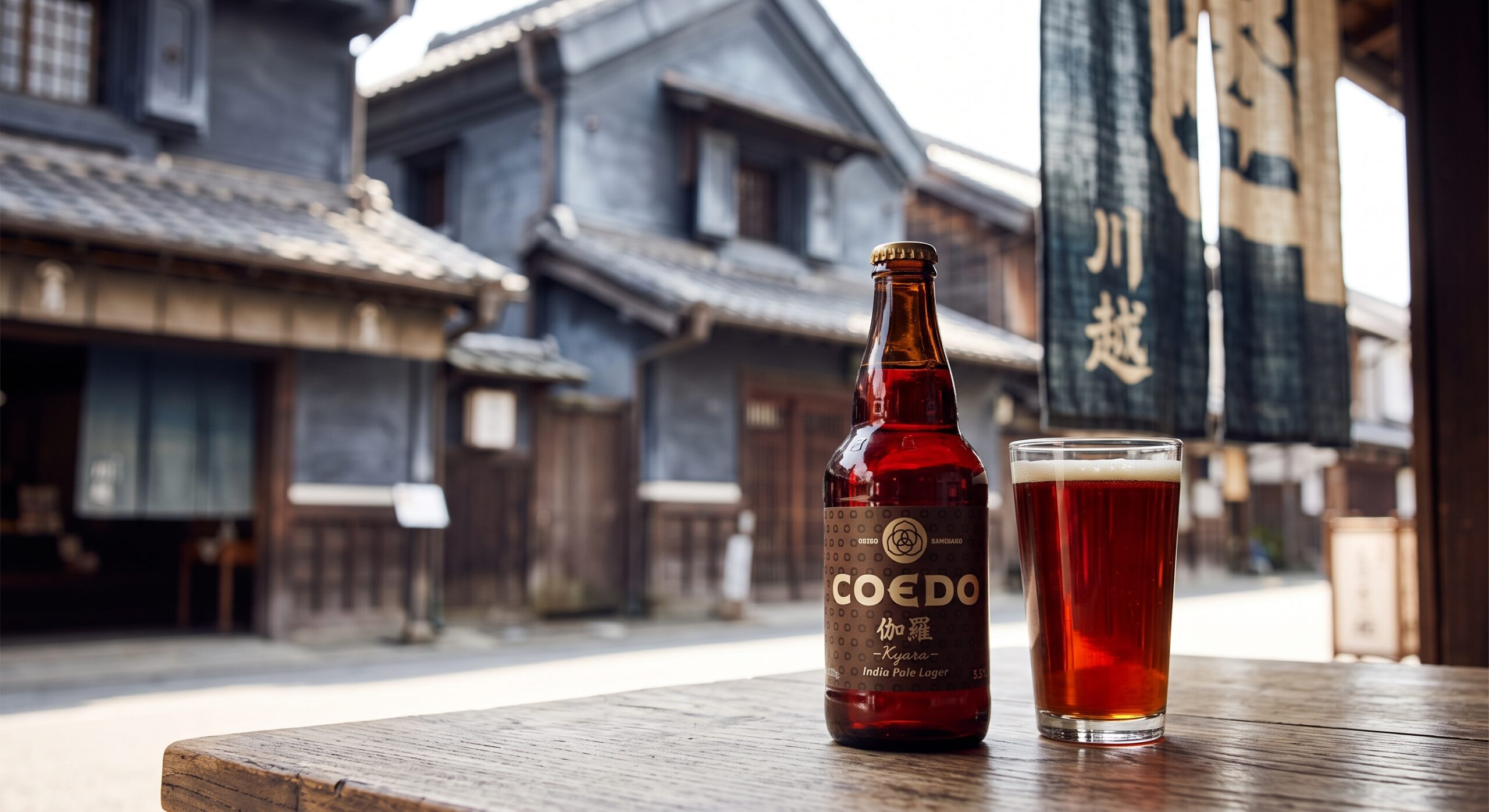
- Craft beer: Kyara — India Pale Lager (IPL), 5.5% ABV, IBU 35, brewed from malt and hops only / COEDO Brewery, Kyodo Shoji Co., Ltd. (head office: Nakadai-minami, Kawagoe City, Saitama)
Official site: https://coedobrewery.com/products/kyara - Music: “Sekitou” (“Red-Orange”) by ACIDMAN (major-label version, 2002)
YouTube: https://www.youtube.com/watch?v=EXYTyVR1Eac
▶ If the player above doesn’t play, open it on YouTube
The Story of the Brewery
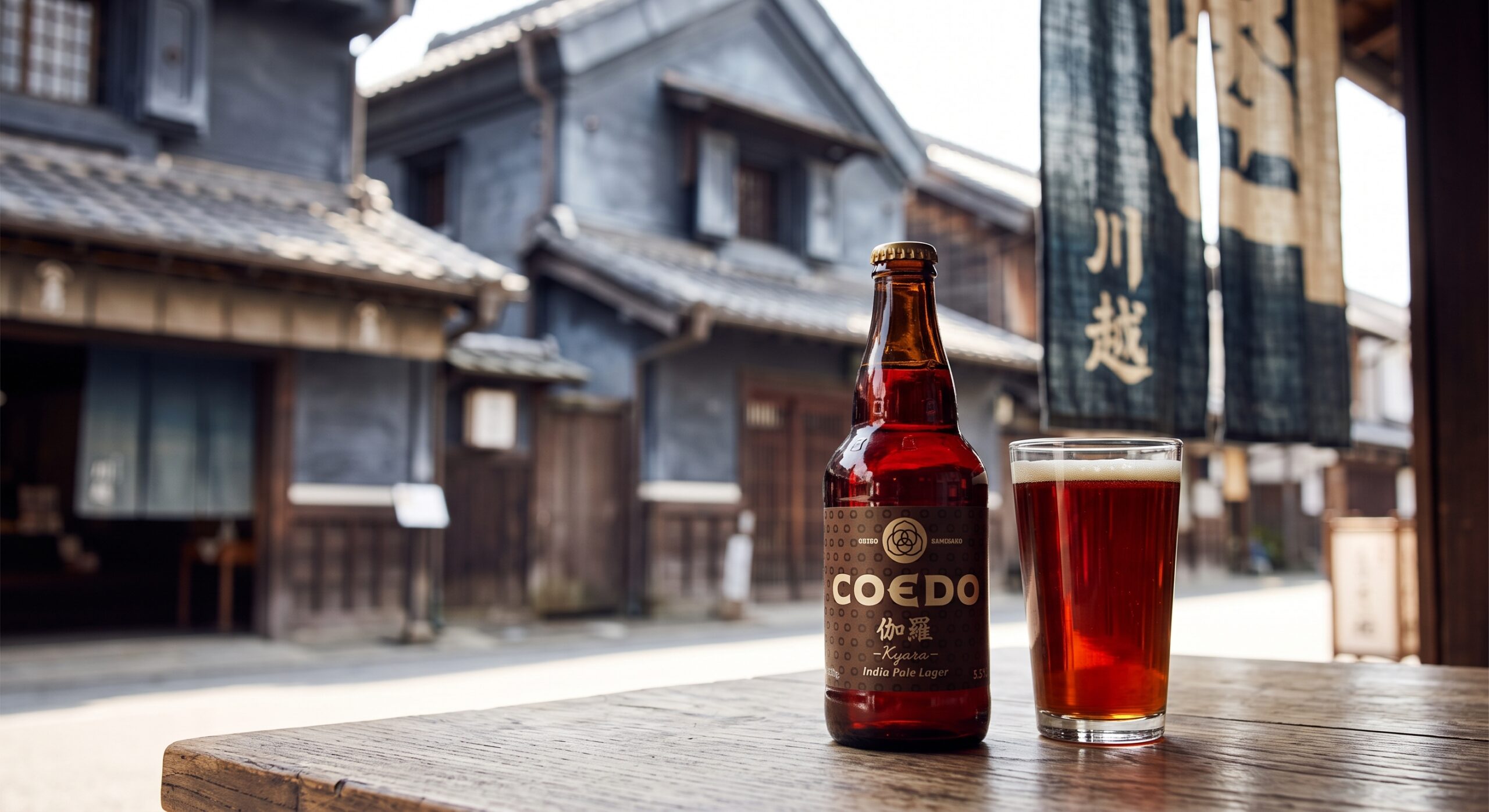
Kyodo Shoji Co., Ltd. was founded in May 1982 in Kawagoe City, Saitama, as an organic farming company built around the idea of food that is “safe, secure, and delicious.” After a 1994 revision to Japan’s liquor tax law opened the door to small-scale brewing, the company obtained a happoshu manufacturing license in April 1996 and opened COEDO Brewery. In 2006, it named its craft beer brand “COEDO,” after Kawagoe’s nickname “Koedo” (Little Edo). The brewing plant relocated in 2016 to a more environmentally sustainable facility in the neighboring town of Miyoshi, but the company’s head office remains in Kawagoe, where it all began. Shigeharu Asagiri, the founder of the COEDO brand, was likewise born in Kawagoe City, Saitama.
Kyara, the beer featured here, is an India Pale Lager at 5.5% ABV and IBU 35. Its ingredient list is simple: just malt and hops. The name comes from the deep reddish-brown color reminiscent of kyara, a prized agarwood incense. Caramel malt sweetness and body meet hop aromas suggestive of Sauvignon Blanc, stone fruit, and tropical fruit.
The Story of the Land
In the Edo period, Kawagoe flourished as the castle town of Kawagoe Domain, linked to Edo by river trade. Proud of standing shoulder to shoulder with the capital, it came to be called “Koedo” — Little Edo — and its old storehouse-style streetscape still stands along Ichibangai today. The brand name COEDO is nothing more than that nickname, spelled out in Roman letters: a beer that carries the name of the place it was born, unchanged.
The Story of the Song
ACIDMAN is a rock band that started in 1997, formed by four members — Nobuo Oki, Takeshi Shiibashi, Masatoshi Sato, and Ichigo Urayama — who met in the light music club at Seibu Gakuen Bunri High School. Vocalist and guitarist Nobuo Oki was born on August 3, 1977, in Kawagoe City, Saitama. He spent much of his life there through high school, and while he now lives in Tokyo, he says he still returns to his family home every two or three months.
“Sekitou” (“Red-Orange”), the song featured here, was first released as an indie single on November 24, 2000, then re-released as ACIDMAN’s 3rd major-label single on October 9, 2002. It also appears on their major-label debut album Sou, released later that same month. Oki wrote the lyrics, and the major-label version is credited to ACIDMAN for the music. The lyrics layer scenes reminiscent of sunrise and sunset one after another, strongly colored but without a clear narrative thread tying them together.
On March 24, 2026, Oki was appointed a “Koedo Kawagoe Ambassador” for his hometown. “I live in Tokyo now, but Kawagoe is the most important place in the world to me,” he said in his comment. Over the years he has held a solo concert in Kawagoe, run a Kawagoe products fair at his own festival “SAI,” and — as featured in this article — collaborated with COEDO on a beer, each time renewing his ties to his hometown.
Why This Pairing
The name COEDO was borrowed from Kawagoe’s nickname, “Koedo.” ACIDMAN’s Nobuo Oki, too, was given a title — “Koedo Kawagoe Ambassador” — by the very town where he was born. One is a company name, the other a personal title, but both are names lent to them by this town.
The color lines up too. A beer the color of kyara — a deep reddish-brown — paired with a song titled “Red-Orange,” evoking sunrise and sunset. Both are built around a burning warm color. Oki’s life, split between Tokyo and a hometown he returns to every few months, and COEDO’s choice to wear the old name “Koedo,” still alive in the town’s storehouse streets, as its brand name — both come down to holding on to a place to come home to.
Where to Find This Beer
The Rakuten Ichiba link below is an affiliate link.
- Brewery official site:https://coedobrewery.com/products/kyara
- Buy on Rakuten Ichiba: View the product page (350ml, ¥6,798)
These are Japanese storefronts. If you are visiting the brewery, drinking it fresh at their own taproom is by far the best option.
Pairing Dishes Worth Trying
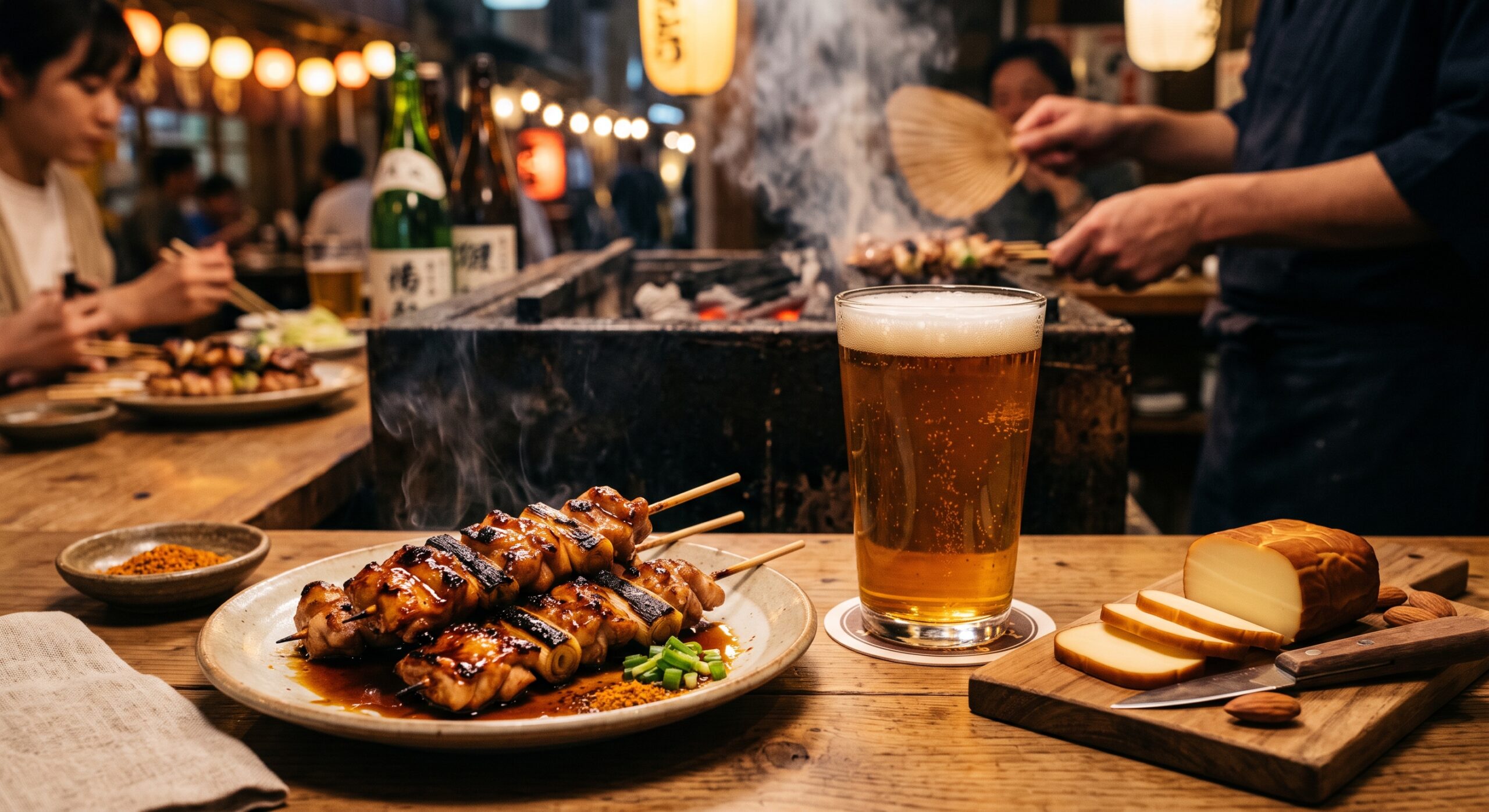
- Charcoal-grilled yakitori (tare sauce)
The toasty char of the glaze echoes the caramel malt sweetness, while the hop bitterness and carbonation cut cleanly through the fat. - Smoked cheese
The smoky aroma meets the toasty malt character head-on, and the wine-like hop aroma lightens the richness of the cheese.
A note on the science: the aroma compounds produced by charcoal grilling or smoking share a chemical family with the caramel notes created by roasting malt, so pairing them sharpens the aroma on the palate. The hop bitterness and carbonation then reset a palate weighed down by fat or smoke, keeping the next bite tasting fresh.
Visiting the Brewery
COEDO Brewery (Kyodo Shoji Co., Ltd.)
COEDO BREWERY THE RESTAURANT and COEDO KIOSK, where you can drink while watching the fermentation tanks, are at U_PLACE 1F, 8-1 Wakitahoncho, Kawagoe City, Saitama. About a 3-minute walk from the west exit of Kawagoe Station.
Limited beers brewed on the in-house equipment are only available here.
Sights Nearby
- Toki no Kane (Bell Tower) / Kawagoe City | ~10 min, ~2 km by car from the brewery
The bell tower regarded as the symbol of Koedo Kawagoe. Said to have first been built in the early Edo period by Sakai Tadakatsu, then lord of Kawagoe Domain, it stands at the heart of Ichibangai, the street lined with old storehouse-style buildings. The bell still rings four times a day. - Kashiya Yokocho (Candy Alley) / Kawagoe City | ~10 min, ~2 km by car from the brewery
A cobblestone lane lined with around 30 traditional sweet shops. It began when confectioners gathered here in the Edo period and multiplied through branch shops; from the late 1920s through the early Showa era it grew into a major sweets-making district filling in for those lost in Tokyo’s shitamachi after the 1923 earthquake. In 2001 Japan’s Ministry of the Environment named its scent one of the “100 Fragrant Landscapes of Japan.”
Hot Springs Nearby
- Koedo Onsen KASHIBA / Kawagoe City | ~20 min, ~6 km by car from the brewery
A day-use hot spring facility drawing natural spring water (pH 7.7, weakly alkaline, low-temperature) from 1,500 meters underground. It also has stone-bed sauna rooms and regular saunas, both included in the bathing fee.
Opening hours, closing days and day-use bathing availability can change. Please check each facility’s official information before visiting.
A Quick Glossary of Beer Terms
- Craft beer: Beer made by small breweries that put the character of the maker front and centre, as opposed to the uniformity of mass production.
- Lager: Beer brewed by “bottom fermentation” at low temperatures, with the yeast working near the bottom of the tank. It tends to finish clean and crisp; most major Japanese beers are lagers.
- IPA: Short for India Pale Ale. A pale ale brewed with a heavy dose of hops for strong bitterness and bright citrus or pine aromas.
- Hops: The cones of a climbing plant, which give beer its bitterness and aroma. Depending on the variety, that aroma can read as citrus, tropical fruit or open grassland.
- Malt: Germinated barley. It forms the foundation of a beer’s sweetness, colour and body; how deeply it is roasted determines colour and toastiness.
- IBU: An international scale for bitterness. Around 10 registers as barely bitter; above 60 lands firmly in sharply bitter IPA territory.
Sources
- Kyara — COEDO BREWERY official site
- HISTORY — COEDO BREWERY official site
- Nobuo Oki appointed “Koedo Kawagoe Ambassador” for his hometown, Kawagoe City, Saitama — ACIDMAN official website
- Koedo Kawagoe Ambassadors — City of Kawagoe official site (Japanese)
- “Sekitou” (song) — Wikipedia (Japanese)
- COEDO Brewery — Wikipedia (Japanese)
If you notice any errors in this article, please don’t hesitate to reach out at info@soundrecords.jp.
Read this article in Japanese: 帰る場所の色