日本語で読む | This is the English version of a bilingual article.
Today’s Pairing
- Craft beer: Hitachino Nest Anbai Ale — a sour ale made with domestic green ume (Japanese plum) and moshio sea salt, 7.5% ABV, 22 IBU / Kiuchi Brewery Co. (Konosu, Naka City, Ibaraki)
Official site: https://kiuchibrewery.co.jp/products/beer/list/anbai-ale/ - Music: “Sayonara Elegy” by Ishizaki Hui (2018)
YouTube: https://www.youtube.com/watch?v=9MvMeZCZVME
▶ If the player above doesn’t play, open it on YouTube
The Story of the Brewery
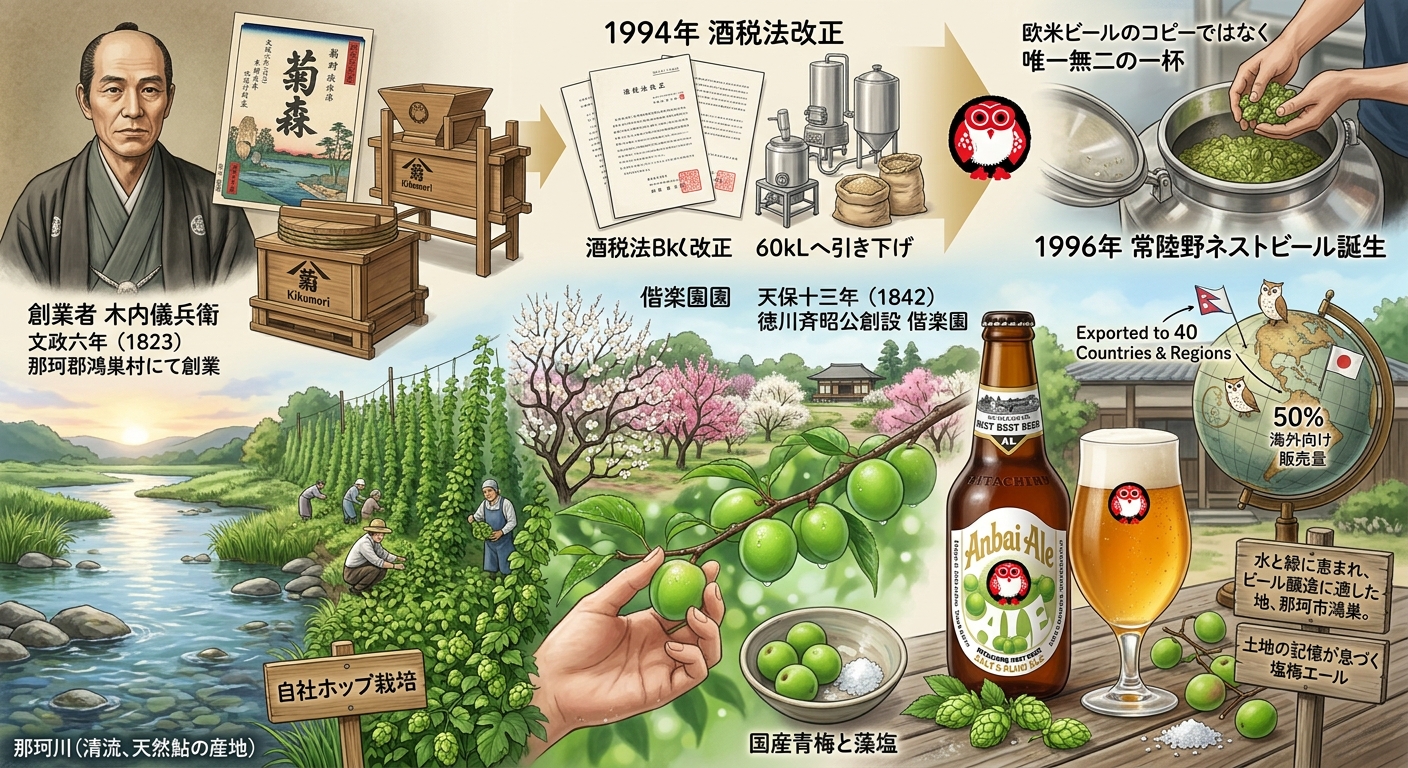
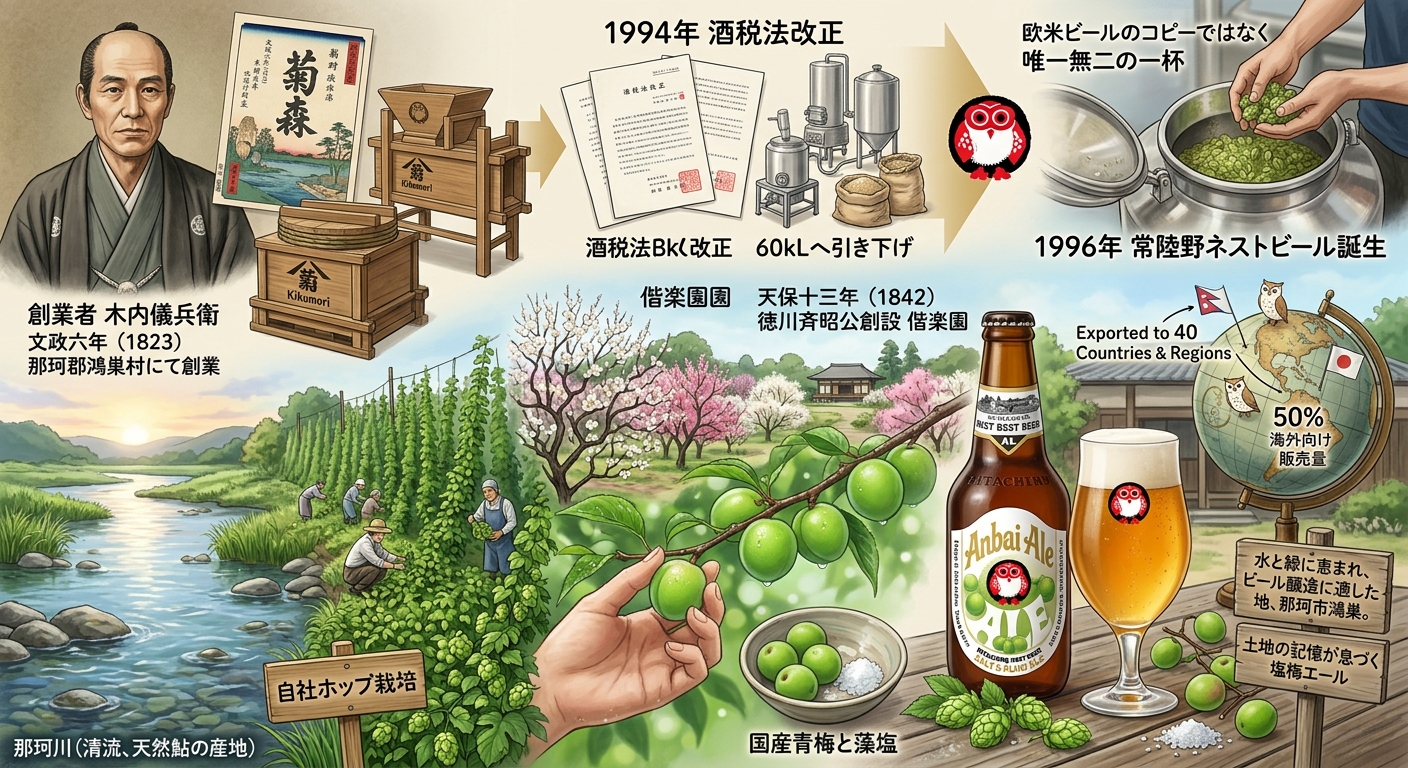
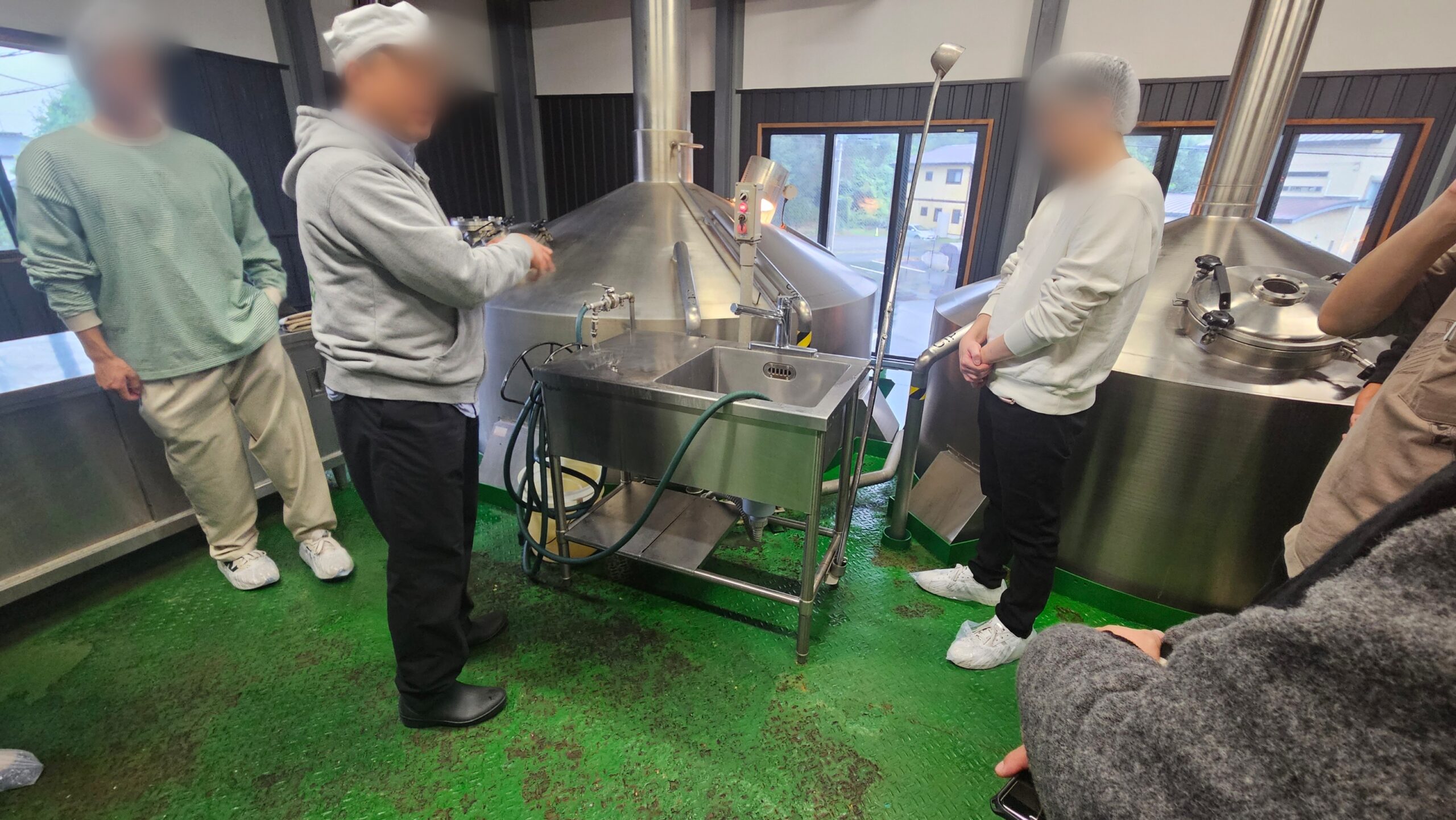
Kiuchi Brewery was founded in 1823, when Kiuchi Gihei began brewing sake in what was then Konosu village, in an area now part of Naka City, Ibaraki. Its sake brand, “Kikuzakari,” is still made on the same grounds today.
The move into beer came after a change to Japan’s liquor tax law in April 1994, which lowered the minimum annual production volume required for a beer brewing license from 2,000 kiloliters to just 60 — opening up beer brewing, until then the domain of major manufacturers, to small and mid-sized producers across the country. Kiuchi joined that wave, and in 1996 began brewing Hitachino Nest Beer.
The brewery’s official site describes its approach this way: even using Western ingredients, the goal is never to copy Western beer, but to create something that exists nowhere else. Malt and hops are living plant material, and the site emphasizes that responding to their subtle variation is work for people, not machines; in recent years the brewery has also begun growing its own hops. The owl on the label has become the face of the brand — as of 2019, Hitachino Nest Beer was exported to 40 countries and regions, with 50% of its sales coming from outside Japan. That is how far a beer born in Naka City has traveled.
The Story of the Land
Naka City sits just north of Mito, the prefectural capital, with the Naka River marking the boundary between the two. It’s one of the clearest rivers in the Kanto region and well known as a habitat for wild ayu (sweetfish). Kiuchi Brewery’s own site describes this land as “blessed with water and greenery, well suited to beer brewing.”
Mention Mito, and many people picture Kairakuen, one of Japan’s three great gardens. Opened in 1842 by Tokugawa Nariaki, the ninth lord of the Mito domain, as a place of rest for the people of the domain, it still holds roughly 100 varieties and 3,000 ume (plum) trees that bloom in succession each early spring. In 1966, ume was designated Ibaraki Prefecture’s official tree. Here, the plum isn’t just scenery for tourists — it’s rooted in daily life.
Anbai Ale draws on green ume and sea salt — ingredients that connect, in their own way, to that memory of the land. Brewed with fresh domestic green ume, ume juice and moshio sea salt, it isn’t reaching for the plum as a tourist attraction, but trying to capture the fruit’s own tartness and aroma in a glass.
The Story of the Song

Ishizaki Hui was born on March 7, 1984, in Mito. In his third year of junior high, he formed the band “mighty duck” with friends and sang lead vocals; after starting university, he formed the rock band “astrcoast” in October 2004. He disbanded it in November 2010, went solo, and made his major-label debut on Epic Records Japan in July 2012.
In 2018, Ishizaki wrote both the lyrics and music for “Sayonara Elegy,” sung by actor Suda Masaki. Released on February 21, 2018, as the theme song for the NTV drama Todome no Kiss, the song later got a digital-only self-cover from Ishizaki himself on December 19 of that year, and was included on his mini-album Golden Age, released March 6, 2019. On February 19, 2021, a solo, single-take self-cover — just Ishizaki and a guitar — was released on “THE FIRST TAKE.”
“Elegy” means a song of mourning or lament. Sung from the perspective of a man still carrying an old, unresolved love while trying to move forward, the song doesn’t resolve into simple sadness — it leaves a more complicated aftertaste.
Why This Pairing
The word “anbai” (塩梅) originally referred to the seasoning of a dish — literally “salt and plum” — and came to mean the general condition or balance of things. Anbai Ale is a beer where the tartness of green ume, the salinity of moshio, and a light hop bitterness all hold steady without any one of them taking over. It’s a beer that tastes like the phrase “just the right balance.”
“Sayonara Elegy” doesn’t resolve into a single emotion either. It’s an elegy, yet lingering attachment to the past and the will to move forward exist side by side. That imbalance — neither pure despair nor simple hope — sits at the core of the song. The balance of salt, acid and bitterness in the glass, and the coexistence of feelings that don’t quite resolve, may not be so far apart.
One more thing: both Kiuchi Brewery and Ishizaki Hui set out from land drained by the same river system. The brewery stands on the north bank of the Naka River, in Naka City; Ishizaki grew up on the south bank, in Mito. The beer traveled to 40 countries and regions; the song traveled across Japan by way of another singer’s voice, Suda Masaki’s. Neither stayed in the exact form it was born in — each passed through another shape before reaching someone far away.
Where to Find This Beer
The Rakuten Ichiba link below is an affiliate link.
- Brewery official site:https://kiuchibrewery.co.jp/products/beer/list/anbai-ale/
- Search on Rakuten Ichiba:see results for “常陸野ネストビール 塩梅エール”
These are Japanese storefronts. If you are visiting the brewery, drinking it fresh at their own taproom is by far the best option.
Pairing Dishes Worth Trying
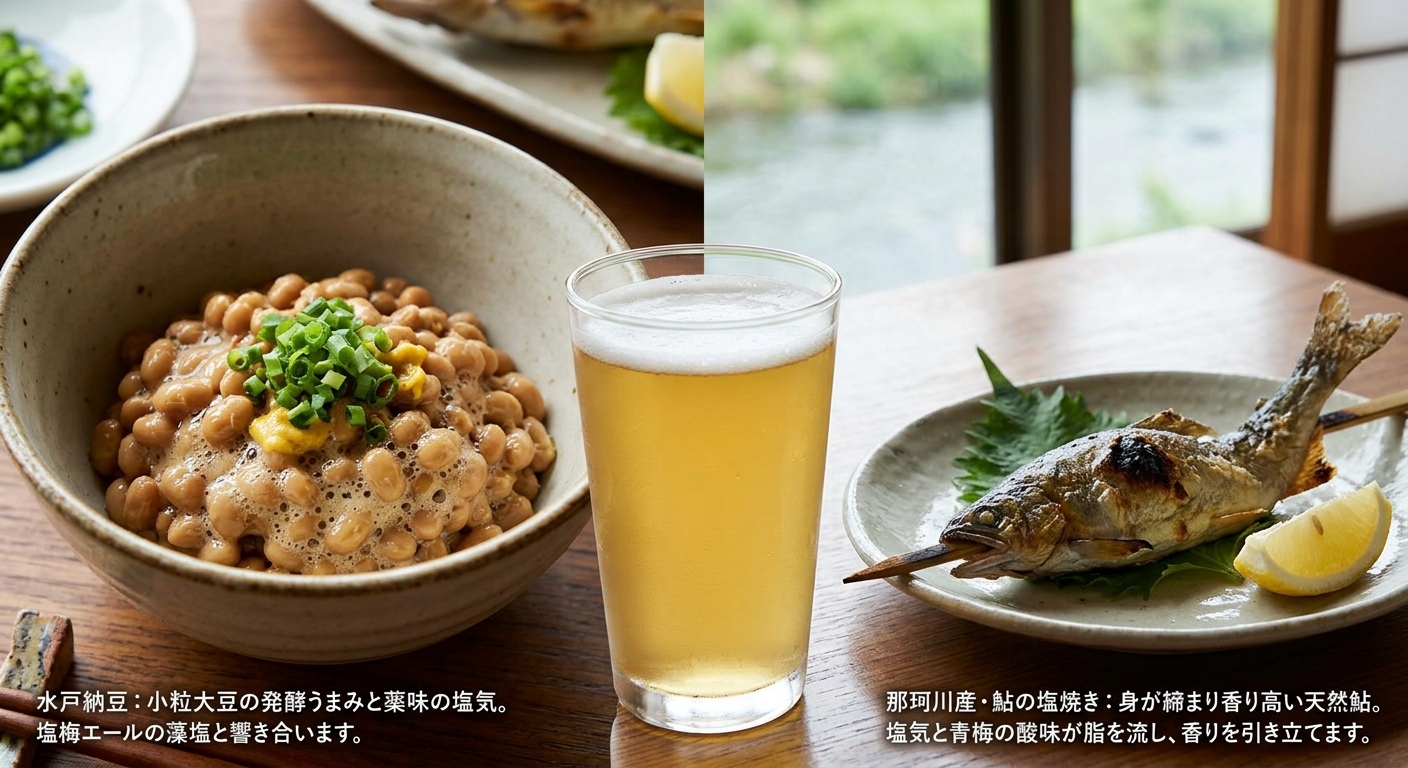
- Mito natto
One of Mito’s signature local foods, made with small soybeans and typically eaten with mustard and soy sauce. The umami from the natto’s fermentation runs in the same direction as the salinity of the beer’s moshio salt, and the two reinforce each other. - Salt-grilled ayu from the Naka River
The Naka River is known for its wild ayu, prized for their firm flesh and distinct aroma. The salt from the grilling and the tartness from the beer’s green ume both cut through the fish’s oil, leaving just the ayu’s own aroma behind.
A note on the science: acidity is known to cut through the heaviness of fat, resetting the palate and lightening the aftertaste. Umami compounds such as glutamic acid, common in fermented foods, are also known to produce a more satisfying aftertaste when paired with salinity — one reason fermented and sea-derived ingredients like natto and moshio tend to bring out the best in each other.
Visiting the Brewery
Kiuchi Brewery main site (Hitachino Nest Beer)
1257 Konosu, Naka City, Ibaraki. About an 8-min walk from Hitachi-Konosu Station (JR Suigun Line).
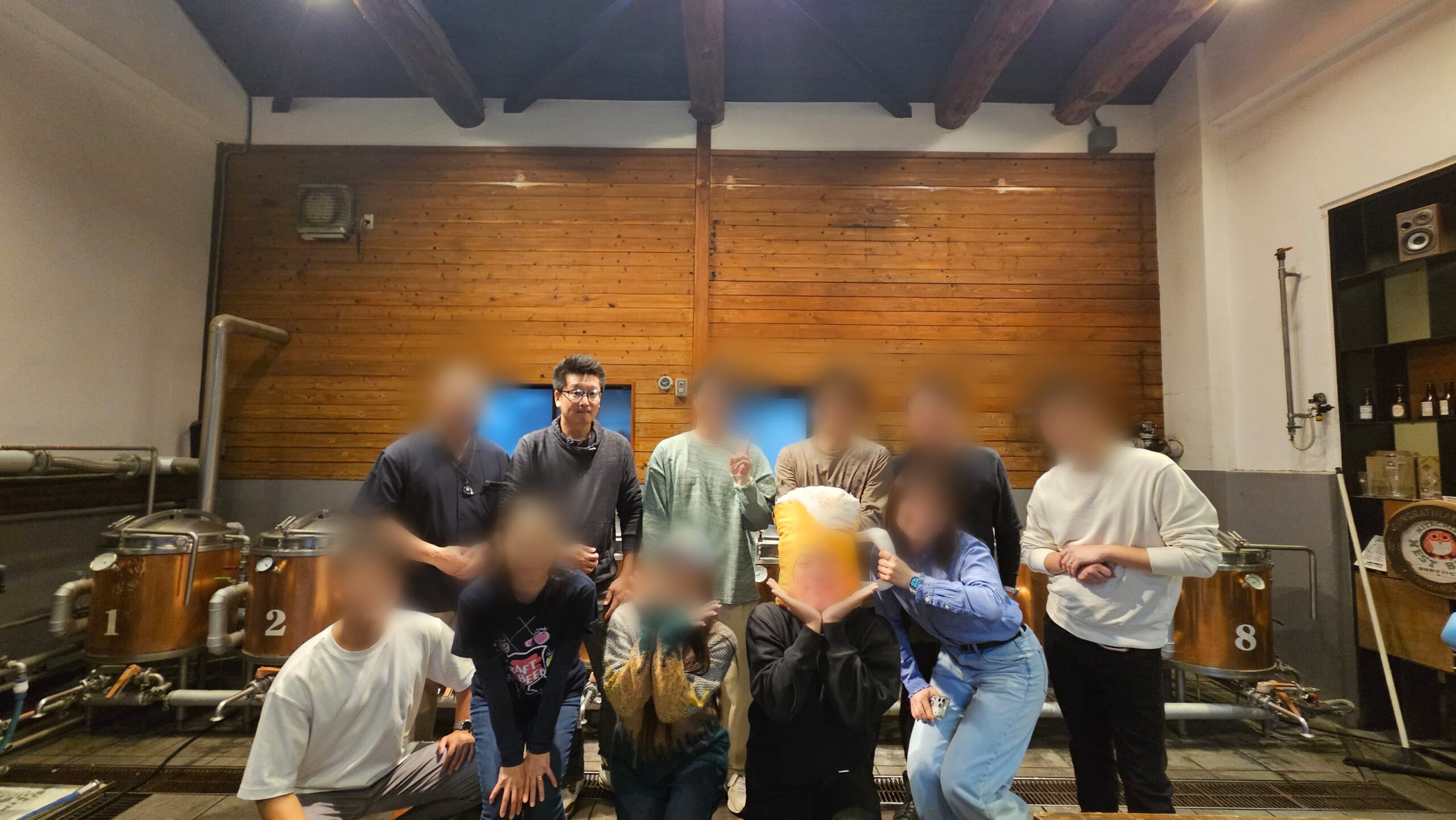
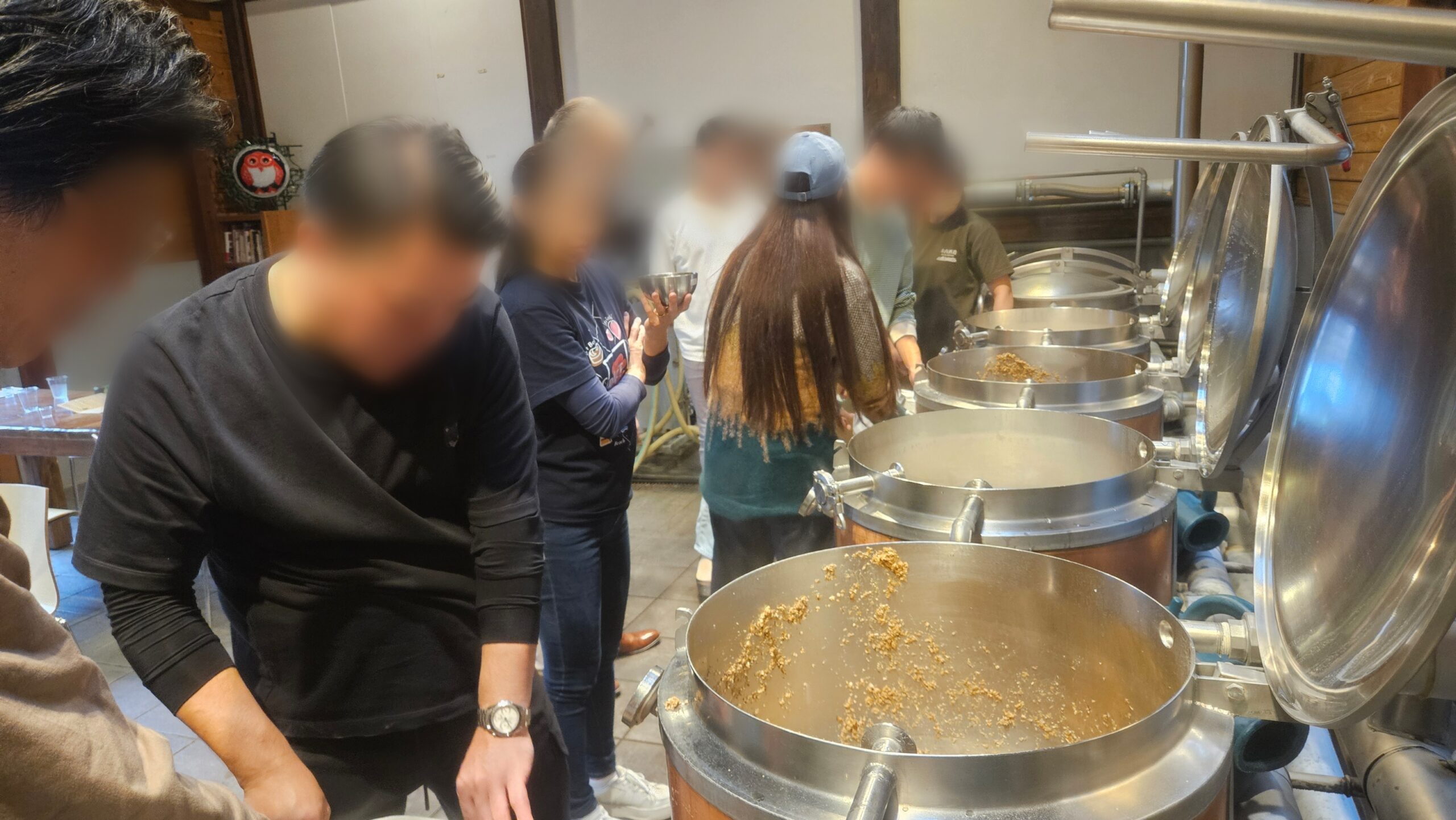
A brewery founded in 1823. The grounds hold a hand-cut soba restaurant and a “make-your-own beer” workshop.
Sights Nearby
- Shizumine Furusato Park / Naka City | ~10 min, ~5 km by car from the brewery
A park where about 2,000 double-flowered cherry trees bloom, one of Japan’s “100 best cherry-blossom spots,” with a Japanese garden and large play structures. - Kairakuen Garden / Mito City | ~30 min, ~13 km by car from the brewery
One of Japan’s three great gardens, alongside Kenrokuen in Kanazawa and Korakuen in Okayama. About 3,000 plum trees of some 100 varieties; open 6:00-19:00 (varies by season), with a paid inner area.
Opening hours and closing days can change. Please check each facility’s official information before visiting.
A Quick Glossary of Beer Terms
- Craft beer: Beer made by small breweries that put the character of the maker front and centre, as opposed to the uniformity of mass production.
- Ale: Beer brewed with top-fermenting yeast that works near room temperature, often yielding fruitier aromas and a fuller body. Sour ales, like this one, are a member of the ale family.
- Malt: Germinated barley. It forms the foundation of a beer’s sweetness, colour and body; how deeply it is roasted determines colour and toastiness.
- Hops: The cones of a climbing plant, which give beer its bitterness and aroma. Depending on the variety, that aroma can read as citrus, tropical fruit or open grassland.
- IBU: An international measure of bitterness. Around 10 you barely notice it; above 60 you are in clearly bitter IPA territory.
Sources
- Kiuchi Brewery — Anbai Ale product page
- Kiuchi Brewery — Hitachino Nest Beer brand story
- Kiuchi Brewery — company profile
- “Sayonara Elegy” — Wikipedia (Japanese)
- Ishizaki Hui — Sony Music Japan official profile
- Ishizaki Hui — Wikipedia (Japanese)
- Symbols of Ibaraki Prefecture — official prefectural site
- Ayu — Ibaraki Prefecture agriculture and fisheries portal
- Mito Plum Festival — official Ibaraki tourism site
If you notice any errors in this article, please don’t hesitate to reach out at info@soundrecords.jp.
Read this article in Japanese: ちょうどいい塩梅で