今日のペアリング
▶ 上のプレーヤーで再生できない場合は、YouTubeで開く
醸造所の話
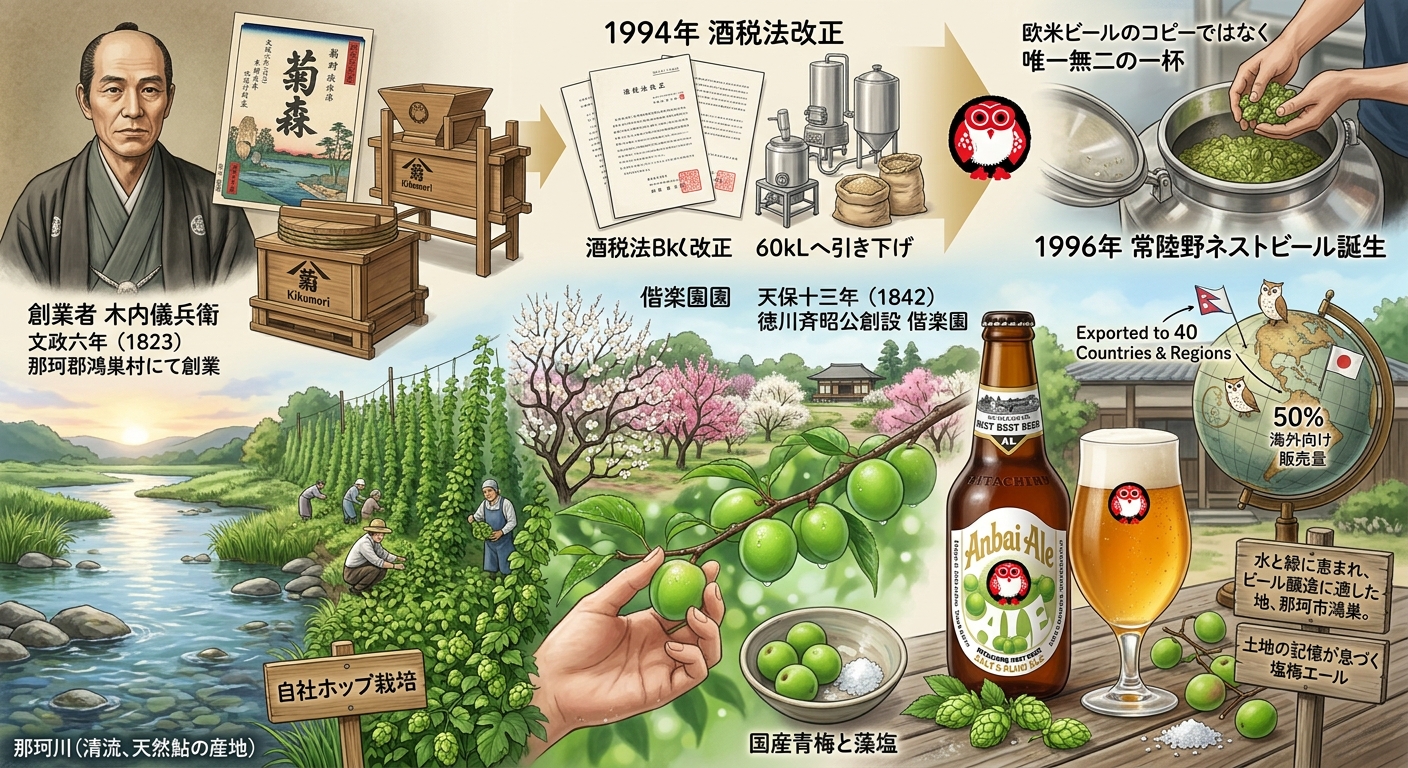
木内酒造の創業は文政6年(1823年)。那珂郡鴻巣村、いまの茨城県那珂市鴻巣で、木内儀兵衛が酒造りを始めたのが始まりです。清酒「菊盛」は、いまも変わらずこの土地で仕込まれています。
ビール造りに動いたのは1994年4月の酒税法改正がきっかけでした。ビールの製造免許に必要な年間最低製造量が、それまでの2,000キロリットルから60キロリットルへと大きく引き下げられ、大手メーカーだけのものだったビール造りが、各地の中小の蔵にも開かれたのです。木内酒造はこの流れに加わり、1996年に常陸野ネストビールの製造を始めました。
公式サイトが掲げているのは、「欧米の原料を使っても、欧米ビールのコピーを作るわけではない。ここで生まれるのは唯一無二の一杯」という考え方です。麦やホップは生きた植物であり、その微妙な変化に対応するのは機械ではなく人だとして、近年はホップの自社栽培にも取り組んでいます。ラベルのフクロウは、いまやこのビールの顔です。2019年時点で輸出先は40の国と地域に及び、販売量の5割が海外向けという数字が、那珂市生まれのビールがどれだけ遠くまで羽ばたいたかを物語っています。
土地の話
那珂市は、茨城県庁のある水戸市のすぐ北に隣り合っています。二つの市の境を流れるのが那珂川。関東でも屈指の清流として知られ、天然鮎の産地としても名高い川です。木内酒造の公式サイトも、この土地について「水と緑に恵まれ、ビール醸造に適した地」と紹介しています。
水戸といえば、日本三名園のひとつに数えられる偕楽園を思い浮かべる人も多いはずです。天保13年(1842年)、水戸藩第9代藩主・徳川斉昭が領民の休養の場として開いたこの庭園には、いまも約100品種・3,000本の梅が植えられ、早春になると次々と咲き競います。ウメは1966年、茨城県の「県の木」にも選ばれました。この土地にとって梅は、観光名所の飾りではなく、暮らしに根づいた木なのです。
塩梅エールが使うのは、そんな土地の記憶とどこかでつながる青梅と、海の塩。国産の新鮮な青梅と梅果汁、そして藻塩を加えて仕込まれるこのビールは、華やかな観光地としての梅ではなく、酸味と香りという梅そのものの性質をグラスに閉じ込めようとした一本です。
醸造所を訪ねて
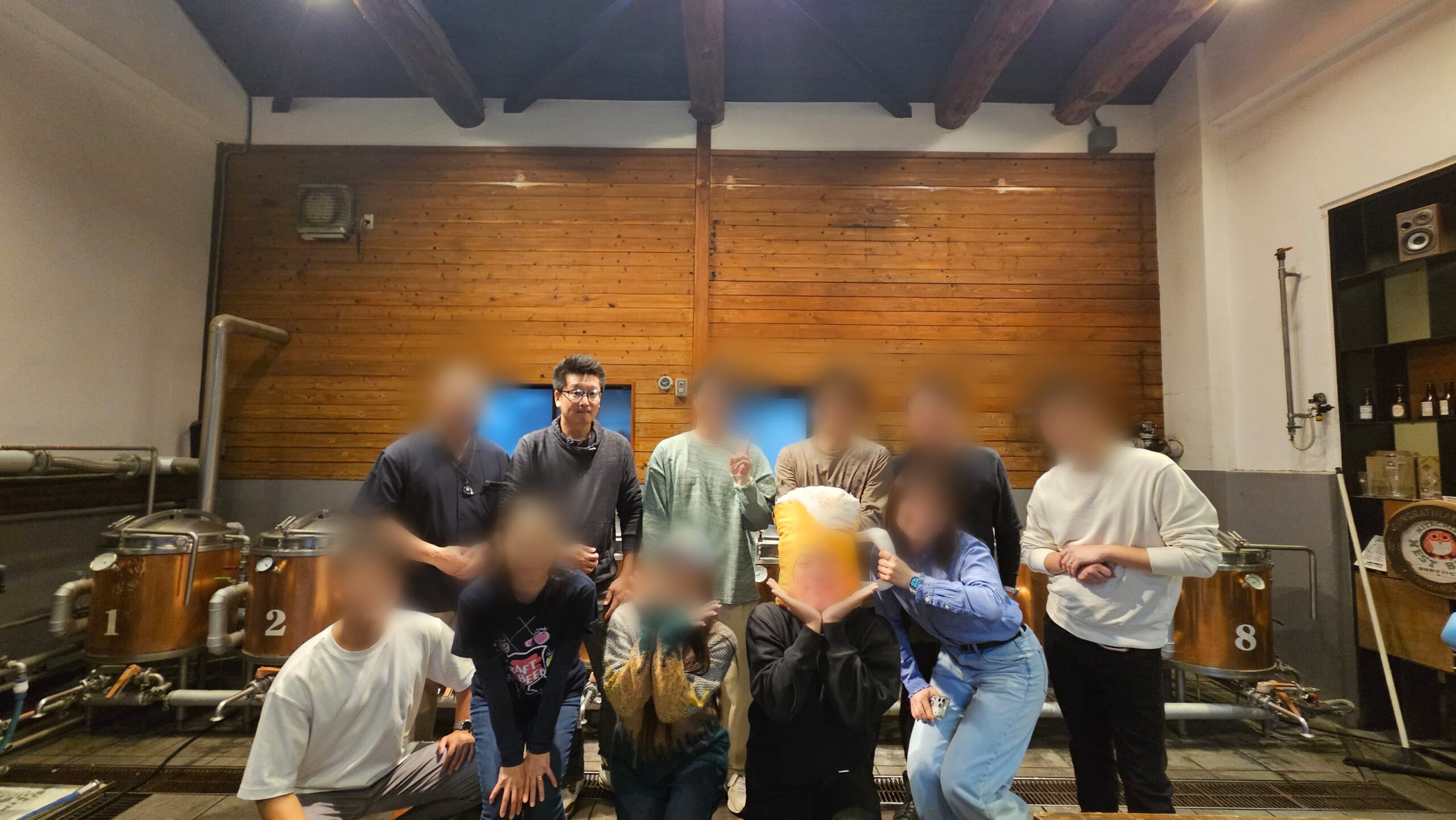
同僚とビール作りで集合写真

副原料やホップはどうしますか?と講師の方と打ち合わせ
どんな?味になるのか皆でイメージ膨らませながらビール作り体験しました
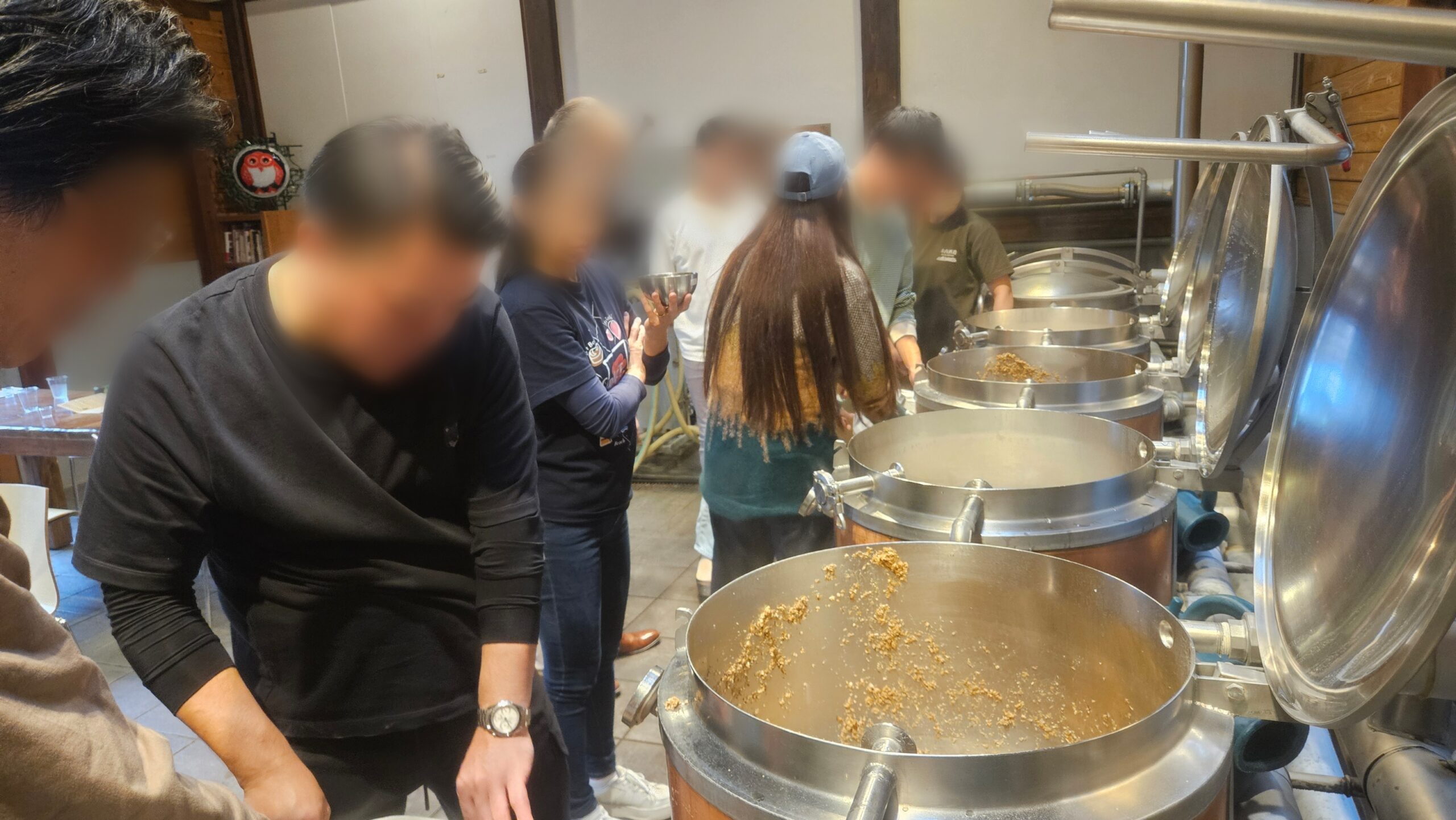
講師の方から説明を受けながらの見様見真似の作業でした。
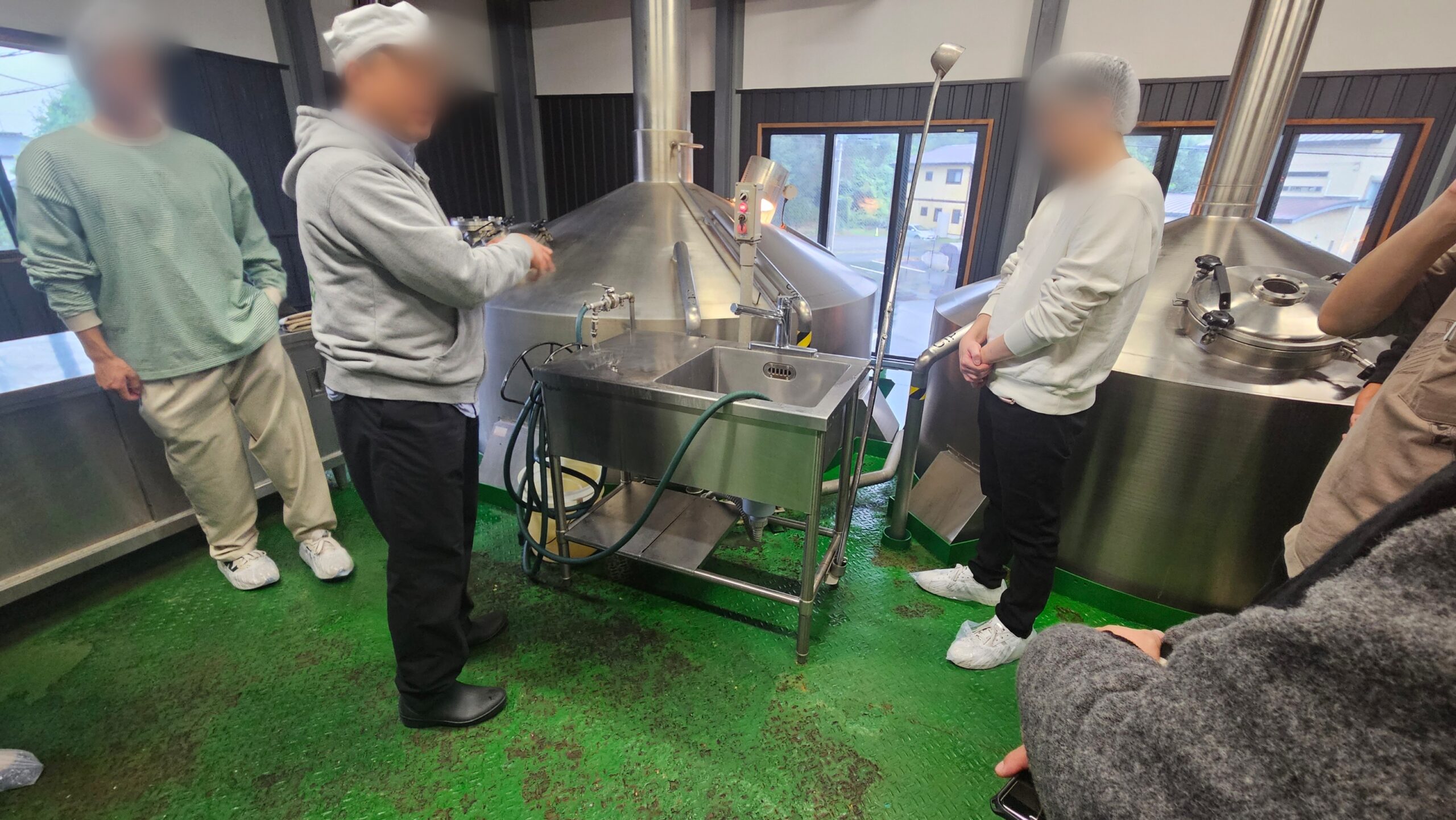
ビール作り後は皆で醸造所見学をして更に知識を得た参加者でした
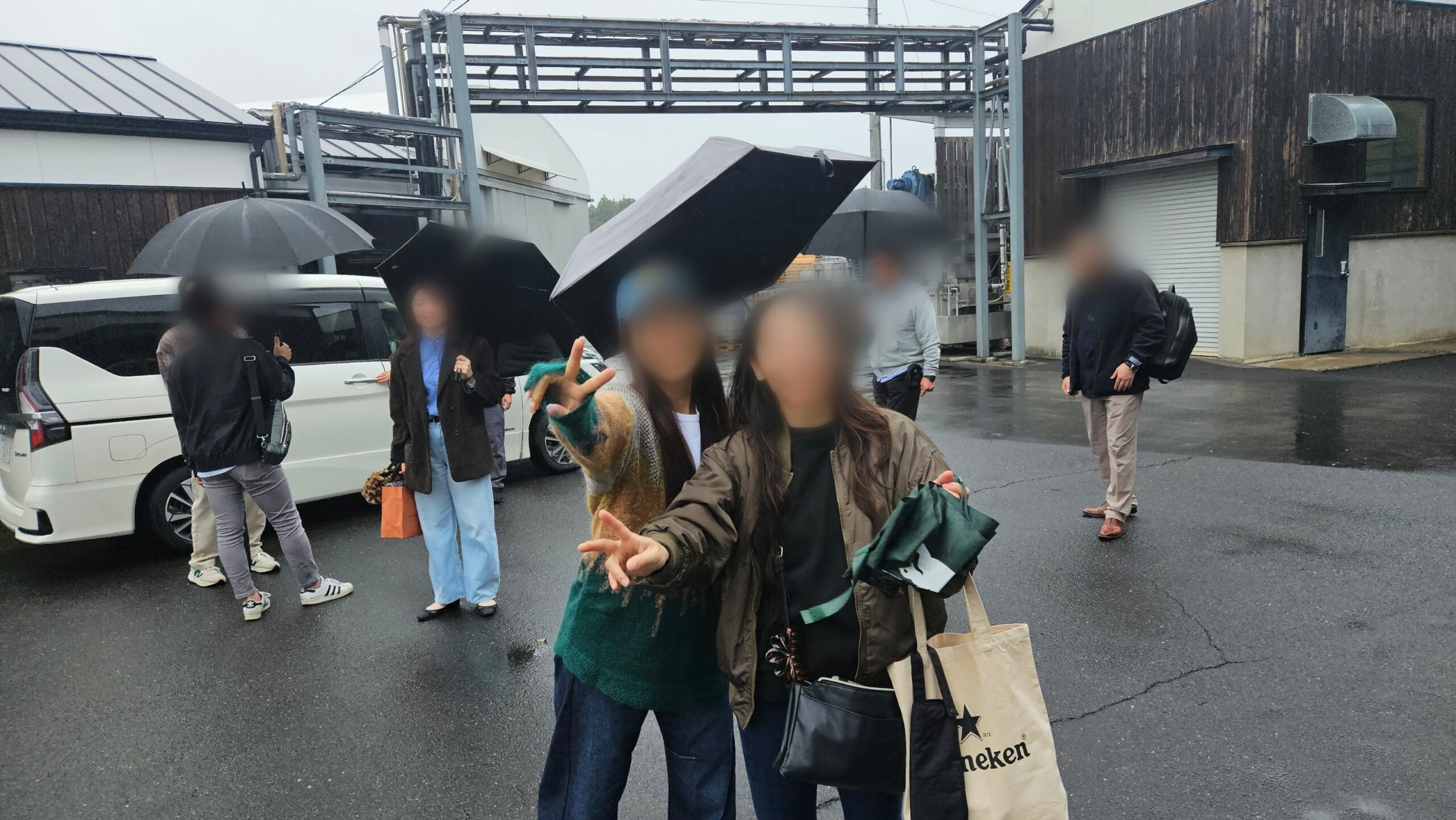
忘れない思い出が1つ増えました。
音楽の話
石崎ひゅーいは1984年3月7日、水戸市生まれ。中学3年のときに友人に誘われて組んだバンド「mighty duck」でボーカルを務め、大学進学後の2004年10月にはロックバンド「astrcoast」を結成します。2010年11月にバンドを解散してソロに転向し、2012年7月、エピックレコードジャパンからメジャーデビューしました。
2018年、石崎ひゅーいは俳優・菅田将暉が歌う「さよならエレジー」の作詞・作曲を手がけます。日本テレビ系ドラマ『トドメの接吻』の主題歌として2018年2月21日に発売されたこの曲は、同年12月19日、石崎自身によるセルフカバーが配信限定でリリースされ、2019年3月6日発売のミニアルバム『ゴールデンエイジ』にも収録されました。2021年2月19日には、ギター一本で一発録りする「THE FIRST TAKE」でのセルフカバー映像も公開されています。
エレジーとは「哀歌」「悲歌」を意味する言葉です。過去の恋を引きずりながら、それでも前を向こうとする男の視点で描かれたこの曲は、単純な悲しみでは終わらない、複雑な後味を残します。
なぜこの組み合わせなのか
「塩梅」という言葉は、もともと料理の味加減を指し、そこから物事の具合や調子全般を表す言葉として定着しました。塩梅エールは、青梅の酸味、藻塩の塩気、ホップのほのかな苦みという三つの要素のどれもが突出せず、釣り合っている一杯です。「ちょうどいい加減」という言葉そのものを飲んでいるようなビールだと言ってもいいかもしれません。
「さよならエレジー」もまた、単純な感情では割り切れない曲です。哀歌でありながら、過去への未練と、前へ進もうとする意志が同居している。純粋な絶望でも、単純な希望でもない釣り合いの悪さが、この曲の芯にあります。塩気と酸味と苦みのバランスと、割り切れない感情の同居は、案外近いところにあるのではないでしょうか。
そしてもうひとつ。木内酒造も石崎ひゅーいも、同じ那珂川の水系がある土地から歩き出しました。醸造所があるのは川の北岸の那珂市、石崎ひゅーいが生まれ育ったのは対岸の水戸市です。ビールは世界40の国と地域へ、歌は菅田将暉という別の歌い手の声を経由して全国へ届きました。どちらも、生まれた場所そのままの形ではなく、一度別のかたちを経てから、遠くの誰かに渡っていったのです。
この一杯を、探すなら
※楽天市場へのリンクは広告(アフィリエイト)です。醸造所がタップルームや直営店を持っている場合は、できたてを現地で味わうのが一番のおすすめです。
🌡️ おすすめの飲み方(温度とグラス):10℃前後で、そのまま。青梅由来の香りは温度が上がるほど開いてくるので、少しずつ温度が上がるのを待ちながら楽しむのもおすすめです。グラスは口がすぼまったチューリップ型やワイングラスを使うと、酸味と梅の香りがまとまって鼻先に届きます。
合わせたい「アテ」
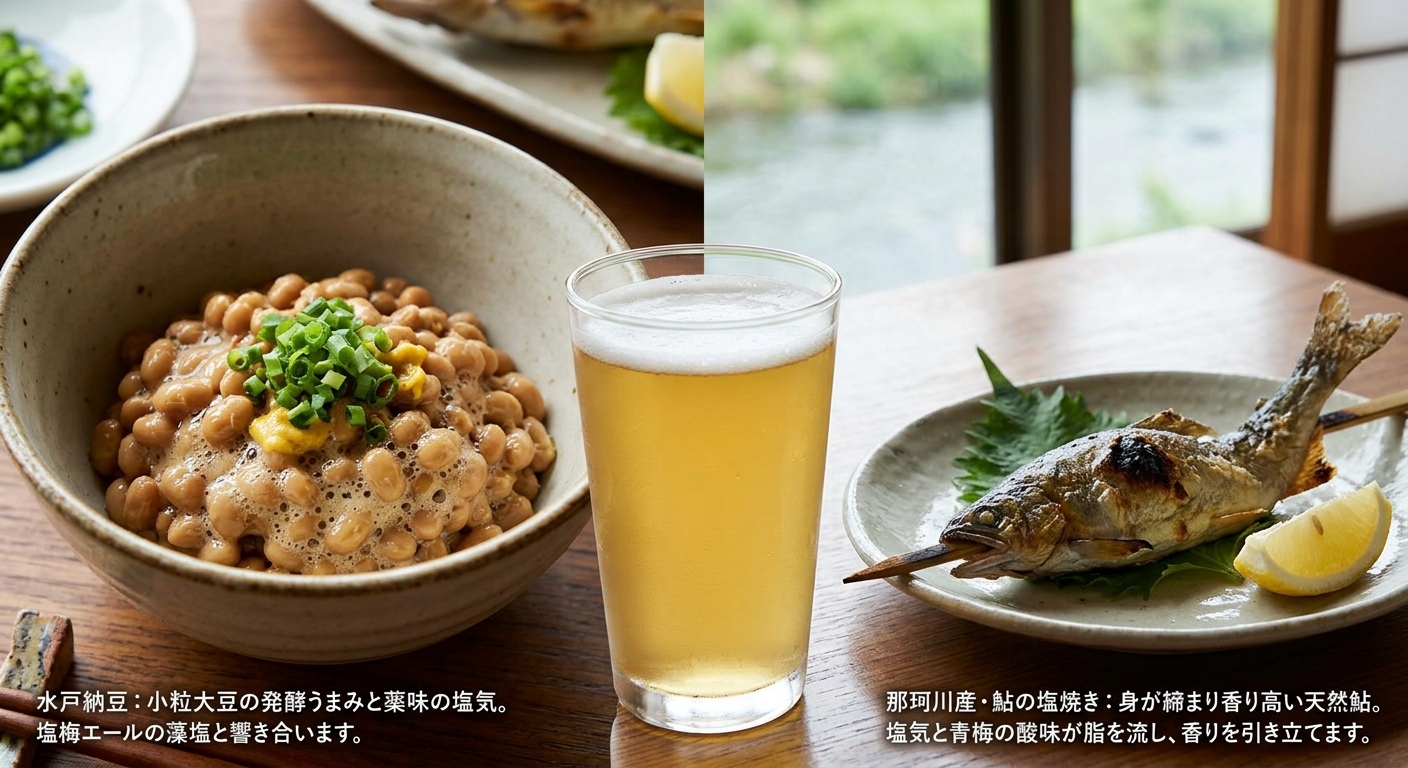
- 水戸納豆
茨城県、なかでも水戸を代表する名物です。小粒大豆を使い、発酵によるうまみと塩気のある薬味(からしや醤油)でいただくことが多い一品。塩梅エールの藻塩の塩気と、納豆の発酵うまみが同じ方向を向いて響き合います。
- 那珂川産・鮎の塩焼き
那珂川は天然鮎の産地として知られ、身の締まった香り高い鮎が獲れます。塩焼きの塩気と、青梅由来の酸味が魚の脂を洗い流し、あとには鮎そのものの香りだけが残ります。
科学的にひとこと:酸味には脂肪分の重さを和らげ、口の中をリセットして後味を軽くする働きがあることが知られています。また、発酵食品に多く含まれるグルタミン酸などのうまみ成分は、塩気と重なることで単体よりも満足感のある後味を生みやすいとされ、納豆や藻塩のような発酵・海由来の食材同士が引き立て合う理由のひとつになっています。
この醸造所をたずねるなら
木内酒造 本店(常陸野ネストビール)
茨城県那珂市鴻巣1257/JR水郡線「常陸鴻巣駅」から徒歩約8分。
1823年創業の蔵。敷地に手打ちそばの店や、自分でビールを仕込める「手造りビール工房」があります。
近くの観光スポット
- 静峰ふるさと公園/那珂市静|醸造所から車で約10分・約5km
約2,000本の八重桜が咲く公園で、「日本さくら名所100選」のひとつ。園内には日本庭園や大型遊具もあります。 - 偕楽園/水戸市見川|醸造所から車で約30分・約13km
金沢の兼六園、岡山の後楽園とならぶ日本三名園のひとつ。約100品種3,000本の梅が植えられ、開園は6:00〜19:00(時期により変動)、本園エリアの入場は有料です。
※営業時間・定休日は変わることがあります。おでかけ前に各施設の公式情報をご確認ください。
ひとことメモ(ビールの用語)
- クラフトビール:小規模な醸造所が、造り手の個性を前面に出して仕込むビールの総称。大量生産の均一な味とは別の方向を目指しています。
- エール:常温に近い温度で、酵母が液面近くで働く「上面発酵」で造るビール。果実のような香りと厚みのある味わいが出やすいのが特徴です。
- モルト:発芽させた大麦(麦芽)のこと。ビールの甘み・色・コクの土台になり、焙煎の深さで色と香ばしさが決まります。
- ホップ:ビールに苦みと香りを与えるつる性植物の毬花(まりばな)。品種によって、柑橘・トロピカルフルーツ・草原のように香りが変わります。
- IBU:苦みの強さを表す国際的な数値。10前後だとほとんど苦みを感じず、60を超えるとはっきり苦いIPAの領域です。
参考
内容に誤りがございましたら、お手数ですが info@soundrecords.jp までご連絡いただけますと幸いです。
Today’s Pairing
▶ If the player above doesn’t play, open it on YouTube
The Story of the Brewery
Kiuchi Brewery was founded in 1823, when Kiuchi Gihei began brewing sake in what was then Konosu village, in an area now part of Naka City, Ibaraki. Its sake brand, “Kikuzakari,” is still made on the same grounds today.
The move into beer came after a change to Japan’s liquor tax law in April 1994, which lowered the minimum annual production volume required for a beer brewing license from 2,000 kiloliters to just 60 — opening up beer brewing, until then the domain of major manufacturers, to small and mid-sized producers across the country. Kiuchi joined that wave, and in 1996 began brewing Hitachino Nest Beer.
The brewery’s official site describes its approach this way: even using Western ingredients, the goal is never to copy Western beer, but to create something that exists nowhere else. Malt and hops are living plant material, and the site emphasizes that responding to their subtle variation is work for people, not machines; in recent years the brewery has also begun growing its own hops. The owl on the label has become the face of the brand — as of 2019, Hitachino Nest Beer was exported to 40 countries and regions, with 50% of its sales coming from outside Japan. That is how far a beer born in Naka City has traveled.
The Story of the Land
Naka City sits just north of Mito, the prefectural capital, with the Naka River marking the boundary between the two. It’s one of the clearest rivers in the Kanto region and well known as a habitat for wild ayu (sweetfish). Kiuchi Brewery’s own site describes this land as “blessed with water and greenery, well suited to beer brewing.”
Mention Mito, and many people picture Kairakuen, one of Japan’s three great gardens. Opened in 1842 by Tokugawa Nariaki, the ninth lord of the Mito domain, as a place of rest for the people of the domain, it still holds roughly 100 varieties and 3,000 ume (plum) trees that bloom in succession each early spring. In 1966, ume was designated Ibaraki Prefecture’s official tree. Here, the plum isn’t just scenery for tourists — it’s rooted in daily life.
Anbai Ale draws on green ume and sea salt — ingredients that connect, in their own way, to that memory of the land. Brewed with fresh domestic green ume, ume juice and moshio sea salt, it isn’t reaching for the plum as a tourist attraction, but trying to capture the fruit’s own tartness and aroma in a glass.
The Story of the Song
Ishizaki Hui was born on March 7, 1984, in Mito. In his third year of junior high, he formed the band “mighty duck” with friends and sang lead vocals; after starting university, he formed the rock band “astrcoast” in October 2004. He disbanded it in November 2010, went solo, and made his major-label debut on Epic Records Japan in July 2012.
In 2018, Ishizaki wrote both the lyrics and music for “Sayonara Elegy,” sung by actor Suda Masaki. Released on February 21, 2018, as the theme song for the NTV drama Todome no Kiss, the song later got a digital-only self-cover from Ishizaki himself on December 19 of that year, and was included on his mini-album Golden Age, released March 6, 2019. On February 19, 2021, a solo, single-take self-cover — just Ishizaki and a guitar — was released on “THE FIRST TAKE.”
“Elegy” means a song of mourning or lament. Sung from the perspective of a man still carrying an old, unresolved love while trying to move forward, the song doesn’t resolve into simple sadness — it leaves a more complicated aftertaste.
Why This Pairing
The word “anbai” (塩梅) originally referred to the seasoning of a dish — literally “salt and plum” — and came to mean the general condition or balance of things. Anbai Ale is a beer where the tartness of green ume, the salinity of moshio, and a light hop bitterness all hold steady without any one of them taking over. It’s a beer that tastes like the phrase “just the right balance.”
“Sayonara Elegy” doesn’t resolve into a single emotion either. It’s an elegy, yet lingering attachment to the past and the will to move forward exist side by side. That imbalance — neither pure despair nor simple hope — sits at the core of the song. The balance of salt, acid and bitterness in the glass, and the coexistence of feelings that don’t quite resolve, may not be so far apart.
One more thing: both Kiuchi Brewery and Ishizaki Hui set out from land drained by the same river system. The brewery stands on the north bank of the Naka River, in Naka City; Ishizaki grew up on the south bank, in Mito. The beer traveled to 40 countries and regions; the song traveled across Japan by way of another singer’s voice, Suda Masaki’s. Neither stayed in the exact form it was born in — each passed through another shape before reaching someone far away.
Where to Find This Beer
The Rakuten Ichiba link below is an affiliate link.
These are Japanese storefronts. If you are visiting the brewery, drinking it fresh at their own taproom is by far the best option.
🌡️ How to serve it:Around 10°C, straight from the bottle. The aroma of the green ume opens up as the beer warms, so it’s worth letting it sit for a few minutes as you drink, the way you might with wine. A tulip-shaped glass or wine glass, which narrows toward the top, will gather the tartness and plum aroma toward your nose.
Pairing Dishes Worth Trying
- Mito natto
One of Mito’s signature local foods, made with small soybeans and typically eaten with mustard and soy sauce. The umami from the natto’s fermentation runs in the same direction as the salinity of the beer’s moshio salt, and the two reinforce each other.
- Salt-grilled ayu from the Naka River
The Naka River is known for its wild ayu, prized for their firm flesh and distinct aroma. The salt from the grilling and the tartness from the beer’s green ume both cut through the fish’s oil, leaving just the ayu’s own aroma behind.
A note on the science: acidity is known to cut through the heaviness of fat, resetting the palate and lightening the aftertaste. Umami compounds such as glutamic acid, common in fermented foods, are also known to produce a more satisfying aftertaste when paired with salinity — one reason fermented and sea-derived ingredients like natto and moshio tend to bring out the best in each other.
Visiting the Brewery
Kiuchi Brewery main site (Hitachino Nest Beer)
1257 Konosu, Naka City, Ibaraki. About an 8-min walk from Hitachi-Konosu Station (JR Suigun Line).
A brewery founded in 1823. The grounds hold a hand-cut soba restaurant and a “make-your-own beer” workshop.
Sights Nearby
- Shizumine Furusato Park / Naka City | ~10 min, ~5 km by car from the brewery
A park where about 2,000 double-flowered cherry trees bloom, one of Japan’s “100 best cherry-blossom spots,” with a Japanese garden and large play structures. - Kairakuen Garden / Mito City | ~30 min, ~13 km by car from the brewery
One of Japan’s three great gardens, alongside Kenrokuen in Kanazawa and Korakuen in Okayama. About 3,000 plum trees of some 100 varieties; open 6:00-19:00 (varies by season), with a paid inner area.
Opening hours and closing days can change. Please check each facility’s official information before visiting.
A Quick Glossary of Beer Terms
- Craft beer: Beer made by small breweries that put the character of the maker front and centre, as opposed to the uniformity of mass production.
- Ale: Beer brewed with top-fermenting yeast that works near room temperature, often yielding fruitier aromas and a fuller body. Sour ales, like this one, are a member of the ale family.
- Malt: Germinated barley. It forms the foundation of a beer’s sweetness, colour and body; how deeply it is roasted determines colour and toastiness.
- Hops: The cones of a climbing plant, which give beer its bitterness and aroma. Depending on the variety, that aroma can read as citrus, tropical fruit or open grassland.
- IBU: An international measure of bitterness. Around 10 you barely notice it; above 60 you are in clearly bitter IPA territory.
Sources
If you notice any errors in this article, please don’t hesitate to reach out at info@soundrecords.jp.
コメントを残す