今日のペアリング
▶ 上のプレーヤーで再生できない場合は、YouTubeで開く
酒蔵の話
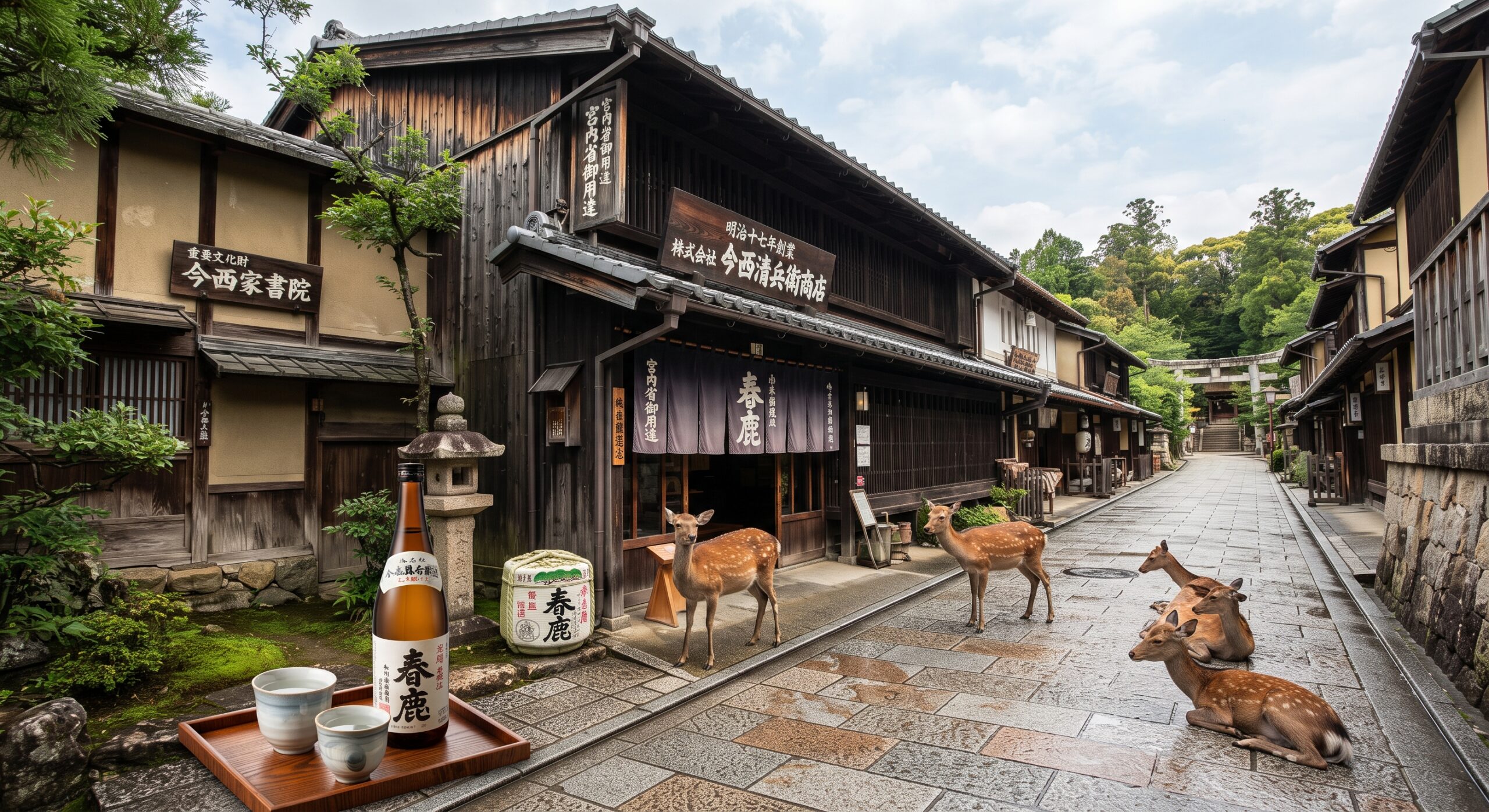
株式会社今西清兵衛商店は、明治17年(1884年)、今西清一が清酒・みりん・あられ酒の製造を始めたことに始まります。明治27年(1894年)には明治天皇にあられ酒を買い上げられ、宮内省御用達を仰せつかったという歴史を持つ蔵です。現在の代表取締役社長は今西清隆氏。蔵は奈良町(ならまち)の一角、福智院町に今も建ち、建物二階の蔵では昔ながらの木桶仕込みによる発酵を続けながら、海外10数カ国への輸出にも取り組んでいます。
屋号でもある酒銘「春鹿」は、「春日の神々が鹿に乗ってやってきた」という伝説に由来すると、蔵元自身が紹介しています。今回合わせる「純米 超辛口」は、兵庫県産を中心に広く使われる酒米「五百万石」を用い、精米歩合60%、アルコール度数15度、日本酒度+12に仕込まれた一本。米由来の旨みとミネラル感のあるキレが同居する、辛口党にも日本酒の入門者にもすすめられる一本です。
土地の話
蔵が建つ福智院町は、江戸時代・明治時代の町家が今も残る「ならまち」のただ中にあります。蔵のすぐ隣(福智院町24-3)には、重要文化財「今西家書院」が立っています。元は興福寺大乗院家の坊官・福智院家の邸宅でしたが、大正13年(1924年)に今西家がこれを譲り受け、以来守り続けてきました。室町時代初期の書院造りの遺構として昭和12年(1937年)に民間所有の建造物としては初めて国宝に指定され、昭和25年(1950年)の文化財保護法施行に伴い重要文化財に改められています。
「春鹿」の名の由来となった春日大社は、蔵から徒歩20分ほどの春日野にあります。この一帯で暮らす鹿たちは、古くから春日大社の神使(神の使い)として大切にされてきました。さだまさし「まほろば」が描く春日野の情景は、春鹿という酒銘が生まれた場所そのものでもあります。
音楽の話
「まほろば」は、さだまさしが1979年4月10日に発表したソロ4枚目のオリジナル・アルバム「夢供養」のA面5曲目に収録された楽曲です。作詞・作曲はさだまさし自身、編曲は渡辺俊幸。『万葉集』に収められた磐姫皇后の歌をモチーフに、春日野の風景と、男女の心のすれ違いを描いた一曲とされ、シングルカットはされていないものの、今もさだまさしのコンサートで歌い継がれる定番レパートリーのひとつです。
さだまさしは1952年4月10日、長崎県長崎市生まれ。1972年、吉田政美とフォークデュオ「グレープ」を結成し、1974年発表の「精霊流し」が大ヒットとなりました。1976年にグループを解散した後はシンガーソングライターとして活動し、「雨やどり」(1977年、オリコン1位)、「関白宣言」(1979年7月、150万枚を超える大ヒット)、「北の国から~遥かなる大地より~」(1981年)など、数々のヒット曲を世に送り出しています。
なぜこの組み合わせなのか
春鹿という酒銘は、春日の神々が鹿に乗ってこの地にやってきたという伝説から生まれました。一方「まほろば」は、その神々が降り立ったとされる春日野そのものを舞台に、『万葉集』の古歌を下敷きにしながら、ある男女の心の行き違いを静かに歌う一曲です。酒の名も、歌の舞台も、たどっていくと同じ春日野にたどり着きます。
「超辛口」という名を背負いながら、口に含むと五百万石の米由来の旨みがふわりと立ち上がり、最後にミネラル感のあるキレで締まる――この「辛さの奥にある静かな余韻」は、万葉の古歌を引きながら淡々と情景を紡いでいく「まほろば」の歌い口とどこか重なります。派手さはなくとも、聴くほどに、飲むほどに、奈良という土地の奥行きが見えてくる。そんな一本と一曲です。
この一本を、探すなら
※楽天市場へのリンクは広告(アフィリエイト)です。在庫・取扱いは変動します。お近くの酒販店でも、ぜひ銘柄名を伝えて探してみてください。
🌡️ おすすめの飲み方:よく冷やしてシャープな飲み口を楽しむのはもちろん、ぬる燗にすると辛口の奥にある五百万石の米の旨みがふわっと広がります。冷・燗どちらも試してみてください。
合わせたい「アテ」
- 柿の葉寿司
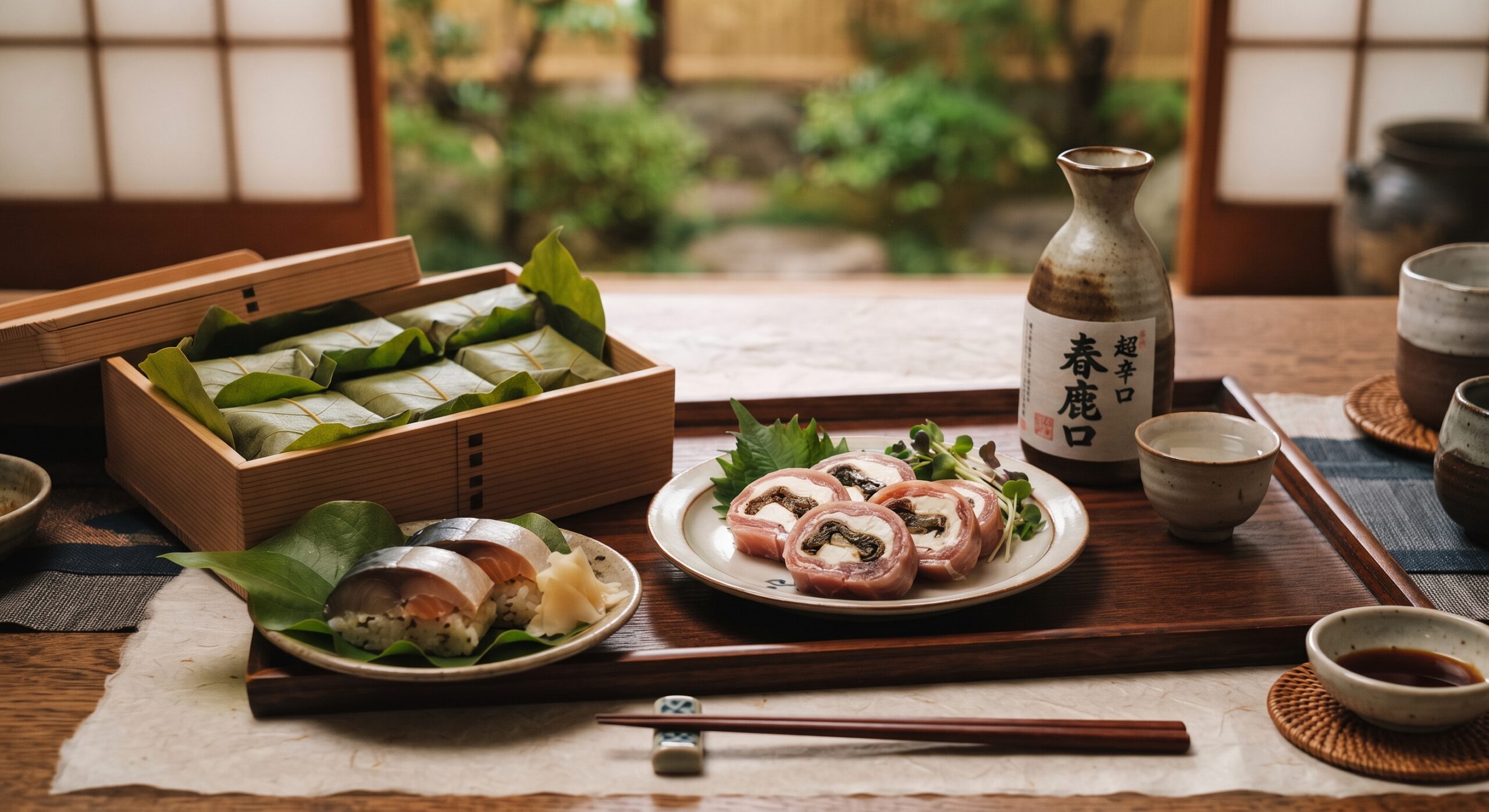
奈良県を代表する郷土料理。酢でしめた鯖や鮭を酢飯とともに柿の葉で包んだ押し寿司で、山間部で海の魚を保存するための知恵から生まれたといわれます。酢飯の酸味と魚の旨みに、超辛口のキレのよさがすっと寄り添います。
レシピはこちら:楽天レシピ「柿の葉寿司」
- 奈良漬けとクリームチーズの生ハム巻き
奈良漬けは酒粕に野菜を漬け込んで作る奈良の名産品で、いわば日本酒そのものから生まれた発酵食品です。生ハムの塩気とクリームチーズのコクに奈良漬けの香りを重ねることで、同じ発酵由来の香気成分を持つ純米酒とも自然に響き合います。
レシピはこちら:クラシル「奈良漬けとクリームチーズの生ハム巻き」
科学的にひとこと:柿の葉寿司の酢飯に含まれる酸味は、超辛口のようなキレのある日本酒と合わさることで、口の中をさっぱりとリセットしてくれます。奈良漬けは酒粕による発酵で生まれた香気成分(エステル類など)を持ち、同じく発酵由来の香りを持つ日本酒と、香りの系統が重なり合って馴染みやすくなります。
この蔵をたずねるなら
春鹿(今西清兵衛商店)
奈良県奈良市福智院町24-1/JR奈良駅から奈良交通バスで「福智院町」下車徒歩約1分、近鉄奈良駅から徒歩約15分。
蔵のすぐ隣(福智院町24-3)には、今西家が大正13年(1924)から守り継ぐ重要文化財「今西家書院」があります。
近くの観光スポット
- 今西家書院/奈良市福智院町|春鹿から徒歩約1分(隣接)
室町時代初期の書院造りの遺構。元は興福寺大乗院家の坊官・福智院家の邸宅で、大正13年(1924)に今西家が譲り受けました。昭和12年(1937)に民間所有の建造物として初めて国宝に指定され(昭和25年に重要文化財へ変更)、今も今西家が維持・公開しています。公開は木・金・土・日曜10:30〜16:00(受付15:30まで、夏季・年末年始・貸切日は休館)、入館料は一般500円。訪問前に公開日をご確認ください。
- 元興寺/奈良市中院町|春鹿から徒歩約5分(約400m)
世界遺産に登録された古刹で、飛鳥から移された瓦や建材の一部を今に伝えます。ならまちの中心にあり、蔵からもっとも近い大きな見どころです。
- 春日大社/奈良市春日野町|春鹿から徒歩約20分(車で約5分・約2km)
「春日の神々が鹿に乗ってやってきた」という伝説にちなんで名付けられたのが、酒銘「春鹿」です。さだまさし「まほろば」が舞台とする春日野も、この一帯にあたります。
近くの温泉
- 奈良健康ランド/天理市嘉幡町|春鹿から車で約30分(約13.6km)
天然温泉の大浴場や岩盤浴を備えた24時間営業の日帰り温泉施設。深夜時間帯の追加料金はありますが、いつでも日帰り入浴ができます(大人2,200円)。料金・混雑状況は訪問前に公式サイトでご確認ください。
※営業時間・定休日・日帰り入浴の可否は変わることがあります。おでかけ前に各施設の公式情報をご確認ください。
ひとことメモ(日本酒の用語)
- 純米酒:米・米麹・水だけで造られ、醸造アルコールを添加していない日本酒。米の旨みをまっすぐ感じられるのが特徴です。
- 精米歩合:玄米を削り、残った部分の割合。数値が低いほど、米を多く磨いていることを示します。
参考
内容に誤りがございましたら、お手数ですが info@soundrecords.jp までご連絡いただけますと幸いです。
Today’s Pairing
- Sake: Harushika “Junmai Chokarakuchi” (Extra Dry) — brewed with Gohyakumangoku sake rice, rice-polishing ratio (seimai buai) 60%, 15% alcohol, sake meter value (nihonshu-do) +12 / Imanishi Seibei Shoten Co., Ltd. (24-1 Fukuchiin-cho, Nara City, Nara Prefecture)
Official site: https://www.harushika.com/
- Kayoukyoku (classic Japanese popular song): “Mahoroba” by Masashi Sada (from the album “Yume Kuyo,” 1979)
YouTube: https://www.youtube.com/watch?v=5FMqPIybTZQ
▶ If the player above doesn’t play, open it on YouTube
The Story of the Brewery
Imanishi Seibei Shoten Co., Ltd. began in 1884, when Imanishi Seiichi started producing sake, mirin, and arare-zake (a rice-cracker-based liqueur). In 1894, Emperor Meiji purchased its arare-zake, and the brewery was granted the honor of becoming a purveyor to the Imperial Household Ministry. Its current president is Imanishi Kiyotaka. The brewery still stands in Fukuchiin-cho, in the heart of Nara-machi, where fermentation continues in traditional wooden vats on the building’s second floor, alongside exports to more than a dozen countries overseas.
The brand name, Harushika (“spring deer”), comes — according to the brewery itself — from the legend that the deities of Kasuga rode into this land on the backs of deer. The bottle in this pairing, Junmai Chokarakuchi, is brewed with Gohyakumangoku, a sake rice grown widely around Hyogo and elsewhere, polished to a seimai buai of 60%, at 15% alcohol with a sake meter value of +12. It’s a dry sake where rice-derived umami and a mineral-tinged crispness coexist — one that works equally well for dry-sake fans and for first-time sake drinkers.
The Story of the Land
Fukuchiin-cho, where the brewery stands, sits right in the middle of Nara-machi, where Edo- and Meiji-era townhouses still line the streets. Next door, at 24-3 Fukuchiin-cho, stands Imanishi-ke Shoin, an Important Cultural Property. It originally belonged to the Fukuchiin family, stewards (bokan) for the Daijo-in branch of Kofuku-ji Temple, before the Imanishi family acquired it in 1924 and has maintained it ever since. As an example of early-Muromachi-period shoin-zukuri architecture, it became, in 1937, the first privately owned building in Japan designated a National Treasure, later redesignated an Important Cultural Property in 1950 under the new Cultural Properties Protection Law.
Kasuga Taisha Shrine, the source of the Harushika name’s legend, stands in Kasugano, about a 20-minute walk from the brewery. The deer that live throughout this area have long been cherished as sacred messengers of Kasuga Taisha. The Kasugano landscape that Masashi Sada’s “Mahoroba” describes is the very same place where the name Harushika was born.
The Story of the Song
“Mahoroba” is the fifth track on side A of “Yume Kuyo,” Masashi Sada’s fourth original solo album, released on April 10, 1979. Both lyrics and music are by Sada himself, with arrangement by Toshiyuki Watanabe. Built around a waka poem by Empress Iwa no Hime from the “Man’yoshu” (Japan’s oldest poetry anthology), the song is said to depict the scenery of Kasugano alongside a quiet emotional rift between a man and a woman. It was never released as a single, but it remains one of the staples of Sada’s live repertoire to this day.
Masashi Sada was born on April 10, 1952, in Nagasaki City, Nagasaki Prefecture. In 1972 he formed the folk duo Grape with Masami Yoshida, and their 1974 song “Shoryo Nagashi” became a major hit. After the duo disbanded in 1976, he continued as a singer-songwriter, producing hit after hit: “Amayadori” (1977, No. 1 on the Oricon chart), “Kanpaku Sengen” (July 1979, selling over 1.5 million copies), and “Kita no Kuni Kara ~Haruka Naru Daichi Yori~” (1981), among others.
Why This Pairing
The name Harushika comes from a legend that the deities of Kasuga rode into this land on deer. “Mahoroba,” meanwhile, is set in that very same Kasugano where the gods are said to have descended, quietly singing of an emotional rift between a man and a woman against a backdrop borrowed from the ancient Man’yoshu. Trace either the sake’s name or the song’s setting back far enough, and both arrive at the same place: Kasugano.
Despite carrying the name “extra dry,” this sake opens with a gentle wave of umami from its Gohyakumangoku rice before closing on a mineral-tinged crispness — a quiet resonance beneath the dryness that echoes the way “Mahoroba” unfolds its scenery calmly, borrowing from ancient poetry rather than reaching for drama. Neither is flashy, but the more you listen, and the more you drink, the more of Nara’s depth comes into view.
Where to Find This Bottle
The Rakuten Ichiba link below is an affiliate link.
Note: the links above lead to Japan-based retailers. They’re most convenient for readers in Japan, or for those elsewhere who are able to arrange international shipping. Stock and availability change over time, so if you’re near a specialty sake shop, it’s well worth asking for this label by name.
🌡️ Recommended way to drink it: Well chilled, to enjoy its sharp, crisp edge — or try it gently warmed (nurukan), which brings out the quiet umami of the Gohyakumangoku rice beneath the dryness. Worth trying both ways.
Pairing Dishes Worth Trying
- Kakinoha-zushi (persimmon-leaf sushi)
A signature dish of Nara Prefecture: vinegared mackerel or salmon pressed together with sushi rice and wrapped in persimmon leaves, born of the need to preserve sea fish in this inland, mountainous region. The tartness of the vinegared rice and the umami of the fish pair naturally with the crisp finish of an extra-dry sake.
Recipe (in Japanese): Rakuten Recipe, “Kakinoha-zushi”
- Narazuke and cream cheese wrapped in prosciutto
Narazuke is a Nara specialty made by pickling vegetables in sake lees — a fermented food born, in a sense, from sake itself. Layering its aroma with the saltiness of prosciutto and the richness of cream cheese lets it resonate naturally with a junmai sake, which shares the same fermentation-derived aromatic compounds.
Recipe (in Japanese): Kurashiru, “Narazuke and Cream Cheese Wrapped in Prosciutto”
A note on the science: the acidity in kakinoha-zushi’s vinegared rice resets the palate when paired with a crisp, dry sake like this one. Narazuke carries aromatic compounds (such as esters) produced by fermentation in sake lees, and those aromas echo the fermentation-derived notes in the sake itself, letting the two blend naturally.
Visiting the Brewery
Harushika (Imanishi Seibei Shoten)
24-1 Fukuchiin-cho, Nara City, Nara Prefecture. About a 1-minute walk from the “Fukuchiin-cho” bus stop (Nara Kotsu bus from JR Nara Station), or about 15 minutes on foot from Kintetsu Nara Station.
Right next door (24-3 Fukuchiin-cho) stands “Imanishi-ke Shoin,” an Important Cultural Property the Imanishi family has maintained since 1924.
Sights Nearby
- Imanishi-ke Shoin / Fukuchiin-cho, Nara City | ~1 min on foot, right next to Harushika
An early-Muromachi-period shoin-zukuri residence. It originally belonged to the Fukuchiin family, stewards (bokan) for the Daijo-in branch of Kofuku-ji Temple, before the Imanishi family acquired it in 1924. In 1937 it became the first privately owned building in Japan designated a National Treasure (redesignated an Important Cultural Property in 1950) and the Imanishi family still maintains and opens it today. Open Thursday–Sunday, 10:30–16:00 (last entry 15:30; closed in summer, New Year, and for private events); admission ¥500. Check opening days before you go.
- Gangoji Temple / Chuin-cho, Nara City | ~5 min on foot (~400m) from Harushika
A UNESCO World Heritage temple that preserves roof tiles and building materials said to date back to its origins in Asuka. It’s the closest major sight to the brewery, in the heart of Nara-machi.
- Kasuga Taisha Shrine / Kasugano-cho, Nara City | ~20 min on foot (~5 min, ~2km by car) from Harushika
The name “Harushika” (“spring deer”) comes from the legend that the deities of Kasuga rode in on deer. Kasugano, the very area this shrine stands in, is also the setting of Masashi Sada’s “Mahoroba.”
Hot Springs Nearby
- Nara Kenko Land / Kahata-cho, Tenri City | ~30 min (~13.6km) by car from Harushika
A 24-hour day-use hot spring facility with a natural-hot-spring bathhouse and a floor-heated relaxation room (ganbanyoku). A late-night surcharge applies in the small hours, but day-use bathing is available any time (¥2,200 for adults). Check rates and crowding on the official site before you go.
Opening hours, closing days and day-use bathing availability can change. Please check each facility’s official information before visiting.
A Quick Glossary of Sake Terms
- Junmai: Sake made only from rice, rice koji, and water, with no added brewing alcohol. It lets the umami of the rice come through directly.
- Seimai buai (rice-polishing ratio): The percentage of the original grain remaining after milling. The lower the number, the more the rice has been polished down.
Sources
If you notice any errors in this article, please don’t hesitate to reach out at info@soundrecords.jp.
コメントを残す