日本語で読む | This is the English version of a bilingual article.
Today’s Pairing
- Sake: Gassan Junmai Daiginjo — brewed with 100% Yamada Nishiki rice, polished to a seimai buai (rice-polishing ratio) of 45%, 16% alcohol / Yoshida Shuzo Co., Ltd. (1216 Hirose, Hirose-cho, Yasugi City, Shimane Prefecture)
Official site: https://e-gassan.co.jp/ - Kayoukyoku (classic Japanese popular song): “Shimane Koi Tabi” (“A Solo Journey of Love Through Shimane”) by Mizumori Kaori, 2014
YouTube: https://www.youtube.com/watch?v=cw9YcKsDi0s
▶ If the player above doesn’t play, open it on YouTube
The Story of the Brewery
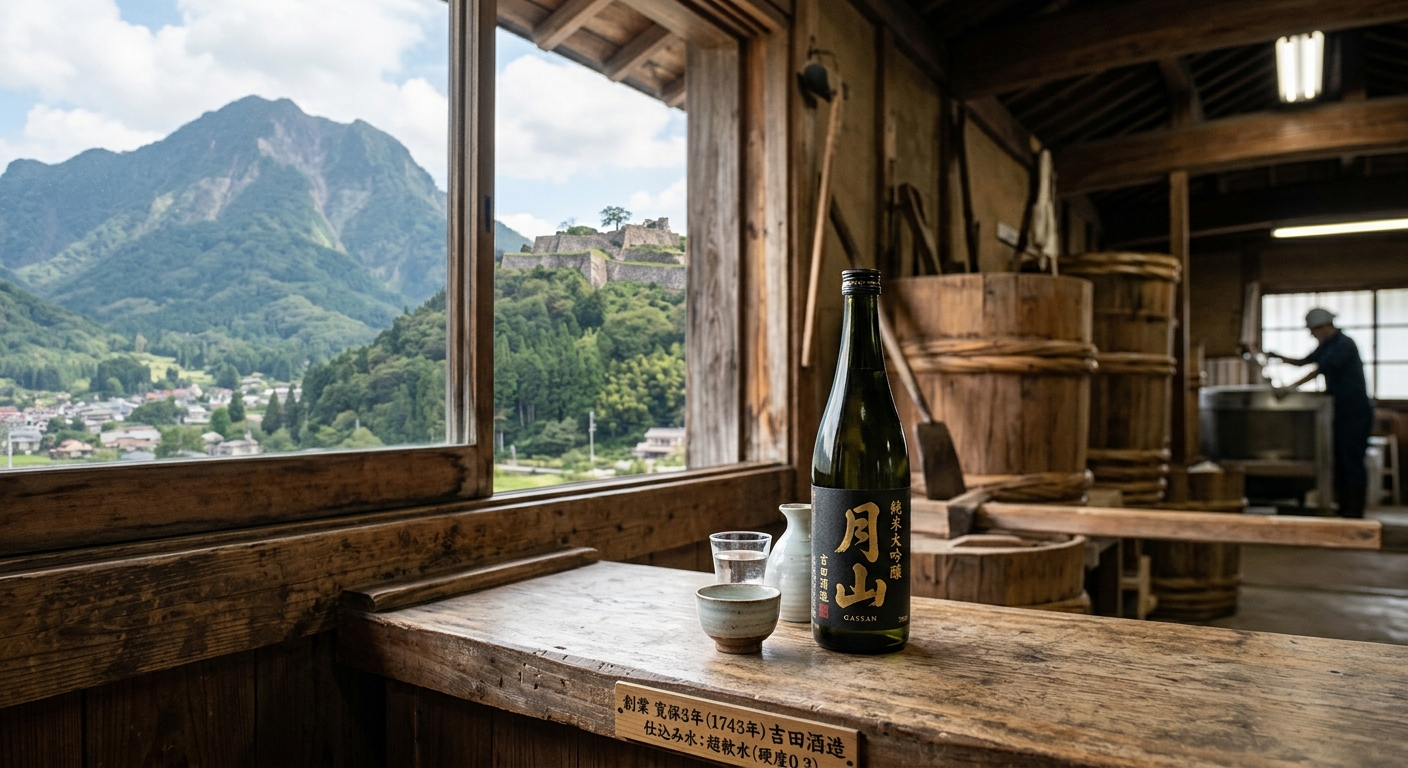
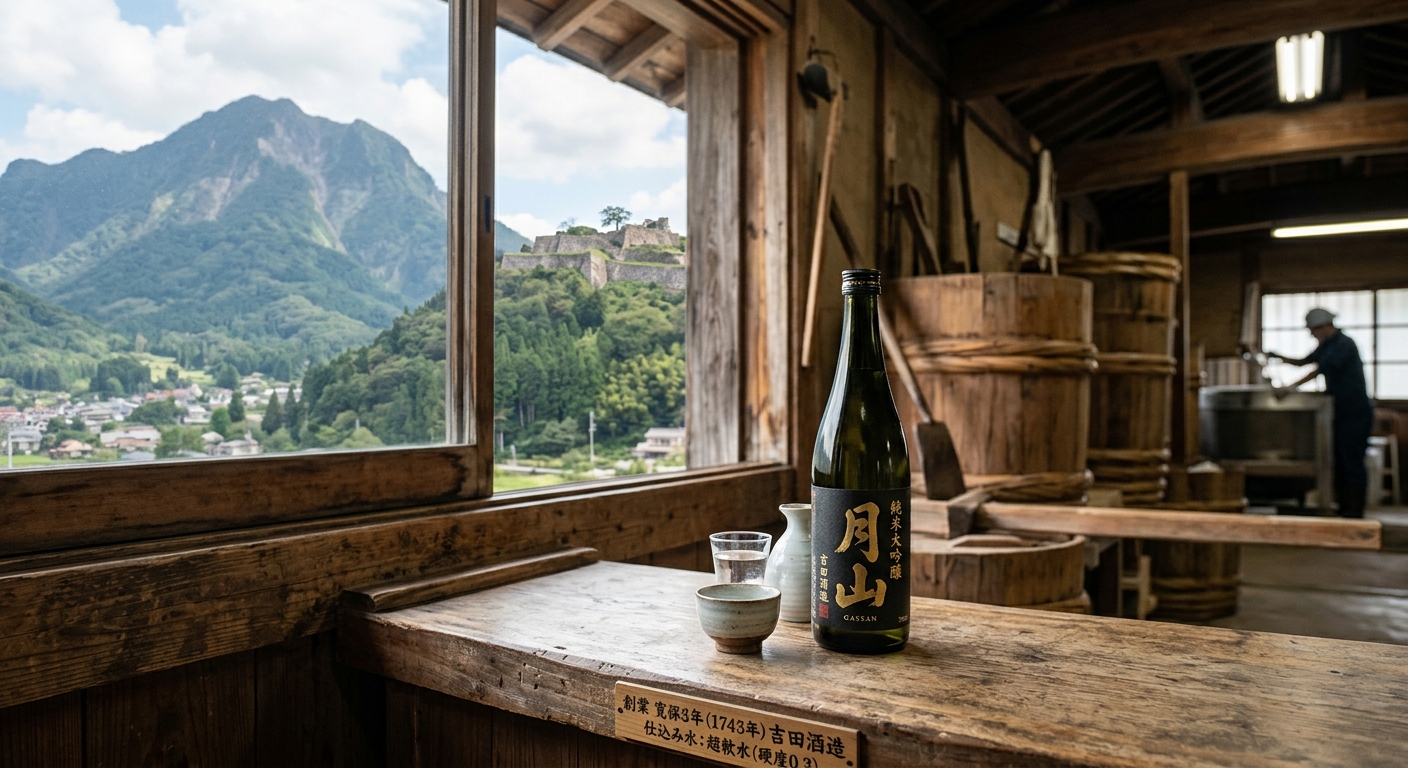
Yoshida Shuzo Co., Ltd. began brewing in 1743, under a license granted by the Hirose domain. According to the brewery’s own website, the family had already been making sake since 1730 under its earlier household name — together, close to 300 years rooted in this part of Yasugi. During the Edo period, the best-finished sake of each year was named “Gassan” and offered to the lord of the Hirose domain as the “ichiban-daru,” or “first cask.” The brewery’s flagship brand, Gassan, takes its name directly from that tribute sake, and the brewery still describes its guiding idea today as: “to keep brewing sake as fine as what was once offered to the lord.”
For its brewing water, the brewery draws on local water running at its own doorstep, which its official site describes as “ultra-soft water with a hardness of 0.3.” The bottle in this pairing, Gassan Junmai Daiginjo, is brewed with that ultra-soft water and 100% Yamada Nishiki rice, polished down to a seimai buai of 45%. At 16% alcohol, it offers a well-balanced, clean finish, with a gentle acidity wrapping around a firm sweetness and umami.
The Story of the Land
Hirose-cho, in Yasugi City, where Yoshida Shuzo stands, is the former castle town of Gassan Toda Castle, the stronghold of the Amago clan, who once ruled much of the San’in and San’yo regions during the Sengoku period. Built atop Mt. Gassan, about 184 meters high, the castle was protected by steep cliffs and deep moats and was long known as a near-impregnable fortress. It was designated a national historic site in 1934 and named No. 65 on the official list of Japan’s 100 Fine Castles in 2006. In 1566, after a prolonged siege by the Mori clan exhausted its provisions, the castle’s lord at the time, Amago Yoshihisa, was forced to surrender it. Yamanaka Yukimori (also known as Shikanosuke), a general born and raised at the foot of this castle, is remembered as one of the Ten Brave Warriors of Amago; a bronze statue of him still stands on the castle ruins’ Taikodan terrace today.
The brewery’s brand name, Gassan, is simply the name of this mountain and its castle. The idea of naming the finest cask offered to one’s lord after the very mountain that crowned the castle is a piece of the brewery’s spirit that survives on the label even now, nearly 400 years later.
The Story of the Song
“Shimane Koi Tabi” was released on April 9, 2014, Mizumori Kaori’s 22nd single. The lyrics are by Niitani Toshiya, the music by Tsuru Tetsuya, and the arrangement by Ito Norio. It debuted at No. 4 on Oricon’s weekly singles chart and was certified Gold by the Recording Industry Association of Japan. On December 20 of that year, it won the Grand Prize at the 47th Japan Cable Awards. It’s a travel-themed enka song that follows a heartbroken woman traveling alone through Shimane, taking in the view from the San’in Main Line and the scenery of Lake Shinji along the way.
Mizumori Kaori was born in Tokyo in 1973. She debuted as a singer in 1995 with the single “Oshiroi Bana.” After her 2003 hit “Tottori Sakyu” (“Tottori Sand Dunes”), requests poured in from local governments across Japan asking her to sing about their own regions, earning her the nickname “the Queen of Local Songs.” “Shimane Koi Tabi” is one entry in that ongoing series of regional travel songs.
Why This Pairing
Gassan is a sake polished not for flashy promotion, but through the quiet, steady diligence of brewing a bottle worthy of one’s lord, year after year. The woman at the heart of “Shimane Koi Tabi,” meanwhile, carries her heartbreak alone, walking through Shimane’s scenery for no one’s eyes but her own.
Neither is a dramatic story. But just as a sake named after a castle once called impregnable has gone on being quietly polished, generation after generation, a traveler with a wounded heart can slowly put herself back together within this land’s scenery. The moon over that mountain castle was never only for the lord — it should settle just as quietly over the heart of anyone walking this land today.
Where to Find This Bottle
The Rakuten Ichiba link below is an affiliate link.
- Brewery’s official site: https://e-gassan.co.jp/
- Buy on Rakuten Ichiba: View the product page (720ml, ¥3,850)
Note: the links above lead to Japan-based retailers. They’re most convenient for readers in Japan, or for those elsewhere who are able to arrange international shipping. Stock and availability change over time, so if you’re near a specialty sake shop, it’s well worth asking for this label by name.
Pairing Dishes Worth Trying
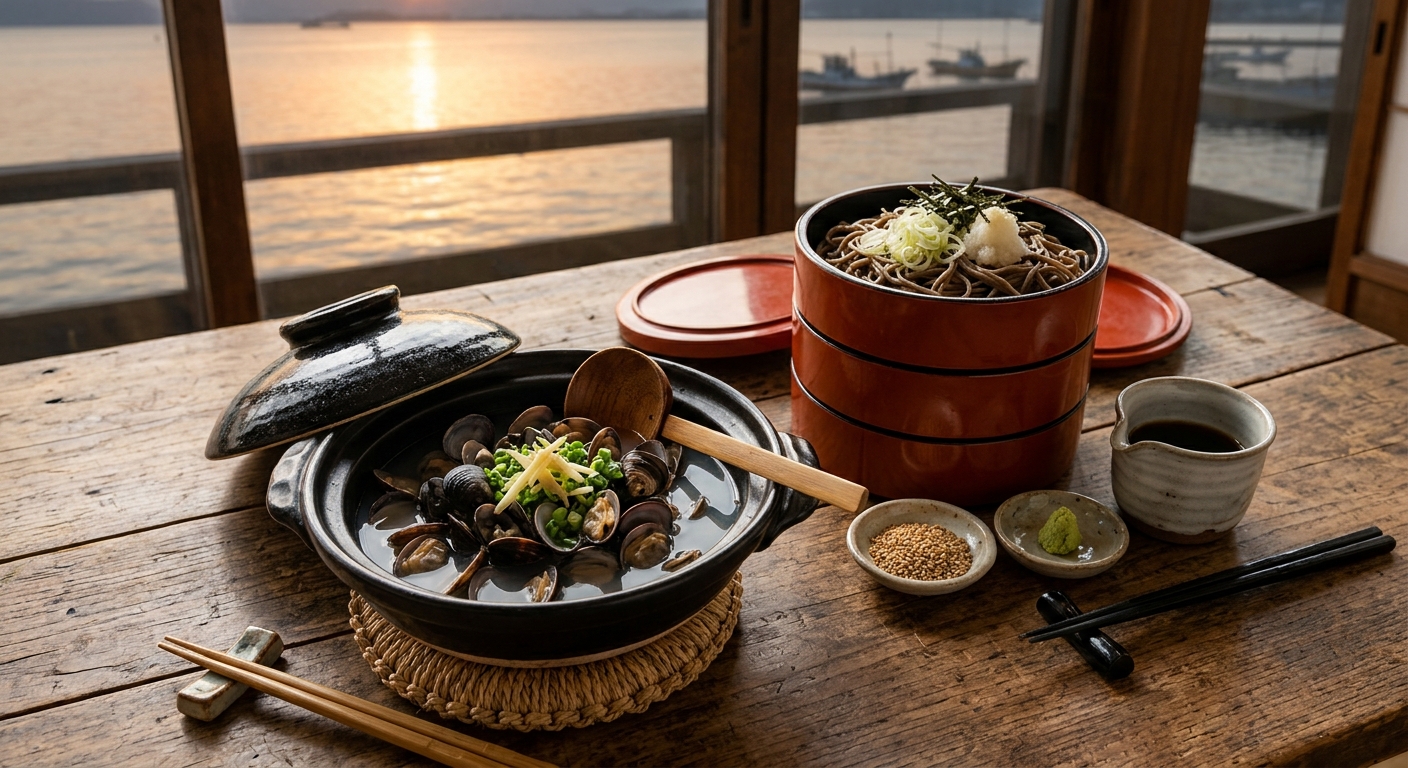
- Sake-steamed Lake Shinji shijimi clams
Lake Shinji’s shijimi clams, steamed in nothing but sake, are one of Shimane’s signature dishes. Their refined umami and natural saltiness pair naturally with the gentle acidity of a junmai daiginjo brewed with ultra-soft water (hardness 0.3).
Recipe (in Japanese): Lake Shinji Shijimi Official Site, “A Fisherman’s Own Sake-Steamed Shijimi, Loved by Kids Too” - Izumo soba (warigo soba)
A local specialty of the Izumo region, served in a stack of three round lacquered bowls, each topped with different condiments. The soft water used to brew this sake keeps its flavor from overpowering the delicate aroma of the soba’s dipping sauce, letting the two run cleanly side by side.
Recipe (in Japanese): Rakuten Recipe, “Izumo Specialty: Warigo Soba”
A note on the science: the succinic acid and glutamic-acid-type umami in shijimi clams, and the inosinic acid (from bonito flakes) and glutamic acid (from kombu) in soba dipping sauce, both resonate with the amino-acid umami in sake, creating a synergistic boost of savoriness on the palate. Because ultra-soft water carries very little mineral character, sake brewed with it tends not to overpower the delicate aroma and umami of a dashi-based broth — part of why this local water and this local food sit so naturally together.
Visiting the Brewery
Yoshida Shuzo
1216 Hirose, Hirose-cho, Yasugi City, Shimane. About 15 min by car from Yasugi Station on the JR San’in Main Line.
The brewery stands in the old castle town of Gassan Toda Castle, the Sengoku-era stronghold of the Amago clan.
Sights Nearby
- Ruins of Gassan Toda Castle / Hirose-cho, Yasugi | about 5 min, 1.5 km by car from the brewery
The remains of the mountain fortress that served as the Amago clan’s stronghold, long described as nearly impregnable. A national historic site, and No. 65 on the official list of Japan’s 100 Fine Castles (2006). The Yasugi City Museum of History at its foot (admission ¥210) is a good first stop before climbing, with a diorama of the castle’s history. - Adachi Museum of Art / 320 Furukawa-cho, Yasugi | about 10 min, 2.6 km by car from the brewery
Its Japanese garden has been ranked No. 1 in Japan for 23 consecutive years (as of the 2025 ranking, per the museum’s own announcement) by the US-based Sukiya Living Magazine: The Journal of Japanese Gardening. The museum is also known for its Yokoyama Taikan collection. Opening hours and closures vary by season, so check the official site before you go.
Hot Springs Nearby
- Yumeland Shirasagi (Sagi-no-yu Onsen) / Furukawa-cho, Yasugi | about 10 min, 2.6 km by car from the brewery
A day-use bathing facility right by the Adachi Museum, in the Sagi-no-yu hot spring area. It includes a swimsuit-required “bade spa” pool and a restaurant, open 10:00–21:00. Hours and closures can change, so check ahead.
Opening hours, closing days and day-use bathing availability can change. Please check each facility’s official information before visiting.
A Quick Glossary of Sake Terms
- Junmai Daiginjo: Junmai (sake made only from rice, rice koji, and water, with no added brewing alcohol) polished to a seimai buai of 50% or less — the most refined, fragrant tier of junmai sake.
- Seimai buai (rice-polishing ratio): The percentage of the original grain remaining after milling. The lower the number, the more the rice has been polished down.
Sources
- “About Yoshida Shuzo” – Yoshida Shuzo Co., Ltd. Official Site
- Gassan Junmai Daiginjo 720ml – Yoshida Shuzo Official Online Shop
- Shimane Koi Tabi – Wikipedia (Japanese)
- Gassan Toda Castle – Wikipedia (Japanese)
- Lake Shinji Shijimi Official Site – Sake-Steamed Shijimi Recipe
If you notice any errors in this article, please don’t hesitate to reach out at info@soundrecords.jp.
Keep reading in English
Sake and Kayokyoku
- The Moon Over the Tone River Has Always Lit the Ones Who Keep Changing
- One Autumn Day, Someone Saw a Nation’s Pride in a Chrysanthemum
- To Brew in a Time of Peace
Browse all articles in English
Read this article in Japanese: 山城にかかる月は、迷った心にも満ちていく