日本語で読む | This is the English version of a bilingual article.
Today’s Pairing
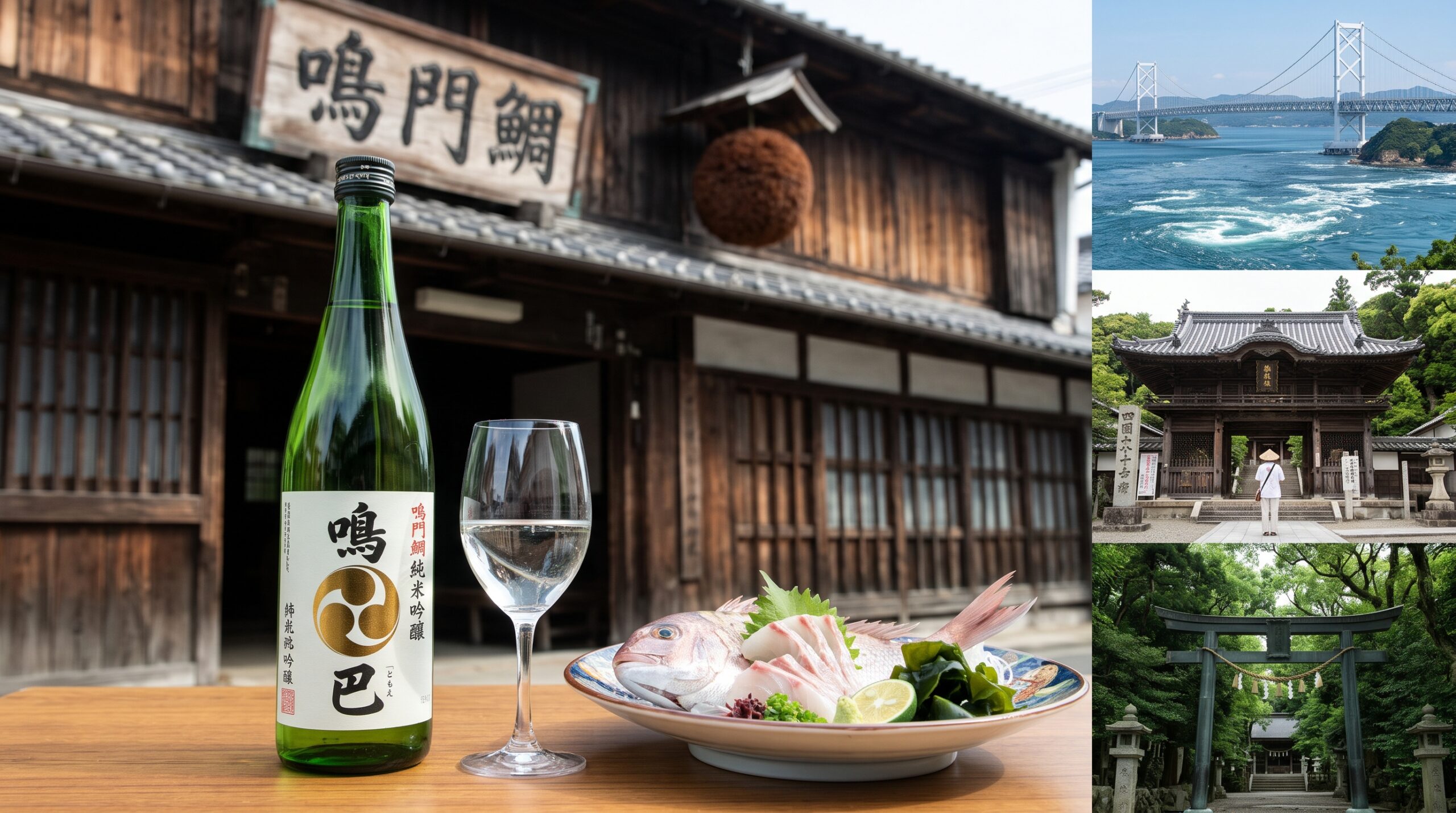
- Sake: Narutotai “Tomoe” Junmai Ginjo — brewed with 100% Tokushima-grown “Awa-ichiba Yamada Nishiki” sake rice, rice-polishing ratio (seimai buai) 58%, 15% alcohol / Honke Matsuura Sake Brewery Co., Ltd. (19 Yanaginomoto, Ikedani, Oasa-cho, Naruto City, Tokushima Prefecture)
Official site: https://narutotai.jp/ - Kayoukyoku (classic Japanese popular song, here in the enka style): “Naruto Kairyu” (“Naruto Current”) by Miyama Hiroshi, 2026
YouTube: https://www.youtube.com/watch?v=pUXqt1iYeqU
▶ If the player above doesn’t play, open it on YouTube
The Story of the Brewery
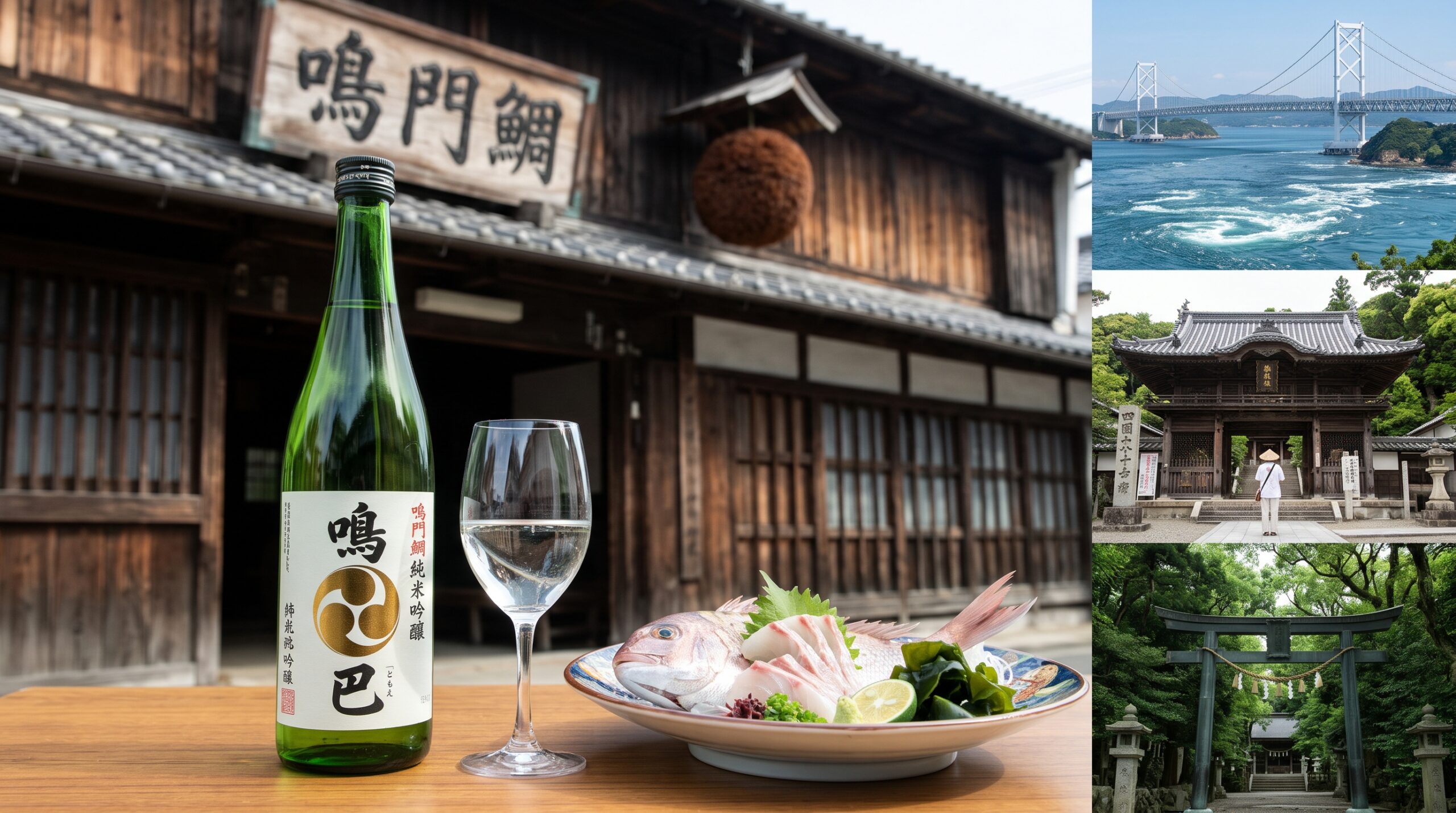
Honke Matsuura Sake Brewery was founded in 1804, when the second-generation Matsuura Naozo Yukiyasu began brewing sake. The brewery has kept making sake in Naruto ever since, and in 1886 it registered its flagship brand name, Narutotai, as a trademark. Today the company is led by chairman Tachibana Osamu, representative director Tachibana Teruhiro, and president Sakai Yu.
The bottle in this pairing, Narutotai “Tomoe” Junmai Ginjo, is brewed with 100% Tokushima-grown Awa-ichiba Yamada Nishiki rice, polished to a seimai buai of 58%, at 15% alcohol. Junmai ginjo is sake made only from rice, rice koji, and water (no added brewing alcohol), polished to 60% or less and fermented slowly at low temperatures for a fragrant aroma. This one is known for its smooth acidity, pleasant fruitiness, and elegant aroma — a bottle its brewery says pairs equally well with Japanese and Western food. It has won gold at Japan’s “Wine Glass Award for Sake” in 2023 and 2025, and the award’s top honor in 2026.
The Story of the Land
Oasa-cho, where the brewery stands, spreads along the lower reaches of the Yoshino River in Naruto City. Just a few minutes’ drive from the brewery sit Ryozen-ji, Temple No. 1 of the Shikoku Pilgrimage, and Oasahiko Shrine, the former chief shrine (ichinomiya) of Awa Province. Ryozen-ji is said by tradition to have been founded by the monk Gyoki during the Tenpyo era (729–749) and is known as the temple where Shikoku pilgrims traditionally begin their journey. Oasahiko Shrine, known locally as “Oasa-san,” enshrines the deity Oasahiko no Kami.
Naruto is also known for the whirlpools of the Naruto Strait. According to the Japan Coast Guard’s 8th Regional Headquarters Hydrographic and Oceanographic Department, the strait’s current can reach speeds of 19 km/h or more when it’s running strong. Red sea bream that swim against this fierce current are known for developing firm, dense flesh, and are sold under the brand name Narutotai (“Naruto sea bream”). The brewery’s own flagship brand takes its name from this very fish. The same current is also credited with growing Naruto wakame, a seaweed prized for its firm texture and strong flavor.
The Story of the Song
“Naruto Kairyu” is a single released on June 24, 2026, by enka singer Miyama Hiroshi. The lyrics are by Banjo Takashi, the music by Gen Tetsuya, and the arrangement by Nango Tatsuya. Set against the fierce current of the Naruto Strait, the song sings of a man’s romantic resolve and spirit, and reached a peak position of 22 on Oricon’s weekly singles chart.
Miyama Hiroshi was born on September 17, 1980, in Nankoku City, Kochi Prefecture; his real name is Tsuneishi Masaaki. He moved to Tokyo at 25 and, after years of hardship, debuted in June 2009 with the single “Hitokoi Sakaba.” His stage name, “Miyama” (literally “three mountains”), nods both to his home prefecture of Kochi, surrounded by mountains on three sides, and to his mentor, composer Nakamura Norimasa, who also used the pen name “Yamaguchi Hiroshi.” Known as the “kendama enka singer” for performing the traditional toy trick while singing onstage, he first appeared on NHK’s 66th Kohaku Uta Gassen in 2015 and has remained a regular on the year-end broadcast ever since.
Why This Pairing
The name “Narutotai” comes from a sea bream that swims against the Naruto Strait’s fierce whirlpools, growing firmer for the struggle. Polished by a rough current, it only grows better — a story that applies to this region’s sake as much as to its fish.
“Naruto Kairyu,” meanwhile, sings of a man’s resolve set against that very same fierce current. Even listeners who’ve never seen the strait can hear the roar of its whirlpools behind the song.
A sake that carries the name of a fish raised in the whirlpools, and a song that watches those whirlpools and sings of resolve — both are stories born of the same rough sea at Naruto. Let the strait’s churning current come to mind as you tip your glass.
Where to Find This Bottle
The Rakuten Ichiba link below is an affiliate link.
- Brewery’s official site: https://narutotai.jp/
- Buy on Rakuten Ichiba: View the product page (1800ml, ¥4,543)
Note: the links above lead to Japan-based retailers. They’re most convenient for readers in Japan, or for those elsewhere who are able to arrange international shipping. Stock and availability change over time, so if you’re near a specialty sake shop, it’s well worth asking for this label by name.
Pairing Dishes Worth Trying
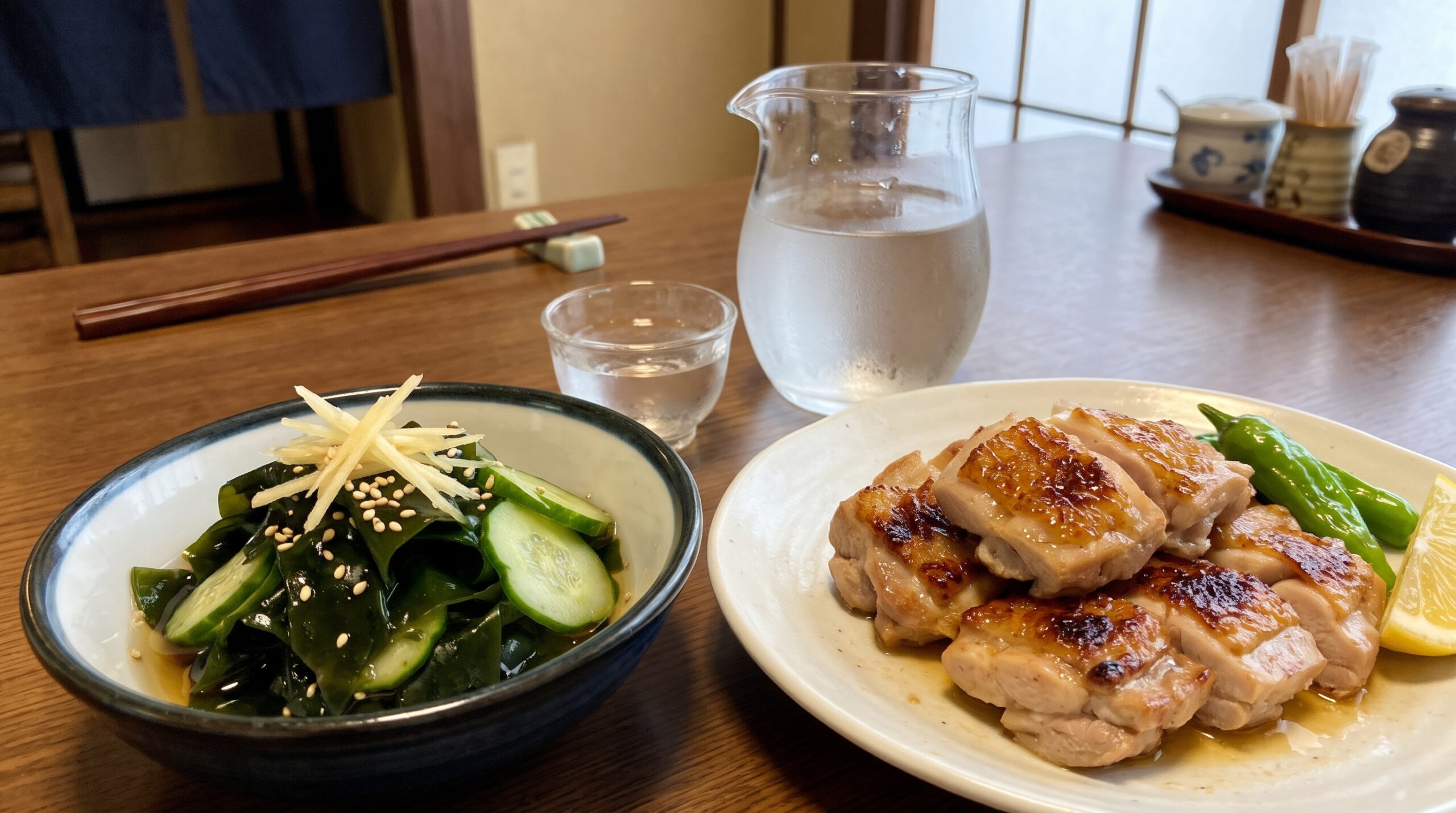
- Fresh wakame and cucumber sunomono (vinegared salad)
Naruto wakame, grown in the fierce currents of the Naruto Strait, is known for its thick, firm texture and strong flavor. A simple vinegared salad lets that texture and aroma come through clearly, and the dish’s acidity echoes the smooth acidity of this junmai ginjo.
Recipe (in Japanese): Kurashiru, “Fresh Wakame and Cucumber Sunomono” - Awa Odori chicken, skin seared until crisp
Awa Odori chicken is a local breed that took Tokushima Prefecture’s livestock researchers more than a decade to develop. Slowly searing the skin until crisp brings out the chicken’s full umami, and the toasty aroma it develops echoes the elegant ginjo aroma of this junmai ginjo.
Recipe (in Japanese): Cookpad, “Awa Odori Chicken Thigh with Crispy Seared Skin”
A note on the science: the acidity in a vinegared salad echoes the organic acids naturally present in sake, tidying up the aftertaste on the palate. The toasty aromatic compounds that develop as chicken skin sears slowly (through the Maillard reaction) layer nicely with the fragrant ginjo aroma of a junmai ginjo, adding depth to the overall aroma.
Visiting the Brewery
Honke Matsuura Sake Brewery
19 Yanaginomoto, Ikedani, Oasa-cho, Naruto City, Tokushima Prefecture. About a 15-minute walk from Ikedani Station (JR Kotoku Line), about an 8-minute walk from Awa-Otani Station (JR Naruto Line), or about 10 minutes by car from Naruto-nishi IC on the expressway.
Oasa-cho, where the brewery stands, spreads along the lower reaches of the Yoshino River, within a few minutes’ drive of Shikoku Pilgrimage Temple No. 1 and the former chief shrine of Awa Province.
Sights Nearby
- Ryozen-ji Temple (Shikoku Pilgrimage Temple No. 1) / Oasa-cho Bando, Naruto | about 5 min, ~2 km by car from the brewery
Honoring Shaka Nyorai (Shakyamuni Buddha) as its principal image, Ryozen-ji is said by tradition to have been founded by the monk Gyoki during the Tenpyo era (729–749). It’s known as the temple where Shikoku pilgrims traditionally begin their journey. - Oasahiko Shrine (former chief shrine of Awa Province) / Oasa-cho Bando, Naruto | about 6 min, ~3 km by car from the brewery
Known locally as “Oasa-san,” this shrine enshrines the deity Oasahiko no Kami. Mt. Oasa, home to the shrine’s okunomiya (inner sanctuary), rises behind the grounds. - Naruto German House (Doitsukan) / Oasa-cho Hinoki, Naruto | about 7 min, ~3 km by car from the brewery
A museum telling the story of the German POW band interned at the Bando POW camp during World War I, who gave Japan’s first-ever complete performance of Beethoven’s Symphony No. 9 on June 1, 1918. Open 9:30–17:00 (last entry 16:30); closed the 4th Monday of each month and over the New Year holidays. Please check opening days before visiting.
Hot Springs Nearby
- Naruto Natural Hot Spring Aratae no Yu / Mutsu-cho, Naruto | about 15 min, ~10 km by car from the brewery
A day-use-only hot spring next to the Naruto boat-racing stadium, with both a mineral-spring open-air bath and a Roman-style indoor bath (open 8:00–24:00, last entry 23:00). Please check admission fees and closures before visiting.
Opening hours, closing days and day-use bathing availability can change. Please check each facility’s official information before visiting.
A Quick Glossary of Sake Terms
- Junmai Ginjo: Junmai (sake made only from rice, rice koji, and water, with no added brewing alcohol) that has been polished to a seimai buai of 60% or less and fermented slowly at low temperatures, giving it a fragrant aroma.
- Seimai buai (rice-polishing ratio): The percentage of the original grain remaining after milling. The lower the number, the more the rice has been polished down.
Sources
- Honke Matsuura Sake Brewery – Official Site
- Company Profile – Honke Matsuura Sake Brewery
- Company History – Honke Matsuura Sake Brewery
- Narutotai “Tomoe” Junmai Ginjo – Honke Matsuura Sake Brewery
- Miyama Hiroshi, “Naruto Kairyu” MUSIC VIDEO (Nippon Crown Enka/Kayoukyoku Official Channel)
- Miyama Hiroshi Releases New Single “Naruto Kairyu” – Utabito (Japanese)
- Miyama Hiroshi – Wikipedia (Japanese)
- Naruto Wakame – Pride Fish (Japan Fisheries Cooperatives, Japanese)
- About Awa Odori Chicken – Tokushima Prefectural Government (Japanese)
- About Naruto City German House (Japanese)
If you notice any errors in this article, please don’t hesitate to reach out at info@soundrecords.jp.
Keep reading in English
Sake and Kayokyoku
- The Moon Over the Mountain Castle Fills Even a Lost Heart
- The Moon Over the Tone River Has Always Lit the Ones Who Keep Changing
- One Autumn Day, Someone Saw a Nation’s Pride in a Chrysanthemum
Browse all articles in English
Read this article in Japanese: 荒々しい渦に磨かれて、うまくなる