Suigei Shuzo was founded in 1872 (Meiji 5). Its predecessor, Ishino Shuzo, began brewing sake in the Nagahama district of Kochi City, and the brewery has kept the tradition alive ever since as the only sake brewery still operating within Kochi City itself.
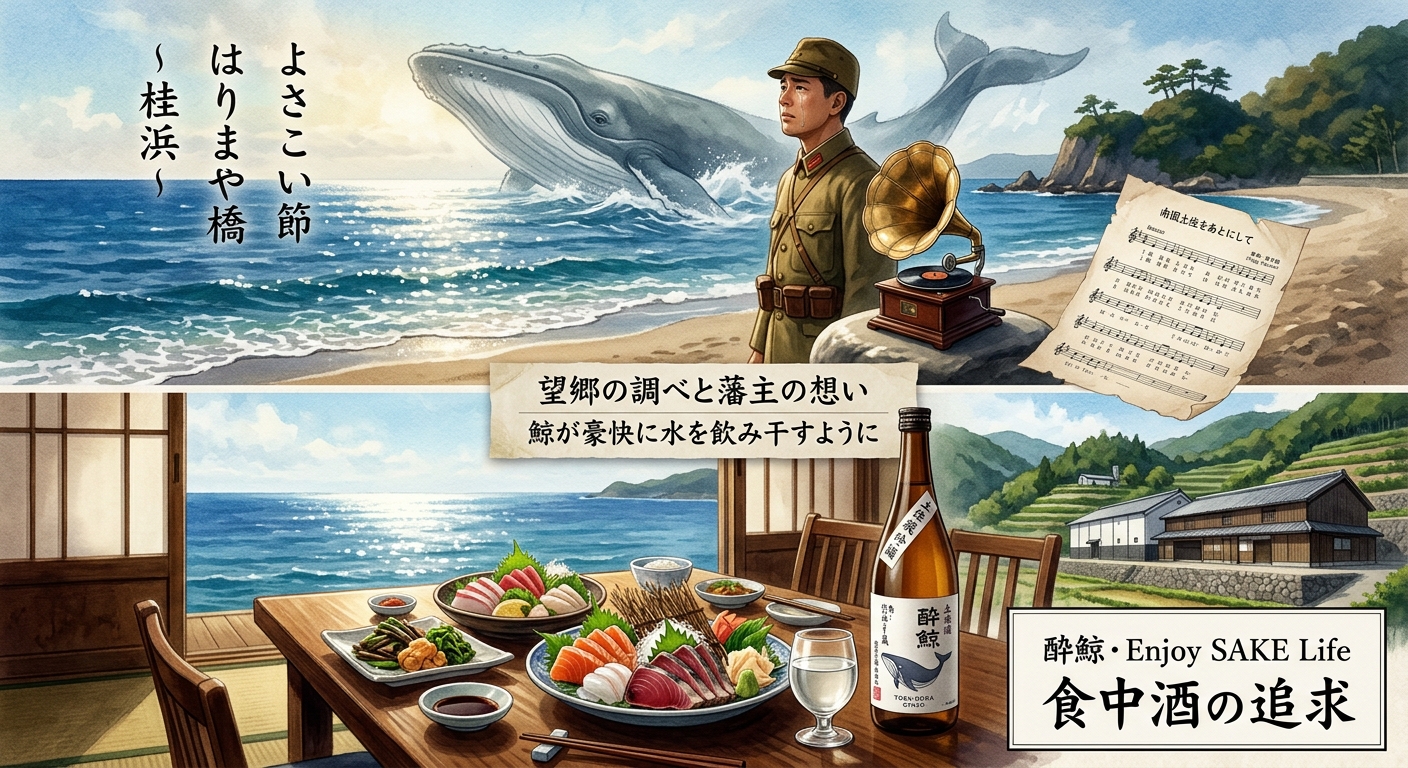
The name “Suigei” (literally “drunken whale”) traces back to the pen name that Yamauchi Yodo, the 15th and final lord of the Tosa domain in the closing years of the shogunate, gave himself: “Geikai Suikou,” or “the drunken lord of the whale sea.” Yodo was famously fond of drink, and the name likens the way he savored sake to a whale gulping down great draughts of seawater — a wish, carried into the present day, that guests too might drink as heartily and joyfully as a whale.
The brewery’s guiding theme is “Enjoy SAKE Life.” Its sake aims for a gentle aroma, a crisp finish, and a solid depth of umami — a style built to accompany food, in step with Tosa’s rich culinary culture. In 2018 the brewery opened a second facility, the Tosa Kura, dedicated entirely to ginjo-grade sake, and with the original Nagahama Kura now operating alongside it, production has continued to grow.
The Story of the Land
Kochi Prefecture faces the Pacific Ocean and is richly blessed by the Kuroshio Current. Abundant in seafood, mountain harvests, and river delicacies, the region has a deep-rooted spirit of hearty eating and hearty drinking — embodied in “sawachi ryori,” the local tradition of piling generous spreads of food onto large communal platters for everyone to share.
The fact that Tosa sake is, almost without exception, light and dry owes much to this culture of lively banqueting. Sake here has been refined toward a crisp, clean profile precisely so that drinkers never tire of it, cup after cup after cup. The region’s mild climate and the pure water flowing down from its mountains quietly support that character.
The Story of the Song
The origins of “Nangoku Tosa wo Ato ni Shite” trace back to the Pacific War, when soldiers from Kochi serving in the “Whale Corps” (the 236th Infantry Regiment of the former Imperial Japanese Army’s 40th Division) sang it on distant battlefields to remember their home. After the war, composer Takemasa Eisaku reworked and rearranged the song, giving it new lyrics that captured the feelings of young people leaving Tosa behind for group employment in the cities.
Released by King Records in 1959 with Peggy Hayama on vocals, the song became a massive hit, selling roughly one million copies within about a year and around two million copies in total. The lyrics weave in a phrase from the folk song “Yosakoi Bushi” along with famous Kochi landmarks such as Harimaya Bridge and Katsurahama Beach, expressing with striking directness the ache of missing home even from far away.
Why This Pairing
The song traces its roots to the “Whale Corps,” and the sake takes its name from “the drunken lord of the whale sea.” Neither connection was planned, yet a whale swims quietly through both the song and the sake — which is what makes this pairing such a delightful find.
A song sung with a heart full of homesickness, and a sake that carries forward the name of a lord who loved to drink as heartily as a whale — both are joined by the same thread: a longing for Tosa that persists even from afar. With every cup, the wistful melody once sung on a faraway battlefield seems to echo quietly once more.
Where to Find This Bottle
The Rakuten Ichiba link below is an affiliate link.
Note: Stock and availability change often, and the Rakuten and Amazon links above lead to Japan-based retailers — most convenient for readers in Japan or anyone able to arrange international shipping. Readers elsewhere may want to check a local specialty sake shop, or simply ask for this bottle by name.
🌡️ Recommended way to enjoy it:Well chilled. The gentle ginjo aroma and crisp, dry finish come into sharpest focus at a cold temperature.
A Pairing Dish Worth Trying
Katsuo no Tataki (Seared Bonito) An essential dish when talking about Kochi. The smoky char from straw-grilling and the clean, lean flavor of the fish — with excess fat seared away — meet the crisp, dry character of Suigei head-on. Best enjoyed piled high with fresh aromatics, alongside a steady pour of sake. Recipe (in Japanese): クラシル「かつおのたたき」
Sawachi Ryori Kochi’s classic banquet-style spread, featuring everything from sashimi to sushi to fried dishes arranged together on large platters. Its refusal to be tied to a single flavor, and its openness to cup after cup of sake, embodies the very spirit of “Enjoy SAKE Life” that Suigei stands for. Recipe (in Japanese): クラシル「海鮮ちらし寿司」
A small note on the science: the smoky aroma of straw-grilled bonito resonates with the gentle fragrance of ginjo-style sake, while the sake’s acidity cleanly washes away the richness of the fish’s fat.
Visiting the Brewery
Suigei Brewing, Nagahama Brewery 566-1 Nagahama, Kochi City, Kochi. About 20 min by car from Kochi Station. The brewery, close to Katsurahama beach, carries on a sake house founded on this spot in 1872.
Sights Nearby
Katsurahama Beach / Kochi City | ~10 min, ~4 km by car from the brewery A scenic spot on the Pacific, where a statue of Sakamoto Ryoma gazes out to sea. The small Katsurahama Aquarium is on the same beach.
Kochi Prefectural Sakamoto Ryoma Memorial Museum / Kochi City (in Katsurahama Park) | ~10 min, ~4 km by car from the brewery A museum showing Ryoma’s letters and more. 9:00-17:00, open year-round; the permanent exhibition is ¥500 for adults (¥900 during special exhibitions), free for high-school age and younger.
Hot Springs Nearby
Sansuien “Yudono Suisaikaku” natural hot spring / Kochi City | ~15 min, ~8 km by car from the brewery The hot spring of an inn built on the former villa grounds of the Yamauchi lords of Tosa, with an open-air bath looking out over the Kagami River and Mt. Hitsuzan. Day-use bathing 10:00-16:00 (last entry 15:30), ¥1,200 for adults.
Opening hours, closing days and day-use bathing availability can change. Please check each facility’s official information before visiting.
A Quick Glossary of Sake Terms
Junmai Ginjo: A pure rice sake (junmai) made from rice milled down to 60% or less of its original size and fermented slowly at low temperatures. Known for its fragrant, floral aroma.

コメントを残す