今日のペアリング
▶ 上のプレーヤーで再生できない場合は、YouTubeで開く
酒蔵の話
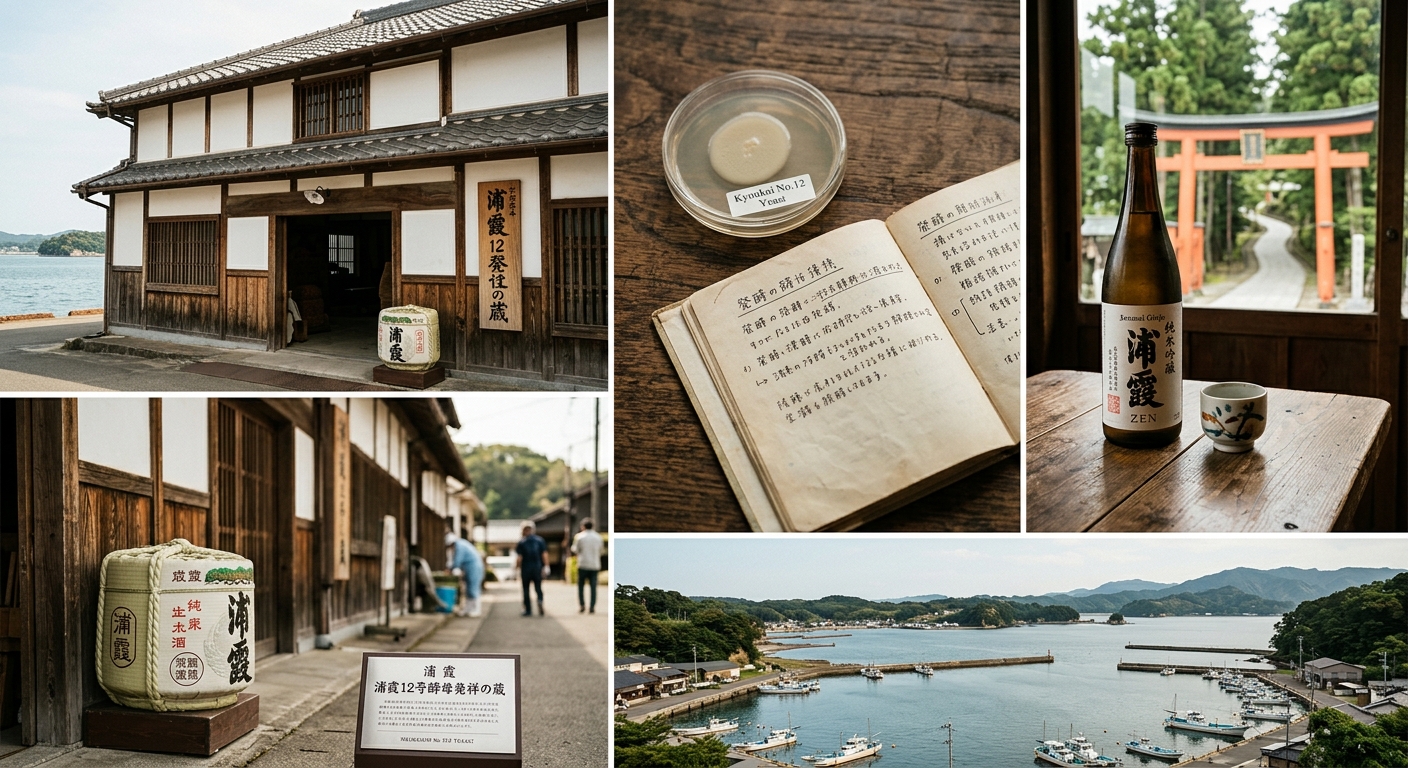
「浦霞」を醸す株式会社佐浦は1724年(享保9年)創業。仙台湾に面した港町、宮城県塩竈市に蔵を構える老舗です。江戸時代後半には、陸奥国一之宮として仙台藩主伊達家の崇敬を集めた鹽竈神社の御神酒酒屋となり、以来その役目を今に伝えています。現在の蔵元は13代目・佐浦弘一氏です。
昭和40年(1965年)頃、宮城県酒造協同組合醸造試験所の技師が、浦霞の吟醸醪から一つの酵母を分離しました。この酵母はのちに日本醸造協会によって「きょうかい12号酵母」として登録され、昭和60年(1985年)頃からは全国の酒蔵へ頒布されるように。以来、浦霞は「12号酵母発祥の酒蔵」を自認しています。蔵の中でひっそり生まれた一つの酵母が、やがて日本中の酒造りを支える存在になったのです。
今回合わせる「純米吟醸 浦霞禅」は1973年発売以来、蔵を代表するロングセラー商品。山田錦と、宮城県で生まれた酒造好適米・トヨニシキを用い、精米歩合50%まで磨いて醸されています。アルコール度数15度、日本酒度+2〜+3。穏やかな果実のような香りと、フレッシュでほどよい旨みが持ち味で、公式には食中酒として位置づけられている一本です。
土地の話
塩竈市は仙台湾に面し、松島湾への玄関口でもある港町です。豊かな漁場に恵まれ、古くから鹽竈神社の門前町として栄えてきました。佐浦は、その神社に御神酒を納める蔵として、地域と長く歩みをともにしてきました。
蔵の中で生まれた小さな酵母が、思いがけず日本中の酒蔵に広がっていったように、この港町は、地元でひっそり育まれたものが、遠くまで届く力を持った土地でもあります。
音楽の話
「青葉城恋唄」が生まれたのは1977年6月。さとう宗幸さんがNHK-FM仙台の番組「FMリクエストアワー」でDJを務め、リスナーが投稿した詩に曲をつける企画を始めた、その中でのことでした。仙台在住のリスナー・星間船一さんが投稿した詩に、さとうさんが手を加えて編詩し、わずか5分ほどでこの曲ができあがったといいます。
そのデモテープがキングレコードのディレクターの目に留まり、ダークダックスとの競作という形で、1978年5月5日にシングル発売。さとう宗幸盤はオリコン週間最高3位、100万枚を超えるヒットとなり、同年の日本レコード大賞新人賞、日本作詩大賞、日本有線大賞最優秀新人賞、FNS歌謡祭最優秀新人賞など数々の賞に輝きました。
広瀬川や青葉通、仙台七夕を歌詞に織り込みながら、仙台城下町を舞台に失恋を歌う叙情詩。仙台市・宮城県はもちろん東北地方を代表するご当地ソングとされ、歌詞にある仙台の雅称「杜の都」を全国に広めた一曲でもあります。
なぜこの組み合わせなのか
どちらも、地元でごくひっそりと生まれたものが、思いがけず遠くまで届いた物語を持っています。浦霞の蔵の醪の中で見つかった一つの酵母は、20年の時を経て全国の酒蔵に広がり、数えきれない酒の味を支える存在になりました。同じように、仙台のラジオ番組にリスナーが投稿した一編の詩は、わずか5分で曲になり、やがて日本中で歌われる一曲へと育ちました。
浦霞禅の穏やかな果実香とフレッシュな旨みには、飾り立てない素朴さがあります。それは、技巧を凝らしたわけではないのに、じわりと全国に浸透していったこの曲の飾らない魅力と重なります。ローカルな場所からひっそり生まれたものが、飾らないままに遠くまで愛されていく――そんな共通点を、このペアリングに込めました。
この一本を、探すなら
※楽天市場へのリンクは広告(アフィリエイト)です。在庫・取扱いは変動します。お近くの酒販店でも、ぜひ銘柄名を伝えて探してみてください。
🌡️ おすすめの飲み方:公式には冷やから熱燗まで幅広い温度帯で楽しめるとされていますが、まずは10℃前後に軽く冷やして。穏やかな果実香とフレッシュな旨みが、いちばん澄んだかたちで感じられます。
合わせたい「アテ」
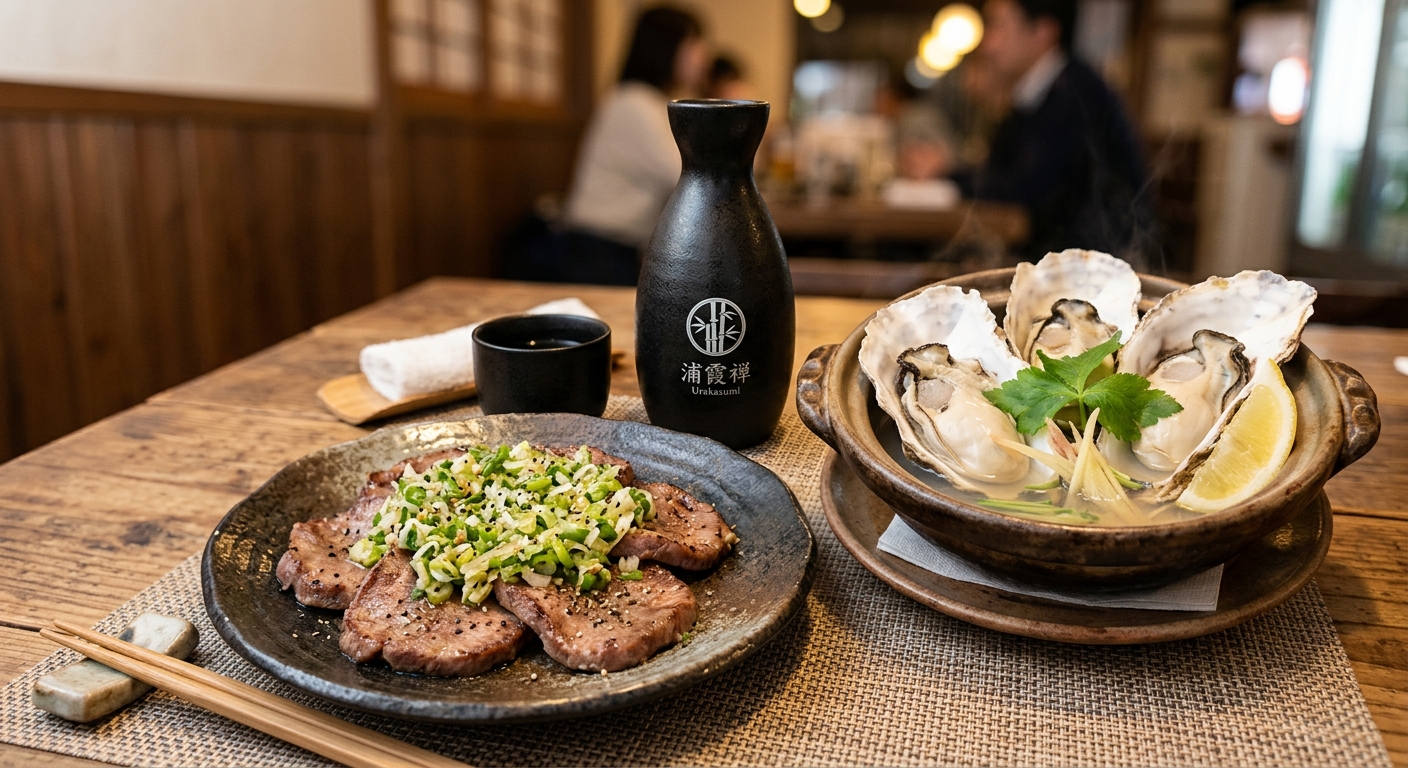
- シンプル ネギ塩牛タン
仙台名物・牛タンを、ねぎ塩でさっぱりと。脂の旨みとねぎ塩の爽やかさに、浦霞禅のフレッシュな酸とほどよい旨みが寄り添い、後味を軽やかに整えてくれます。
レシピはこちら:クラシル「シンプル ネギ塩牛タン」
- 殻付き牡蠣の酒蒸し
松島湾をはじめ宮城県が誇る牡蠣を、酒蒸しでシンプルに。凝縮した牡蠣の旨みに、純米吟醸ならではの穏やかな香りが寄り添う一皿です。
レシピはこちら:クラシル「お鍋で簡単 殻付き牡蠣の酒蒸し」
科学的にひとこと:牛タンの脂は、純米吟醸酒の穏やかな酸とすっきりした後味によって口の中がリセットされ、次の一口を新鮮に感じさせてくれます。牡蠣に豊富なグルタミン酸やコハク酸といった旨味成分は、日本酒に含まれるアミノ酸由来の旨味と重なり合い、互いを引き立て合う相乗効果を生みます。
この蔵をたずねるなら
浦霞醸造元 佐浦
宮城県塩竈市本町2-19/JR仙石線「本塩釜駅」から徒歩約7分。
本社併設の「浦霞 酒ギャラリー」で県内限定品などを販売しています(10:00〜17:00、日曜ほか休)。
近くの観光スポット
- 志波彦神社・鹽竈神社/塩竈市一森山|蔵から徒歩約15分(車で約5分)
海上安全・大漁の守り神として信仰を集める陸奥国一之宮。表参道の202段の石段でも知られます。
- マリンゲート塩釜/塩竈市港町|蔵から車で約5分・約1.5km
松島湾の遊覧船や、浦戸諸島への市営汽船が発着するターミナル。飲食・物販もあります。
- 松島(瑞巌寺・五大堂)/宮城郡松島町|蔵から車で約25分・約13km
日本三景のひとつ。伊達政宗ゆかりの瑞巌寺や、海に張り出した五大堂があります。
近くの温泉
- 松島温泉/宮城郡松島町|蔵から車で約25分・約13km
2008年に湧いた新しい温泉。松島湾を望むホテルの中に、日帰り入浴を受け付けるところがあります。受付時間は各施設でご確認ください。
※営業時間・定休日・日帰り入浴の可否は変わることがあります。おでかけ前に各施設の公式情報をご確認ください。
ひとことメモ(日本酒の用語)
- 純米吟醸酒:精米歩合60%以下まで磨いた米を低温でじっくり発酵させた純米酒。華やかな香りが特徴です。
- 精米歩合:玄米を削り、残った部分の割合。数値が低いほど、米を多く磨いていることを示します。
参考
内容に誤りがございましたら、お手数ですが info@soundrecords.jp までご連絡いただけますと幸いです。
Today’s Pairing
▶ If the player above doesn’t play, open it on YouTube
The Story of the Brewery
Saura Co., Ltd., brewer of Uragasumi, was founded in 1724. The brewery stands in Shiogama, a port town in Miyagi Prefecture facing Sendai Bay. In the latter half of the Edo period it became the official sake supplier to Shiogama Shrine, the region’s foremost shrine and one long revered by the Date clan, lords of the Sendai domain — a role it continues to this day. The current owner is the thirteenth generation, Saura Koichi.
Around 1965, a technician at the Miyagi Sake Brewers’ Cooperative research laboratory isolated a yeast strain from the ginjo mash at Uragasumi. That strain was later registered by the Japan Sake and Shochu Makers Association as “Kyokai No. 12 Yeast,” and from around 1985 it was distributed to breweries across the country. Uragasumi has since called itself “the brewery where Kyokai No. 12 yeast was born” — a single yeast strain that first appeared quietly in one brewery’s mash and went on to support sake brewing nationwide.
The bottle in this pairing, Junmai Ginjo Uragasumi Zen, has been the brewery’s long-selling flagship since it was first released in 1973. It is brewed from Yamada Nishiki and Toyonishiki, a sake rice variety bred in Miyagi, polished to a seimai buai of 50%. It comes in at 15% alcohol, with a nihonshu-do (sake meter value) of +2 to +3. Its gentle, fruit-like aroma and fresh, well-balanced umami make it, by the brewery’s own description, a sake built to be enjoyed with food.
The Story of the Land
Shiogama faces Sendai Bay and also serves as a gateway to Matsushima Bay. Blessed with rich fishing grounds, it has long flourished as the town at the gate of Shiogama Shrine, and Saura has walked alongside the region for centuries as the brewery entrusted with offering sake to that shrine.
Just as a small yeast strain born inside the brewery’s mash unexpectedly spread to sake breweries across Japan, this port town is a place where something quietly nurtured at home has a way of reaching far beyond it.
The Story of the Song
“Aoba-jo Koiuta” was born in June 1977. Sato Muneyuki was hosting a program called “FM Request Hour” on NHK-FM Sendai, and had started a segment in which he set listeners’ submitted poems to music. Among those submissions was a poem from a Sendai resident, Hoshima Funaichi. Sato added his own touches to the text, and the song came together in about five minutes.
The demo tape caught the ear of a director at King Records, and the song was released as a single on May 5, 1978, marketed as a competing release alongside a version by The Dark Ducks. Sato’s version reached number three on the weekly Oricon chart and sold over a million copies, and that year it won the Best New Artist award at the Japan Record Awards, along with the Grand Prize at the Japan Lyricist Award, the Best New Artist award at the Japan Cable Broadcasting Awards, and the Best New Artist award at the FNS Music Festival.
Weaving in the Hirose River, Aoba Street, and the Sendai Tanabata festival, the song is a lyric poem of lost love set against the old castle town of Sendai. It is regarded as a representative local song of Sendai, Miyagi Prefecture, and the wider Tohoku region, and it is credited with spreading Sendai’s poetic nickname, “Mori no Miyako” (“the City of Trees”), across the country.
Why This Pairing
Both the sake and the song carry the same kind of story: something born quietly in one small place that unexpectedly reached far beyond it. The yeast strain found in Uragasumi’s mash spread, over the course of twenty years, to breweries across the country and now underpins the flavor of countless sakes. In much the same way, a single poem sent in to a local Sendai radio program became a song in about five minutes, and eventually grew into one sung across all of Japan.
Uragasumi Zen’s gentle, fruit-like aroma and fresh umami carry an unadorned simplicity. That quality echoes the modest charm of a song that, without any showiness, quietly seeped into the hearts of listeners nationwide. Something born humbly in a local place, loved widely without ever losing that humility — that is the shared thread behind this pairing.
Where to Find This Bottle
The Rakuten Ichiba link below is an affiliate link.
Note: both Rakuten and Amazon links above lead to Japan-based retailers. They’re most convenient for readers in Japan, or for those elsewhere who are able to arrange international shipping. Stock and availability change over time, so if you’re near a specialty sake shop, it’s well worth asking for this label by name.
🌡️ Recommended way to drink it: The brewery says it can be enjoyed anywhere from chilled to warmed, but start by chilling it lightly to around 10°C (50°F). That’s where its gentle fruit-like aroma and fresh umami come through most clearly.
A Pairing Dish Worth Trying
- Negishio gyutan (salt-and-scallion grilled beef tongue)
Sendai’s signature dish, grilled and finished with scallion and salt. The rich fat of the tongue and the brightness of the scallion-salt sit well against Uragasumi Zen’s fresh acidity and gentle umami, which keep the finish light.
Recipe (in Japanese): Kurashiru, “Simple Negishio Gyutan”
- Sake-steamed oysters in the shell
Oysters from Miyagi’s coast, including Matsushima Bay, simply steamed in sake. Their concentrated umami sits alongside the gentle aroma that’s characteristic of a junmai ginjo.
Recipe (in Japanese): Kurashiru, “Easy Pot-Steamed Oysters in the Shell”
A note on the science: the fat in grilled beef tongue is cut through by the sake’s gentle acidity and clean finish, resetting the palate for the next bite. The glutamic acid and succinic acid abundant in oysters overlap with the amino-acid-derived umami in the sake, lifting both flavors through mutual synergy.
Visiting the Brewery
Urakasumi — Saura Co.
2-19 Honcho, Shiogama City, Miyagi. About a 7-min walk from Hon-Shiogama Station (JR Senseki Line).
The “Urakasumi Sake Gallery” at the head office sells Miyagi-only bottles and more (10:00-17:00; closed Sundays and some other days).
Sights Nearby
- Shiwahiko Shrine & Shiogama Shrine / Shiogama City | ~15-min walk (~5 min by car) from the brewery
The first-ranked shrine of the old Mutsu Province, long revered for safety at sea and good catches; known also for the 202 stone steps of its main approach.
- Marine Gate Shiogama / Shiogama City | ~5 min, ~1.5 km by car from the brewery
The terminal for Matsushima Bay sightseeing boats and the municipal ferry to the Urato Islands, with shops and eateries.
- Matsushima (Zuiganji Temple, Godaido Hall) / Matsushima Town | ~25 min, ~13 km by car from the brewery
One of Japan’s three great scenic views, with Date Masamune’s Zuiganji temple and the Godaido hall standing out over the water.
Hot Springs Nearby
- Matsushima Onsen / Matsushima Town | ~25 min, ~13 km by car from the brewery
A hot spring first tapped in 2008. Some of the bay-view hotels accept day-use bathers; check each one’s hours before you go.
Opening hours, closing days and day-use bathing availability can change. Please check each facility’s official information before visiting.
A Quick Glossary of Sake Terms
- Junmai Ginjo: A junmai (pure rice) sake — made only from rice, rice koji, and water, with no added brewing alcohol — brewed from rice polished to 60% or less of its original size (a “ginjo” level of polish) and fermented slowly at low temperatures, giving it a fragrant aroma.
- Seimai buai (rice-polishing ratio): The percentage of the original brown rice grain remaining after polishing. The lower the number, the more the rice has been polished down.
Sources
If you notice any errors in this article, please don’t hesitate to reach out at info@soundrecords.jp.
コメントを残す