今日のペアリング
▶ 上のプレーヤーで再生できない場合は、YouTubeで開く
酒蔵の話
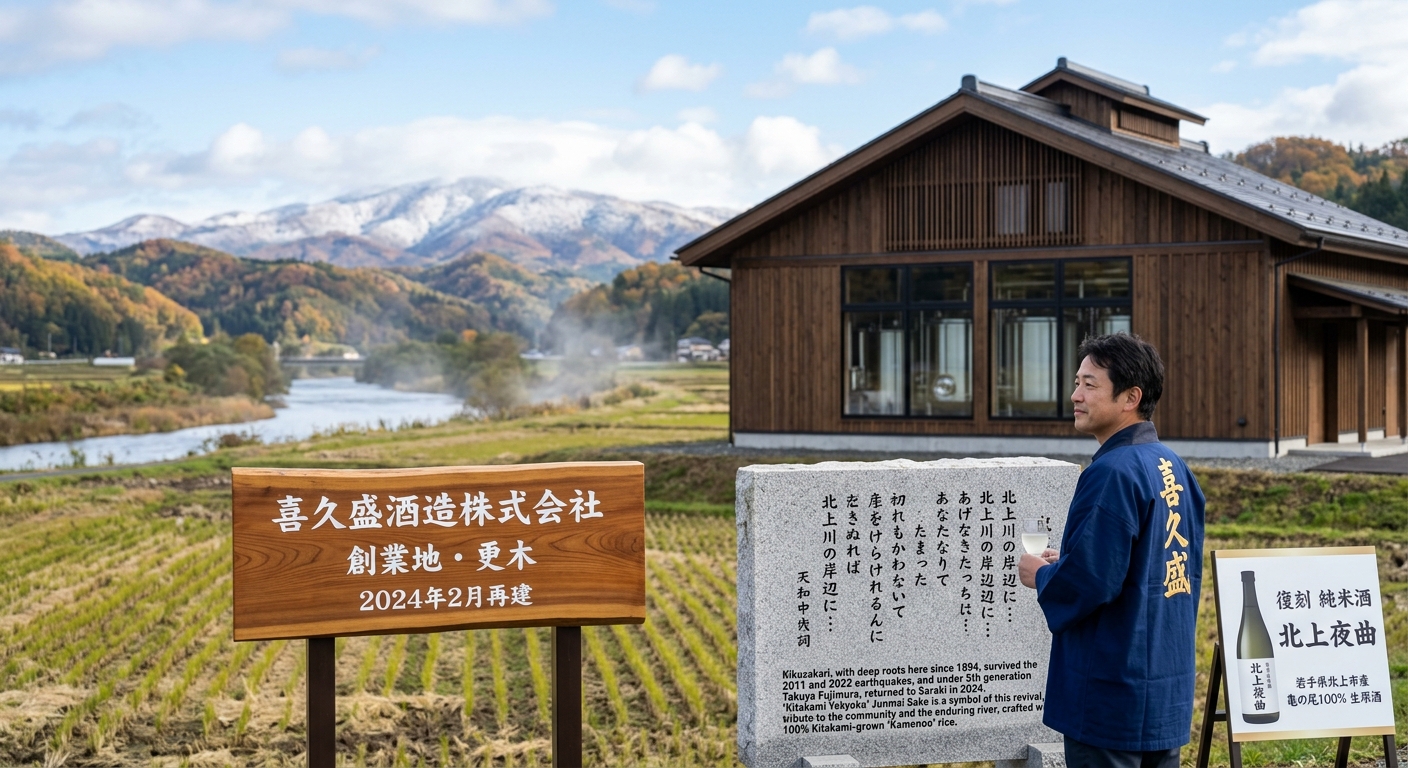
喜久盛酒造株式会社は1894年(明治27年)、岩手県北上市更木の地に「藤村酒造店」として創業しました。1951年(昭和26年)に、現在の社名「喜久盛酒造」に改めています。
2011年の東日本大震災では、更木の本社蔵が屋根の崩落や土壁の破損などの被害を受け、半壊状態となりました。以来蔵は、隣接する花巻市の、廃業した同業者の酒蔵を間借りして酒造りを続けます。2014年には醸造アルコールを添加しない全量純米酒への転換を決め、使用する米も岩手県産に統一しました。2022年の地震で被災した土蔵の損傷がさらに進んだこともあり、5代目蔵元・藤村卓也さんは、創業の地・更木での蔵の再建を決断します。創業130周年にあたる2024年2月、新しい製造所が更木に完成し、蔵はようやく生まれ故郷へと戻りました。
今回合わせる純米酒「北上夜曲」は、藤村さんが2019年に復刻させた一本です。先代の代に一度姿を消していたこの名前を、藤村さんが再びボトルにまとわせました。実はこの名前と蔵には、それより古い縁があります。藤村さんの祖父にあたる先々代の蔵元は、かつて北上観光協会の会長を務めており、昭和49年(1974年)、地元で生まれた歌「北上夜曲」の歌碑を北上市に建てる際に携わっていました。原料米には地元・北上市産の「亀の尾」を100%使用し、加水をしない生原酒に仕上げられています。
土地の話
北上市は、東北地方で最も長い川である北上川の中流域に位置します。市内随一の桜の名所として知られる展勝地には、「北上夜曲」の歌碑が立っています。碑は1974年に建てられ、1989年に現在の展勝地レストハウス南側へ移されました。作詞者直筆の歌詞と作曲者自筆の楽譜が刻まれ、ボタンを押すと曲が流れる仕掛けがある、全国でも珍しい歌碑です。地元では2011年まで「北上夜曲歌唱コンクール全国大会」も開かれ、長く歌い継がれてきました。
「北上夜曲」の酒米「亀の尾」も、この北上川がもたらす土地で育った北上市産の米です。歌に歌われ、碑となって残る川のほとりと、酒米が実る田んぼは、同じ北上川の恵みでつながっています。
音楽の話
「北上夜曲」は、水沢農学校の生徒だった菊地規(1923-1989年)が1940年12月に作詞し、旧制八戸中学校の生徒だった安藤睦夫(1924-2007年)が翌1941年2月に曲を付けました。二人は同じ下宿で過ごした、岩手県出身の仲間でした。当初「北上川のささやき」という題でしたが、当時流行していた「蘇州夜曲」にならって「北上夜曲」に改められたといいます。
戦後しばらくは作者不詳のまま口伝えで広まり、1950年代半ばからは新宿の歌声喫茶などで愛唱されるようになりました。1961年1月22日にソノシートとして初めて録音され、同年、複数のレコード会社から競作盤が発売されます。最終的にはレコード会社6社から22種類ものレコードが世に出たといい、中でもダークダックス盤(キングレコード)と、多摩幸子・和田弘とマヒナスターズ盤(ビクター)が特にヒットし、後者は1970年までに売上200万枚を突破しました。同じ1961年、長らく不明だった作者の二人が名乗り出て、暗い時代のさなかに10代の若者だけの手でこの曲が生まれていたことが、大きな話題となりました。
なぜこの組み合わせなのか
北上市に立つ「北上夜曲」の歌碑を建てたのは、当時北上観光協会の会長を務めていた喜久盛酒造の先々代蔵元でした。歌と蔵の間には、酒の名前として結びつくよりずっと前から、地続きの縁があったことになります。先代の代に一度途絶えたその名を、5代目・藤村卓也さんが2019年、純米酒として蘇らせました。
そして蔵自身もまた、2011年の震災でふるさとを追われ、11年にわたって隣町・花巻市で酒を造り続けました。2022年の地震という追い打ちも経て、2024年にようやく更木の地へ帰ってきました。ふるさとの川を想って生まれた「北上夜曲」という歌と、ふるさとの地へ帰ってきた蔵、その名を継いだ一本の酒。三つの物語が、北上川のほとりで静かに重なります。
この一本を、探すなら
※楽天市場へのリンクは広告(アフィリエイト)です。在庫・取扱いは変動します。お近くの酒販店でも、ぜひ銘柄名を伝えて探してみてください。
🌡️ おすすめの飲み方:よく冷やして。加水をしない生原酒ならではの、どっしりとした米の旨みと力強さを、キリッと冷えた状態で楽しむのがおすすめです。
合わせたい「アテ」
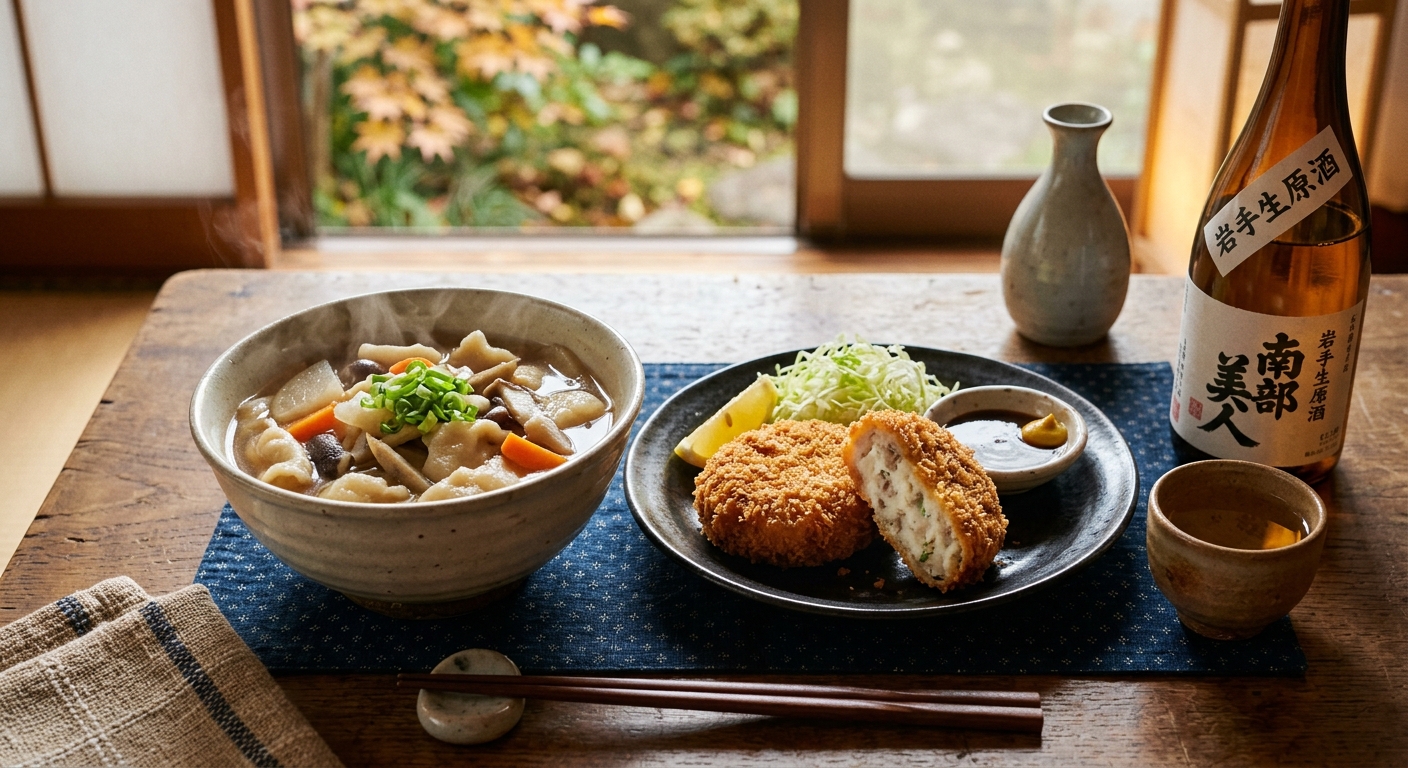
- ひっつみ汁
小麦粉をこねて薄く伸ばし、手でちぎって野菜と煮込む、岩手に古くから伝わる家庭の汁物。素朴な小麦の甘みと出汁の旨みが、加水をしていない生原酒のどっしりとした米の旨みを受け止めてくれます。
レシピはこちら:クラシル「岩手県の郷土料理 ひっつみ汁」
- 北上コロッケ
じゃがいもではなく、北上市特産の里芋「二子さといも」を使ったご当地コロッケ。里芋ならではの、ねっとりとした食感と穏やかな甘みが持ち味です。北上市産の米で仕込まれた酒と、北上市産の芋で作られたコロッケ、地元同士の組み合わせです。
科学的にひとこと:小麦や里芋に含まれるでんぷん由来のほのかな甘みは、日本酒に含まれる有機酸や旨味成分と結びつくことで、互いの味わいを引き立て合います。湯気の立つ汁物や揚げたてのコロッケは香りが立ちやすく、生原酒がもつ穏やかな米の香りもいっそう感じやすくなります。
この蔵をたずねるなら
喜久盛酒造
岩手県北上市更木3-54/JR「北上駅」から車で約15分。
1894年に更木の地で創業し、2024年に生まれ故郷の更木へ戻ってきた蔵です。
近くの観光スポット
- 北上市立公園 展勝地/北上市立花|蔵から車で約10分・約6km
北上川の東岸に約2km続く桜並木で、「さくら名所100選」のひとつ。北上川の川下りや、園内のみちのく民俗村もあります。
- みちのく民俗村/北上市立花(展勝地内)|蔵から車で約10分・約6km
南部曲り家など江戸〜大正期の建物を約20棟移築した、東北最大級の野外博物館。入場無料です。
※営業時間・定休日は変わることがあります。おでかけ前に各施設の公式情報をご確認ください。
ひとことメモ(日本酒の用語)
- 純米酒:米・米麹・水だけで造られ、醸造アルコールを添加していない日本酒。米の旨みをまっすぐ感じられるのが特徴です。
- 生原酒:加熱処理(火入れ)をせず、水も加えずに瓶詰めした酒。搾りたてに近い風味が楽しめます。
参考
内容に誤りがございましたら、お手数ですが info@soundrecords.jp までご連絡いただけますと幸いです。
Today’s Pairing
- Sake: Junmai “Kitakami Yakyoku” Nama Genshu (unpasteurized, undiluted) — made with 100% Kitakami City-grown “Kameno-o” rice / Kikuzakari Sake Brewery Co., Ltd. (3-54 Sarashina, Kitakami City, Iwate Prefecture)
Official site: http://kikuzakari.jp/
- Kayoukyoku (classic Japanese popular song): “Kitakami Yakyoku” (“Kitakami Night Song”) by Tama Sachiko & Hiroshi Wada and the Mahina Stars, 1961
YouTube: https://www.youtube.com/watch?v=kbdcrhyqXvE
▶ If the player above doesn’t play, open it on YouTube
The Story of the Brewery
Kikuzakari Sake Brewery was founded in 1894 in the Sarashina district of Kitakami City, Iwate Prefecture, as “Fujimura Sake Brewery.” It took its current name, Kikuzakari, in 1951.
The Great East Japan Earthquake of 2011 badly damaged the brewery’s main storehouse in Sarashina — its roof partially collapsed and its earthen walls crumbled, leaving the building half-destroyed. From then on, the brewery kept brewing by renting space at a closed competitor’s facility in neighboring Hanamaki City. In 2014, it committed to becoming an all-Junmai brewery, using no added brewing alcohol, and switched entirely to Iwate-grown rice. After a 2022 earthquake caused further damage to the already-weakened storehouse, fifth-generation owner Takuya Fujimura decided to rebuild on the brewery’s original site in Sarashina. In February 2024, marking the brewery’s 130th anniversary, a new brewing facility was completed there, and the brewery finally returned home.
The Junmai sake in this pairing, “Kitakami Yakyoku,” is a label Fujimura revived in 2019. It had once disappeared during his father’s time as owner, and Fujimura brought the name back to a bottle. The name has an older connection to the brewery than that: Fujimura’s grandfather, two generations before him, once served as chairman of the Kitakami Tourism Association, and in 1974 was involved in erecting a monument in Kitakami City to the song “Kitakami Yakyoku.” The sake is brewed entirely from “Kameno-o” rice grown locally in Kitakami City, and bottled undiluted and unpasteurized as nama genshu.
The Story of the Land
Kitakami City sits along the middle stretch of the Kitakami River, the longest river in the Tohoku region. At Tenshochi, the city’s best-known cherry blossom spot, stands the monument to “Kitakami Yakyoku.” It was erected in 1974 and moved to its current location beside the Tenshochi rest house in 1989. Rare among monuments nationwide, it bears the lyricist’s own handwriting and the composer’s own musical score, and a button lets visitors play the song. A national “Kitakami Yakyoku” singing contest was even held locally each year until 2011.
The “Kameno-o” rice used for the Kitakami Yakyoku sake is also grown in Kitakami City, nourished by the same river. The riverbank remembered in song and cast in stone, and the rice paddies that grow the sake’s rice, are connected by the same waters of the Kitakami River.
The Story of the Song
“Kitakami Yakyoku” was written in December 1940 by Kiku Kikuchi (1923–1989), then a student at Mizusawa Agricultural School, with music added the following February, 1941, by his friend Mutsuo Ando (1924–2007), a student at the old Hachinohe Middle School. Both men were from Iwate Prefecture and had lived in the same boarding house. The song was originally titled “Whispers of the Kitakami River,” but was renamed “Kitakami Yakyoku” in imitation of the then-popular song “Soshu Yakyoku” (“Suzhou Serenade”).
For years after the war it spread by word of mouth with its authors unknown, becoming a favorite at Shinjuku’s “utagoe kissa” (singing cafes) from the mid-1950s onward. It was first recorded, on a flexi disc, on January 22, 1961, and that same year several record companies released competing versions. In the end, six record companies put out 22 different recordings of the song. Among them, the version by Dark Ducks (on King Records) and the version by Tama Sachiko & Hiroshi Wada and the Mahina Stars (on Victor) became especially big hits — the latter surpassing two million copies sold by 1970. That same year, 1961, the two long-unknown authors finally came forward, and it became widely known that the song had been written entirely by two teenagers during the darkest years of the war.
Why This Pairing
The monument to “Kitakami Yakyoku” in Kitakami City was built under the chairmanship of a Kikuzakari family member — two generations before the current owner — who led the local tourism association at the time. The bond between the song and the brewery predates the sake that now carries the song’s name. That name, once discontinued under the previous generation, was revived as a Junmai sake by fifth-generation owner Takuya Fujimura in 2019.
And the brewery itself was driven from its hometown by the 2011 earthquake. It brewed in neighboring Hanamaki City for eleven years, and after a further setback in a 2022 earthquake, finally returned to Sarashina in 2024. A song written in longing for a home beside the river, a brewery that has returned to its home beside the same river, and a sake that carries the song’s name: three stories quietly overlapping on the banks of the Kitakami.
Where to Find This Bottle
The Rakuten Ichiba link below is an affiliate link.
Note: the links above lead to Japan-based retailers. They’re most convenient for readers in Japan, or for those elsewhere who are able to arrange international shipping. Stock and availability change over time, so if you’re near a specialty sake shop, it’s well worth asking for this label by name.
🌡️ Recommended way to drink it: Well chilled. Serving this undiluted nama genshu ice-cold brings out its bold rice umami and powerful body at their best.
Pairing Dishes Worth Trying
- Hittsumi soup
A rustic home-style soup from Iwate, made by kneading and stretching wheat dough, tearing it by hand, and simmering it with vegetables. Its plain wheat sweetness and savory broth stand up well to the bold rice umami of this undiluted nama genshu.
Recipe (in Japanese): Kurashiru, “Iwate’s Regional Hittsumi Soup”
- Kitakami croquette
A local specialty croquette made not with potato but with “Futago” taro, a variety grown in Kitakami City. The taro lends a sticky texture and gentle sweetness quite different from a potato croquette — a pairing of two things grown and made in the same city as the sake.
A note on the science: the mild sweetness that starches in wheat and taro release complements the organic acids and umami compounds in sake, each enhancing the other’s flavor. Hot soup and freshly fried croquettes release aroma more readily, which also makes the gentle rice-driven fragrance of this nama genshu easier to notice.
Visiting the Brewery
Kikuzakari Sake Brewery
3-54 Saragi, Kitakami City, Iwate. About 15 min by car from Kitakami Station.
Founded in Saragi in 1894, the brewery returned to its home ground of Saragi in 2024.
Sights Nearby
- Tenshochi Park / Kitakami City | ~10 min, ~6 km by car from the brewery
A row of cherry trees running about 2 km along the east bank of the Kitakami River, one of Japan’s “100 best cherry-blossom spots.” There are boat trips on the river, and the Michinoku Folklore Village is in the park.
- Michinoku Folklore Village / Kitakami City (within Tenshochi Park) | ~10 min, ~6 km by car from the brewery
One of Tohoku’s largest open-air museums, with about 20 relocated buildings from the Edo to Taisho periods, including Nanbu magariya farmhouses. Free entry.
Opening hours and closing days can change. Please check each facility’s official information before visiting.
A Quick Glossary of Sake Terms
- Junmai: Sake made only from rice, rice koji, and water, with no added brewing alcohol, giving a straightforward sense of the rice’s own umami.
- Nama genshu: Sake bottled without pasteurization (hi-ire) and without dilution with water, letting drinkers enjoy a flavor close to what comes straight from the press.
Sources
If you notice any errors in this article, please don’t hesitate to reach out at info@soundrecords.jp.
コメントを残す