今日のペアリング
▶ 上のプレーヤーで再生できない場合は、YouTubeで開く
酒蔵の話
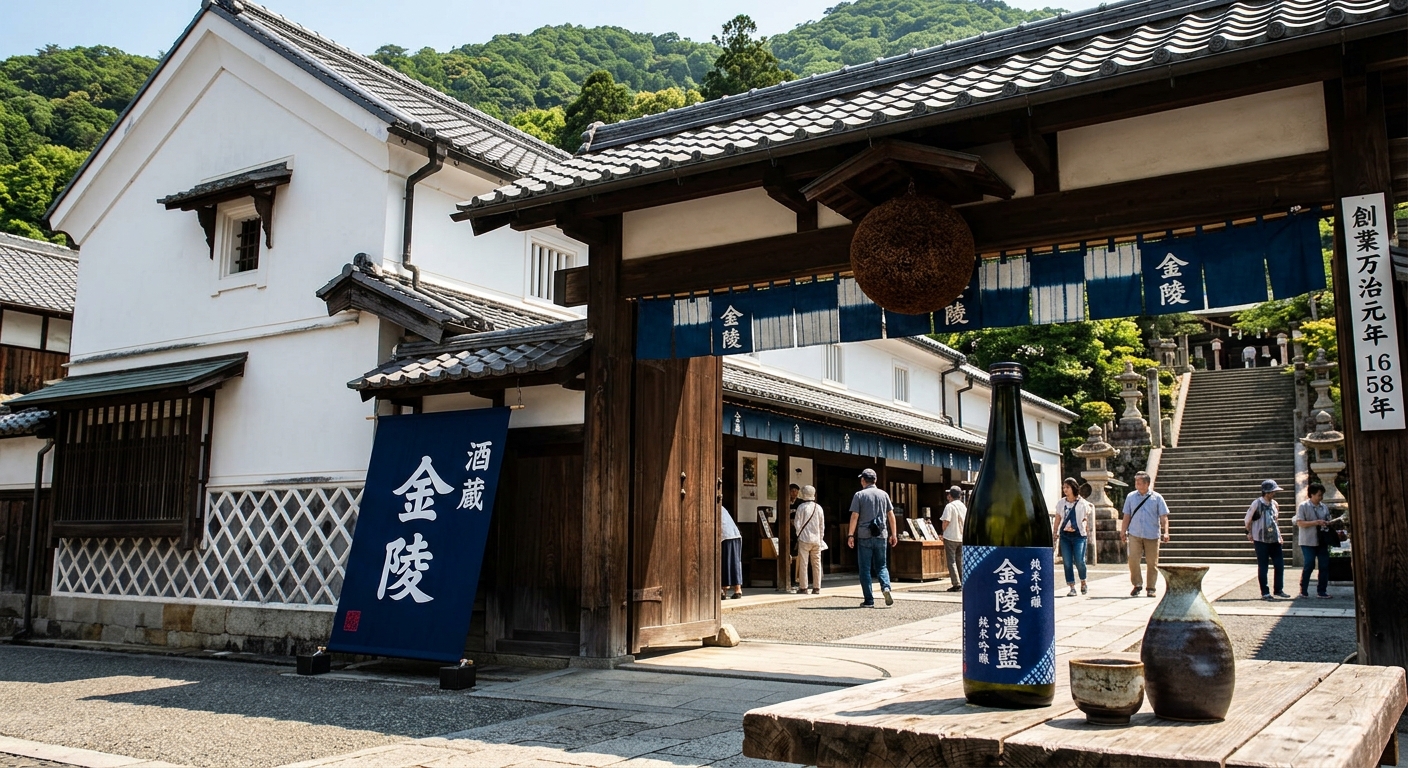
西野金陵株式会社の歴史は、万治元年(1658年)、初代嘉右衛門が阿波藍(染料)の取り扱いを始めたことにさかのぼります。以来代々「嘉右衛門」の名を継ぎ、寛政元年(1789年)、8代目嘉右衛門が讃岐・琴平で酒造業に乗り出しました。この年を境に、「こんぴらさん」の名で親しまれる金刀比羅宮の御神酒は「金陵」と定められ、江戸時代から「讃岐のこんぴら酒」として、全国から参拝に訪れる人々に愛飲されてきました。大正7年(1918年)に会社として設立され、昭和57年(1982年)に西野金陵株式会社へ社名を改め、平成20年(2008年)には創業350周年を迎えています。現在の代表取締役社長は西野寛明氏です。
今回合わせる「金陵濃藍 純米吟醸」は、香川県産の酒米「オオセト」を用い、精米歩合58%、アルコール度数15度以上16度未満で仕込まれた一本。さわやかな果実香となめらかな旨味が調和する、中口の純米吟醸酒です。ラベルの藍色は、酒造りを始めるより百年以上前、蔵の出発点だった藍染めの商いを今に伝えるデザインで、蔵元の公式サイトでも「金陵のルーツは藍にあります」と紹介されています。
土地の話
仲多度郡琴平町は、瀬戸内海航路の目印として古くから知られてきた琴平山(象頭山)のふもとに広がる、こんぴら参りの門前町です。蔵元によれば、参道口に「金陵の郷」が開かれたのは昭和63年(1988年)。本州と四国を結ぶ瀬戸大橋が開通したのと同じ年で、酒造創業当時の白壁の酒蔵を復元して整備されました。
金刀比羅宮そのものの由緒はさらに古く、古代には琴平山は瀬戸内海に浮かぶ島だったと伝えられ、大物主神の行宮跡に創建されたとされています。大物主神は農業・殖産・医薬・海上守護など幅広いご利益で知られる神様で、江戸時代に全国的な航路網が発展すると、各地に「金毘羅講」が結成されるほど航海者たちの篤い信仰を集めました。今も金刀比羅宮は「海の神様」として、瀬戸内海を渡る船乗りたちを見守り続けています。
音楽の話
「瀬戸の花嫁」は1972年4月10日発売、小柳ルミ子にとって4枚目のシングルです。作詞は山上路夫、作曲は平尾昌晃、編曲は森岡賢一郎。オリコン週間チャート1位を獲得し、1972年の年間チャートでも2位となる大ヒットとなりました。同年の第3回日本歌謡大賞では大賞を、第14回日本レコード大賞では歌唱賞を受賞しています。
小柳ルミ子は1952年、福岡市生まれ。1970年に宝塚音楽学校を首席で卒業し、翌1971年、シングル「わたしの城下町」で歌手デビューしました。この曲はいきなり160万枚・年間チャート1位のヒットとなり、第13回日本レコード大賞最優秀新人賞を獲得しています。その勢いのまま送り出された4枚目のシングルが「瀬戸の花嫁」です。瀬戸内海の小島へ嫁いでいく女性の心情と、新しい生活への決意を歌った一曲ですが、歌詞のモデルとされる特定の島は実在しないことが分かっています。作詞の山上路夫自身も瀬戸内海の島を訪れたことはなく、広島・尾道から四国へ渡る船の上で目にした瀬戸内海の景色が、この詞のイメージのもとになったと伝えられています。
なぜこの組み合わせなのか
金刀比羅宮は、瀬戸内海を渡っていく船乗りたちの無事を、古くから見守り続けてきた神様です。金陵は、その金刀比羅宮の御神酒として、海を渡る人々のそばにずっと在り続けてきた酒でもあります。
一方「瀬戸の花嫁」は、まさにその瀬戸内海を渡って、新しい生活へ向かう一人の女性を描いた歌です。香川県には、春を告げる魚・サワラにまつわる「若嫁さんに大きなサワラを1本持たせて里帰りさせる」という風習も伝わっており、海を渡る花嫁という情景は、この土地にとって決して遠い物語ではありません。
藍染めの商いから始まった蔵が、海の神様の御神酒を代々醸し続けてきたように、この歌もまた、瀬戸内海を渡っていった無数の花嫁たちの心情を半世紀以上にわたって歌い継がれてきました。海を渡る人を見守るものと、海を渡る人を歌うもの――藍色のラベルを見つめながら、そんな物語に思いを馳せてみてください。
この一本を、探すなら
※楽天市場へのリンクは広告(アフィリエイト)です。在庫・取扱いは変動します。お近くの酒販店でも、ぜひ銘柄名を伝えて探してみてください。
🌡️ おすすめの飲み方:よく冷やして。オオセトならではのさわやかな果実香となめらかな旨味は、冷やすことで一番きれいに引き立ちます。
合わせたい「アテ」
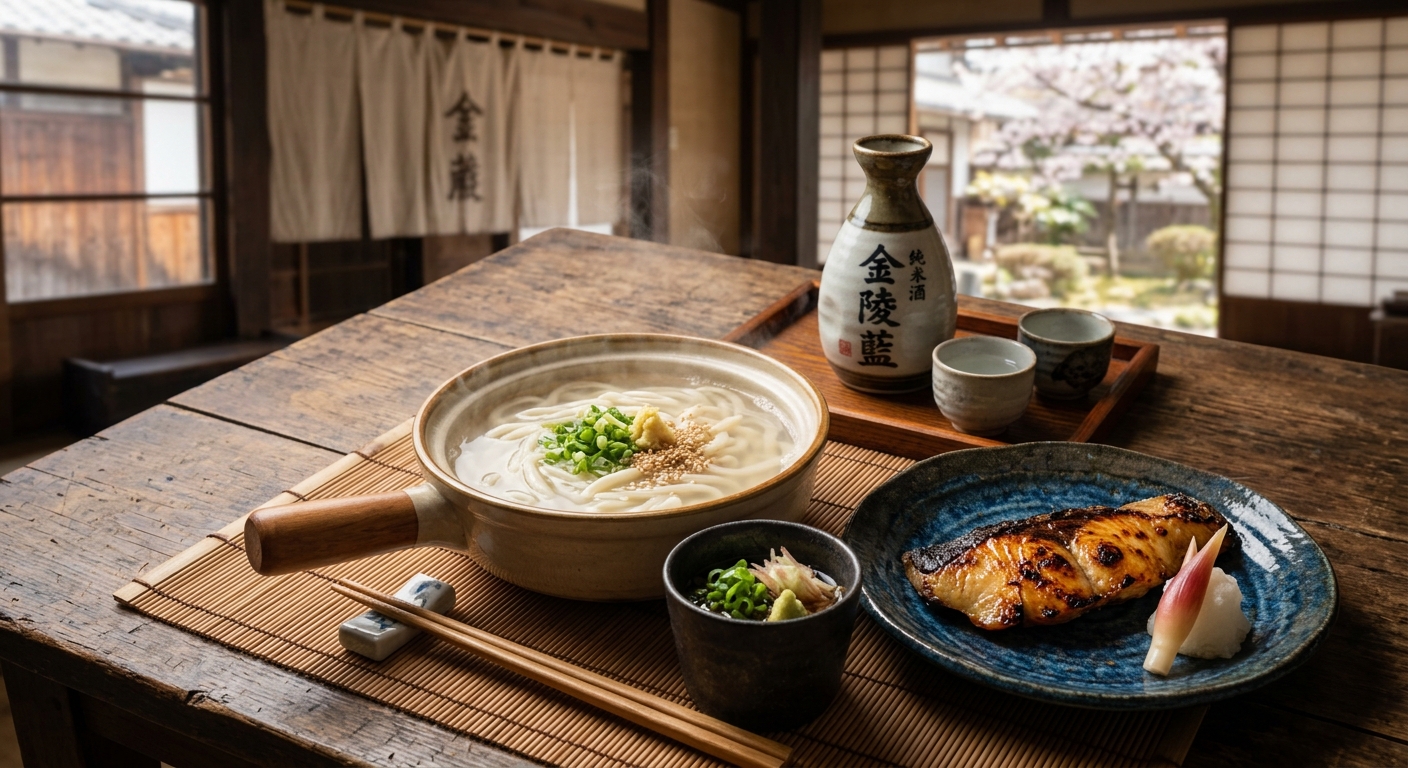
- 釜揚げうどん
香川県を代表するソウルフード。蔵元自身も「うどんに合う酒」という純米酒を出しているほど、この土地では日本酒とうどんが切っても切れない組み合わせです。ゆでたての熱々のうどんと、いりこだしの効いた濃いめのつゆの旨味に、純米吟醸のなめらかな旨味がすっと寄り添います。
レシピはこちら:クラシル「手作りつゆで釜揚げうどん」
- 鰆(さわら)の西京焼き
春を告げる魚として香川県民に愛されてきたサワラ。かつては嫁いだ娘に大きなサワラを1本持たせて里帰りさせる風習があったほど、この土地では花嫁と縁の深い魚でもあります。西京味噌の甘みと香ばしさに、金陵濃藍のさわやかな果実香が寄り添います。
レシピはこちら:クラシル「漬けて焼くだけ 鰆の西京焼き」
科学的にひとこと:うどんだしに使われるいりこや昆布の旨味成分(イノシン酸・グルタミン酸)は、日本酒のアミノ酸系の旨味と重なり合い、口の中で旨味の相乗効果を生み出します。西京味噌は発酵によって甘い香気成分を生み出しており、純米吟醸酒が持つ穏やかな吟醸香と響き合って、香りの一体感を感じさせてくれます。
この蔵をたずねるなら
金陵(西野金陵 本店・酒蔵資料館「金陵の郷」)
香川県仲多度郡琴平町623/JR琴平駅・琴電琴平駅から徒歩約10分、高松自動車道 善通寺ICから車で約15分。
本店隣の資料館「金陵の郷」は入館無料(平日9:00〜16:00、土日祝9:00〜18:00)。こんぴらさんの表参道沿いにあります。
近くの観光スポット
- 金刀比羅宮(こんぴらさん)/琴平町|金陵本店から表参道を徒歩すぐ
御本宮まで785段の石段。金陵はこの金刀比羅宮の御神酒醸造元です。参拝できる時間は日によって変わるため、訪問前に公式サイトでご確認ください。
- 旧金毘羅大芝居(金丸座)/琴平町|金陵本店から徒歩約10分(車で約5分)
1835年建築、現存最古の芝居小屋(国指定重要文化財)。公演のない日は内部を見学できます(9:00〜17:00、公演期間中は休館あり)。
- 総本山善通寺/善通寺市|金陵本店から車で約15分・約7km
弘法大師空海の生誕地と伝わる、四国霊場75番札所。東院・西院の二つの伽藍が並ぶ広い境内です。
近くの温泉
- こんぴら温泉郷/琴平町・表参道周辺|金陵本店から徒歩圏
参道沿いに旅館が集まる温泉地。日帰り入浴を受け付けている宿があります(例:こんぴら温泉湯元 八千代=大人800円)。受付時間・実施日は宿ごとに異なるので、事前にご確認ください。
※営業時間・定休日・日帰り入浴の可否は変わることがあります。おでかけ前に各施設の公式情報をご確認ください。
ひとことメモ(日本酒の用語)
- 純米吟醸酒:精米歩合60%以下まで磨いた米を低温でじっくり発酵させた純米酒。華やかな香りが特徴です。
- 精米歩合:玄米を削り、残った部分の割合。数値が低いほど、米を多く磨いていることを示します。
参考
内容に誤りがございましたら、お手数ですが info@soundrecords.jp までご連絡いただけますと幸いです。
Today’s Pairing
- Sake: Kinryo “Koiai” Junmai Ginjo — brewed with Kagawa-grown Oseto sake rice, rice-polishing ratio (seimai buai) 58%, 15–16% alcohol / Nishino Kinryo Co., Ltd. (623 Kotohira-cho, Nakatado-gun, Kagawa Prefecture)
Official site: https://www.nishino-kinryo.co.jp/
- Kayoukyoku (classic Japanese popular song): “Seto no Hanayome” (“The Bride of the Seto Sea”) by Koyanagi Rumiko, 1972
YouTube: https://www.youtube.com/watch?v=1tsdlNUg_1Q
▶ If the player above doesn’t play, open it on YouTube
The Story of the Brewery
The history of Nishino Kinryo Co., Ltd. goes back to 1658, when the first-generation Kaemon began trading in Awa indigo dye. The name Kaemon was passed down through the generations, and in 1789 the eighth-generation Kaemon branched into sake brewing in Kotohira, in the Sanuki region (present-day Kagawa). From that year on, the sacred sake offered at Kotohira-gu Shrine — popularly known as “Konpira-san” — was designated as Kinryo, and it has been cherished ever since as “the sake of Sanuki’s Konpira pilgrimage” by visitors arriving from across Japan. The company was incorporated in 1918, took its present name, Nishino Kinryo Co., Ltd., in 1982, and marked its 350th anniversary in 2008. Its current president is Nishino Hiroaki.
The bottle in this pairing, Kinryo “Koiai” Junmai Ginjo, is brewed with Kagawa-grown Oseto sake rice, polished to a seimai buai of 58%, at 15–16% alcohol. It’s a medium-dry junmai ginjo — sake made only from rice, rice koji, and water, fermented at low temperatures for a fragrant aroma — where a refreshing fruit-like aroma meets a smooth umami. The indigo blue on its label reaches back more than a century before the brewery ever made sake, to the indigo-dye trade where it all began; the brewery’s own website describes it simply: “Kinryo’s roots lie in indigo.”
The Story of the Land
Kotohira, in Nakatado District, spreads out at the foot of Mt. Kotohira (also called Mt. Zozu), long known as a landmark for ships navigating the Seto Inland Sea. It’s the temple town that has grown up around the approach to Konpira-san. According to the brewery, “Kinryo no Sato,” its visitor complex at the entrance to that approach, opened in 1988 — the very same year the Seto Ohashi Bridge opened, connecting Honshu and Shikoku across the strait. The complex was built around a restoration of the white-walled brewery building from the company’s earliest sake-making days.
Kotohira-gu Shrine’s own history reaches back further still. Mt. Kotohira is said to have once been an island in the Seto Inland Sea, and the shrine is said to have been founded on the site of a temporary shrine (angu) of the deity Onamuchi no Kami. Onamuchi no Kami is honored for broad blessings spanning agriculture, industry, medicine, and protection at sea, and as Japan’s shipping routes expanded nationwide during the Edo period, devotional groups called “Konpira-ko” formed in ports around the country. Even today, Kotohira-gu is beloved as “the god of the sea,” continuing to watch over sailors crossing the Seto Inland Sea.
The Story of the Song
“Seto no Hanayome” was released on April 10, 1972, Koyanagi Rumiko’s fourth single. The lyrics are by Yamagami Michio, the music by Hirao Masaaki, and the arrangement by Morioka Kenichiro. It topped Oricon’s weekly singles chart and finished as the second-best-selling single of 1972 for the year. That same year it won the Grand Prix at the 3rd Japan Music Awards (Nihon Kayo Taisho) and the Best Vocal Performance award at the 14th Japan Record Awards.
Koyanagi Rumiko was born in Fukuoka City in 1952. She graduated top of her class from the Takarazuka Music School in 1970, and the following year, 1971, debuted as a singer with “Watashi no Jokamachi,” an instant hit that sold 1.6 million copies and won her the Best New Artist award at the 13th Japan Record Awards. “Seto no Hanayome,” her fourth single, rode that same momentum. The song follows the feelings of a woman marrying into a small Seto Inland Sea island community and her resolve to begin a new life there — though it later became clear that the specific island said to have inspired the lyrics doesn’t actually exist. Lyricist Yamagami Michio himself had never visited any of the Seto Inland Sea’s islands; the images in the lyrics are said to have come from the scenery he saw while crossing from Onomichi, in Hiroshima, to Shikoku by boat.
Why This Pairing
Kotohira-gu has, since ancient times, watched over the safety of sailors crossing the Seto Inland Sea. Kinryo, as the sacred sake offered at that very shrine, has likewise stayed close to everyone making that crossing.
“Seto no Hanayome,” meanwhile, portrays a woman crossing that same sea toward a new life. Kagawa Prefecture still carries a custom tied to sawara, the fish that heralds spring here: a young bride would once be sent home to visit her family carrying one large sawara. A bride crossing the sea, in other words, is not a distant image for this region — it’s part of its own folk memory.
Just as a brewery that began in the indigo trade has gone on brewing the sea god’s sacred sake for generations, this song has been sung for more than fifty years, carrying the feelings of countless brides who crossed the Seto Inland Sea. One thing watches over those who cross the sea; the other sings of them. Let that thought settle in as you look at the indigo-blue label in your hand.
Where to Find This Bottle
The Rakuten Ichiba link below is an affiliate link.
Note: the links above lead to Japan-based retailers. They’re most convenient for readers in Japan, or for those elsewhere who are able to arrange international shipping. Stock and availability change over time, so if you’re near a specialty sake shop, it’s well worth asking for this label by name.
🌡️ Recommended way to drink it: Well chilled. The refreshing fruit-like aroma and smooth umami that come from Oseto rice show best when served cold.
Pairing Dishes Worth Trying
- Kamaage udon
Kagawa’s signature soul food. The brewery itself even sells a junmai sake called “the sake that goes with udon” — in this region, sake and udon are simply inseparable. The rich, iriko (dried sardine) -based dipping sauce and the piping-hot, freshly boiled noodles pair naturally with the smooth umami of this junmai ginjo.
Recipe (in Japanese): Kurashiru, “Kamaage Udon with Homemade Dipping Sauce”
- Sawara (Spanish mackerel) saikyo-yaki
Sawara is beloved in Kagawa as the fish that announces spring — so much so that a local custom once had a newly married daughter carry one large sawara home on her first visit back to her family, making it a fish long tied to brides here. The sweetness and toasted aroma of the white miso marinade echo the refreshing fruit-like aroma of Kinryo “Koiai.”
Recipe (in Japanese): Kurashiru, “Marinate and Grill: Sawara Saikyo-yaki”
A note on the science: the umami compounds in udon dashi — inosinic acid from iriko and glutamic acid from kombu — resonate with the amino-acid umami in sake, creating a synergistic boost of savoriness on the palate. The fermentation in white miso (saikyo miso) develops sweet aromatic compounds that echo the gentle ginjo aroma of a junmai ginjo, creating a sense of unity between the dish’s fragrance and the sake’s.
Visiting the Brewery
Kinryo (Nishino Kinryo head office & “Kinryo no Sato” sake museum)
623 Kotohira-cho, Nakatado-gun, Kagawa. About a 10-min walk from JR / Kotoden Kotohira Station; about 15 min by car from Zentsuji IC on the Takamatsu Expressway.
The sake museum “Kinryo no Sato” next to the head office is free to enter (weekdays 9:00–16:00, weekends & holidays 9:00–18:00) and sits right on the main approach to Kotohira-gu Shrine.
Sights Nearby
- Kotohira-gu Shrine (Konpira-san) / Kotohira-cho | a short walk up the approach from Kinryo
785 stone steps lead to the main hall. Kinryo is the official brewer of this shrine’s sacred sake. Visiting hours vary by day, so check the official site before you go.
- Kanamaru-za (old Konpira Grand Playhouse) / Kotohira-cho | ~10 min on foot, ~5 min by car from Kinryo
Built in 1835, the oldest surviving playhouse in Japan (an Important Cultural Property). Open for interior tours on non-performance days (9:00–17:00; closed during kabuki runs).
- Zentsu-ji Temple / Zentsuji City | ~15 min, ~7 km by car from Kinryo
Temple 75 of the Shikoku pilgrimage, said to be the birthplace of Kobo Daishi (Kukai), with two large temple precincts side by side.
Hot Springs Nearby
- Konpira Onsen-kyo / along the shrine approach, Kotohira-cho | walking distance from Kinryo
A cluster of inns along the approach. Some offer day-use bathing (e.g. Konpira Onsen Yumoto Yachiyo, ¥800 for adults). Hours and days vary by inn, so check ahead.
Opening hours, closing days and day-use bathing availability can change. Please check each facility’s official information before visiting.
A Quick Glossary of Sake Terms
- Junmai Ginjo: Junmai (sake made only from rice, rice koji, and water, with no added brewing alcohol) that has been polished to a seimai buai of 60% or less and fermented slowly at low temperatures, giving it a fragrant aroma.
- Seimai buai (rice-polishing ratio): The percentage of the original grain remaining after milling. The lower the number, the more the rice has been polished down.
Sources
If you notice any errors in this article, please don’t hesitate to reach out at info@soundrecords.jp.

コメントを残す