この記事を耳で聞く
表示中の言語で読み上げます。音声は端末の設定によって異なります。
今日のペアリング
- 日本酒:菊盛 純米吟醸/兵庫県産山田錦100%使用・精米歩合50%・アルコール度数16度以上17度未満/木内酒造株式会社(茨城県那珂市鴻巣1257)
公式サイト:https://kiuchibrewery.co.jp/products/sake/list/junmai-ginzukuri-2/ - 歌謡曲:「潮来笠」橋幸夫(1960年)
YouTube:https://www.youtube.com/watch?v=lqk54HKf800
▶ 上のプレーヤーで再生できない場合は、YouTubeで開く
酒蔵の話
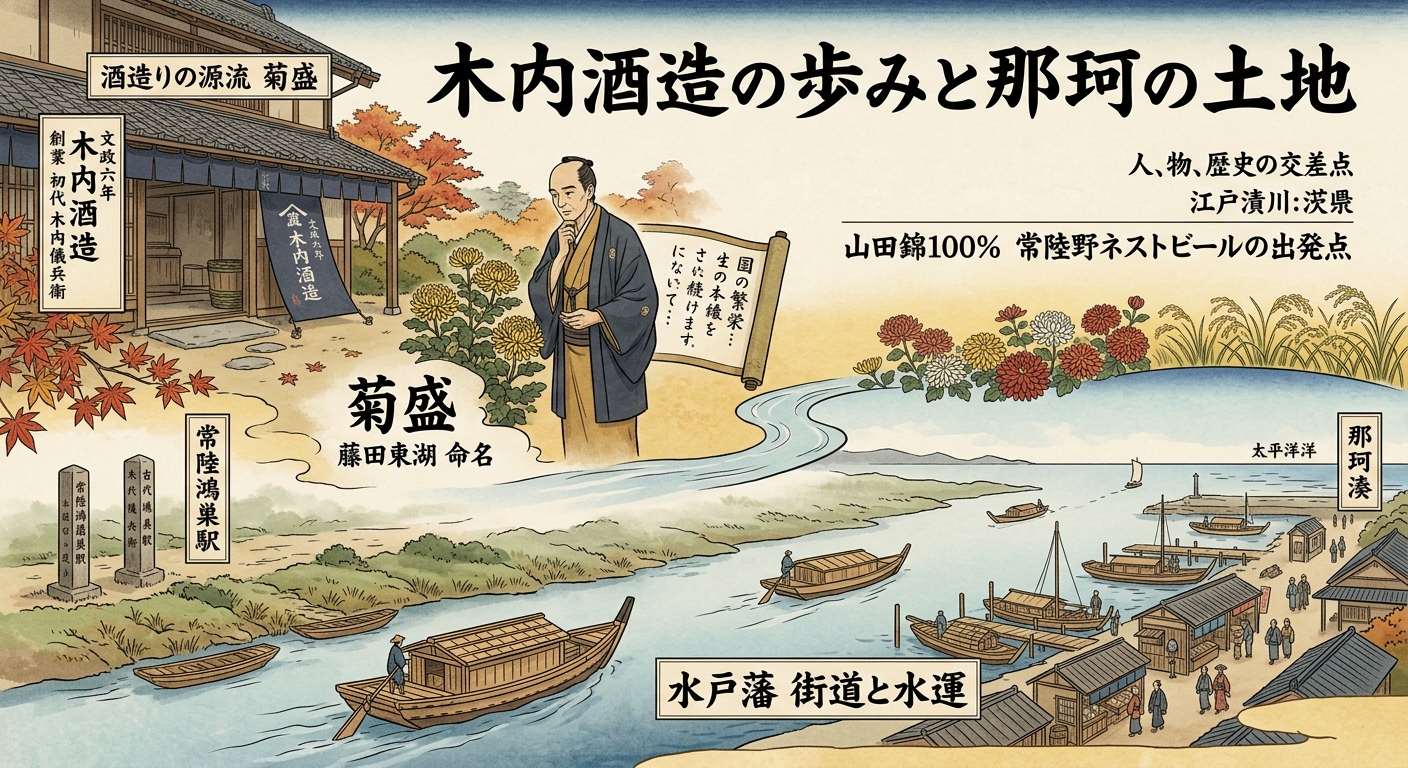
木内酒造株式会社は、文政6年(1823年)、初代・木内儀兵衛が現在の茨城県那珂市の地で酒造りを始めたことに始まります。看板銘柄「菊盛」という名前は、水戸学の中心人物で木内家と縁のあった藤田東湖が、ある秋の日、庭に咲き誇る菊の姿に日本の繁栄の姿を重ね、名付けたと伝えられています。幕末の水戸という土地と、国の行く末を思った学者の言葉が、そのまま酒の名前として代々受け継がれてきたことになります。現在の代表者は木内敏之氏です。
木内酒造は清酒だけの蔵ではありません。1995年からビール造りに挑み、1996年10月には「常陸野ネストビール」の最初の一本を世に送り出しました。以来、世界的な評価を受けるクラフトビールの蔵元としても知られていますが、その出発点は江戸時代から変わらず続く清酒「菊盛」です。
今回合わせる「菊盛 純米吟醸」は、兵庫県産の酒米「山田錦」を100%使用し、精米歩合50%、アルコール度数16度以上17度未満で仕込まれた一本。芳醇な旨みと爽やかな香りが調和する純米吟醸酒です。
土地の話
木内酒造の本店は、JR水郡線・常陸鴻巣駅から徒歩数分、那珂川のほとりに広がる那珂市にあります。この土地は江戸時代、水戸藩の城下町・水戸と、太平洋に面した那珂湊を結ぶ街道筋にあたり、水運と陸運の双方が行き交う交通の要衝でした。藤田東湖をはじめとする水戸学の学者たちが活躍した舞台も、まさにこの水戸藩の領内です。
那珂川を少し下れば、江戸時代に「潮来」として知られた港町があります。利根川水系の水運で栄え、江戸や伊勢参りへ向かう船の行き交う土地として、多くの渡世人や旅人の物語の舞台にもなってきました。同じ水戸藩の領内で、酒を仕込む蔵と、旅人が行き交う港町が、川を通じてゆるやかにつながっていたのです。
音楽の話
「潮来笠」は1960年7月5日発売、橋幸夫のデビューシングルです。作詞は佐伯孝夫、作曲・編曲は吉田正。売上は約120万枚に達し、同年の第2回日本レコード大賞では新人賞を受賞しました。渡世人(股旅者)の心情を歌う「股旅物」の歌謡曲で、題材となった潮来は、利根川水系の水運で栄えた茨城県の港町です。
橋幸夫は1943年5月3日、東京都荒川区生まれ。1960年、「潮来笠」でデビューするとこの曲が大ヒットとなり、舟木一夫・西郷輝彦とともに「御三家」と呼ばれる人気を獲得しました。その後も「いつでも夢を」(吉永小百合とのデュエット)、「霧氷」で日本レコード大賞を受賞するなど、長く歌謡界の第一線で活躍しましたが、2025年9月4日、82歳で逝去しています。
なぜこの組み合わせなのか
「菊盛」という名前は、水戸学の学者・藤田東湖が、庭に咲く菊の花に日本の繁栄への願いを重ねて名付けたものです。同じ水戸藩の領内、那珂川を少し下ったところにある港町・潮来は、江戸時代、水運によって多くの旅人や渡世人が行き交った土地でした。
「潮来笠」は、そんな潮来を舞台に、笠を傾けて渡り歩く一人の男の姿を歌った一曲です。国の繁栄を願って名付けられた酒と、その同じ水戸藩の土地を渡り歩いた旅人を歌う曲。どちらも、江戸から続くこの土地の記憶を、形を変えて今に伝えています。
橋幸夫は2025年に世を去りましたが、「潮来笠」は今も歌い継がれています。杯を傾けながら、水戸の学者が見た菊の花と、笠を傾けて潮来を渡った旅人、二つの情景に思いを馳せてみてください。
この一本を、探すなら
- 蔵元の公式サイト:https://kiuchibrewery.co.jp/products/sake/list/junmai-ginzukuri-2/
- 楽天市場で買う:「菊盛 純米吟醸」の商品ページを見る(720ml・1,815円)
※楽天市場へのリンクは広告(アフィリエイト)です。在庫・取扱いは変動します。お近くの酒販店でも、ぜひ銘柄名を伝えて探してみてください。
合わせたい「アテ」
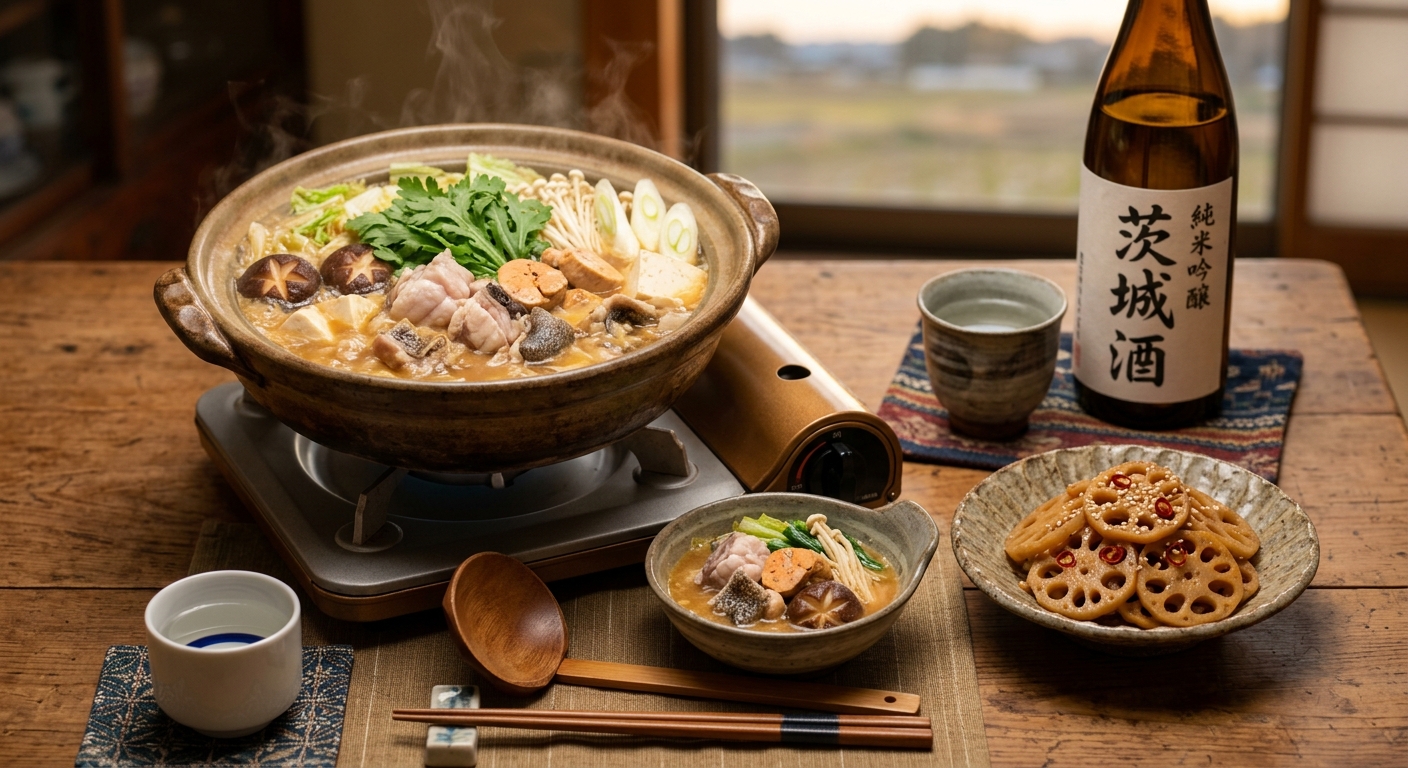
- あんこう鍋
茨城県の大洗・北茨城を中心に親しまれてきた、冬の代表的な郷土料理です。身や肝、皮まで余すところなく使い、味噌仕立てでじっくり煮込む濃厚な一鍋に、純米吟醸のふくよかな旨みが寄り添います。
レシピはこちら:クラシル「白だしで簡単 アンコウ鍋」 - れんこんのきんぴら
茨城県は、れんこんの収穫量が全国の約半分を占める全国一の産地で、県内でとれるれんこんの多くは霞ヶ浦周辺の土浦市などで作られています(令和5年産農林水産省作物統計)。シャキシャキとした歯ざわりと甘辛い味付けに、純米吟醸の爽やかな香りが調和します。
レシピはこちら:クラシル「シャキシャキ!れんこんのきんぴら」
科学的にひとこと:あんこう鍋の濃厚な味噌だしに含まれるアミノ酸系の旨味は、純米吟醸酒の米由来の旨味と重なり合い、口の中で旨味の相乗効果を生み出します。れんこんの甘みと歯ざわりは、ごま油の香ばしさとともに、吟醸酒の穏やかな吟醸香を引き立ててくれます。
この蔵をたずねるなら
木内酒造 本店
茨城県那珂市鴻巣1257/JR水郡線「常陸鴻巣駅」から徒歩約5〜6分、常磐自動車道 那珂ICから車で約5分。
きき酒処では出来たての日本酒を購入でき、蔵の敷地内には蕎麦店やレストランも併設されています。
近くの観光スポット
- 静峰ふるさと公園/那珂市|木内酒造から車で約10分
「日本さくら名所100選」に選ばれた公園で、約2,000本の八重桜と約200本のソメイヨシノが植えられ、1シーズンに2度花見ができます。開園は9時〜17時、入園無料(月曜・年末年始は休園)。 - 古徳沼/那珂市古徳|木内酒造から車で約13分
11月初旬から3月中旬にかけて、オオハクチョウ・コハクチョウが飛来する農業用ため池。白鳥は日中は近隣の田畑へ出ていることが多いため、早朝(7時頃まで)か夕方の観察がすすめられています。
※営業時間・定休日は変わることがあります。おでかけ前に各施設の公式情報をご確認ください。
ひとことメモ(日本酒の用語)
- 純米吟醸酒:精米歩合60%以下まで磨いた米を低温でじっくり発酵させた純米酒。華やかな香りが特徴です。
- 精米歩合:玄米を削り、残った部分の割合。数値が低いほど、米を多く磨いていることを示します。
参考
- 木内酒造株式会社 公式サイト
- 沿革 | 木内酒造株式会社
- 菊盛 純米吟醸 | 木内酒造株式会社
- 木内酒造 本店 | 木内酒造株式会社
- 会社概要 | 木内酒造株式会社
- 株式会社木内酒造1823 | いばらき輸出サポートデスク(茨城県)
- 潮来笠 – Wikipedia
- 橋幸夫 – Wikipedia
- 静峰ふるさと公園 | 那珂市公式サイト
- 古徳沼 | 那珂市公式サイト
- 旬のうまいもの特集 れんこん | 茨城をたべよう(茨城県営業戦略部)
内容に誤りがございましたら、お手数ですが info@soundrecords.jp までご連絡いただけますと幸いです。
오늘의 페어링
- 일본술:기쿠사카리 준마이 긴조 / 효고현산 야마다니시키 100% 사용・정미보합 50%・알코올 도수 16도 이상 17도 미만 / 기우치 주조 주식회사(이바라키현 나카시 고노스 1257)
공식 사이트:https://kiuchibrewery.co.jp/products/sake/list/junmai-ginzukuri-2/ - 가요곡:「이타코가사」하시 유키오(1960년)
유튜브:https://www.youtube.com/watch?v=lqk54HKf800
▶ 위 플레이어로 재생되지 않을 경우, 유튜브에서 열기
양조장 이야기
기우치 주조 주식회사는 분세이 6년(1823년), 초대 기우치 기헤에가 지금의 이바라키현 나카시에서 술을 빚기 시작한 것에서 비롯됩니다. 대표 브랜드 '기쿠사카리(菊盛)'라는 이름은, 미토학의 중심인물이자 기우치 가문과 인연이 있던 후지타 도코가 어느 가을날 정원에 만발한 국화의 모습에 일본의 번영을 겹쳐 보고 지었다고 전해집니다. 막부 말기 미토라는 땅과, 나라의 앞날을 생각한 학자의 말이 그대로 술의 이름으로 대대로 이어져 온 셈입니다. 현재 대표는 기우치 도시유키 씨입니다.
기우치 주조는 청주만 빚는 양조장이 아닙니다. 1995년부터 맥주 양조에 도전해, 1996년 10월에는 '히타치노 네스트 비어'의 첫 병을 세상에 내놓았습니다. 이후 세계적으로 높은 평가를 받는 크래프트 비어 양조장으로도 알려져 있지만, 그 출발점은 에도 시대부터 변함없이 이어온 청주 '기쿠사카리'입니다.
이번에 함께할 '기쿠사카리 준마이 긴조'는 효고현산 양조미 '야마다니시키'를 100% 사용하고, 정미보합 50%, 알코올 도수 16도 이상 17도 미만으로 빚은 술입니다. 풍부한 감칠맛과 상쾌한 향이 조화를 이루는 준마이 긴조주입니다.
고장 이야기
기우치 주조의 본점은 JR 스이군선 히타치코노스역에서 도보로 몇 분 거리, 나카강 기슭에 펼쳐진 나카시에 있습니다. 이 땅은 에도 시대, 미토번의 성시였던 미토와 태평양에 면한 나카미나토를 잇는 가도 길목에 해당하여 수운과 육운이 모두 오가는 교통의 요지였습니다. 후지타 도코를 비롯한 미토학 학자들이 활약한 무대 또한 바로 이 미토번의 영내입니다.
나카강을 따라 조금 내려가면, 에도 시대에 '이타코'로 알려졌던 항구 마을이 있습니다. 도네강 수계의 수운으로 번성하여, 에도나 이세 참배로 향하는 배들이 오가는 땅으로서 수많은 떠돌이 협객과 나그네 이야기의 무대가 되어 왔습니다. 같은 미토번의 영내에서, 술을 빚는 양조장과 나그네들이 오가는 항구 마을이 강을 통해 느슨하게 이어져 있었던 것입니다.
음악 이야기
'이타코가사'는 1960년 7월 5일 발매된 하시 유키오의 데뷔 싱글입니다. 작사는 사에키 다카오, 작곡·편곡은 요시다 다다시가 맡았습니다. 판매량은 약 120만 장에 달했고, 같은 해 제2회 일본 레코드 대상에서 신인상을 수상했습니다. 떠돌이 협객(마타타비모노)의 심정을 노래한 '마타타비모노' 장르의 가요곡으로, 소재가 된 이타코는 도네강 수계의 수운으로 번성한 이바라키현의 항구 마을입니다.
하시 유키오는 1943년 5월 3일, 도쿄도 아라카와구에서 태어났습니다. 1960년 '이타코가사'로 데뷔하자 이 곡이 크게 히트하며, 후나키 가즈오·사이고 테루히코와 함께 '미쓰고케(御三家)'라 불리는 인기를 얻었습니다. 이후에도 '이쓰데모 유메오'(요시나가 사유리와의 듀엣), '무효'로 일본 레코드 대상을 수상하는 등 오랫동안 가요계 제일선에서 활약했으나, 2025년 9월 4일, 82세로 별세했습니다.
왜 이 조합인가
'기쿠사카리'라는 이름은 미토학 학자 후지타 도코가 정원에 핀 국화꽃에 일본의 번영을 바라는 마음을 담아 지은 것입니다. 같은 미토번 영내, 나카강을 따라 조금 내려간 곳에 있는 항구 마을 이타코는, 에도 시대에 수운을 통해 수많은 나그네와 떠돌이 협객이 오가던 땅이었습니다.
'이타코가사'는 바로 그 이타코를 무대로, 삿갓을 기울여 쓰고 떠돌아다니는 한 남자의 모습을 노래한 곡입니다. 나라의 번영을 바라며 이름 지어진 술과, 그 같은 미토번의 땅을 떠돌았던 나그네를 노래한 곡. 둘 다 에도 시대부터 이어진 이 땅의 기억을, 형태를 바꾸어 오늘날까지 전하고 있습니다.
하시 유키오는 2025년에 세상을 떠났지만, '이타코가사'는 지금도 계속 불리고 있습니다. 잔을 기울이며, 미토의 학자가 바라본 국화꽃과 삿갓을 기울여 이타코를 건넜던 나그네, 두 가지 풍경에 잠시 마음을 기울여 보세요.
이 한 병을 찾는다면
- 양조장 공식 사이트:https://kiuchibrewery.co.jp/products/sake/list/junmai-ginzukuri-2/
- 라쿠텐 시장에서 구매하기:「菊盛 純米吟醸」 상품 페이지 보기(720ml・1,815円)
※라쿠텐 이치바 링크는 광고(제휴 링크)입니다. 재고와 취급 여부는 변동될 수 있습니다. 가까운 주류 판매점에서도 꼭 상표명을 말씀하시고 찾아보세요.
🌡️ 추천하는 음용법:충분히 차갑게 해서(10~15도 정도). 풍부한 감칠맛과 상쾌한 향이 차게 했을 때 가장 깔끔하게 살아납니다.
곁들이고 싶은 '안주'
- 아귀 전골이바라키현의 오아라이・기타이바라키를 중심으로 사랑받아 온 겨울철 대표 향토 요리입니다. 살과 간, 껍질까지 남김없이 사용해 된장으로 깊게 끓여낸 진한 한 그릇에, 준마이 긴조의 풍부한 감칠맛이 다정하게 어우러집니다.
레시피는 이쪽:쿠라시루 '시라다시로 간단 아귀 전골' - 연근 긴피라이바라키현은 연근 수확량이 전국의 약 절반을 차지하는 전국 제일의 산지로, 현 내에서 수확되는 연근의 대부분은 가스미가우라 주변의 쓰치우라시 등에서 재배됩니다(레이와 5년산 농림수산성 작물통계). 아삭한 식감과 달콤짭짤한 양념에, 준마이 긴조의 상쾌한 향이 잘 어우러집니다.
레시피는 이쪽:쿠라시루 '아삭아삭! 연근 긴피라'
과학적으로 한마디: 아귀 전골의 진한 된장 육수에 담긴 아미노산계 감칠맛은 준마이 긴조주의 쌀 유래 감칠맛과 겹쳐져, 입 안에서 감칠맛의 상승효과를 만들어냅니다. 연근의 단맛과 식감은 참기름의 고소한 향과 함께 긴조주의 은은한 긴조 향을 한층 돋보이게 해줍니다.
이 양조장을 찾아간다면
기우치 주조 본점이바라키현 나카시 고노스 1257 / JR 스이군선 '히타치코노스역'에서 도보 약 5~6분, 조반 자동차도 나카 IC에서 차로 약 5분.
시음 코너에서는 갓 만든 일본술을 구입할 수 있으며, 양조장 부지 내에는 소바 가게와 레스토랑도 함께 자리하고 있습니다.
근처 관광 명소
- 시즈미네 후루사토 공원 / 나카시|기우치 주조에서 차로 약 10분'일본 벚꽃 명소 100선'에 선정된 공원으로, 약 2,000그루의 겹벚꽃과 약 200그루의 소메이요시노가 심어져 있어 1시즌에 2번 꽃놀이를 즐길 수 있습니다. 개원 시간은 9시~17시, 입장 무료(월요일·연말연시는 휴원).
- 고토쿠누마 / 나카시 고토쿠|기우치 주조에서 차로 약 13분11월 초순부터 3월 중순에 걸쳐 큰고니·고니가 날아오는 농업용 저수지입니다. 백조는 낮 동안 인근 논밭으로 나가 있는 경우가 많아, 이른 아침(7시경까지)이나 저녁 무렵의 관찰이 권장됩니다.
※영업시간·정기휴무일은 변경될 수 있습니다. 방문 전에 각 시설의 공식 정보를 확인해 주세요.
한마디 메모(일본술 용어)
- 준마이 긴조슈:정미보합 60% 이하까지 깎은 쌀을 저온에서 천천히 발효시킨 준마이슈. 화사한 향이 특징입니다.
- 정미보합:현미를 깎아내고 남은 부분의 비율. 수치가 낮을수록 쌀을 많이 깎았다는 것을 나타냅니다.
참고
- 기우치 주조 주식회사 공식 사이트
- 연혁 | 기우치 주조 주식회사
- 기쿠사카리 준마이 긴조 | 기우치 주조 주식회사
- 기우치 주조 본점 | 기우치 주조 주식회사
- 회사 개요 | 기우치 주조 주식회사
- 주식회사 기우치 주조1823 | 이바라키 수출 지원 데스크(이바라키현)
- 이타코가사 – 위키백과
- 하시 유키오 – 위키백과
- 시즈미네 후루사토 공원 | 나카시 공식 사이트
- 고토쿠누마 | 나카시 공식 사이트
- 제철 별미 특집 연근 | 이바라키를 먹자(이바라키현 영업전략과)
내용에 오류가 있으시면, 번거로우시겠지만info@soundrecords.jp로 연락 주시면 감사하겠습니다.
コメントを残す