今日のペアリング
▶ 上のプレーヤーで再生できない場合は、YouTubeで開く
酒蔵の話
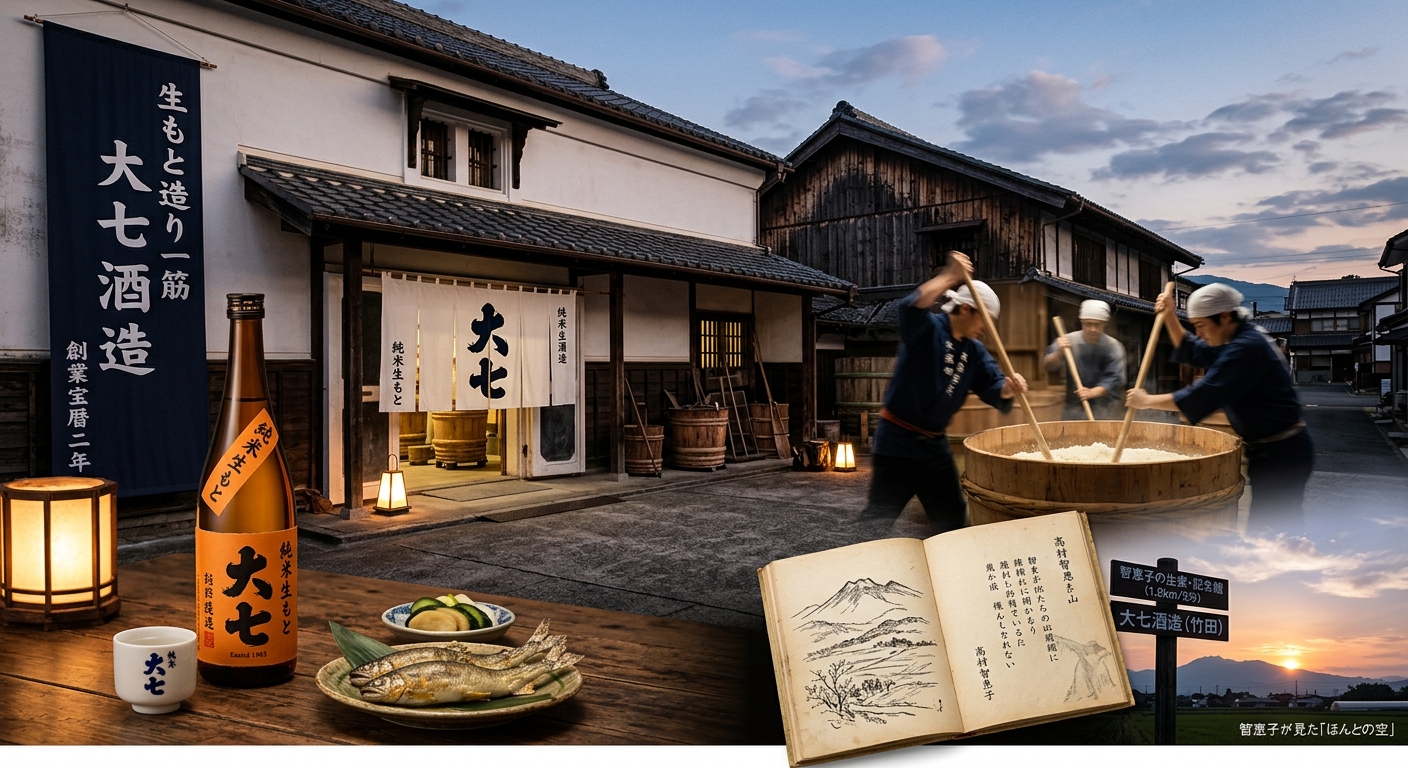
大七酒造は宝暦2年(1752年)、初代・太田三良右衛門が福島県二本松市で創業した蔵元です。創業当初の酒銘は「大山」でしたが、8代目の代に蔵の名を取って「大七」と改めました。転機となったのは明治末年、大蔵省醸造試験所が山廃酛・速醸酛といった簡便な酒母造りの技術を開発し、全国の蔵がこぞって切り替えていった時期です。8代目も一度は速醸酛を試みたものの、「これでは自分の求める酒はできない」と判断し、あえて手間のかかる生もと造りを守り続ける道を選びました。以来大七は生もと造り一筋の蔵として、全国新酒鑑評会史上初めて生もと造り純米酒での金賞受賞という記録も打ち立てています。現在の代表者は太田七右衛門氏で、令和7年(2025年)7月7日に十代目として襲名しました。
合わせる「純米生もと」は昭和58年(1983年)に発売された一本。五百万石を精米歩合69%まで磨き、アルコール度数15度で仕込まれています。生もと造り特有の穏やかな酸とふくらみのある旨味が調和し、蔵元の公式サイトでは「15度前後の常温や、ぬる燗。そしてお好みにより熱燗でも」楽しめる食中酒として紹介されています。
土地の話
二本松市は、洋画家・高村智恵子のふるさとでもあります。旧・安達郡油井村(現・二本松市油井)で生まれ育った智恵子の実家は、「花霞」という銘柄を醸していた造り酒屋で、屋号を「米屋」といいました。智恵子が生まれ育った家もまた、酒蔵だったのです。
大七酒造がある竹田の蔵から、智恵子の生家・智恵子記念館までは、車でわずか3分・約1.2kmという近さです。かつて智恵子の実家が醸していた酒と、いまも大七が醸し続けている酒は、同じ二本松の空の下にある、決して遠い場所の物語ではありません。
音楽の話
「智恵子抄」は、彫刻家・詩人の高村光太郎が1941年に刊行した詩集のタイトルです。詩集には、東京で暮らす智恵子が「東京には空が無い」と嘆き、ふるさと二本松の安達太良山の上に広がる青い空だけを「ほんとの空」と呼んで恋しがる、よく知られた一節が収められています。この詩集を題材に1964年(昭和39年)、二代目コロムビア・ローズが歌謡曲「智恵子抄」を発表しました。作詞は丘灯至夫、作曲は戸塚三博、編曲は福田正。歌詞は東京の灰色の空を嫌い、ふるさとの安達太良山に思いを馳せる智恵子の姿を歌っており、この曲は同年のNHK紅白歌合戦に二代目コロムビア・ローズが初出場する足がかりともなりました。
二代目コロムビア・ローズは本名・宗紀子、1942年生まれ。1962年に「白ばら紅ばら」でデビューし、1964年の「智恵子抄」が代表曲となりました。1975年に渡米してロサンゼルスを拠点に歌手活動を続け、2020年8月16日、78歳で亡くなっています。
高村智恵子自身は1886年、油井村の造り酒屋「米屋」に生まれ、日本女子大学校で洋画に打ち込んだのち、1914年から高村光太郎との結婚生活に入りました(正式な入籍は1933年)。晩年は病を得て、1937年頃からは病室で千数百点ともいわれる紙絵を制作し、1938年に52歳で亡くなりました。
なぜこの組み合わせなのか
智恵子が焦がれた「ほんとの空」は、彼女の実家が酒を醸していたのと同じ二本松の空です。実家の酒蔵はもう残っていませんが、そこから車でわずか3分の場所では、大七酒造が270年以上、生もと造りという手間のかかる方法を、時代の流れに逆らってでも守り続けてきました。
もし智恵子が今もいたなら、変わらず安達太良山の上に広がる空の下で醸される大七の酒を、どんな気持ちで口にしたでしょうか。「智恵子抄」が歌う望郷の思いと、生まれた土地で造られ続ける一本の酒を重ねて、味わってみてください。
この一本を、探すなら
※楽天市場へのリンクは広告(アフィリエイト)です。在庫・取扱いは変動します。お近くの酒販店でも、ぜひ銘柄名を伝えて探してみてください。
🌡️ おすすめの飲み方:常温(15度前後)からぬる燗で。お好みで熱燗でも、と蔵元が案内しています。生もと造り特有の穏やかな酸とふくらみのある旨味は、温度を変えるたびに違う表情を見せてくれます。
合わせたい「アテ」
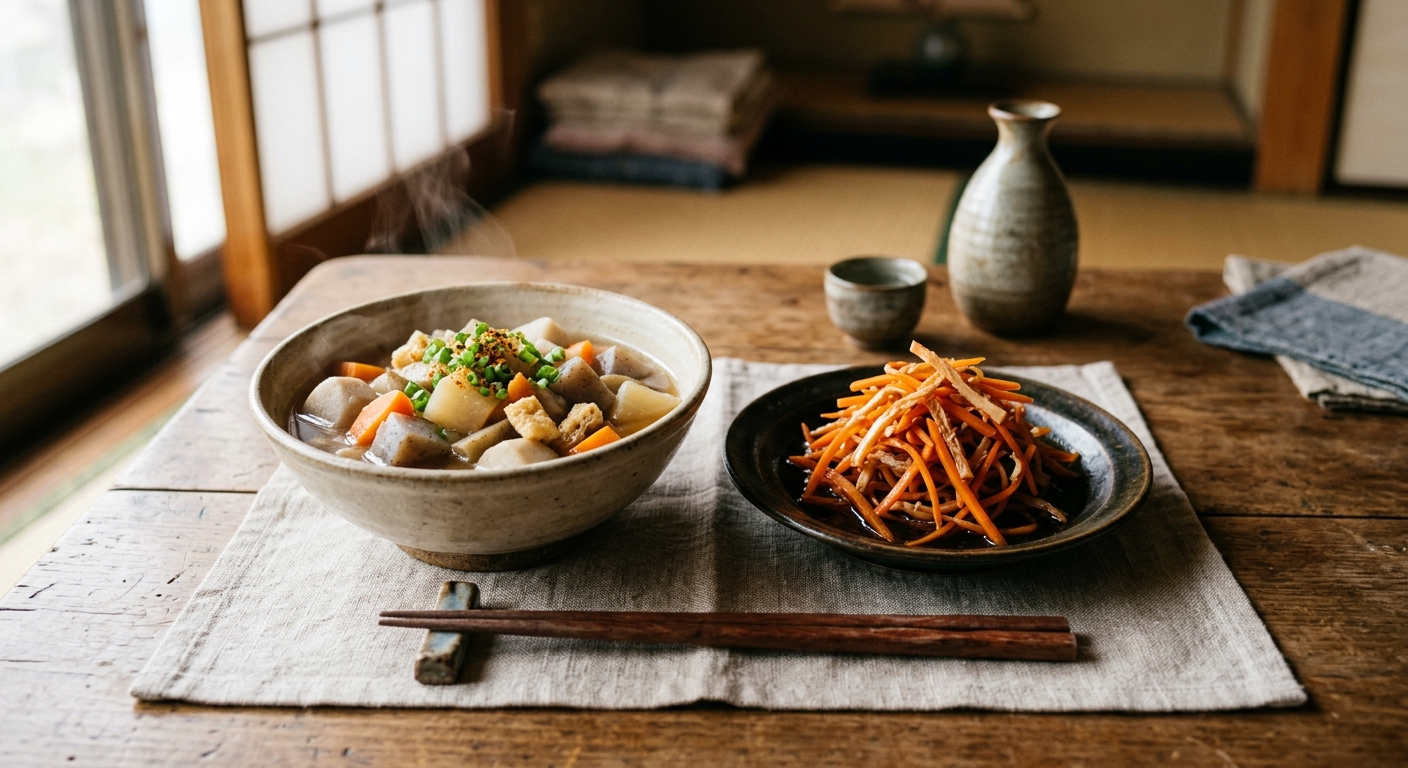
- ざくざく
二本松に伝わる郷土料理。里芋・大根・にんじん・ごぼう・こんにゃくをさいの目に切って、醤油で煮込んだ汁物です。もともとは冠婚葬祭で振る舞われてきた家庭の味で、いまも二本松提灯まつりなどで供されます。根菜と出汁がじんわり染みた素朴な旨味に、生もと造りならではの穏やかな酸とコクのある味わいがよく合います。
レシピはこちら:JAグループ「ざくざく」
- いかにんじん
スルメイカとにんじんを細切りにし、醤油とみりんの甘辛いたれに漬け込んだ、福島県の郷土料理。雪深い冬の保存食として親しまれてきました。イカの旨味と甘辛いたれの味わいに、生もと造りの複雑な酸味と米の旨味が重なります。
レシピはこちら:クラシル「福島県の『いかにんじん』」
科学的にひとこと:生もと造りの酒母は乳酸菌の働きで乳酸やアミノ酸を豊富に含み、その穏やかな酸味が、根菜の出汁や醤油だれに含まれるグルタミン酸・コハク酸系の旨味と重なり合うことで、味わい全体に厚みを生みます。酸味には、根菜の甘みや魚介の風味をくどく感じさせない働きもあります。
この蔵をたずねるなら
大七酒造
福島県二本松市竹田一丁目66番地/JR二本松駅から車で約6分(約1.8km)。
宝暦2年(1752年)創業、生もと造り一筋の蔵元です。
近くの観光スポット
- 智恵子の生家・智恵子記念館/二本松市油井|大七酒造から車で約3分・約1.2km
高村智恵子の生家(かつて「花霞」を醸した造り酒屋、屋号「米屋」)を修復・公開し、裏手の記念館に智恵子の紙絵・油絵などを展示。開館9:00〜16:30(最終入館16:00)、休館は水曜(祝日の場合は翌日)・年末年始(12/28〜1/3)、入館料は大人410円。
- 霞ヶ城公園(二本松城跡)/二本松市|大七酒造から車で約3分・約1.2km
寛永20年(1643年)に整備された二本松城跡。無料で見学でき、ソメイヨシノなど約2,500本が咲く桜の名所としても知られています。
近くの温泉
- 岳温泉/二本松市岳温泉|大七酒造から車で約20分・約15.4km
安達太良山のふもとに広がる温泉地。岳温泉観光協会が日帰り入浴の専用ページを公式サイトに設けており、日帰り入浴を受け付ける宿があります。受付時間・料金は宿ごとに異なるので、事前にご確認ください。
※営業時間・定休日・日帰り入浴の可否は変わることがあります。おでかけ前に各施設の公式情報をご確認ください。
ひとことメモ(日本酒の用語)
- 純米酒:米・米麹・水だけで造られ、醸造アルコールを添加していない日本酒。米の旨みをまっすぐ感じられるのが特徴です。
- 精米歩合:玄米を削り、残った部分の割合。数値が低いほど、米を多く磨いていることを示します。
- 生酛(きもと)造り:乳酸菌を自然に取り込んで酒母(酛)を育てる、手間ひまのかかる伝統的な製法です。
参考
内容に誤りがございましたら、お手数ですが info@soundrecords.jp までご連絡いただけますと幸いです。
Today’s Pairing
- Sake: Daishichi Junmai Kimoto — brewed with Gohyakumangoku rice, rice-polishing ratio (seimai buai) 69%, 15% alcohol / Daishichi Sake Brewery Co., Ltd. (1-66 Takeda, Nihonmatsu City, Fukushima Prefecture)
Official site: https://www.daishichi.com/
- Kayoukyoku (classic Japanese popular song): “Chieko-sho” by Columbia Rose II, 1964
YouTube: https://www.youtube.com/watch?v=O6wsLHTQj3o
▶ If the player above doesn’t play, open it on YouTube
The Story of the Brewery
Daishichi Sake Brewery was founded in 1752 by its first-generation head, Ota Sanroemon, in what is now Nihonmatsu City, Fukushima. The sake was originally sold under a different brand name (大山), but the eighth-generation head renamed it “Daishichi,” after the brewery itself. The turning point came in the closing years of the Meiji era, when the Ministry of Finance’s brewing research institute developed simpler methods of preparing yeast starter — yamahai and sokujo — and breweries across Japan switched over to them one after another. The eighth-generation head tried sokujo as well, but decided “this can’t produce the sake I’m after,” and chose instead to keep brewing the more labor-intensive kimoto way. Daishichi has focused solely on kimoto brewing ever since, and it holds the distinction of being the first brewery in the history of Japan’s National New Sake Awards to win a gold medal for a kimoto-brewed junmai sake. Its current head, Ota Shichiemon, took on that name as the tenth generation on July 7, 2025.
The bottle in this pairing, Junmai Kimoto, was first released in 1983. It’s brewed with Gohyakumangoku rice polished to a seimai buai of 69%, at 15% alcohol. The brewery’s own website recommends it as food-friendly sake “served at around 15°C (room temperature), warmed gently (nurukan), or even hot (atsukan) if you prefer” — a sake whose gentle acidity and rounded umami, both distinctive of kimoto brewing, come through at any of those temperatures.
The Story of the Land
Nihonmatsu City is also the hometown of the painter Takamura Chieko. Born and raised in the former village of Yui, Adachi District (now Yui, Nihonmatsu City), Chieko’s family ran a sake brewery that made a label called “Hanagasumi,” trading under the name “Komeya.” The house Chieko grew up in was, itself, a sake brewery.
From Daishichi’s brewery in the Takeda district, it’s only a 3-minute, roughly 1.2-km drive to Chieko’s birthplace and memorial museum. The sake her family once brewed, and the sake Daishichi still brews today, sit under the very same Nihonmatsu sky — not a story from some distant place at all.
The Story of the Song
“Chieko-sho” is the title of a collection of poems published in 1941 by the sculptor and poet Takamura Kotaro, Chieko’s husband. It contains a well-known passage in which Chieko, living in Tokyo, laments that “Tokyo has no sky,” and longs only for the blue sky over Mt. Adatara back in her hometown of Nihonmatsu — the only sky she calls “the real sky.” Taking that poetry collection as its subject, Columbia Rose II released the kayoukyoku “Chieko-sho” in 1964. The lyrics are by Oka Toshio, with music and arrangement credited to Totsuka Mihiro (戸塚三博) and Fukuda Tadashi (福田正) respectively. The song follows Chieko turning away from Tokyo’s grey sky and longing for Mt. Adatara back home, and it became the song that carried Columbia Rose II to her first appearance on NHK’s Kohaku Uta Gassen that same year.
Columbia Rose II, whose real name was Mune Noriko, was born in 1942. She debuted in 1962 with “Shirobara Benibara,” and “Chieko-sho,” released in 1964, became her signature song. She moved to the United States in 1975 and continued performing out of Los Angeles. She died on August 16, 2020, at the age of 78.
Takamura Chieko herself was born in 1886 into the “Komeya” sake brewery in Yui village. She devoted herself to Western-style painting at Japan Women’s University, then began married life with Takamura Kotaro in 1914 (their marriage was formally registered in 1933). In her later years she fell ill, and from around 1937 she created what are said to be well over a thousand paper cutouts from her hospital room, before she died in 1938 at the age of 52.
Why This Pairing
The “real sky” Chieko longed for is the very same Nihonmatsu sky over the brewery where her own family once made sake. That family brewery no longer exists, but just a 3-minute drive away, Daishichi has kept brewing the labor-intensive kimoto way for more than 270 years, against the grain of the times.
If Chieko were here today, what would she feel tasting sake still brewed under that same sky over Mt. Adatara? Let the homesickness at the heart of “Chieko-sho” sit alongside a bottle still made in the place she was born, and taste it with that in mind.
Where to Find This Bottle
The Rakuten Ichiba link below is an affiliate link.
Note: the links above lead to Japan-based retailers. They’re most convenient for readers in Japan, or for those elsewhere who are able to arrange international shipping. Stock and availability change over time, so if you’re near a specialty sake shop, it’s well worth asking for this label by name.
🌡️ Recommended way to drink it: Around 15°C (room temperature) to gently warmed (nurukan); the brewery says hot (atsukan) works too, if you prefer. The gentle acidity and rounded umami of kimoto brewing show a different side at every temperature.
Pairing Dishes Worth Trying
- Zakuzaku
A Nihonmatsu home-style dish: taro, daikon, carrot, burdock root, and konjac, all diced small and simmered in a soy-sauce broth. Originally served at weddings, funerals, and other family gatherings, it’s still served today at the Nihonmatsu Lantern Festival. The mild, dashi-soaked sweetness of the root vegetables pairs naturally with the gentle acidity and body of kimoto brewing.
Recipe (in Japanese): JA Group, “Zakuzaku”
- Ika Ninjin
A Fukushima specialty of dried squid and julienned carrot marinated in a sweet soy-and-mirin sauce, traditionally kept as a preserved dish through the region’s snowy winters. The squid’s umami and the sweet-savory marinade echo the complex acidity and rice-derived umami of kimoto brewing.
Recipe (in Japanese): Kurashiru, “Fukushima’s Ika Ninjin”
A note on the science: the yeast starter in kimoto brewing is built up through natural lactic-acid fermentation, giving the sake plenty of lactic acid and amino acids. That gentle acidity resonates with the glutamic and succinic acid umami in root-vegetable dashi and soy-based marinades, adding depth to the overall flavor — while the acid also keeps the vegetables’ sweetness and the seafood’s richness from feeling heavy.
Visiting the Brewery
Daishichi Sake Brewery
1-66 Takeda, Nihonmatsu City, Fukushima Prefecture. About a 6-minute drive (roughly 1.8 km) from JR Nihonmatsu Station.
Founded in 1752, the brewery has focused solely on kimoto brewing ever since.
Sights Nearby
- Chieko’s Birthplace & Memorial Museum / Yui, Nihonmatsu City | ~3 min, ~1.2 km by car from Daishichi
The restored childhood home of painter Takamura Chieko — once a sake brewery that made a label called “Hanagasumi,” trading under the name “Komeya.” The museum behind it displays Chieko’s paper cutouts and oil paintings. Open 9:00–16:30 (last entry 16:00), closed Wednesdays (or the following day if a holiday) and over New Year (Dec 28–Jan 3); adult admission ¥410.
- Kasumigajo Park (ruins of Nihonmatsu Castle) / Nihonmatsu City | ~3 min, ~1.2 km by car from Daishichi
The ruins of Nihonmatsu Castle, laid out in 1643. Free to enter, and known for about 2,500 cherry trees in bloom each spring.
Hot Springs Nearby
- Dake Onsen / Dake Onsen, Nihonmatsu City | ~20 min, ~15.4 km by car from Daishichi
A hot spring town at the foot of Mt. Adatara. The official Dake Onsen Tourism Association site has a dedicated day-trip bathing page, and several inns accept day-use bathers. Hours and prices vary by inn, so check ahead.
Opening hours, closing days and day-use bathing availability can change. Please check each facility’s official information before visiting.
A Quick Glossary of Sake Terms
- Junmai: Sake made only from rice, rice koji, and water, with no added brewing alcohol, letting the rice’s own umami come through directly.
- Seimai buai (rice-polishing ratio): The percentage of the original grain remaining after milling. The lower the number, the more the rice has been polished down.
- Kimoto: A traditional, labor-intensive method of building the yeast starter (moto) by cultivating naturally occurring lactic acid bacteria, rather than adding lactic acid directly.
Sources
If you notice any errors in this article, please don’t hesitate to reach out at info@soundrecords.jp.
コメントを残す