この記事を耳で聞く
表示中の言語で読み上げます。音声は端末の設定によって異なります。
今日のペアリング
- 日本酒:五人娘 純米酒(生もと仕込み)/長野県産酒米「美山錦」使用・精米歩合70%・アルコール度数14度/株式会社寺田本家(千葉県香取郡神崎町神崎本宿1964)
公式サイト:https://www.teradahonke.co.jp/ - 歌謡曲:「大利根月夜」田端義夫(1939年)
YouTube:https://www.youtube.com/watch?v=5-0j58U0M7o
▶ 上のプレーヤーで再生できない場合は、YouTubeで開く
酒蔵の話
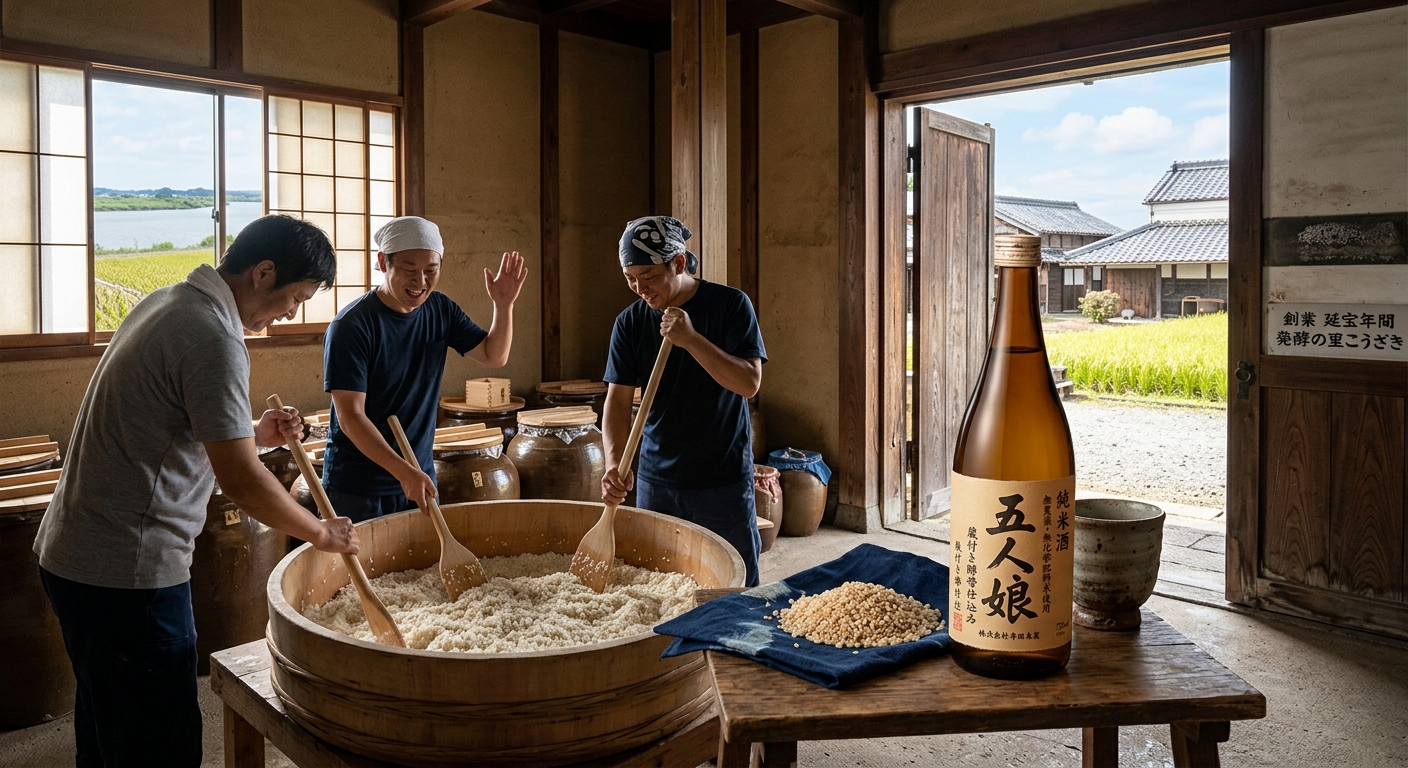
株式会社寺田本家は延宝年間(1673〜81年)の創業と伝わる、350年以上の歴史を持つ蔵元です。現在の代表取締役社長は24代目・寺田優氏。蔵の理念として公式サイトには「微生物も寺田本家で働く人も元気に働く寺田本家。多種多様な力(微生物・人・モノ・コト)が働いて美味しくて健康に良いものができる」と掲げられています。
この自然な酒造りへの転換点になったのが、23代目・寺田啓佐氏の存在でした。自らの病と経営の危機をきっかけに、それまでの「安く造るお酒」から「安心なお酒」へと舵を切り、無農薬・無化学肥料の米、添加物を使わない蔵付き酵母、機械に頼らず手と歌で醸す造りへと大きく転換したのです。啓佐氏が他界した後は、24代目・優氏がその意志を受け継いでいます。
看板銘柄「五人娘」のうち、今回合わせる純米酒は、長野県産の酒米「美山錦」を精米歩合70%まで磨き、アルコール度数14度で仕込んだ一本。酵母は添加せず、蔵に棲みつく蔵付き酵母にまかせる「生酛(きもと)」造りで、無農薬・無化学肥料の米を使い、搾ったままの無濾過で届けられます。蔵元いわく「お米の柔らかな甘味と旨みが広がり、生酛ならではの酸味でぴりっと締まる、やさしい味わい」の一本です。
土地の話
寺田本家がある千葉県香取郡神崎町は、下流で太平洋に注ぐ利根川のほとりに広がる町です。町内にはもう一つ、同じく300年以上の歴史を持つ蔵元「鍋店」の神崎酒造蔵もあり、2015年4月には、この二つの蔵を中心に「道の駅 発酵の里こうざき」が開業しました。日本酒をはじめ、味噌・醤油・漬物など全国の発酵食品約300種類が並ぶ、発酵をテーマにした道の駅です。
隣接する香取市佐原には、日本で初めて実測による全国地図を作り上げた伊能忠敬が暮らした旧宅が、小野川沿いの古い商家町の中に今も残っています。少し足を延ばせば、下総国一宮・香取神宮もあり、利根川沿いのこの一帯には、水運とともに栄えてきた土地の記憶が重なっています。
音楽の話
「大利根月夜」は1939年(昭和14年)発売、田端義夫のシングル。作詞は藤田まさと、作曲は長津義司です。田端義夫は同じ1939年、新進作曲家・倉若晴生の「島の船唄」でデビューし、「里恋峠」、そしてこの「大利根月夜」、「別れ船」「梅と兵隊」とヒットを重ね、東海林太郎・上原敏と並ぶ看板歌手としての地位を築きました。
歌詞は、利根川の流れに浮かぶ月を見つめる男の心情を描きます。「昔笑うて 眺めた月も 今日は 今日は 涙の顔で見る」――同じ川面を流れる同じ月でも、見る者の心が変われば、その見え方もまったく違ってくる。そんな情景が歌われています。田端義夫自身は1919年、三重県松阪市の生まれ。2013年に94歳で亡くなるまで、長く歌い続けた一曲です。
なぜこの組み合わせなのか
「大利根月夜」が歌うのは、利根川の同じ月を、かつては笑って、今日は涙で見つめる男の姿です。変わらずそこにある川と月、そして変わっていく人の心――この歌の芯には、そんな対比があります。
寺田本家もまた、変わることを恐れなかった蔵です。23代目・啓佐氏は、自らの病と蔵の危機をきっかけに、長く続けてきた「安く造るお酒」のやり方を手放し、無農薬の米と蔵付きの菌にまかせる「安心なお酒」へと造りを一新しました。その蔵のすぐ脇を、今日も変わらず利根川は流れています。
変わらない川面を流れる月と、変わり続けることを選んだ蔵。利根川のほとりでは、そのどちらもが、今日まで静かに受け継がれてきました。
この一本を、探すなら
- 蔵元の公式サイト:https://www.teradahonke.co.jp/
- 楽天市場で買う:「寺田本家 五人娘 純米酒」の商品ページを見る(720ml・1,822円)
※楽天市場へのリンクは広告(アフィリエイト)です。在庫・取扱いは変動します。お近くの酒販店でも、ぜひ銘柄名を伝えて探してみてください。
合わせたい「アテ」
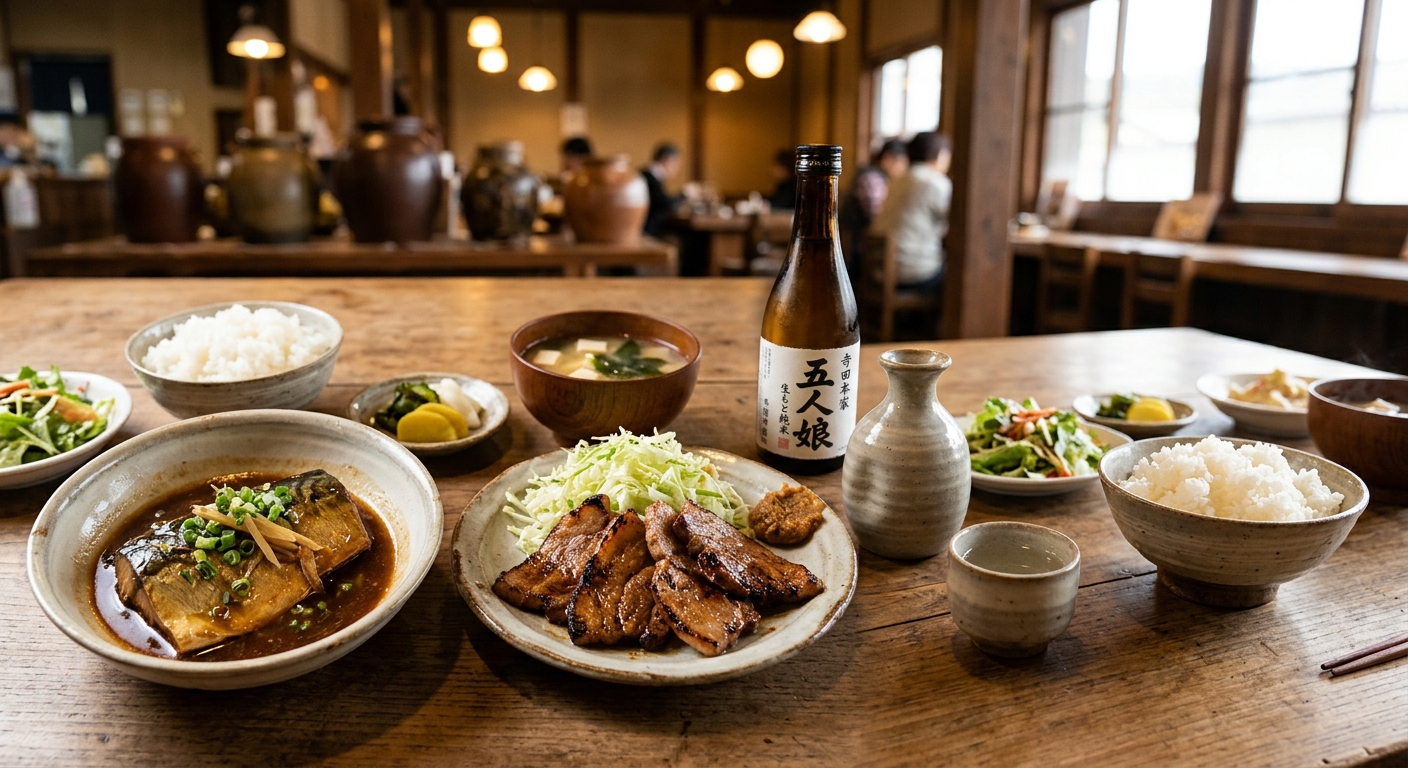
- 鯖の味噌煮
「道の駅 発酵の里こうざき」のカフェ&レストランでも供される、この土地になじみ深い一皿。味噌の発酵由来の旨味に、脂ののった鯖の味わいが重なり、生もと純米の酸味がすっと後味を引き締めてくれます。
レシピはこちら:クラシル「基本のサバの味噌煮」 - 豚肉の味噌麹焼き
同じく道の駅のメニューにもある一品。麹の力で肉をやわらかく仕立てる調理法は、蔵付き酵母や麹にこだわる寺田本家の酒造りとも響き合います。
レシピはこちら:クラシル「ご飯がすすむ 豚肉の塩麹味噌焼き」(塩麹と味噌を合わせたレシピですが、味噌麹だけでも同じ作り方でできます)
科学的にひとこと:味噌や麹に含まれる酵素(プロテアーゼ)はタンパク質を分解して旨味成分(グルタミン酸)を生み出します。同じく米麹から生まれるこの日本酒の穏やかな旨味・酸味は、発酵由来の旨味同士で重なり合い、脂ののった部位の後味もすっきりと流してくれます。
この蔵をたずねるなら
寺田本家
千葉県香取郡神崎町神崎本宿1964/JR成田線 下総神崎駅から徒歩約20分、圏央道 神崎ICから車で約3分。
蔵のすぐそばを利根川が流れ、隣には同じく300年以上の歴史を持つ蔵元「鍋店」(神崎酒造蔵)もあります。
近くの観光スポット
- 道の駅 発酵の里こうざき/神崎町|寺田本家から車で約3分・約2.5km
2015年4月開業。発酵をテーマにした道の駅で、寺田本家や鍋店の酒をはじめ、全国の発酵食品約300種類が並びます。 - 伊能忠敬旧宅・佐原の町並み/香取市佐原|寺田本家から車で約11分・約10km
日本地図を作った伊能忠敬が暮らした旧宅(入館無料、9:00〜16:30、年末年始12/29〜1/1は休館)が残る、小野川沿いの古い商家町です。 - 香取神宮/香取市香取|寺田本家から車で約17分・約14km
下総国一宮。創建は神武天皇18年と伝わり、現在の本殿・楼門は元禄13年(1700年)に徳川綱吉が造営したものです。
※営業時間・定休日は変わることがあります。おでかけ前に各施設の公式情報をご確認ください。
ひとことメモ(日本酒の用語)
- 純米酒:米・米麹・水だけで造られ、醸造アルコールを添加していない日本酒。米の旨みをまっすぐ感じられるのが特徴です。
- 生酛(きもと)造り:乳酸菌を自然に取り込んで酒母(酛)を育てる、手間ひまのかかる伝統的な製法です。
- 精米歩合:玄米を削り、残った部分の割合。数値が低いほど、米を多く磨いていることを示します。
参考
- 株式会社寺田本家 公式サイト
- 会社概要 | 株式会社寺田本家
- 五人娘 純米酒 720ml | 株式会社寺田本家
- 田端義夫 – Wikipedia
- 田端義夫「大利根月夜」歌詞 – 歌ネット
- 道の駅発酵の里こうざき – Wikipedia
- 伊能忠敬旧宅 | 香取市
- 香取神宮 | 香取市
内容に誤りがございましたら、お手数ですが info@soundrecords.jp までご連絡いただけますと幸いです。
오늘의 페어링
- 일본 술(사케):고닌무스메 준마이슈(생주 양조)/나가노현산 주조미 「미야마니시키」 사용・정미 비율 70%・알코올 도수 14도/주식회사 데라다 혼케(지바현 가토리군 간자키초 간자키혼주쿠 1964)
공식 사이트:https://www.teradahonke.co.jp/ - 가요곡:「오토네 쓰키요」 다바타 요시오(1939년)
YouTube:https://www.youtube.com/watch?v=5-0j58U0M7o
▶ 위 플레이어로 재생되지 않는 경우, YouTube에서 열기
양조장 이야기
주식회사 데라다 혼케는 엔포 연간(1673〜81년)에 창업했다고 전해지는, 350년 넘는 역사를 지닌 양조장입니다. 현재 대표이사 사장은 24대 데라다 유타카 씨입니다. 공식 사이트에는 양조장의 이념으로 「미생물도 데라다 혼케에서 일하는 사람도 활기차게 일하는 데라다 혼케. 다종다양한 힘(미생물・사람・물건・일)이 일해서 맛있고 건강에 좋은 것이 만들어진다」고 내걸려 있습니다.
이 자연스러운 술 빚기로의 전환점이 된 것이 23대 데라다 게이스케 씨의 존재였습니다. 자신의 병과 경영 위기를 계기로, 그때까지의 「싸게 만드는 술」에서 「안심할 수 있는 술」로 방향을 틀어, 무농약・무화학비료 쌀, 첨가물을 쓰지 않는 양조장 고유 효모, 기계에 의존하지 않고 손과 노래로 빚는 방식으로 크게 전환했습니다. 게이스케 씨가 세상을 떠난 뒤에는 24대 유타카 씨가 그 뜻을 이어받고 있습니다.
대표 브랜드 「고닌무스메」 가운데 이번에 맞춘 준마이슈는, 나가노현산 주조미 「미야마니시키」를 정미 비율 70%까지 깎아 알코올 도수 14도로 빚은 한 병입니다. 효모는 첨가하지 않고 양조장에 깃든 고유 효모에 맡기는 「기모토(생주)」 방식이며, 무농약・무화학비료 쌀을 사용해 짜낸 그대로 무여과로 선보입니다. 양조장 측은 「쌀의 부드러운 단맛과 감칠맛이 퍼지고, 기모토 특유의 산미로 알싸하게 마무리되는 부드러운 맛」이라고 말합니다.
고장 이야기
데라다 혼케가 있는 지바현 가토리군 간자키초는 하류에서 태평양으로 흘러드는 도네강 가에 펼쳐진 마을입니다. 마을 안에는 또 하나, 마찬가지로 300년 넘는 역사를 지닌 양조장 「나베텐」의 간자키 주조장도 있으며, 2015년 4월에는 이 두 양조장을 중심으로 「미치노에키 발효의 마을 고자키」가 문을 열었습니다. 일본 술을 비롯해 된장・간장・절임 등 전국의 발효 식품 약 300종이 늘어선, 발효를 테마로 한 휴게소입니다.
이웃한 가토리시 사와라에는, 일본에서 처음으로 실측에 의한 전국 지도를 만든 이노 다다타카가 살았던 옛집이 오노강변의 오래된 상가 마을 속에 지금도 남아 있습니다. 조금만 발길을 옮기면 시모사국 이치노미야인 가토리 신궁도 있어, 도네강변의 이 일대에는 물길과 함께 번성해 온 고장의 기억이 겹쳐 있습니다.
음악 이야기
「오토네 쓰키요」는 1939년(쇼와 14년) 발매된 다바타 요시오의 싱글입니다. 작사는 후지타 마사토, 작곡은 나가쓰 요시지입니다. 다바타 요시오는 같은 1939년 신진 작곡가 구라와카 하루오의 「섬의 뱃노래」로 데뷔했고, 「사토코이토게」, 그리고 이 「오토네 쓰키요」, 「와카레부네」, 「우메토 헤이타이」로 히트를 이어 가며 도쿄 다로・우에하라 빈과 어깨를 나란히 하는 간판 가수의 자리를 굳혔습니다.
가사는 도네강 물결에 떠 있는 달을 바라보는 남자의 심정을 그립니다. 「옛날 웃으며 바라보던 달도 오늘은 오늘은 눈물 어린 얼굴로 본다」――같은 강물 위를 흐르는 같은 달이라도, 보는 사람의 마음이 바뀌면 보이는 모습이 전혀 달라진다는 정경이 노래됩니다. 다바타 요시오 본인은 1919년 미에현 마쓰사카시 출생으로, 2013년 94세로 세상을 떠날 때까지 오래도록 불러 온 한 곡입니다.
왜 이 조합일까
「오토네 쓰키요」가 노래하는 것은 도네강의 같은 달을, 예전에는 웃으며, 오늘은 눈물로 바라보는 남자의 모습입니다. 변하지 않고 그곳에 있는 강과 달, 그리고 변해 가는 사람의 마음――이 노래의 핵심에는 그런 대비가 있습니다.
데라다 혼케 또한 변화를 두려워하지 않은 양조장입니다. 23대 게이스케 씨는 자신의 병과 양조장의 위기를 계기로, 오래 이어 온 「싸게 만드는 술」의 방식을 내려놓고, 무농약 쌀과 양조장에 깃든 균에 맡기는 「안심할 수 있는 술」로 양조 방식을 일신했습니다. 그 양조장 바로 옆을 오늘도 변함없이 도네강이 흐르고 있습니다.
변하지 않는 강물 위를 흐르는 달과, 계속 변하기를 택한 양조장. 도네강 가에서는 그 둘 모두가 오늘까지 조용히 이어져 왔습니다.
이 한 병을 찾는다면
- 양조장 공식 사이트:https://www.teradahonke.co.jp/
- 라쿠텐 시장에서 구매하기:「寺田本家 五人娘 純米酒」 상품 페이지 보기(720ml・1,822円)
※라쿠텐 시장 링크는 광고(제휴)입니다. 재고・취급 여부는 바뀔 수 있습니다. 가까운 주류 판매점에서도 꼭 브랜드명을 말씀하시고 찾아보세요.
🌡️ 추천 마시는 법:상온 또는 미지근한 데운 술(40℃ 전후)로. 기모토 특유의 온화한 산미와 쌀의 감칠맛이 온도를 올리면 부풀어 오릅니다. 시원하게 차갑게 해도 물론 즐길 수 있습니다.
곁들이고 싶은 안주
- 고등어 된장조림「미치노에키 발효의 마을 고자키」의 카페&레스토랑에서도 제공되는, 이 고장에 친숙한 한 접시. 된장의 발효에서 오는 감칠맛에 기름진 고등어의 맛이 겹치고, 생주 준마이의 산미가 뒷맛을 깔끔하게 잡아 줍니다.
레시피는 이쪽:쿠라시루 「기본 고등어 된장조림」 - 돼지고기 된장누룩구이마찬가지로 휴게소 메뉴에도 있는 한 품목. 누룩의 힘으로 고기를 부드럽게 만드는 조리법은, 양조장 고유 효모와 누룩을 고집하는 데라다 혼케의 술 빚기와도 울림이 있습니다.
레시피는 이쪽:쿠라시루 「밥이 술술 넘어가는 돼지고기 소금누룩 된장구이」(소금누룩과 된장을 합친 레시피이지만, 된장누룩만으로도 같은 방법으로 만들 수 있습니다)
과학적으로 한마디:된장이나 누룩에 들어 있는 효소(프로테아제)는 단백질을 분해해 감칠맛 성분(글루탐산)을 만들어 냅니다. 마찬가지로 쌀누룩에서 태어나는 이 일본 술의 온화한 감칠맛・산미는 발효에서 오는 감칠맛끼리 겹쳐, 기름진 부위의 뒷맛도 산뜻하게 씻어 줍니다.
이 양조장을 찾는다면
데라다 혼케지바현 가토리군 간자키초 간자키혼주쿠 1964/JR 나리타선 시모사코자키역에서 도보 약 20분, 겐오도 간자키 IC에서 차로 약 3분.
양조장 바로 옆으로 도네강이 흐르고, 이웃에는 마찬가지로 300년 넘는 역사를 지닌 양조장 「나베텐」(간자키 주조장)도 있습니다.
근처 관광 명소
- 미치노에키 발효의 마을 고자키/간자키초|데라다 혼케에서 차로 약 3분・약 2.5km2015년 4월 개업. 발효를 테마로 한 휴게소로, 데라다 혼케와 나베텐의 술을 비롯해 전국의 발효 식품 약 300종이 늘어서 있습니다.
- 이노 다다타카 옛집・사와라 거리/가토리시 사와라|데라다 혼케에서 차로 약 11분・약 10km일본 지도를 만든 이노 다다타카가 살았던 옛집(입관 무료, 9:00〜16:30, 연말연시 12/29〜1/1 휴관)이 남아 있는, 오노강변의 오래된 상가 마을입니다.
- 가토리 신궁/가토리시 가토리|데라다 혼케에서 차로 약 17분・약 14km시모사국 이치노미야. 창건은 진무 천황 18년이라 전해지며, 현재의 본전・누문은 겐로쿠 13년(1700년)에 도쿠가와 쓰나요시가 조영한 것입니다.
※영업시간・정기휴일은 바뀔 수 있습니다. 방문 전에 각 시설의 공식 정보를 확인해 주세요.
한마디 메모(일본 술 용어)
- 준마이슈:쌀・쌀누룩・물만으로 빚고 양조 알코올을 첨가하지 않은 일본 술. 쌀의 감칠맛을 곧게 느낄 수 있는 것이 특징입니다.
- 기모토(생주) 양조:유산균을 자연스럽게 끌어들여 주모(모토)를 키우는, 손이 많이 가는 전통적인 제법입니다.
- 정미 비율:현미를 깎고 남은 부분의 비율. 수치가 낮을수록 쌀을 많이 깎았음을 나타냅니다.
참고
- 주식회사 데라다 혼케 공식 사이트
- 회사 개요 | 주식회사 데라다 혼케
- 고닌무스메 준마이슈 720ml | 주식회사 데라다 혼케
- 다바타 요시오 – Wikipedia
- 다바타 요시오 「오토네 쓰키요」 가사 – 우타넷
- 미치노에키 발효의 마을 고자키 – Wikipedia
- 이노 다다타카 옛집 | 가토리시
- 가토리 신궁 | 가토리시
내용에 오류가 있으면 번거로우시겠지만info@soundrecords.jp로 연락해 주시면 감사하겠습니다.
コメントを残す