今日のペアリング
▶ 上のプレーヤーで再生できない場合は、YouTubeで開く
酒蔵の話
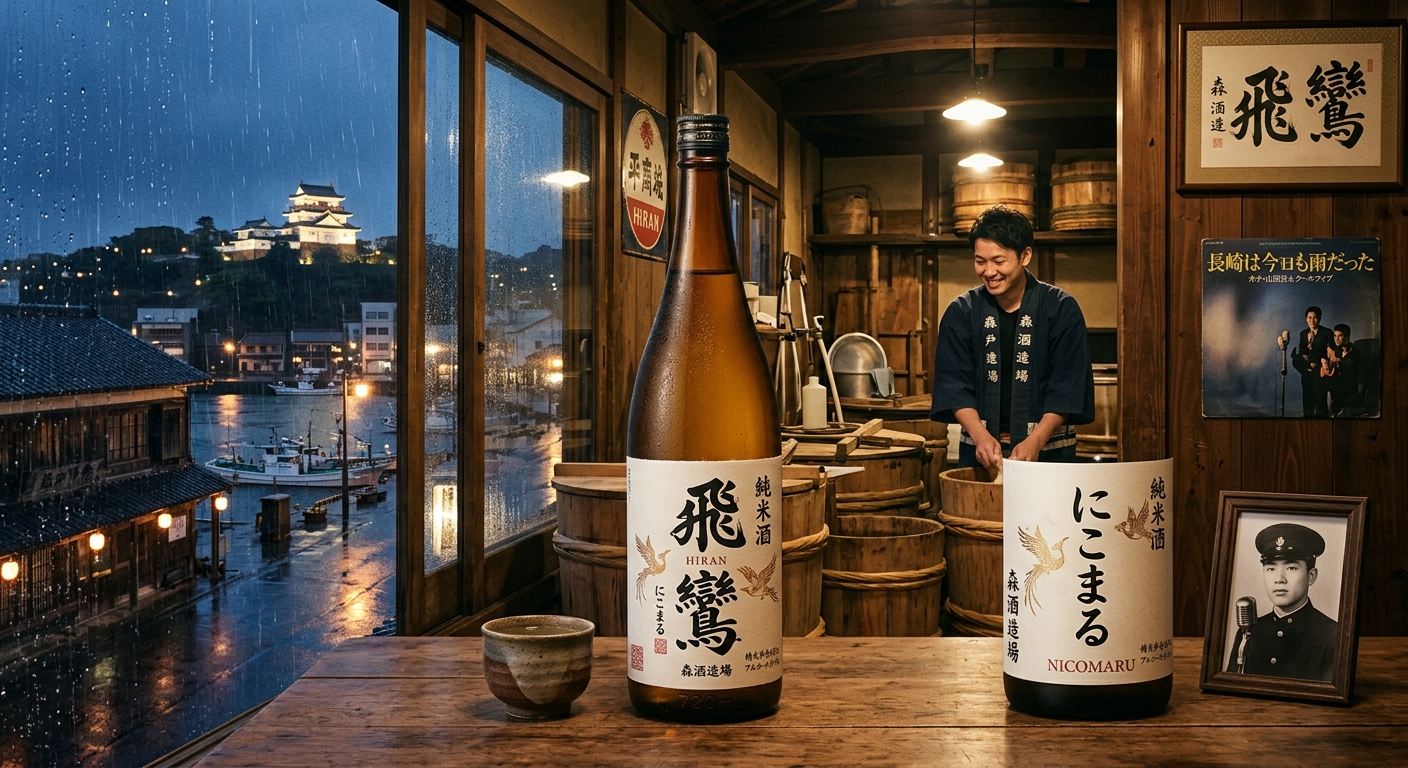
森酒造場は明治28年(1895年)、屋号「小松屋」として森幸吉により創業されました。蔵を構えるのは、平戸城のふもと、古くから南蛮貿易で栄えた港町・長崎県平戸市。かつては清酒「菊の露」、焼酎「仙滴」の銘柄で地元に親しまれ、昭和30年代の法人化を経て銘柄も「豊年」、そして現在の「飛鸞」へと移り変わってきました。
蔵の大きな転機となったのが、平成29年(2017年)の5代目蔵元・森雄太郎さんの帰郷です。広島大学工学部・大学院で発酵工学を学び、独立行政法人酒類総合研究所で最先端の醸造技術を研究したのち、宮城県の酒蔵で3年間修行。27歳で平戸に戻り、廃業寸前だった家業を立て直した「若き天才杜氏」として知られています。「いいお酒は、酒造りの技術以上に、蔵の環境が生み出すもの」という哲学のもと、乳酸菌を自然に取り込む生酛(きもと)造り、櫂入れなし、加水なし、濾過なしという、環境との共存を軸にした酒造りを続けています。
今回合わせる「にこまる」は、麹米に山田錦、掛米に長崎県産の食用米「にこまる」を用いた純米酒。精米歩合65%、アルコール度数14度(原酒)で、穏やかな香りの中に「にこまる」らしい丸みのある旨みを存分に生かした、気兼ねなく飲める一本です。
土地の話
平戸は日本で最初の国際貿易港として知られる土地です。約400年前にはポルトガル・オランダ・イギリスの商館が置かれ、大航海時代の航海士たちからは「西の都フィランド」と呼ばれていました。
「飛鸞」という銘柄名も、この土地の古い記憶に由来します。平戸の島影が、神霊の化身とされる伝説の鳥「鸞(らん)」が飛び立つ姿に似ていたことから「飛鸞島」と呼ばれ、それが転じて「平戸」となったと伝えられています。蔵元はこの土地の名の由来そのものを、ブランド名に刻みました。
音楽の話
「長崎は今日も雨だった」は1969年2月1日発売、内山田洋とクール・ファイブのメジャーデビュー曲です。作詞・永田貴子、作曲・彩木雅夫。オリコン週間最高2位、1969年度年間8位を記録し、約150万枚のミリオンセラーとなりました。同年の第11回日本レコード大賞では新人賞を受賞しています。
リードボーカルを務めた前川清さんは、長崎県北松浦郡鹿町町(現・佐世保市)の出身。長崎市内のキャバレーで歌っていたところをスカウトされてグループに加わったものの、当初は楽器運びのバンドボーイとして帯同する立場でした。それが音楽プロデューサーに見出されリードボーカルに抜擢され、この曲でメジャーデビューを果たしています。
なぜこの組み合わせなのか
前川清さんの故郷・鹿町町(現・佐世保市)は、森酒造場が蔵を構える平戸のすぐ隣、同じ北松浦の海辺の町です。歌に描かれた雨に濡れる長崎の港の情景は、蔵のある平戸の潮風の記憶と地続きの土地から生まれています。
森雄太郎さんが遠く広島・宮城で技術を磨いたのち27歳で平戸に戻り家業を立て直した道のりと、前川清さんがバンドボーイという立場から見出され、リードボーカルとして大ヒットを掴むまでの道のりには、どちらも下積みの時間を経て、自分の生まれた場所や声に立ち返ったときに花開いたという共通点があります。銘柄名の由来である「鸞」が海の向こうへ飛び立つ伝説のように、地元の米「にこまる」で穏やかに醸されたこの酒もまた、平戸から全国へと羽ばたこうとしている一本です。
この一本を、探すなら
※楽天市場へのリンクは広告(アフィリエイト)です。在庫・取扱いは変動します。お近くの酒販店でも、ぜひ銘柄名を伝えて探してみてください。
🌡️ おすすめの飲み方:常温、またはやや冷やして。生酛造りならではの穏やかな酸と『にこまる』米の丸みのある旨みは、キリッと冷やしすぎるより、常温に近い温度でゆっくり味わうと一番よく感じられます。
合わせたい「アテ」
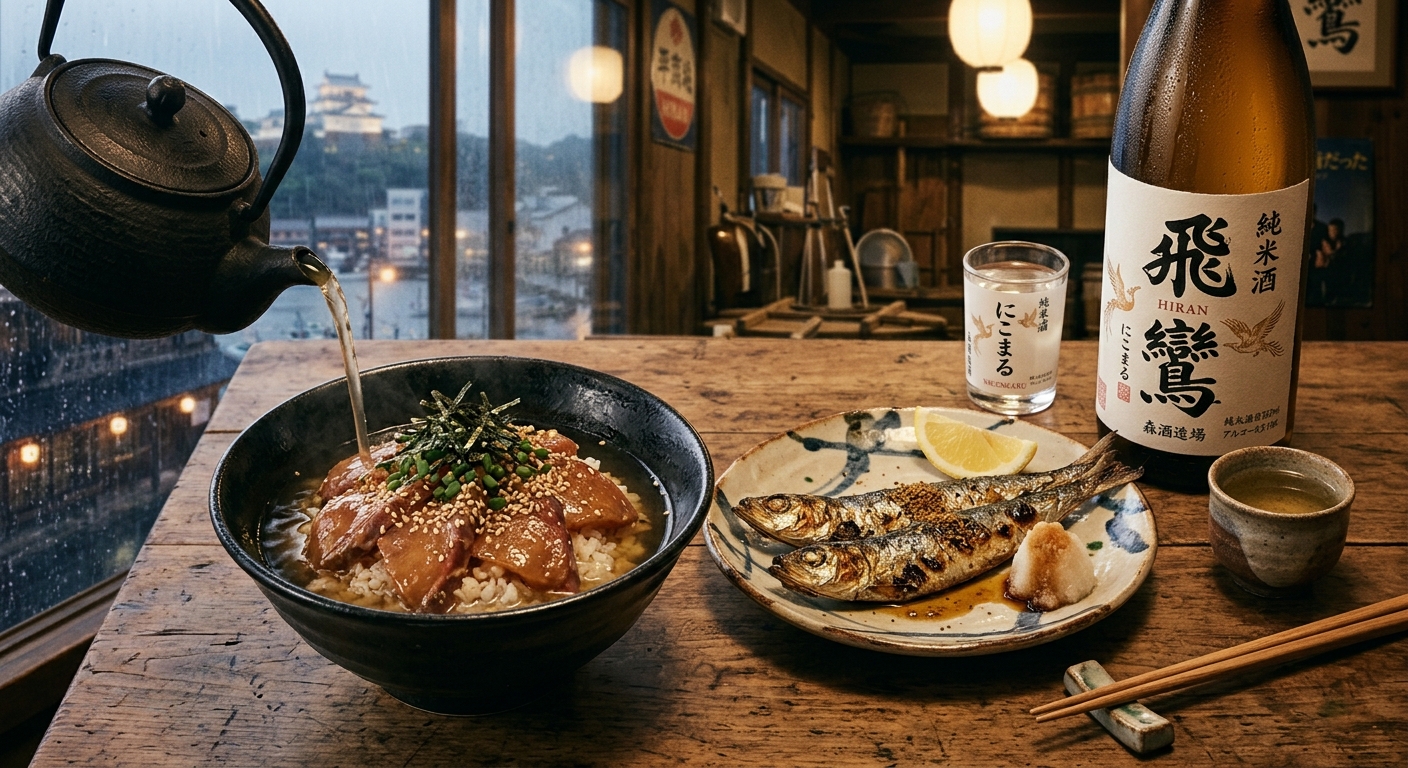
- ごま鯛茶漬け
平戸の郷土料理としても親しまれる鯛茶漬け。鯛の上品な甘みと、にこまるの丸みのある穏やかな旨みが静かに寄り添います。
レシピはこちら:クラシル「ごま鯛茶漬け」
- 焼き丸干しイワシ
長崎近海でも水揚げされる真いわしの丸干し。生酛造りならではのふくよかな酸味が、いわしの脂と香ばしさをすっきりとまとめてくれます。
レシピはこちら:クラシル「フライパンで簡単 焼き丸干しイワシ」
科学的にひとこと:鯛の持つ旨味成分(グルタミン酸)と、生酛造りに由来する穏やかな乳酸の酸味は互いの旨味を引き立て合う相乗効果があり、丸干しイワシの香ばしい脂は、酒のやわらかな香りと重なって後味を軽やかにまとめてくれます。
この蔵をたずねるなら
飛鸞醸造元 森酒造場
長崎県平戸市新町31-2/平戸大橋から車で約5分。
平戸城のふもと、平戸港に面した城下町にある蔵です(直売所 9:00〜17:00)。
近くの観光スポット
- 平戸城/平戸市岩の上町|蔵から徒歩約20分(車で約5分)・約1.5km
亀岡の丘に建つ平戸藩・松浦氏の居城。2021年に展示を全面刷新し、開場8:30〜18:00(10〜3月は17:00まで)、大人520円です。
- 平戸ザビエル記念教会/平戸市鏡川町|蔵から徒歩約12分・約1km
1931年建築のゴシック風の教会。裏手からは寺院の屋根越しに教会の尖塔が見える「寺院と教会の見える風景」が有名です(ミサ・行事のときは見学を控えます)。
- 平戸オランダ商館/平戸市大久保町|蔵から徒歩約10分・約700m
国指定史跡「平戸和蘭商館跡」に復元された1639年築の倉庫。8:30〜17:30(最終入館17:00)です。
近くの温泉
- 平戸温泉/平戸市(大久保町ほか)|蔵から車で約5分・約1.5km
平戸城や平戸大橋を望むホテルに日帰り入浴を受け付けるところがあります(国際観光ホテル旗松亭、平戸海上ホテルなど。大人800円前後、受付時間は各施設でご確認ください)。
※営業時間・定休日・日帰り入浴の可否は変わることがあります。おでかけ前に各施設の公式情報をご確認ください。
ひとことメモ(日本酒の用語)
- 純米酒:米・米麹・水だけで造られ、醸造アルコールを添加していない日本酒。米の旨みをまっすぐ感じられるのが特徴です。
- 生酛(きもと)造り:乳酸菌を自然に取り込んで酒母(酛)を育てる、手間ひまのかかる伝統的な製法です。
- 精米歩合:玄米を削り、残った部分の割合。数値が低いほど、米を多く磨いていることを示します。
参考
内容に誤りがございましたら、お手数ですが info@soundrecords.jp までご連絡いただけますと幸いです。
Today’s Pairing
- Sake: Hiran Nikomaru (Junmai) / Mori Shuzojo Co., Ltd. (Hirado City, Nagasaki Prefecture)
Official site: https://mori-shuzou.jp/
- Kayoukyoku (classic Japanese popular song): “Nagasaki wa Kyo mo Ame Datta” (“It Was Raining Again Today in Nagasaki”), performed by Uchiyamada Hiroshi and Cool Five (1969)
YouTube: https://www.youtube.com/watch?v=Txl5MX5kwck
▶ If the player above doesn’t play, open it on YouTube
The Story of the Brewery
Mori Shuzojo was founded in 1895 by Mori Kokichi, under the shop name “Komatsuya.” The brewery stands at the foot of Hirado Castle, in Hirado, Nagasaki Prefecture — a port town that grew prosperous long ago on the Nanban trade with Europe. For generations it was known locally for a sake called “Kiku no Tsuyu” and a shochu called “Sentekii.” After incorporating in the late 1950s the house brand shifted to “Honen,” and later to the name it carries today: “Hiran.”
The turning point came in 2017, when the fifth-generation owner, Mori Yutaro, came home. He had studied fermentation engineering in the Faculty of Engineering and graduate school at Hiroshima University, researched advanced brewing techniques at the National Research Institute of Brewing, and then spent three years training at a brewery in Miyagi Prefecture. He returned to Hirado at twenty-seven and rebuilt a family business that had been on the verge of closing — work that earned him a reputation as a young prodigy of a toji. His guiding belief is that good sake comes less from brewing technique than from the environment the brewery keeps, and he brews accordingly: kimoto, drawing in lactic acid bacteria naturally; no stirring of the mash; no dilution with water; no filtration.
The bottle in this pairing, Nikomaru, is a junmai made with Yamada Nishiki for the koji rice and Nikomaru — a Nagasaki-grown table rice — for the main mash. Polished to a seimai buai of 65% and bottled undiluted at 14% alcohol, it keeps its aroma quiet and lets the round, generous umami characteristic of Nikomaru rice come forward. It is a bottle made to be drunk without ceremony.
The Story of the Land
Hirado is known as Japan’s first international trading port. Some four hundred years ago, Portuguese, Dutch, and English trading houses stood here, and navigators of the Age of Discovery called it “Firando, the city of the west.”
The brand name “Hiran” reaches back into that old memory of the place. The silhouette of the island was said to resemble the legendary bird known as the ran (Chinese luan), an incarnation of a divine spirit, at the moment of taking flight — so the island was called Hiran-jima, “the island of the flying luan,” and that name is said to have shifted over time into “Hirado.” The brewery took the very origin of its home’s name and made it the name of its sake.
The Story of the Song
“Nagasaki wa Kyo mo Ame Datta” was released on February 1, 1969, as the major-label debut of Uchiyamada Hiroshi and Cool Five. The lyrics are by Nagata Takako and the music by Ayaki Masao. It reached number two on the weekly Oricon chart, placed eighth for the year in 1969, and sold roughly 1.5 million copies. That year it won the Best New Artist award at the 11th Japan Record Awards.
The lead vocalist, Maekawa Kiyoshi, was born in Shikamachi, Kitamatsuura District (today part of Sasebo City), Nagasaki Prefecture. He was singing in a cabaret in Nagasaki when he was scouted and joined the group — though at first he travelled with them as a band boy, carrying the instruments. A producer heard something in him, moved him to lead vocals, and this song became his major debut.
Why This Pairing
Maekawa Kiyoshi’s hometown of Shikamachi sits directly next to Hirado, where Mori Shuzojo stands — two seaside towns on the same Kitamatsuura coast. The rain-soaked Nagasaki harbor the song describes rises from land continuous with the salt-wind memory of the brewery’s own town.
Mori Yutaro sharpened his craft far from home, in Hiroshima and Miyagi, then returned at twenty-seven to rebuild the family brewery. Maekawa Kiyoshi carried instruments before anyone heard him, then was pulled to the front of the stage and given a hit. Both are stories of a long apprenticeship, and of something opening only once the person turned back toward where they came from — a place, a voice. And like the legendary luan of the brand name lifting off toward the far side of the sea, this quietly brewed sake, made from a local rice, is a bottle preparing to fly from Hirado out into the wider country.
Where to Find This Bottle
The Rakuten Ichiba link below is an affiliate link.
Note: both Rakuten and Amazon links above lead to Japan-based retailers. They’re most convenient for readers in Japan, or for those elsewhere who are able to arrange international shipping. Stock and availability change over time, so if you’re near a specialty sake shop, it’s well worth asking for this label by name.
🌡️ Recommended way to drink it: At room temperature, or only lightly chilled. The gentle acidity that kimoto brewing gives this sake, and the round umami of Nikomaru rice, both close up if served too cold — near room temperature, taken slowly, is where they show best.
A Pairing Dish Worth Trying
- Goma tai chazuke
Sea bream with sesame sauce over rice, with hot tea or dashi poured across it — a dish long loved in Hirado. The refined sweetness of the bream and the round, quiet umami of Nikomaru settle beside each other without either raising its voice.
Recipe (in Japanese): Kurashiru, “Goma Tai Chazuke”
- Grilled whole-dried sardines
Whole sardines, salted and dried, from the waters off Nagasaki among other places. The full-bodied acidity particular to kimoto brewing gathers up the oil and the toasted edge of the fish and leaves the palate clean.
Recipe (in Japanese): Kurashiru, “Easy Pan-Grilled Whole-Dried Sardines”
A note on the science: the glutamic acid that gives sea bream its savory depth and the mild lactic acidity born of kimoto brewing lift each other’s umami in a mutual synergy; and the fragrant oil of the grilled sardine overlaps with the sake’s soft aroma, drawing the finish together and keeping it light.
Visiting the Brewery
Hiran — Mori Sake Brewery
31-2 Shinmachi, Hirado City, Nagasaki. About 5 min by car from the Hirado Ohashi bridge.
The brewery stands in the castle town facing Hirado Harbour, at the foot of Hirado Castle (shop open 9:00-17:00).
Sights Nearby
- Hirado Castle / Hirado City | ~20-min walk (~5 min by car), ~1.5 km from the brewery
The castle of the Matsura lords of the Hirado domain, on the Kameoka hill. Its exhibits were fully renewed in 2021; open 8:30-18:00 (to 17:00 from October to March), ¥520 for adults.
- Hirado St. Francis Xavier Memorial Church / Hirado City | ~12-min walk, ~1 km from the brewery
A Gothic-style church built in 1931. The view from behind it, with the church spire rising over temple roofs, is a famous “temples and church” scene (please refrain from visiting during Mass and events).
- Hirado Dutch Trading Post / Hirado City | ~10-min walk, ~700 m from the brewery
A 1639 warehouse reconstructed on the nationally designated historic site of the Dutch trading post. Open 8:30-17:30 (last entry 17:00).
Hot Springs Nearby
- Hirado Onsen / Hirado City | ~5 min, ~1.5 km by car from the brewery
Some of the hotels with views of Hirado Castle and the Hirado Ohashi bridge accept day-use bathers (e.g. Kokusai Kanko Hotel Kishotei and Hirado Kaijo Hotel; around ¥800 for adults; check each one’s hours).
Opening hours, closing days and day-use bathing availability can change. Please check each facility’s official information before visiting.
A Quick Glossary of Sake Terms
- Junmai (pure rice sake): Sake made only from rice, rice koji, and water, with no added brewing alcohol — letting the rice’s own umami come through directly.
- Kimoto: A traditional, labor-intensive method of building the sake starter (moto) by naturally cultivating wild lactic acid bacteria, rather than adding purified lactic acid.
- Seimai buai (rice-polishing ratio): The percentage of the original brown rice grain remaining after polishing. The lower the number, the more the rice has been polished down.
Sources
If you notice any errors in this article, please don’t hesitate to reach out at info@soundrecords.jp.
コメントを残す