今日のペアリング
▶ 上のプレーヤーで再生できない場合は、YouTubeで開く
酒蔵の話
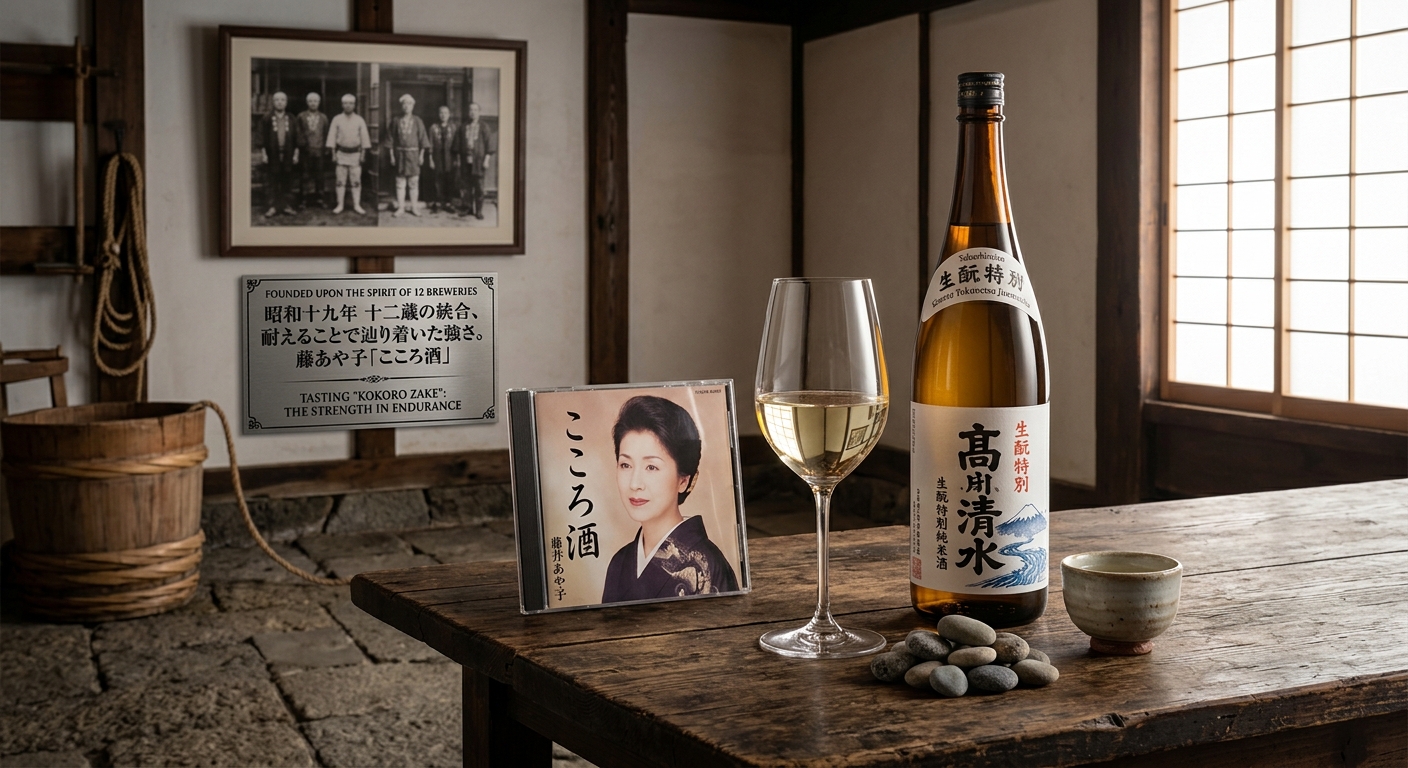
秋田酒類製造株式会社の始まりは、一つの蔵ではありません。昭和19年(1944年)、戦時下の企業整備令により、県内各地で個別に酒を醸してきた12の蔵元が一つの会社へと統合されて生まれました。最も古い系譜をたどると、明暦2年(1656年)に創業し、約290年にわたって清酒「菊水」を醸し続けた蔵にまで遡ります。長い歴史を持つ蔵がそれぞれの技術と誇りを持ち寄り、一つになったのが、この蔵の出発点でした。
「高清水」というブランド名が定まったのは、戦後まもない昭和22年(1947年)のこと。全国から寄せられた5,037点もの案の中から選ばれた名前で、蔵を構える秋田市川元の地が、藩政時代から名水の湧き出す土地として知られていたことに由来します。多くの蔵の想いが一つに集まり、澄んだ一つの泉になる――そんな成り立ちを、蔵の名前そのものが今も語っています。
今回合わせる「生酛特別純米酒」は、秋田県産の酒造好適米「美山錦」を麹米・掛米ともに精米歩合60%まで磨き、乳酸菌を自然に取り込みながらじっくり酒母を育てる伝統製法「生酛(きもと)造り」で手間ひまかけて醸した一本。アルコール度数15.5%、日本酒度+3のやや辛口で、バナナを思わせる澄んだやわらかな香りと、まろやかでふくらみのある旨さが持ち味です。
土地の話
秋田市川元は、藩政時代から名水の湧出地として名高い土地です。豊かな伏流水に恵まれたこの地に、統合されたばかりの12の蔵は蔵を構え、新しい酒造りの拠点としました。目立たない土地の下から絶えず湧き続ける清水のように、表舞台に出ることの少ない各地の蔵人たちの技が、静かに一つの流れとなって受け継がれてきた場所でもあります。
秋田県はまた、雪深い冬と寒暖差の大きい気候が、じっくりと時間をかけて醸す酒造りに向いた土地でもあります。急がず、耐えるように育てる生酛造りの酒母のあり方は、この土地の気候そのものとも重なります。
音楽の話
藤あや子は1961年5月10日、秋田県仙北郡角館町(現・仙北市)生まれ。「みちのくの小京都」とも呼ばれる角館の地で、小学4年生の頃から民謡を習い始め、10代で「ミス花嫁コンテスト」優勝、1985年にはNHK『勝ち抜き歌謡天国』で優勝するなど、早くからその歌声で頭角を現していました。1987年に村勢真奈美の名でデビューした後、1989年に藤あや子として「おんな」で再デビューします。
1992年9月1日発売の3rdシングル「こころ酒」は、都会の片隅で一人静かに杯を傾ける女性の切ない胸の内を歌った一曲。オリコンチャート初登場6位、売上81万枚を超える自身最大のヒットとなり、累計では100万枚を突破、平成に発売された演歌・歌謡曲としては歴代3位の売上を記録しました。この曲のヒットにより第25回日本有線大賞を受賞し、同年の第43回NHK紅白歌合戦に初出場を果たしています。飾らずまっすぐな歌声で、耐えることの静かな強さを歌い上げた一曲です。
なぜこの組み合わせなのか
戦時下で12の蔵がそれぞれの技術と誇りを持ち寄り、耐えながら一つの蔵として歩み出した高清水の成り立ちと、「泣いて甘えるあなたがいたら、辛くとも耐えてゆける」と一人静かに杯を傾ける「こころ酒」の女性の姿には、どちらも「耐えることでしか辿り着けない強さ」という共通点があります。
手間を惜しまず乳酸菌の力をじっくり待つ生酛造りの酒母のように、こころ酒の女性もまた、時間をかけて自分の想いと向き合っています。急がず、じっくりと。そうして醸された酒だからこそ、まろやかでふくらみのある旨さに辿り着けるのです。
この一本を、探すなら
※楽天市場へのリンクは広告(アフィリエイト)です。在庫・取扱いは変動します。お近くの酒販店でも、ぜひ銘柄名を伝えて探してみてください。
🌡️ おすすめの飲み方:冷やして(5〜10℃)、またはぬる燗(35〜45℃)で。生酛造りならではのやわらかな香りと米の旨みは、冷やしても燗をつけても、それぞれ違った表情を見せてくれます。
合わせたい「アテ」
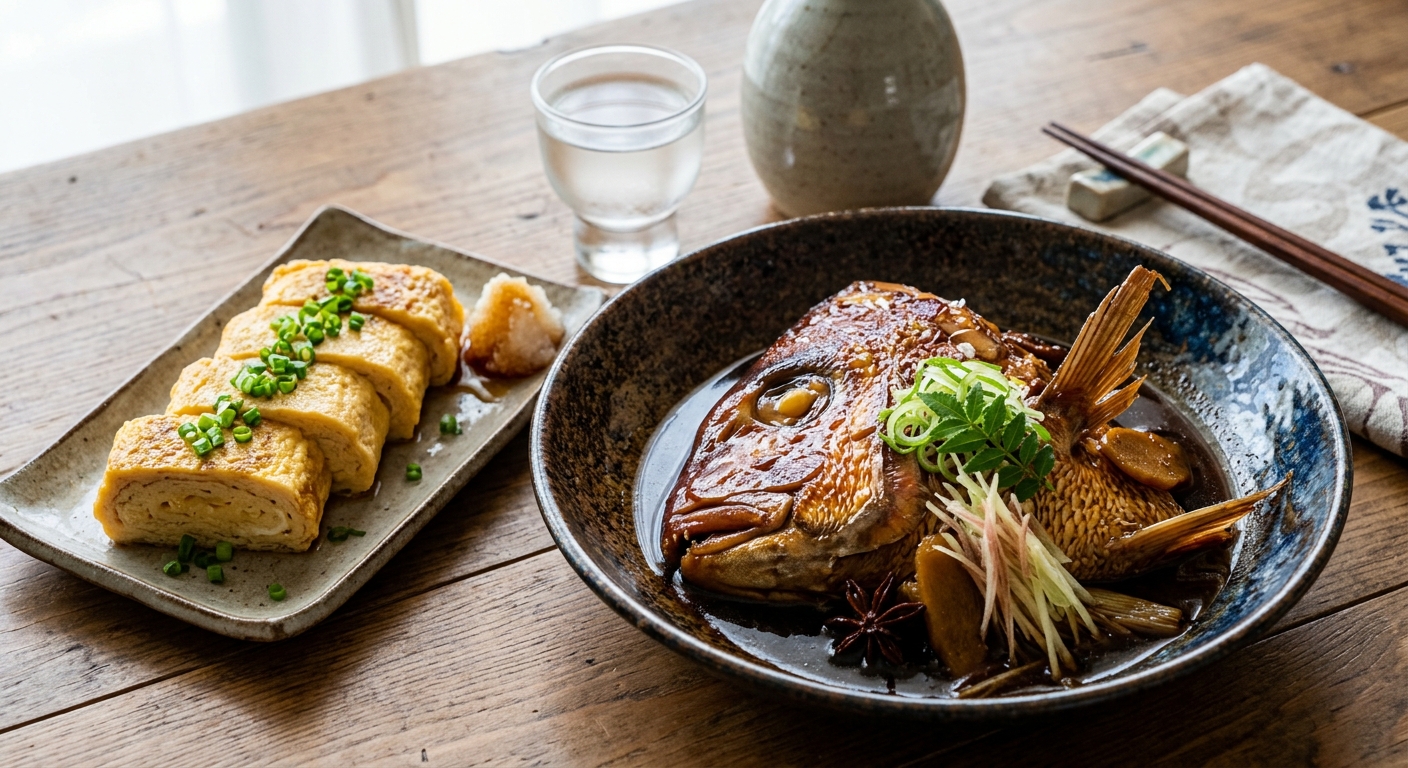
- 真鯛の兜煮
甘辛いしょうゆでじっくり煮付けた真鯛の頭は、旨味がぎゅっと詰まった一皿。生酛造りならではのしっかりとした酸と旨みが、濃いめの煮汁にも負けずに寄り添います。
レシピはこちら:クラシル「鯛のかぶと煮」
- だし巻き卵
ふわりとした卵の甘みと出汁の旨みが優しく広がる一品。生酛特有のまろやかなコクと調和し、燗にした一杯とはまた違う、冷やした酒のやわらかさを引き立ててくれます。
レシピはこちら:クラシル「白だしで簡単 だし巻き卵」
科学的にひとこと:生酛造りの酒に多く含まれる乳酸由来の酸味は、兜煮のような脂ののった煮魚の後味をすっきりと洗い流す”リセット”効果があり、だし巻き卵の出汁の旨味成分とは、米由来のアミノ酸が重なり合うことで穏やかな旨味の相乗効果を生みます。
この蔵をたずねるなら
秋田酒類製造(高清水)
秋田県秋田市川元むつみ町4-12/JR「秋田駅」から車で約7分。
県内12の蔵元が統合して生まれた蔵で、秋田市街に本社があります。
近くの観光スポット
- 千秋公園(久保田城跡)/秋田市千秋公園|蔵から車で約7分・約2km
佐竹氏の居城・久保田城の跡地につくられた公園。園内は終日開放(無料)で、御隅櫓や佐竹史料館は有料・開館時間ありです。
- 秋田県立美術館/秋田市中通|蔵から車で約7分・約2km
藤田嗣治の大壁画「秋田の行事」(幅20.5m)で知られる美術館。安藤忠雄の設計で、10:00〜18:00、一般310円、高校生以下無料です。
近くの温泉
- 秋田温泉プラザ/秋田市添川|蔵から車で約15分・約7km
「美人の湯」と呼ばれる天然温泉の日帰り施設。10:00〜21:00(第2・第4月曜は13:00〜)で営業しています。
※営業時間・定休日・日帰り入浴の可否は変わることがあります。おでかけ前に各施設の公式情報をご確認ください。
ひとことメモ(日本酒の用語)
- 特別純米酒:特別な製法や原料米を用い、その内容をラベルに表示している純米酒です。
- 生酛(きもと)造り:乳酸菌を自然に取り込んで酒母(酛)を育てる、手間ひまのかかる伝統的な製法です。
- 精米歩合:玄米を削り、残った部分の割合。数値が低いほど、米を多く磨いていることを示します。
参考
内容に誤りがございましたら、お手数ですが info@soundrecords.jp までご連絡いただけますと幸いです。
Today’s Pairing
- Sake: Takashimizu Kimoto Tokubetsu Junmai (Special Junmai brewed by the kimoto method) / Akita Shurui Seizo Co., Ltd. (4-12 Kawamoto Mutsumi-cho, Akita City, Akita Prefecture)
Official site: https://www.takashimizu.co.jp/
- Kayoukyoku (classic Japanese popular song): “Kokoro-zake” (“Sake of the Heart”), performed by Fuji Ayako (1992)
YouTube: https://www.youtube.com/watch?v=fXOHrIhO83o
▶ If the player above doesn’t play, open it on YouTube
The Story of the Brewery
Akita Shurui Seizo did not begin as a single brewery. It was born in 1944, in the middle of the war, when a government reorganization ordinance merged twelve separate breweries from across Akita Prefecture into one company. Trace the oldest thread back far enough and you arrive at a house founded in 1656, which brewed a sake called “Kikusui” for roughly two hundred and ninety years. Twelve long-established breweries, each carrying its own techniques and its own pride, pooled everything into a single enterprise. That merger is where this brewery starts.
The brand name “Takashimizu” was settled in 1947, not long after the war ended. It was chosen from among 5,037 suggestions sent in from all over Japan, and it points to the brewery’s home ground: Kawamoto in Akita City had been known since the days of the feudal domain as a place where fine spring water rises. The thoughts of many breweries gathering into one clear spring — the name itself still tells the story of how this company came to be.
The bottle in this pairing, the Kimoto Tokubetsu Junmai, is made from Miyama Nishiki, a sake rice grown in Akita, polished to a seimai buai of 60% for both the koji rice and the main mash rice. It is brewed by kimoto, the traditional and labor-intensive method of building the yeast starter by drawing in lactic acid bacteria naturally and letting it develop slowly. At 15.5% alcohol and a sake meter value of +3, it leans slightly dry, with a clear, soft aroma suggesting banana and a mellow, expansive umami.
The Story of the Land
Kawamoto in Akita City has been celebrated as a source of fine water since the domain era. It was on this ground, blessed with abundant subsoil water, that the twelve newly merged breweries built their base and began again. Like spring water rising ceaselessly from beneath an unremarkable patch of land, the skills of brewers scattered across the prefecture — people who rarely stood in the spotlight — were quietly gathered here into a single current and passed on.
Akita is also a land of deep-snow winters and wide swings in temperature, conditions well suited to sake made slowly and patiently. The way a kimoto starter is raised — unhurried, enduring — mirrors the climate that surrounds it.
The Story of the Song
Fuji Ayako was born on May 10, 1961, in Kakunodate, Senboku District, Akita Prefecture (today part of Senboku City). Kakunodate is known as “the little Kyoto of Michinoku,” and it was there that she began studying min’yo folk singing in the fourth grade. She won a “Miss Bride” contest in her teens and took first place on NHK’s singing competition program in 1985, showing her voice early. After debuting in 1987 under the name Murase Manami, she re-debuted in 1989 as Fuji Ayako with the single “Onna.”
Her third single, “Kokoro-zake,” released on September 1, 1992, gives voice to a woman drinking alone in a quiet corner of the city and to the ache she carries. It entered the Oricon chart at number six and sold more than 810,000 copies — the biggest hit of her career — eventually passing one million in cumulative sales and ranking third among all enka and kayoukyoku singles released in the Heisei era. The song won her the 25th Japan Yusen Taisho and brought her first appearance on NHK’s Kohaku Uta Gassen that same year. She sings it plainly and straight, and what comes through is the quiet strength of endurance.
Why This Pairing
Twelve breweries, under the pressures of wartime, brought their techniques and their pride together and endured their way into becoming one house. The woman in “Kokoro-zake” sits alone with her cup and finds that she can bear what is hard as long as there is someone to bear it for. Different stories, but the same shape: a strength that can only be reached by enduring.
A kimoto starter asks the brewer to spare no effort and then to wait for lactic acid bacteria to do their slow work. The woman in the song is doing something similar — taking her time, facing what she feels. Unhurried, and thorough. It is precisely sake made that way that arrives at a mellow, expansive kind of umami.
Where to Find This Bottle
The Rakuten Ichiba link below is an affiliate link.
Note: both Rakuten and Amazon links above lead to Japan-based retailers. They’re most convenient for readers in Japan, or for those elsewhere who are able to arrange international shipping. Stock and availability change over time, so if you’re near a specialty sake shop, it’s well worth asking for this label by name.
🌡️ Recommended way to drink it: Chilled (5–10°C) or gently warmed as nurukan (35–45°C). The soft aroma and rice umami particular to a kimoto brew show a different face at each temperature, and both are worth meeting.
A Pairing Dish Worth Trying
- Madai no kabutoni
The head of a red sea bream, simmered slowly in a sweet-salty soy broth — a dish packed with concentrated umami. The firm acidity and depth that kimoto brewing gives this sake stand up to the strong broth rather than being flattened by it.
Recipe (in Japanese): Kurashiru, “Sea Bream Kabutoni”
- Dashimaki tamago
A softly rolled omelette in which the sweetness of egg and the umami of dashi spread gently. It harmonizes with the mellow richness particular to kimoto, and brings out the softness of the sake served cold — a different pleasure from the warmed cup.
Recipe (in Japanese): Kurashiru, “Easy Dashimaki Tamago with Shiro-dashi”
A note on the science: the lactic-acid-derived acidity abundant in kimoto-brewed sake has a rinsing effect on the finish of an oil-rich simmered fish like kabutoni, resetting the palate; and with the umami compounds in the dashi of a rolled omelette, the rice-derived amino acids in the sake overlap to produce a gentle synergy of savoriness.
Visiting the Brewery
Akita Seishu (Takashimizu)
4-12 Kawamoto-mutsumicho, Akita City, Akita. About 7 min by car from Akita Station.
The brewery, formed by the merger of twelve breweries from around the prefecture, has its head office in central Akita.
Sights Nearby
- Senshu Park (Kubota Castle ruins) / Akita City | ~7 min, ~2 km by car from the brewery
A park laid out on the ruins of Kubota Castle, seat of the Satake clan. The grounds are open at all hours and free; the corner turret and the Satake Historical Museum are paid, with set hours.
- Akita Museum of Art / Akita City | ~7 min, ~2 km by car from the brewery
Known for Fujita Tsuguharu’s vast mural “Events in Akita” (20.5 m wide), in a building designed by Ando Tadao. 10:00-18:00, ¥310 for adults, free for high-school age and younger.
Hot Springs Nearby
- Akita Onsen Plaza / Akita City | ~15 min, ~7 km by car from the brewery
A day-use natural hot spring known as “the beauty bath.” Open 10:00-21:00 (from 13:00 on the 2nd and 4th Monday).
Opening hours, closing days and day-use bathing availability can change. Please check each facility’s official information before visiting.
A Quick Glossary of Sake Terms
- Tokubetsu junmai (special pure rice sake): A junmai sake made by some special method or with especially well-polished rice — typically a seimai buai of 60% or lower — with the distinction stated on the label.
- Kimoto: A traditional, labor-intensive method of building the sake starter (moto) by naturally cultivating wild lactic acid bacteria, rather than adding purified lactic acid.
- Seimai buai (rice-polishing ratio): The percentage of the original brown rice grain remaining after polishing. The lower the number, the more the rice has been polished down.
Sources
If you notice any errors in this article, please don’t hesitate to reach out at info@soundrecords.jp.
コメントを残す