今日のペアリング
▶ 上のプレーヤーで再生できない場合は、YouTubeで開く
酒蔵の話
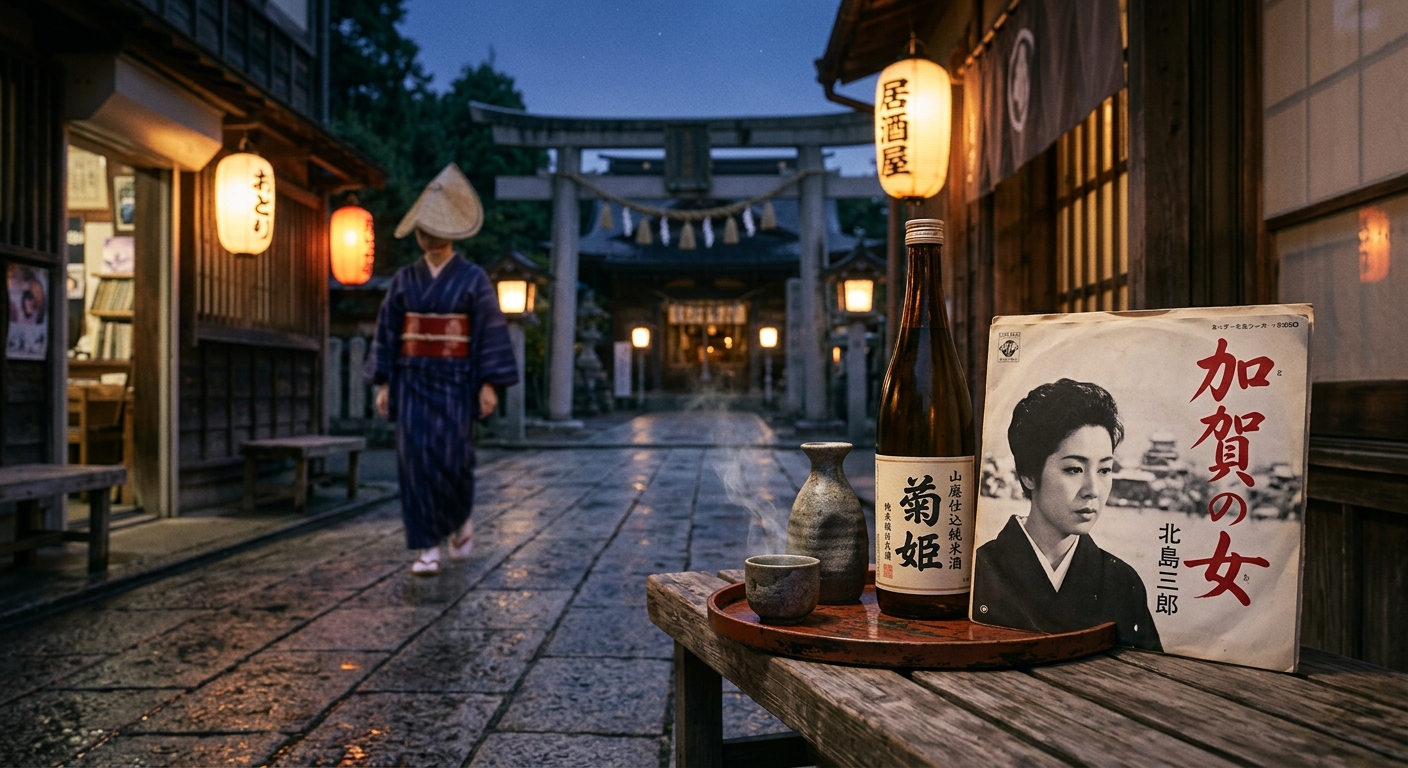
菊姫合資会社は、霊峰・白山の麓、石川県白山市鶴来(つるぎ)に蔵を構えます。天正年間(1573〜1592年)に屋号「小柳屋」として創業したと伝わりますが、蔵の物語はさらに古く、地元の氏神・白山比咩神社の門前町として、奈良時代から神酒を醸してきたとされています。銘柄「菊姫」の名は、白山比咩神社の祭神「菊理媛(くくりひめ)」に由来します。
室町時代にはすでにこの地の酒は「加賀の菊酒」として知られ、「太閤記」には、豊臣秀吉が慶長3年(1598年)の醍醐の花見にこの酒を取り寄せたと記されている、と伝えられています。四百年以上にわたり、天下に名高い美酒の系譜を守り続けてきた蔵です。
現代の菊姫を語るうえで欠かせないのが、今回合わせる「山廃仕込純米酒」。昭和58年(1983年)、山廃仕込みであることをラベルに明記した純米酒として、業界に先駆けて発売しました。山廃酛は、江戸時代から続く生酛系酒母づくりのうち、手間のかかる「山卸(酛摺り)」の作業を廃止したことからその名がついた製法で、酵母と乳酸菌がじっくり共生しながら育ちます。兵庫県三木市吉川町・特A地区産の山田錦を精米歩合70%で用い、搾った後も1〜2年寝かせてから出荷するのが菊姫の流儀。ナッツやカラメルを思わせる芳醇な香りと、力強い酸、米の旨みが渾然一体となった、「男酒」と呼ばれる濃醇な味わいに仕上がります。
土地の話
蔵のある鶴来は、白山比咩神社の門前町として栄えた古い町並みが今も残る場所。白山から流れ出す清らかな伏流水は、古くから「加賀菊酒」を育んできた仕込み水そのものです。
加賀と能登、ふたつの旧国からなる石川県のなかでも、鶴来を含む加賀地方は、金沢の武家文化や加賀友禅、加賀料理といった伝統が色濃く残る土地。菊姫の酒は、そうした「加賀」という土地の名を千年近くにわたって背負い続けてきたとも言えます。
音楽の話
「加賀の女」は北島三郎が1969年7月1日に日本クラウンから発表したシングル。作詞は星野哲郎、作曲・編曲は島津伸男が手がけました。「函館の女」(1965年)、「尾道の女」(1966年)、「博多の女」(1967年)、「薩摩の女」(1968年)に続く、いわゆる「女シリーズ」の4作目にあたります。累計80万枚以上を売り上げるヒットとなり、第20回NHK紅白歌合戦でも歌われました。
タイトルこそ「加賀」ですが、歌詞に描かれるのは香林坊や天神橋、加賀宝生といった、主に金沢の風物です。旧国名としての「加賀」を掲げながら、その中心地・金沢の情景を歌い上げた一曲と言えます。
なぜこの組み合わせなのか
曲名にある「加賀」は、菊姫が守り続ける「加賀菊酒」の「加賀」と同じ、旧加賀国の呼び名です。金沢と、菊姫の蔵がある鶴来は、どちらもこの同じ旧国のなかにあります。一つの曲と一つの酒が、別々の場所から同じ土地の名を歌い、醸してきたことになります。
そして、山廃仕込純米酒が持つ力強い酸と、じっくり寝かせて生まれる熟成の深みは、「女シリーズ」を五作、十作と歌い継いできた北島三郎の、年輪を重ねた重厚な歌声とどこか重なります。どちらも、時間をかけてこそ増す滋味を持った存在です。
この一本を、探すなら
※楽天市場へのリンクは広告(アフィリエイト)です。在庫・取扱いは変動します。お近くの酒販店でも、ぜひ銘柄名を伝えて探してみてください。
🌡️ おすすめの飲み方:常温からぬる燗で。よく寝かせた山廃仕込ならではの熟成香とコクは、冷やしすぎると閉じてしまいます。人肌からぬる燗ほどに温めると、酸と旨みのバランスが最も生きてきます。
合わせたい「アテ」
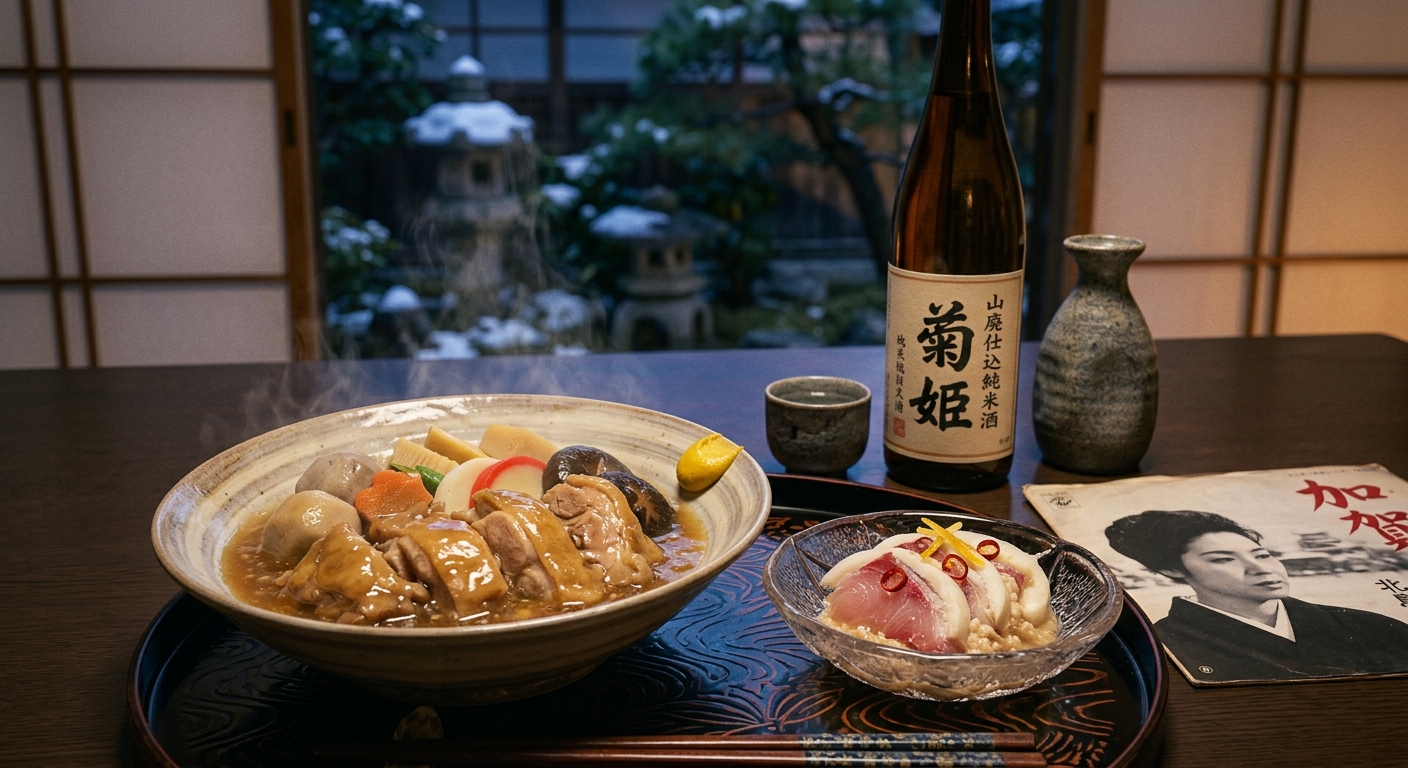
- 治部煮
鴨肉や鶏肉に小麦粉をまぶし、とろみのある醤油だしで煮た、加賀を代表する郷土料理。とろりとした煮汁の旨みとコクに、山廃仕込純米酒の力強い酸と米の旨みが寄り添い、互いを引き立てます。
レシピはこちら:クラシル「鶏もも肉の治部煮」
- かぶら寿司
塩漬けしたかぶらとぶりを米麹で漬け込み、乳酸発酵させる金沢の冬の郷土料理。麹由来の穏やかな酸と旨みが、山廃酛由来の酸と響き合う、土地を同じくする者同士の組み合わせです。
レシピはこちら:クラシル「昔ながらのかぶら寿司」
科学的にひとこと:かぶら寿司も山廃仕込純米酒も、乳酸菌の働きによる自然発酵を経て生まれる点が共通しており、互いの持つ乳酸由来の酸味が舌の上で共鳴し合うことで、単体で味わうよりも角の取れたまろやかな一体感が生まれます。
この蔵をたずねるなら
菊姫合資会社
石川県白山市鶴来新町タ8/北陸鉄道石川線「鶴来駅」から徒歩約10分。
白山比咩神社の門前町・鶴来にある蔵です。
近くの観光スポット
- 白山比咩神社/白山市三宮町|蔵から車で約7分・約2km
全国に約3,000社ある白山神社の総本宮。杉木立の表参道が知られ、境内は終日参拝できます(宝物館は有料・公開日限定)。
- 獅子吼高原/白山市八幡町|蔵から車で約10分・約3km
ゴンドラで標高約650mまで上がると、加賀平野と手取川扇状地が一望できます。パラグライダーの名所でもあります。
近くの温泉
- めおと岩温泉 ラクヨウ/白山市河内町江津|蔵から車で約18分・約9km
手取川沿いの「めおと岩」近くに湧く日帰り温泉。15:00〜21:00、月曜休、大人400円のさらりとした湯です。
※営業時間・定休日・日帰り入浴の可否は変わることがあります。おでかけ前に各施設の公式情報をご確認ください。
ひとことメモ(日本酒の用語)
- 純米酒:米・米麹・水だけで造られ、醸造アルコールを添加していない日本酒。米の旨みをまっすぐ感じられるのが特徴です。
- 精米歩合:玄米を削り、残った部分の割合。数値が低いほど、米を多く磨いていることを示します。
- 生酛(きもと)造り:乳酸菌を自然に取り込んで酒母(酛)を育てる、手間ひまのかかる伝統的な製法です。
参考
内容に誤りがございましたら、お手数ですが info@soundrecords.jp までご連絡いただけますと幸いです。
Today’s Pairing
- Sake: Kikuhime Yamahai-jikomi Junmai (Junmai brewed by the yamahai method) / Kikuhime Co., Ltd. (Tsurugi-shinmachi, Hakusan City, Ishikawa Prefecture)
Official site: https://www.kikuhime.co.jp/
- Kayoukyoku (classic Japanese popular song): “Kaga no Onna” (“The Woman of Kaga”), performed by Kitajima Saburo (1969)
YouTube: https://www.youtube.com/watch?v=gio86K8mFKw
▶ If the player above doesn’t play, open it on YouTube
The Story of the Brewery
Kikuhime Co., Ltd. is based in Tsurugi, Hakusan City, Ishikawa Prefecture, at the foot of the sacred Mt. Hakusan. The brewery traces its shop name, “Koyanagiya,” back to the Tensho era (1573–1592), but the story of sake in this town runs deeper still: as the temple town of the local guardian shrine, Shirayamahime Shrine, it’s said sacred sake has been brewed here since the Nara period. The brand name “Kikuhime” comes from Kukurihime, the deity enshrined at Shirayamahime Shrine.
By the Muromachi period, sake from this area was already known as “Kaga no Kikuzake” (“Kaga’s chrysanthemum sake”), and according to the Taikoki chronicle, Toyotomi Hideyoshi is said to have had this very sake brought to his famous cherry-blossom viewing party at Daigo-ji in 1598. For more than four hundred years, this brewery has upheld a lineage of sake renowned across Japan.
Central to Kikuhime today is the Yamahai-jikomi Junmai featured in this pairing. In 1983, Kikuhime became the first in the industry to release a junmai sake explicitly labeled as brewed by the yamahai method. Yamahai is a traditional kimoto-style yeast-starter method, distinguished by omitting the labor-intensive “yamaoroshi” (rice-mashing) step, allowing wild yeast and lactic bacteria to slowly build the starter’s character together. Kikuhime polishes Yamada Nishiki rice from the Special-A district of Yokawa in Miki, Hyogo Prefecture, at a seimai buai of 70%, and ages the sake for one to two years after pressing before shipping — the house’s signature approach. The result is a rich, full-bodied style often called “otoko-zake” (“a man’s sake”): a fragrant bouquet reminiscent of nuts and caramel, bold acidity, and deep rice umami, all fused into one.
The Story of the Land
Tsurugi, where the brewery stands, still keeps the old townscape that grew up as the temple town of Shirayamahime Shrine. The clear spring water flowing down from Mt. Hakusan is the very brewing water that has nurtured “Kaga Kikuzake” since ancient times.
Ishikawa Prefecture is made up of two former provinces, Kaga and Noto. Within Kaga, the region that includes Tsurugi still carries strong traces of Kanazawa’s samurai culture, Kaga Yuzen dyeing, and Kaga cuisine. In a sense, Kikuhime’s sake has carried the name of this “Kaga” land on its shoulders for nearly a thousand years.
The Story of the Song
“Kaga no Onna” was released by Kitajima Saburo on July 1, 1969, on the Nippon Columbia sublabel Nippon Crown. It was written by Tetsuro Hoshino and composed and arranged by Nobuo Shimazu. The fourth installment in Kitajima’s so-called “Onna (Woman) series,” following “Hakodate no Onna” (1965), “Onomichi no Onna” (1966), “Hakata no Onna” (1967), and “Satsuma no Onna” (1968), it became a hit selling over 800,000 copies and was performed at the 20th NHK Kohaku Uta Gassen.
Though the title says “Kaga,” the lyrics actually describe Kanazawa landmarks — Korinbo, Tenjinbashi, Kaga Hosho noh theater. Framed under the old provincial name “Kaga,” the song is really a portrait of Kanazawa, its central city.
Why This Pairing
The “Kaga” in the song’s title is the very same “Kaga” that Kikuhime has carried for centuries in “Kaga Kikuzake.” Kanazawa and Tsurugi, where Kikuhime’s brewery stands, both belong to this same former province — one song and one sake singing and brewing the name of the same land, from different corners of it.
And the bold acidity of a yamahai-brewed junmai, deepened by patient aging, echoes something in Kitajima Saburo’s own weathered, weighty voice — carried on through five, then ten installments of his “Onna series.” Both are things that only grow richer with time.
Where to Find This Bottle
The Rakuten Ichiba link below is an affiliate link.
Note: both Rakuten and Amazon links above lead to Japan-based retailers. They’re most convenient for readers in Japan, or for those elsewhere who are able to arrange international shipping. Stock and availability change over time, so if you’re near a specialty sake shop, it’s well worth asking for this label by name.
🌡️ Recommended way to drink it: Best at room temperature or gently warmed (nurukan). The aged aroma and depth unique to a well-rested yamahai brew tend to close up if served too cold — warming it to around body temperature lets the acidity and umami settle into their best balance.
A Pairing Dish Worth Trying
- Jibuni
A signature Kaga dish of duck or chicken dusted in flour and simmered in a thickened soy-based broth. The rich, glossy sauce pairs beautifully with the yamahai junmai’s bold acidity and deep rice umami, each bringing out the other.
Recipe (in Japanese): Kurashiru, “Chicken Thigh Jibuni”
- Kaburazushi
A Kanazawa winter specialty: salted turnip and yellowtail pickled with rice malt (koji) and left to lacto-ferment. Its gentle koji-born acidity and umami resonate with the acidity born of the yamahai starter — two things shaped by the same land.
Recipe (in Japanese): Kurashiru, “Traditional Kaburazushi”
A note on the science: both kaburazushi and yamahai junmai are born of natural fermentation driven by lactic acid bacteria, so the lactic acidity each carries resonates together on the palate, softening the edges and creating a rounder sense of unity than either would give on its own.
Visiting the Brewery
Kikuhime
Ta-8 Tsurugi Shinmachi, Hakusan City, Ishikawa. About a 10-min walk from Tsurugi Station (Hokuriku Railway Ishikawa Line).
The brewery is in Tsurugi, the town before the gate of Shirayama-hime Shrine.
Sights Nearby
- Shirayama-hime Shrine / Hakusan City | ~7 min, ~2 km by car from the brewery
The head shrine of the roughly 3,000 Hakusan shrines across Japan, known for its cedar-lined main approach. The grounds are open at all hours (the treasure hall is paid and open on set days).
- Shishiku Kogen / Hakusan City | ~10 min, ~3 km by car from the brewery
A gondola climbs to about 650 m, where the Kaga plain and the alluvial fan of the Tedori River open out below. It’s also a well-known paragliding spot.
Hot Springs Nearby
- Meotoiwa Onsen “Rakuyo” / Hakusan City | ~18 min, ~9 km by car from the brewery
A day-use hot spring near the “Meoto-iwa” rocks along the Tedori River. 15:00-21:00, closed Mondays, ¥400 for adults; the water has a light, silky feel.
Opening hours, closing days and day-use bathing availability can change. Please check each facility’s official information before visiting.
A Quick Glossary of Sake Terms
- Junmai (pure rice sake): Sake made only from rice, rice koji, and water, with no added brewing alcohol — letting the rice’s own umami come through directly.
- Seimai buai (rice-polishing ratio): The percentage of the original brown rice grain remaining after polishing. The lower the number, the more the rice has been polished down.
- Kimoto: A traditional, labor-intensive method of building the sake starter (moto) by naturally cultivating wild lactic acid bacteria, rather than adding purified lactic acid.
Sources
If you notice any errors in this article, please don’t hesitate to reach out at info@soundrecords.jp.
コメントを残す