日本語で読む | This is the English version of a bilingual article.
Today’s Pairing
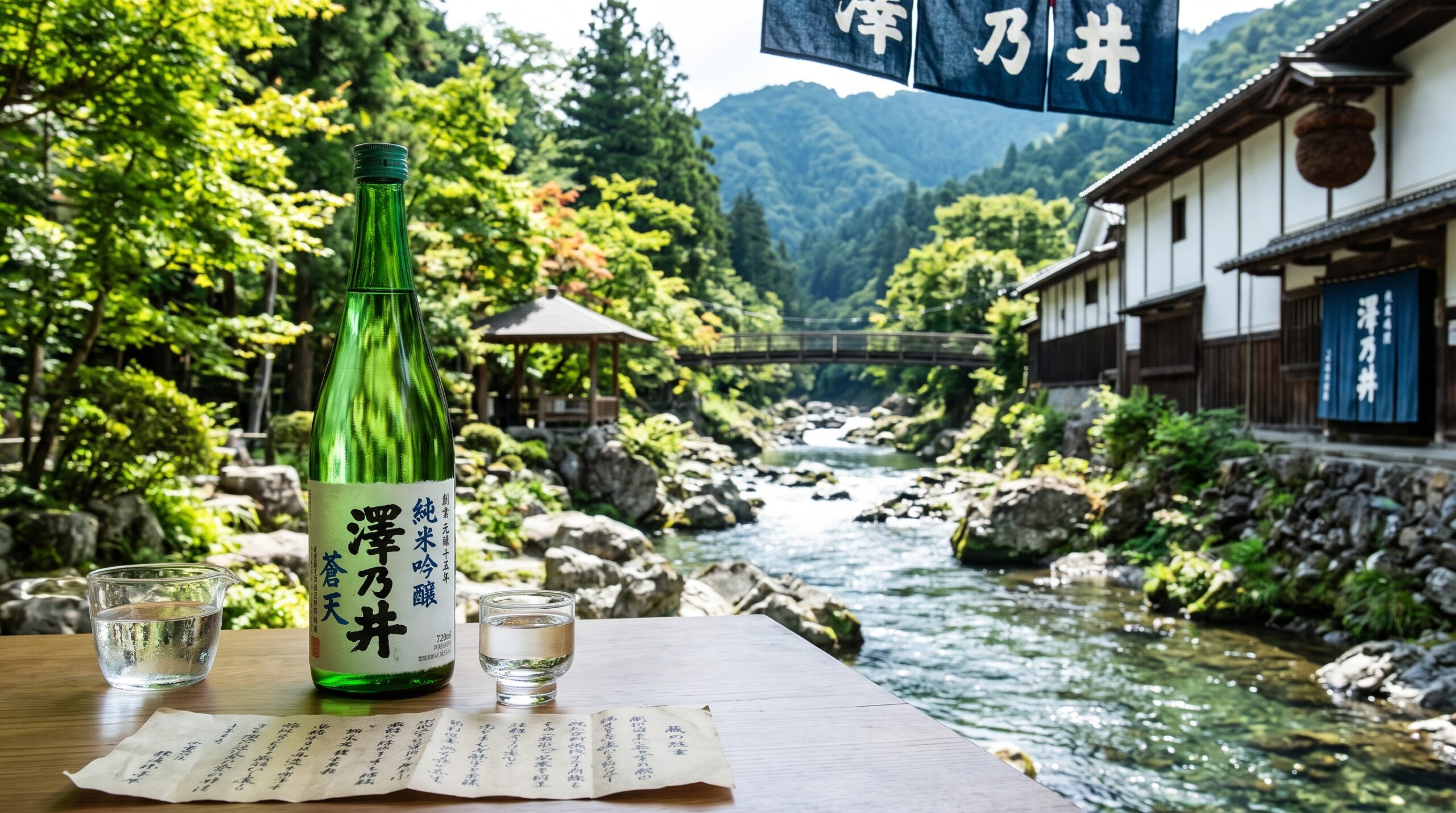
- Sake: Sawanoi “Soten” (“Blue Sky”) Junmai Ginjo — rice-polishing ratio (seimai buai) 55%, 15% alcohol, sake meter value (nihonshu-do) +1 / Ozawa Shuzo Co., Ltd. (2-770 Sawai, Ome City, Tokyo)
Official site: https://www.sawanoi-sake.com/ - Kayoukyoku (classic Japanese popular song): “Tokyo da yo Okkasan” (“It’s Tokyo, Mother”) by Shimakura Chiyoko, 1957
YouTube: https://www.youtube.com/watch?v=y8PhNQcV98Q
▶ If the player above doesn’t play, open it on YouTube
The Story of the Brewery
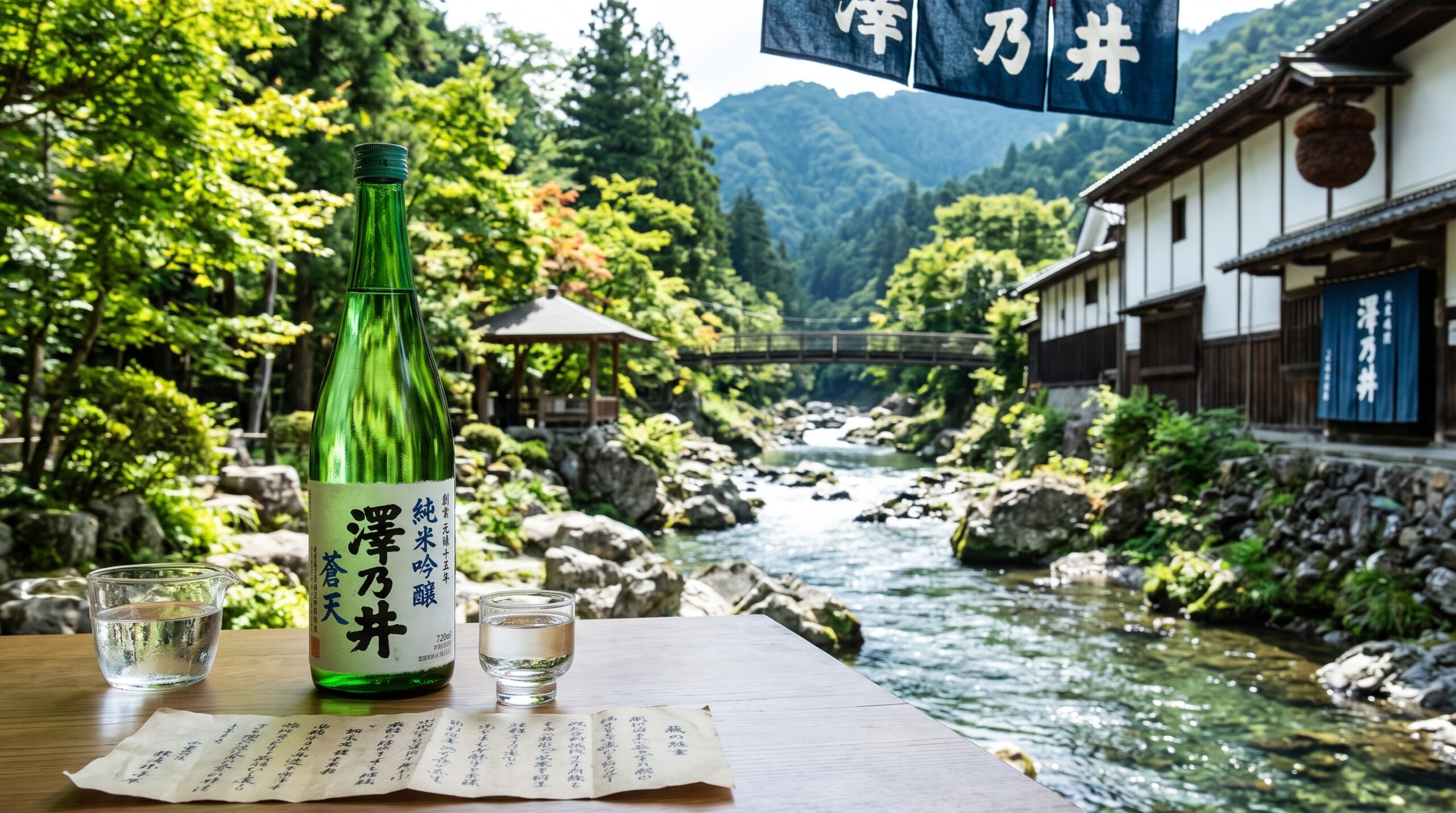
Ozawa Shuzo Co., Ltd. traces its founding to 1702, the year old documents first record the family’s sake brewing. The old place-name for the brewery’s location, Sawai in Ome City, was “Sawai-mura,” which is where the flagship brand name, Sawanoi, comes from. The current head of the brewery, Ozawa Mikio, is its 23rd-generation owner. The brewery once hired toji (master brewers) from Echigo, but starting in 1984 it began training its own in-house toji, completing that generational handover by 2000.
For brewing water, the brewery draws on two sources: medium-hard water from a cave on its grounds, and soft water from a well deep in the mountains. Some of its sake is made using kimoto, the traditional method of cultivating lactic acid bacteria naturally in the yeast starter, and some is still brewed in old-fashioned wooden vats. The bottle in this pairing, Junmai Ginjo “Soten,” is brewed to a seimai buai of 55%, at 15% alcohol, with a nihonshu-do (sake meter value) of +1 and an acidity of 1.7. The brewery itself describes it as “refined in taste and aroma, a junmai ginjo that draws out the umami of the rice” — a refreshing, umami-rich style of sake.
The Story of the Land
Sawai, in Ome City, sits in a valley along the Mitake Gorge, on the upper reaches of the Tama River. The clear stream running past the front of the Ozawa Shuzo brewery gave its name to “Seiryu Garden Sawanoi-en,” which opened in 1967, and remains a popular spot today where visitors can sample sake while listening to the river.
During the Edo period, in 1653–1654, two brothers known as Shoemon and Seiemon drew water from this same Tama River — from an intake further downstream at Hamura — through a roughly 43-km channel all the way to Yotsuya Okido, supplying the drinking water, called Tamagawa Josui, that supported Edo’s rapidly growing population (according to the Tokyo Waterworks Bureau’s own records). In other words, the same Tama River water that has nurtured sake in Sawai once sustained the daily life of Edo — the city now known as Tokyo — directly.
The Story of the Song
“Tokyo da yo Okkasan” was released on March 10, 1957, by Nippon Columbia, sung by Shimakura Chiyoko. The lyrics are by Nomura Toshio, the music by Funamura Toru. The song follows the feelings of a daughter guiding her mother, newly arrived from the countryside, around Tokyo — past Nijubashi Bridge, up Kudanzaka slope, to Yasukuni Shrine, and on to Asakusa. It became a massive hit, selling a cumulative 1.5 million copies, and remains one of Shimakura’s signature songs. A film of the same name, starring Shimakura herself, was also released that year.
Shimakura Chiyoko was born on March 30, 1938, in Kita-Shinagawa, Shinagawa Ward, Tokyo. She debuted in 1955, at age 16, with “Kono Yo no Hana,” an instant hit that made her a star overnight. “Tokyo da yo Okkasan,” released the following year, carries an extra note of conviction for being sung by a Tokyo native herself — a song about her own hometown.
Why This Pairing
The Nijubashi Bridge, Kudanzaka, and Asakusa that “Tokyo da yo Okkasan” guides its listener through are, in a sense, Tokyo’s public face. And yet within that same Tokyo Metropolis lies the valley of the Mitake Gorge, where the same water has been flowing for more than three hundred years. The very same Tama River water that Ozawa Shuzo has used to brew sake in Sawai once served as Edo’s own drinking water.
A daughter walking her mother through the heart of the city, and a brewery that has kept making sake beside an unchanging river — both reflect the same place, Tokyo, moving through time in different ways. Set a sake brewed on three hundred years of unchanging water beside a song about a glittering city, and Tokyo itself might start to look a little deeper than before.
Where to Find This Bottle
The Rakuten Ichiba link below is an affiliate link.
- Brewery’s official site: https://www.sawanoi-sake.com/
- Search on Rakuten Ichiba: See search results for “Sawanoi Junmai Ginjo Soten”
Note: the links above lead to Japan-based retailers. They’re most convenient for readers in Japan, or for those elsewhere who are able to arrange international shipping. Stock and availability change over time, so if you’re near a specialty sake shop, it’s well worth asking for this label by name.
Pairing Dishes Worth Trying
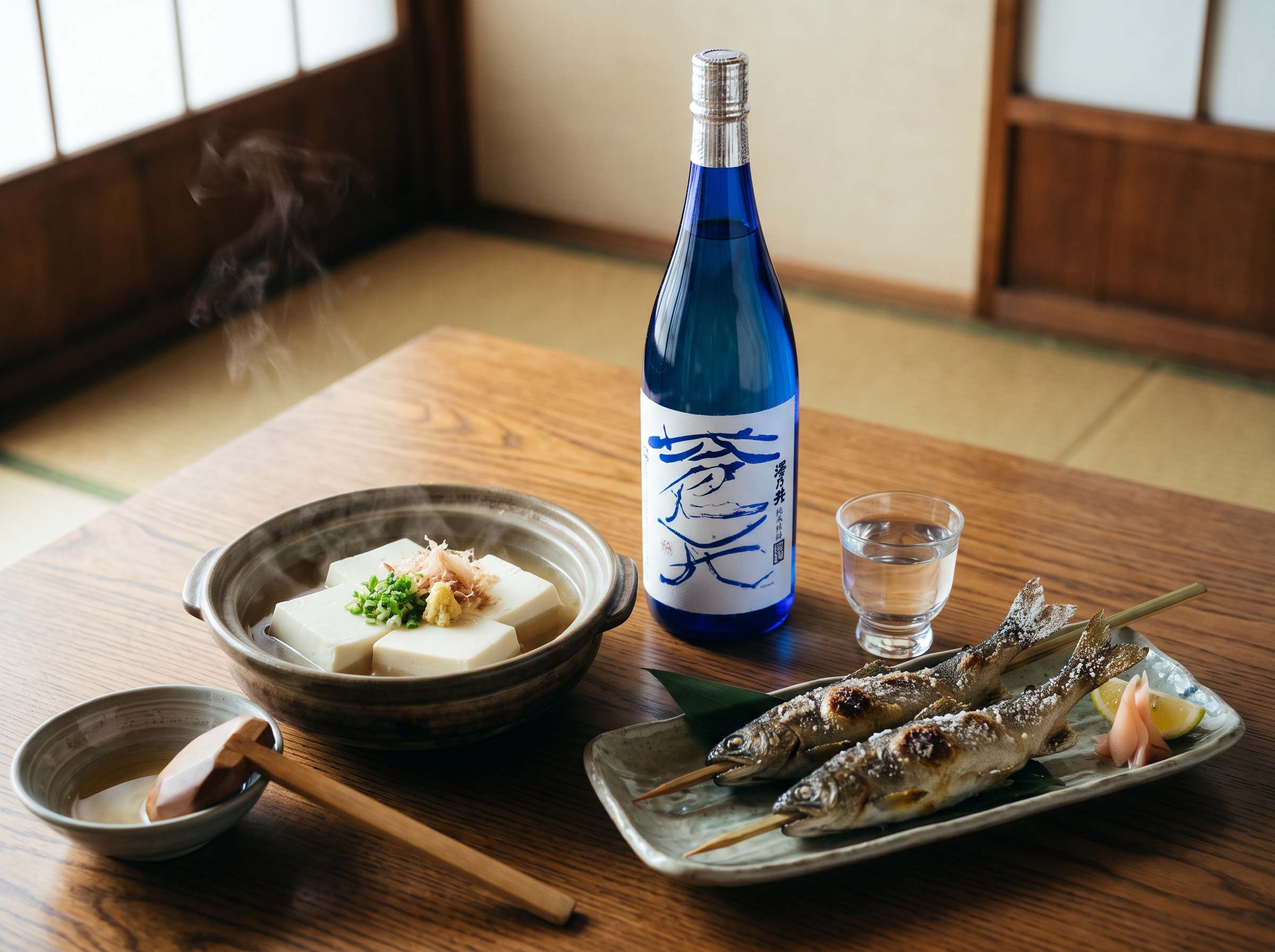
- Hot tofu (yu-dofu) made with the brewery’s own tofu
Ozawa Shuzo uses the same brewing water to hand-make tofu and yuba at its own restaurants, Mamagotoya and Mameraku. Simmer that smooth, soy-sweet tofu gently in a simple dashi broth, and it echoes the smooth texture of Junmai Ginjo “Soten” directly.
Recipe (in Japanese): Kurashiru, “Cozy Silken Tofu Simmered in a Pot” (works just as well with the brewery’s own tofu from Mamagotoya) - Salt-grilled yamame or iwana (mountain trout/char)
Okutama, upstream on the Tama River, is also known for yamame and iwana raised in its clear water. The sweetness of simply salt-grilled river fish pairs naturally with the refreshing fruit-like aroma of “Soten.”
Recipe (in Japanese): Rakuten Recipe, “Simple Salt-Grilled River Fish (Rainbow Trout)” (works just as well with yamame or iwana)
A note on the science: the gentle sweetness of tofu’s soy protein and the glutamic- and inosinic-acid umami in river fish both resonate with the amino-acid umami in sake, creating a synergistic boost of savoriness on the palate. The ginjo aroma unique to junmai ginjo sake (aromatic compounds such as ethyl caproate, produced by low-temperature fermentation) doesn’t compete with the ingredients’ own flavor — if anything, it sharpens their outline.
Visiting the Brewery
Ozawa Shuzo Co., Ltd. (Sawanoi)
2-770 Sawai, Ome City, Tokyo. About a 3–5 min walk from JR Ome Line’s Sawai Station.
The brewery sits right on the Mitake Gorge, with the Tama River running past its front gate. Its adjoining garden, “Seiryu Garden Sawanoi-en” (opened in 1967), lets visitors sample sake while listening to the river.
Sights Nearby
- Kanzan-ji Temple / Yuzuki-cho, Ome City | about a 5-min walk from Ozawa Shuzo
A small temple built in 1930, when calligrapher Taguchi Beisho enshrined a statue of Shakyamuni entrusted to him by the Kanzan-ji temple in Suzhou, China, with the help of Ozawa Taihei of the Ozawa sake brewery. Free to visit with no set hours, right along the Mitake Gorge walking path above the Tama River. - Gyokudo Art Museum / Mitake, Ome City | about a 25-min walk (~1 km) from Ozawa Shuzo
A museum (opened in 1961) dedicated to the Japanese-style painter Kawai Gyokudo. Open 10:00–17:00 (until 16:30 Dec–Feb), closed Mondays (next day if a holiday) and over the New Year. Adult admission is ¥600.
Hot Springs Nearby
- Okutama Onsen Moegi-no-Yu / Okutama Town | about 15 min (~8 km) by car from Ozawa Shuzo
A day-use hot spring along the Tama River. Open 10:00–20:00 (until 19:00 Dec–Mar), closed Mondays (next day if a holiday). A good stop after a hike or a brewery visit.
Opening hours, closing days and day-use bathing availability can change. Please check each facility’s official information before visiting.
A Quick Glossary of Sake Terms
- Junmai Ginjo: Junmai (sake made only from rice, rice koji, and water, with no added brewing alcohol) that has been polished to a seimai buai of 60% or less and fermented slowly at low temperatures, giving it a fragrant aroma.
- Seimai buai (rice-polishing ratio): The percentage of the original grain remaining after milling. The lower the number, the more the rice has been polished down.
Sources
- Company Profile – Ozawa Shuzo Co., Ltd. Official Site
- Ozawa Shuzo – Wikipedia (Japanese)
- Junmai Ginjo “Soten” – Sawanoi Official Online Shop
- “Tokyo da yo Okkasan” – Wikipedia (Japanese)
- Profile – Shimakura Chiyoko (Nippon Columbia Official Site)
- Tamagawa Josui – Tokyo Waterworks Historic Sites, Bureau of Waterworks, Tokyo Metropolitan Government
- Kanzan-ji Temple (Mitake Gorge, Tokyo) – rurubu&more.
- Okutama Onsen Moegi-no-Yu – Official Site
If you notice any errors in this article, please don’t hesitate to reach out at info@soundrecords.jp.
Keep reading in English
Sake and Kayokyoku
- Two Brothers Relit a Brewery’s Dying Flame, Facing the Sea Wind
- Like a Flame That Never Goes Out, They Stayed True
- Polished by the Fierce Current, It Only Grows Better
Browse all articles in English
Read this article in Japanese: きらめく東京の向こうに、三百年変わらぬ水音があった