日本語で読む | This is the English version of a bilingual article.
Today’s Pairing
- Sake: Oochi Shuzo “Hanaemi” Junmai Ginjo — brewed with Yamada Nishiki sake rice, rice-polishing ratio (seimai buai) 55%, 16% alcohol / Oochi Shuzo Co., Ltd. (277-1 Asamiiura, Kamiura, Saiki City, Oita Prefecture)
Official site: https://oochi.saiki.jp/ - Kayoukyoku (classic Japanese popular song): “Bungo Suido” (“Bungo Strait”) by Kawanaka Miyuki, released March 1988
YouTube: https://www.youtube.com/watch?v=AEq7XYBL3Qk
▶ If the player above doesn’t play, open it on YouTube
The Story of the Brewery
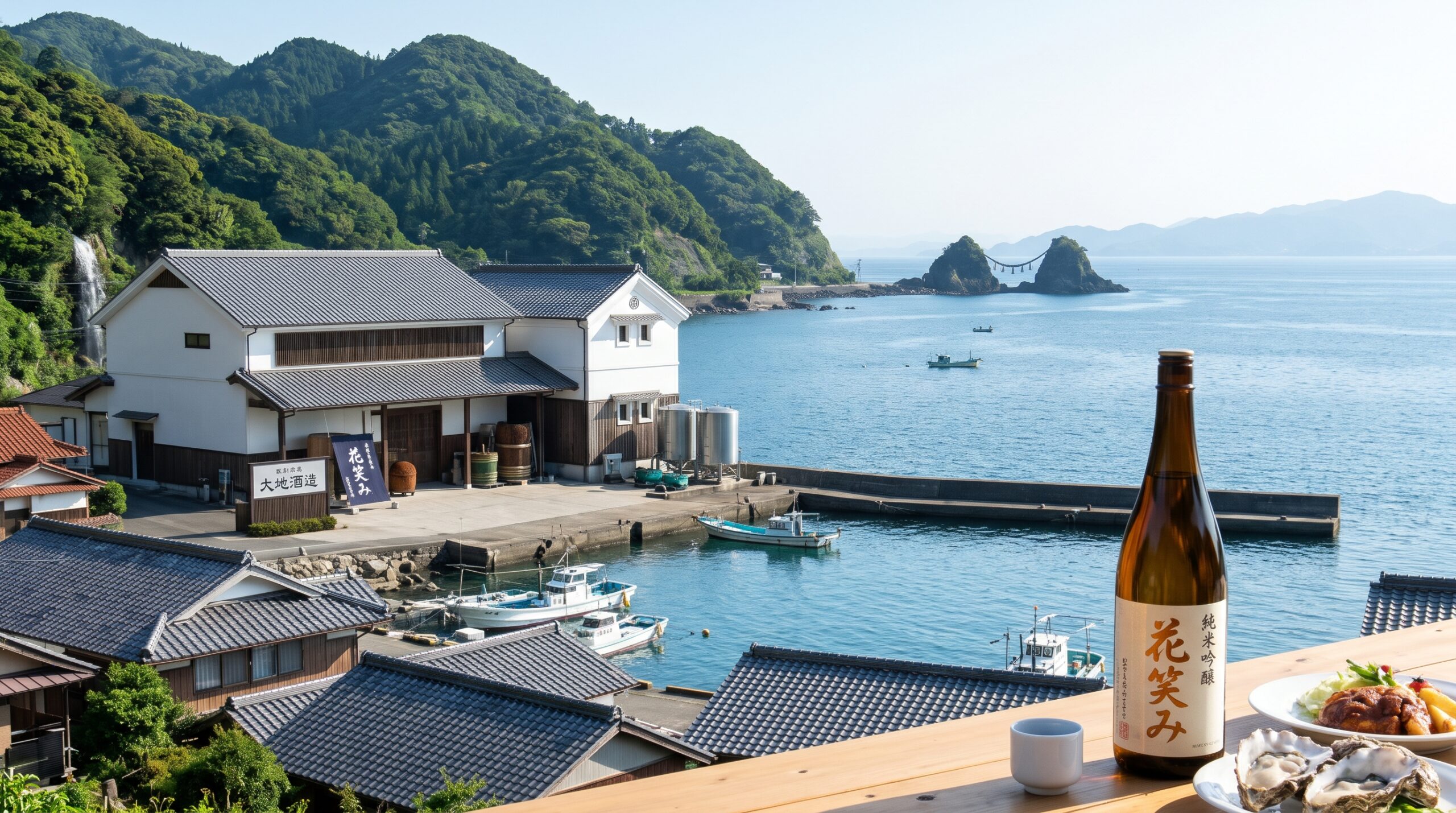
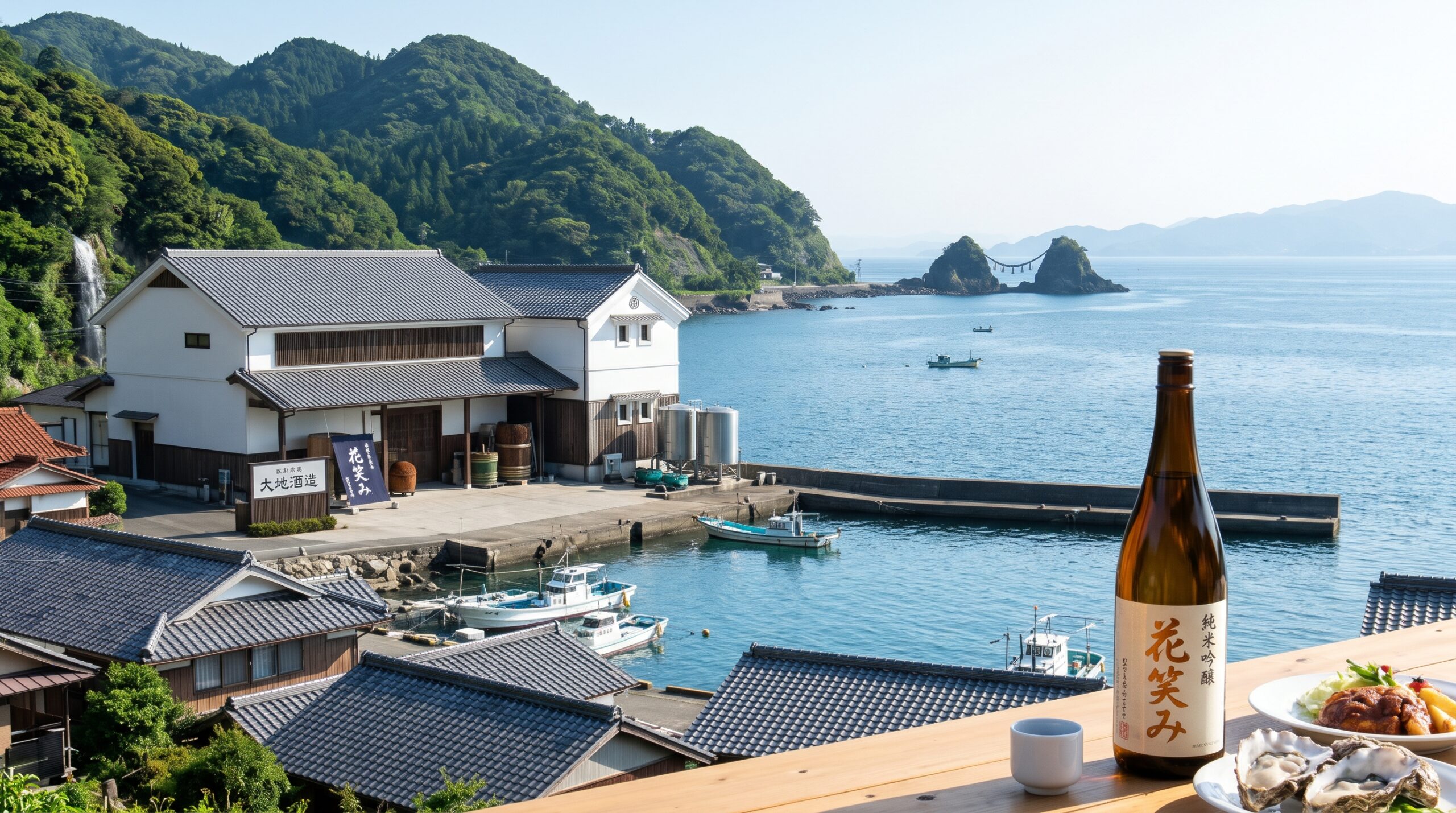
Oochi Shuzo Co., Ltd. was founded in 1885 in Saiki City, Oita Prefecture. According to the brewery, it was known in its early years as a purveyor to the Mori clan, the lords of the Saiki domain. But in the generation of its fifth-generation owner, Oochi Shoichi, a succession problem arose that put the brewery’s survival at risk. Two brothers from the local area decided to keep it going: in 2019, Ikeda Takashi took over the business, while Ikeda Tsukasa became the brewery’s toji (master brewer), and the two began a new chapter together.
Ikeda and his brother moved the brewery to Kamiura, within Saiki City, “in search of better water — the single most important thing in sake brewing,” and began brewing sake at the new kura in 2020. Ikeda Takashi, the company’s president, describes sake brewing as “an act of love toward microorganisms,” while toji Ikeda Tsukasa says he aims to balance rice, water, koji, and yeast to brew a “sake full of umami” that makes the person drinking it nod in quiet approval. The brand name, Hanaemi, means “a bright smile, like a flower in bloom” — a wish that everyone who drinks it will smile, too.
The bottle in this pairing, Hanaemi Junmai Ginjo, is brewed with Yamada Nishiki rice polished to a seimai buai of 55%, at 16% alcohol, with a sake meter value (nihonshu-do) of +3. The brewery describes it as “soft in flavor, rich and mellow (junmai umami-forward), with a sharp finish that pairs well with Western dishes like cream pasta, or with oysters,” and notes its “elegant aroma reminiscent of fresh apples.”
The Story of the Land
Kamiura, where the brewery relocated, is a port town in southeastern Oita Prefecture, facing directly onto the Bungo Strait. Around the nearest station, Asamii on the JR Nippo Main Line, a cluster of sights tied to the sea and water await: “Bungo Futami-ga-ura,” a pair of “married rocks” joined by a great sacred rope, and Gyoran Falls, designated a natural monument of Oita Prefecture. The brewery accepts visitors by reservation (9:00–17:00, groups of up to about 10), and on a clear day you can watch ships crossing the Bungo Strait, sometimes with Shikoku visible on the far shore.
A brewery that might have lost its successor found new footing exactly here — in a port town that looks out, every day, over this same strait.
The Story of the Song
“Bungo Suido” is a single by Kawanaka Miyuki, released in March 1988. The lyrics are by Aku Yu, the music by Miki Takashi. It follows a woman recovering from a broken heart, walking a solitary road to comfort herself, with the scenery of the Bungo Strait — the stretch of sea separating Oita and Ehime — layered over her journey.
Kawanaka Miyuki was born on December 5, 1955, in Yonago, Tottori Prefecture, and grew up in Suita, Osaka, after her family moved there in her early childhood. She debuted in 1973 under the name Kasuga Harumi, but the name didn’t take off, and she returned to Osaka for a time. In 1976, after winning the grand prize at the “Neon-gai Music Festival,” she set herself a deadline — “if I’m not successful by 25, I’ll give up on being a singer” — and in April 1977, at 21, she re-debuted under her own name, Kawanaka Miyuki. Her 1980 single “Futari Zake” became a massive hit, and she has remained one of the leading women of enka ever since. “Bungo Suido” is a song she sang in 1988, years into that second chapter of her career.
Why This Pairing
A brewery’s flame that nearly went out was relit by two local brothers who chose, “in search of better water,” to move it to Kamiura — a port town facing the Bungo Strait. It’s the story of a brewery that had almost lost its successor, finding its footing again beside the sea.
“Bungo Suido” sings of a wounded woman walking alone beside that very same strait. The woman in the song, and the brothers who kept the brewery alive, both seem to pause at a place where they might have stopped for good — and both turn to face forward again, looking out at the sea.
A brewery in a port town that has watched over those who cross the sea, and a song that has sung of the hearts of those walking beside that same sea — both stand on the shore of the same Bungo Strait.
Where to Find This Bottle
The Rakuten Ichiba link below is an affiliate link.
- Brewery’s official site: https://oochi.saiki.jp/
- Buy on Rakuten Ichiba: View the product page (720ml, ¥3,700)
Note: the links above lead to Japan-based retailers. They’re most convenient for readers in Japan, or for those elsewhere who are able to arrange international shipping. Stock and availability change over time, so if you’re near a specialty sake shop, it’s well worth asking for this label by name.
Pairing Dishes Worth Trying
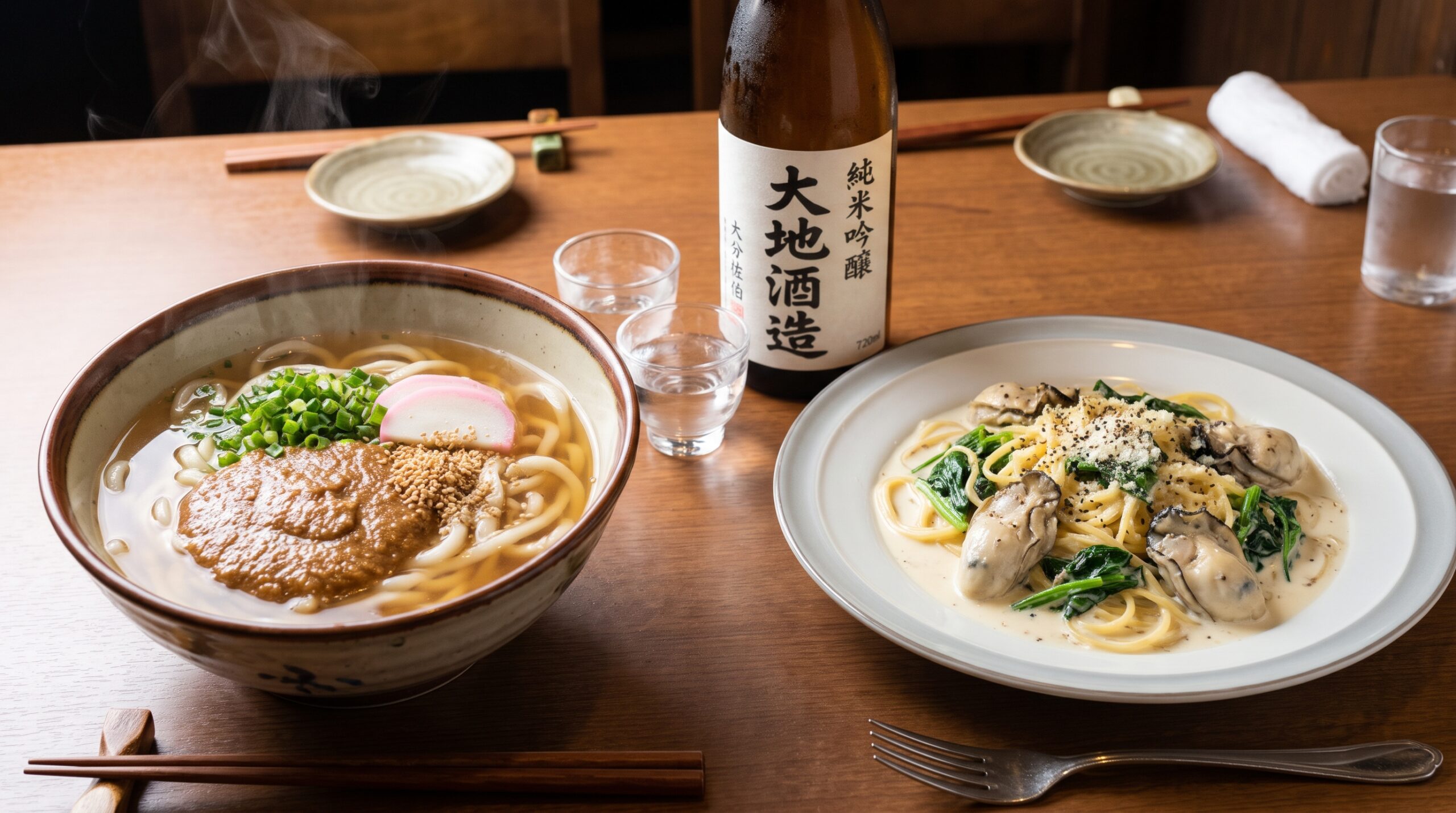
- Gomadashi udon
A local dish from Saiki City, the same city as the brewery. Grilled eso (lizardfish) is flaked and worked into a preserved paste called gomadashi, with sesame, soy sauce, and mirin, then stirred into hot dashi broth and poured over udon noodles. The toasty aroma of grilled fish and sesame, plus the dashi’s umami, resonate with the sharp, clean finish of this junmai ginjo.
Recipe (in Japanese): Rakuten Recipe, “Saiki’s Famous Gomadashi Udon” - Oyster and spinach cream pasta
A pairing the brewery itself recommends, describing this sake as going well with “Western dishes like cream pasta, or oysters.” In Tsurumi, within Saiki City, a producer called Kaisei raises true oysters using a New Zealand-style single-seed method. The oysters’ rich umami and the cream sauce’s milk fat sit naturally alongside this junmai ginjo’s rich, mellow umami.
Recipe (in Japanese): Kurashiru, “Oyster and Spinach Cream Pasta”
A note on the science: the glutamic acid abundant in grilled fish and oysters resonates with the amino-acid umami in sake, producing a synergistic boost of savoriness on the palate. The milk fat in cream sauce and the toasted aroma of sesame bind with the volatile aromatic compounds behind a junmai ginjo’s fruity ginjo aroma, adding depth and richness to the overall scent.
Visiting the Brewery
Oochi Shuzo
277-1 Asamiiura, Kamiura, Saiki City, Oita Prefecture, near JR Asamii Station on the Nippo Main Line. Brewery tours are by reservation only (9:00–17:00, groups of up to about 10, tel. 0972-48-9388). The brewery sits in a port town facing the Bungo Strait.
Sights Nearby
- Bungo Futami-ga-ura / Kamiura, Saiki | about 5 min by car from the brewery
A pair of “married rocks” joined by a large sacred rope, a symbol of Kamiura looking out over the Bungo Strait and a popular spot for the first sunrise of the year. - Gyoran Falls & Gyoran Park / Kamiura, Saiki | about 5 min by car from the brewery
A park centered on a waterfall designated a natural monument of Oita Prefecture. A “Gyoran Falls Festival” was held here again in August 2026. - Seai Park (Seai Beach) / Kamiura, Saiki | about 10 min by car from the brewery
A park built around a beach once chosen as one of Japan’s 88 best bathing beaches, with a campground that operates year-round.
Hot Springs Nearby
- Shio-yu / Asamiiura, Kamiura, Saiki | in the same hamlet as the brewery
An unusual day-use hot spring that heats natural seawater (¥500 for adults, 10:00–22:00, closed Wednesdays). Please check current hours before visiting.
Opening hours, closing days and day-use bathing availability can change. Please check each facility’s official information before visiting.
A Quick Glossary of Sake Terms
- Junmai Ginjo: Junmai (sake made only from rice, rice koji, and water, with no added brewing alcohol) that has been polished to a seimai buai of 60% or less and fermented slowly at low temperatures, giving it a fragrant aroma.
- Seimai buai (rice-polishing ratio): The percentage of the original grain remaining after milling. The lower the number, the more the rice has been polished down.
Sources
- Oochi Shuzo Co., Ltd. – Official Site
- About Oochi Shuzo – Official Site
- Hanaemi Junmai Ginjo – Official Site
- Oochi Shuzo – Oita Sake Brewers Association
- Kawanaka Miyuki – Wikipedia (Japanese)
- Gomadashi – Wikipedia (Japanese)
If you notice any errors in this article, please don’t hesitate to reach out at info@soundrecords.jp.
Keep reading in English
Sake and Kayokyoku
- Like a Flame That Never Goes Out, They Stayed True
- Polished by the Fierce Current, It Only Grows Better
- The Moon Over the Mountain Castle Fills Even a Lost Heart
Browse all articles in English
Read this article in Japanese: 絶えかけた蔵の灯を、兄弟は海風の中で継いだ