日本語で読む | This is the English version of a bilingual article.
Today’s Pairing
- Sake: Chikuha “Noto Junmai” — brewed with 100% Noto-grown Yamada Nishiki rice, rice-polishing ratio (seimai buai) 55%, 15% alcohol / Kazuma Shuzo Co., Ltd. (He-36 Ushitsu, Noto-cho, Hosu-gun, Ishikawa Prefecture)
Official site: https://chikuha.co.jp/ - Kayoukyoku (classic Japanese popular song): “Noto Hantou” (“Noto Peninsula”) by Ishikawa Sayuri, 1977
YouTube: https://www.youtube.com/watch?v=u-4TUBEbSas
▶ If the player above doesn’t play, open it on YouTube
The Story of the Brewery
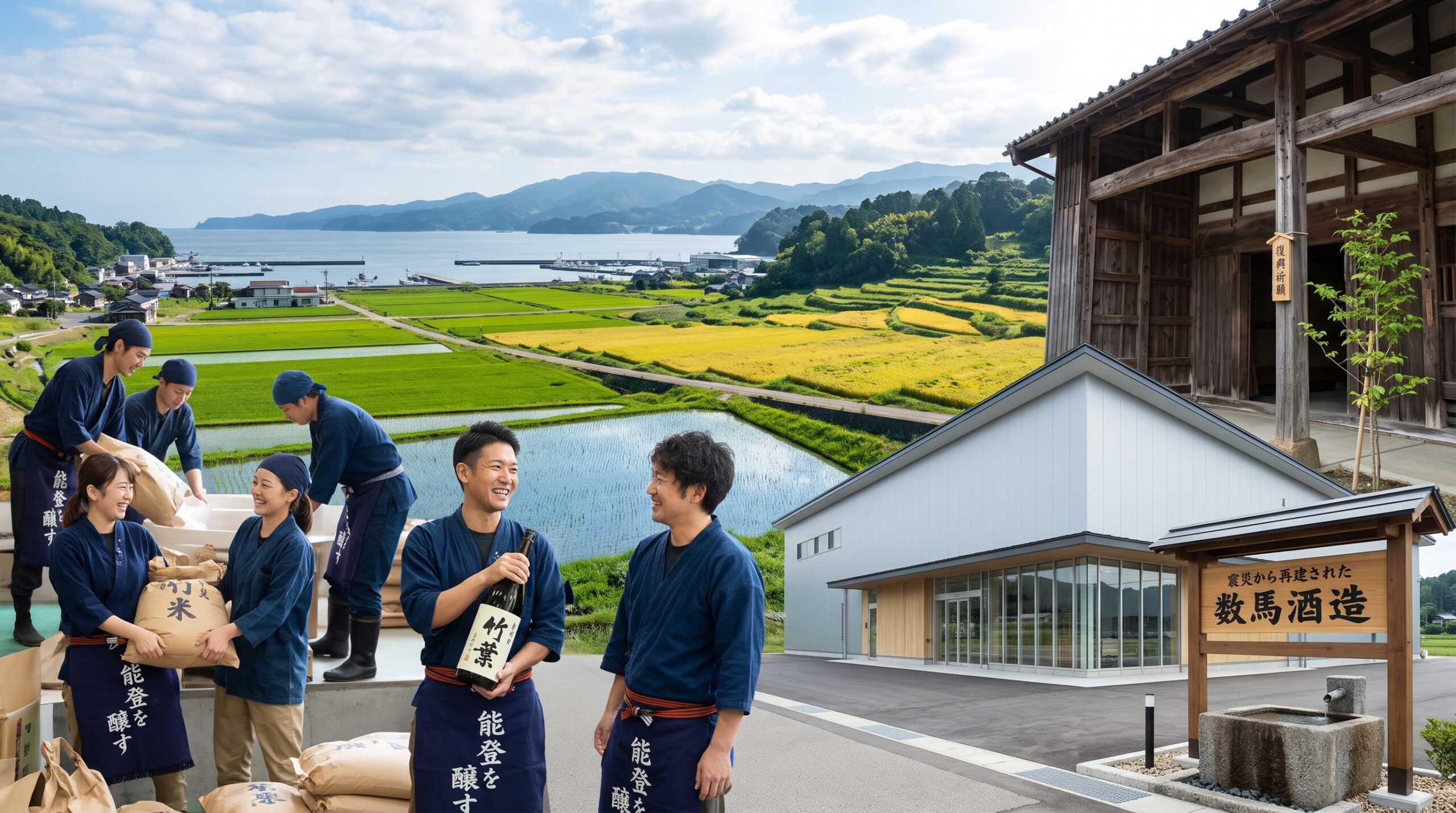
Kazuma Shuzo Co., Ltd. was founded in 1869 in Ushitsu, Noto-cho, as a soy sauce maker. It wasn’t until 1951 that the brewery obtained its license to brew sake — a company whose core business had always been “brewing,” in the broadest sense, taking on sake while staying rooted in the same local water. In September 2015, the brewery moved away from leaving production to an individual toji (master brewer) and kura workers, toward a system where staff themselves take collective responsibility for the brewing. Its guiding philosophy, stated on its official site, is “Brewing Noto” — drawing out the region’s resources and culture, and creating new flows of people into Noto.
One expression of that philosophy is a land-reclamation project the brewery has run since 2014 together with Yumeurara Co., Ltd.: reclaiming abandoned farmland borrowed from local landowners and turning it back into paddy fields for growing sake rice. According to the brewery’s official site, one village’s abandoned farmland was reduced to zero by 2017, and by 2018 the brewery had reclaimed an area equivalent to five Tokyo Domes. In 2020 it reached 100% Noto-grown sake rice, and by 2021 all of its raw rice was sourced from within Noto. The bottle in this pairing, Chikuha “Noto Junmai” — sake made only from rice, rice koji, and water, with no added brewing alcohol — is brewed with 100% Noto-grown Yamada Nishiki rice, polished to a seimai buai of 55%, at 15% alcohol. The brewery’s own site describes it as having a soft, gentle aroma reminiscent of freshly picked green bananas and the almond-syrup sweetness of rice pudding or almond tofu, with a clear, light sweetness and smooth acidity, finishing with a bright bitterness like passionfruit seeds.
The Story of the Land
Ushitsu, where the brewery stands, is a fishing port town facing the northeastern coast of the Noto Peninsula, known as a production area for ishiri — a traditional fish sauce fermented from salted squid innards. Ishikawa Prefecture’s own website describes it as “Noto Peninsula’s traditional fish sauce,” and it remains one of Noto-cho’s signature local products. It’s a land where a fermentation culture born of the sea quietly echoes the brewing culture of a soy sauce maker that later became a sake brewery.
On January 1, 2024, this area was struck by the Noto Peninsula earthquake. Kazuma Shuzo’s official site has kept an ongoing series of “recovery reports” from the immediate aftermath through today. The earliest reports describe parts of the building badly tilted, ground subsidence, broken doors, and shattered sake bottles; a report from February notes that the brewery’s Meiji-era wooden kura building had collapsed entirely. With water service cut off, the brewery received help from sake breweries in other prefectures — including Niizawa Jozoten in Miyagi — who carried out the pressing and bottling of moromi (fermenting mash) still sitting in its tanks. Water service was restored on March 12, the bottling line resumed on March 27, and brewing itself resumed on April 1. Recovery has continued since: a ground-breaking ceremony for a new kura building was held in December 2025, and the exterior of a new bottling plant was completed in August 2026, according to the brewery’s reports.
The Story of the Song
“Noto Hantou” was released on May 10, 1977, a single by Ishikawa Sayuri. The lyrics are by Aku Yu, the music and arrangement by Miki Takashi, released by Nippon Columbia. Together with the preceding single “Tsugaru Kaikyo Fuyu-geshiki” and the following single “Danryu,” it’s counted among what later came to be called her “travel-sentiment trilogy,” and it reached a peak of No. 7 on Oricon’s weekly singles chart. The lyrics follow a woman’s feelings as she sets out on a journey to see someone she longs for, set against the scenery of the Noto Peninsula.
There’s a well-known story behind why this particular song came to be set on the Noto Peninsula. Lyricist Aku Yu had originally intended to write a song about Kumamoto, Ishikawa Sayuri’s actual hometown, but mistakenly assumed from her stage name, “Ishikawa,” that she was from Ishikawa Prefecture — and the song ended up set on the Noto Peninsula instead. This anecdote is widely told as part of Ishikawa Sayuri’s own story.
Why This Pairing
“Noto Hantou” is a song about a woman traveling to see someone she loves. Within the song, the Noto Peninsula is portrayed as the place someone travels to, in order to see that person again.
Kazuma Shuzo, too, lost part of its brewery in the 2024 earthquake, and is still, step by step, rebuilding itself into a place that can welcome people again. From the ground-breaking ceremony for its new kura to the completed exterior of its new bottling plant, the progress recorded on its official site is still ongoing — it hasn’t reached its end yet.
A song about someone traveling to see another person, and a brewery working to become a place people can come see again. As you tilt a glass of Chikuha “Noto Junmai,” with its light sweetness and bright, clean bitterness, let your thoughts rest for a moment on the time this land has been walking through.
Where to Find This Bottle
The Rakuten Ichiba link below is an affiliate link.
- Brewery’s official site: https://chikuha.co.jp/
- Buy on Rakuten Ichiba: View the product page (¥1,815)
Note: the links above lead to Japan-based retailers. They’re most convenient for readers in Japan, or for those elsewhere who are able to arrange international shipping. Stock and availability change over time, so if you’re near a specialty sake shop, it’s well worth asking for this label by name.
Pairing Dishes Worth Trying
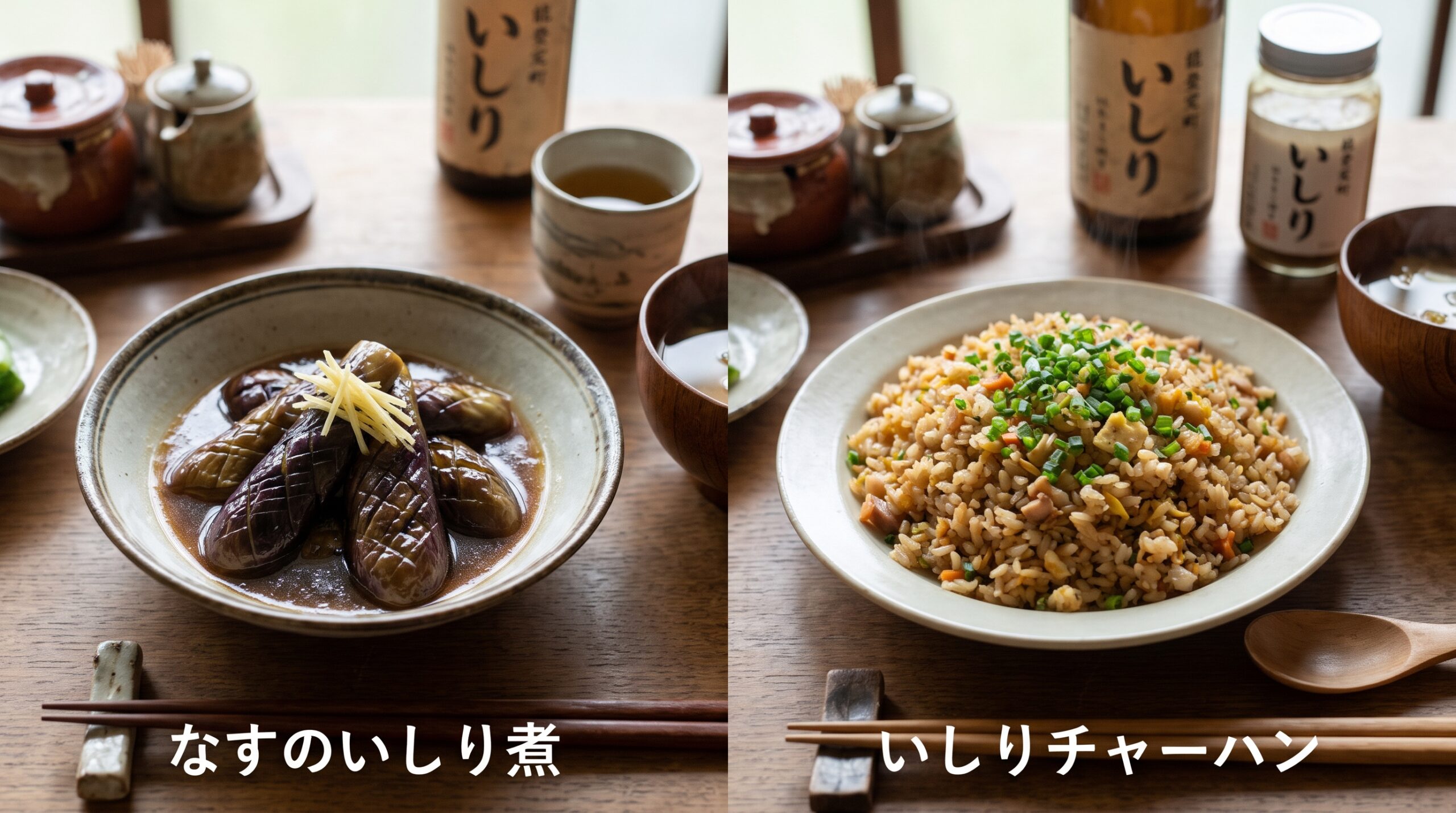
- Eggplant simmered in ishiri (nasu no ishiri-ni)
A home-style dish from Noto-cho, built around ishiri, the fish sauce that’s a specialty of Ushitsu, where the brewery stands. Slits are cut into the eggplant skin, which is then simmered in a broth of dashi, sugar, sake, and ishiri until the fermented sauce’s umami soaks all the way through.
Recipe (in Japanese): Cookpad, “Nasu no Ishiri-ni” - Ishiri fried rice
A Noto take on fried rice that uses ishiri in place of soy sauce. A splash of ishiri and sake added to the hot pan at the end brings out the fish sauce’s savory, toasted aroma. This recipe comes from an ishiri maker itself, making it an easy way to enjoy the fermented seasoning’s umami.
Recipe (in Japanese): Cookpad, “Fragrant Ishiri Fried Rice”
A note on the science: ishiri is a fish sauce fermented from squid innards, rich in umami compounds like glutamic acid and inosinic acid. These resonate with the amino-acid umami in sake, creating a synergistic boost of savoriness on the palate. The aromatic compounds produced during fermentation also echo the mellow aroma of junmai sake, adding depth to the overall fragrance.
Visiting the Brewery
Chikuha / Kazuma Shuzo Brewery
He-36 Ushitsu, Noto-cho, Hosu-gun, Ishikawa. About 40 minutes by car from Noto Airport, or about 30 minutes from Anamizu IC on the Noto Satoyama Kaido highway.
The brewery sits just off Ushitsu Harbor, in a district also known as a production area for ishiri, Noto’s traditional fish sauce.
Sights Nearby
- Mawaki Site & Mawaki Jomon Museum / Mawaki, Noto-cho | ~14 min, ~9.3 km by car from the brewery
A nationally designated historic site where a Jomon-era circle of wooden pillars and other remains were excavated. The adjacent museum displays items found there (open 9:00–17:00; closed Mon & Tue). Please check the latest opening status before visiting. - Tsukumo Bay & Noto Marine Center / Kosaka, Noto-cho | ~18 min, ~11.4 km by car from the brewery
A scenic ria coastline ranked among Japan’s 300 Landscapes. The Marine Center lets visitors observe local sea life. Please check opening status before visiting.
Hot Springs Nearby
- Mawaki Porepore (Jomon Mawaki Onsen) / Mawaki, Noto-cho | ~14 min, ~9.3 km by car from the brewery
A hot spring facility on the same grounds as the Mawaki Site. Day-use bathing is available 15:00–21:00 (closed Wed, ¥550 for adults). Run by the town of Noto, it reopened after a temporary closure following the 2024 earthquake. Please check current hours before visiting.
Opening hours, closing days and day-use bathing availability can change. Please check each facility’s official information before visiting.
A Quick Glossary of Sake Terms
- Junmai: Sake made only from rice, rice koji, and water, with no added brewing alcohol. The umami of the rice comes through directly.
- Seimai buai (rice-polishing ratio): The percentage of the original grain remaining after milling. The lower the number, the more the rice has been polished down.
Sources
- Kazuma Shuzo Co., Ltd. – Official Site
- Company Profile – Kazuma Shuzo Official Site
- “Brewing Noto” Brand Statement – Kazuma Shuzo Official Site
- Rice-Growing Project – Kazuma Shuzo Official Site
- Chikuha “Noto Junmai” – Kazuma Shuzo Official Site
- Recovery Reports – Kazuma Shuzo Official Site
- Ishiri – Ishikawa Prefecture Official Site
- “Noto Hantou” (Ishikawa Sayuri song) – Wikipedia (Japanese)
- Discography – Ishikawa Sayuri Official Site
If you notice any errors in this article, please don’t hesitate to reach out at info@soundrecords.jp.
Keep reading in English
Sake and Kayokyoku
- The Tunnels That Once Mined Gold Now Nurture Something Else
- Beyond the Glittering Tokyo, Three Hundred Years of Unchanging Water
- Two Brothers Relit a Brewery’s Dying Flame, Facing the Sea Wind
Browse all articles in English
Read this article in Japanese: また会いに行ける場所になるまで