今日のペアリング
▶ 上のプレーヤーで再生できない場合は、YouTubeで開く
醸造所の話
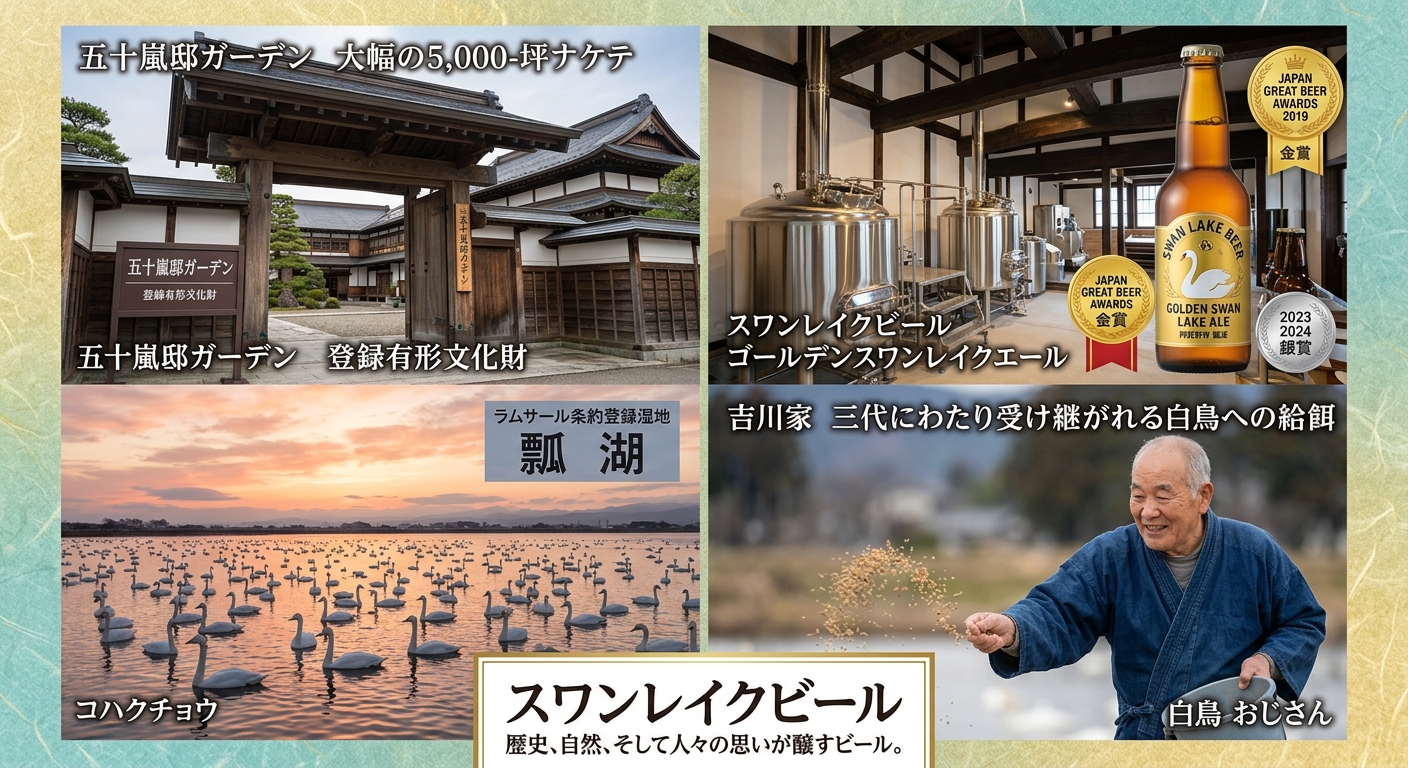
新潟県阿賀野市、白鳥の飛来地として知られる瓢湖のすぐそばに、瓢湖屋敷の杜ブルワリーはあります。運営する株式会社天朝閣がこの地でビール造りを始めたのは1997年。舞台となっているのは、明治から大正にかけてこの地の庄屋を務めた豪農・五十嵐家の邸宅です。五十嵐家は第百十六国立銀行(後の新発田銀行)の創設にも関わった地元の実業家で、約5,000坪という広大な敷地に建つその屋敷と庭園は「五十嵐邸ガーデン」として整備され、2019年には国の登録有形文化財に指定されました。ビール醸造は、この歴史ある屋敷の中で行われています。
看板銘柄のひとつ「ゴールデンスワンレイクエール」は、透き通った黄金色とフローラルな香り、軽やかな飲み口が持ち味のゴールデンエールです。Japan Great Beer Awardsでは2019年に金賞、2023年・2024年には銀賞を連続受賞するなど、国内外のビアコンテストで安定して評価を受けてきた一本で、スワンレイクビール全体ではこれまでに国際的なビアコンテストで120以上のメダルを獲得しています。
土地の話
ブルワリーの名前にもなっている「スワンレイク」は、すぐそばにある瓢湖(ひょうこ)を英語に置き換えたものです。瓢湖は、白鳥の一大飛来地として全国に知られるラムサール条約登録湿地。毎年10月から3月にかけて、コハクチョウを中心に約5,000羽もの水鳥が飛来します。この瓢湖を全国区の観光地に押し上げたのは、1954年、地元に住んでいた吉川重三郎氏が日本で初めて野生の白鳥への餌付けに成功した出来事でした。吉川氏は「動物に信頼してもらうには、一度たりとも嘘をついてはいけない。鳥に餌を与えるのではなく、自分が白鳥にならなければならない」という言葉を残したと伝えられています。その姿勢は「白鳥おじさん」として、息子・孫へと三代にわたり受け継がれ、今も1日3回の給餌が続けられています。
音楽の話
「白鳥の湖」は、ロシアの作曲家ピョートル・チャイコフスキーが1875年から翌1876年にかけて作曲したバレエ音楽です。1877年3月4日、モスクワのボリショイ劇場で初演されました。物語の舞台はドイツ。悪魔ロットバルトの呪いによって、昼は白鳥、夜だけ人間の姿に戻るという二重の生を強いられた王女オデットと、王子ジークフリートの悲恋を描いています。呪いを解く唯一の方法は「まだ誰にも愛を誓ったことのない男が、オデットに永遠の愛を誓うこと」――しかし舞踏会の夜、ロットバルトの罠にはめられたジークフリートは、オデットによく似せられた黒鳥オディールに誓いを立ててしまいます。第2幕でオーボエが奏でる「情景(白鳥のテーマ)」は、このバレエの中でも特に広く親しまれている旋律です。
なぜこの組み合わせなのか
どちらも、白鳥という姿の内側に、見た目だけでは分からないもうひとつの真実を抱えています。「白鳥の湖」のオデットは、昼間は誰の目にも一羽の白鳥にしか見えませんが、その内側には人間の姫としての本当の姿が隠されています。瓢湖の白鳥たちも、ただの渡り鳥ではありません。1954年の給餌の成功から70年以上、「動物に噓をついてはいけない」という吉川重三郎氏の姿勢を三代にわたって守り続けてきた人々との、積み重ねられた信頼関係の上に今の瓢湖の風景があります。どちらも、白鳥という一見シンプルな姿の奥に、地道に積み重ねられてきた物語を隠しているのです。
もうひとつ、名前そのものにも重なりがあります。ゴールデンスワンレイクエールを造る醸造所は、地元の湖の名前をそのまま英語に置き換えて「スワンレイク」と名乗りました。チャイコフスキーのバレエも、舞台がドイツの湖であるにもかかわらず、世界中で「白鳥の湖=スワンレイク」という同じ言葉で呼ばれています。どちらも、誰もが知っているはずのその名前を、誇張することなくそのまま掲げている点が共通しています。
この一杯を、探すなら
※楽天市場へのリンクは広告(アフィリエイト)です。醸造所がタップルームや直営店を持っている場合は、できたてを現地で味わうのが一番のおすすめです。
🌡️ おすすめの飲み方(温度とグラス):よく冷やして6℃前後で。透明感のある黄金色を楽しめるよう、背の高いピルスナーグラスや口の狭いタンブラーに注ぐと、フローラルな香りが立ちやすくなります。
合わせたい「アテ」
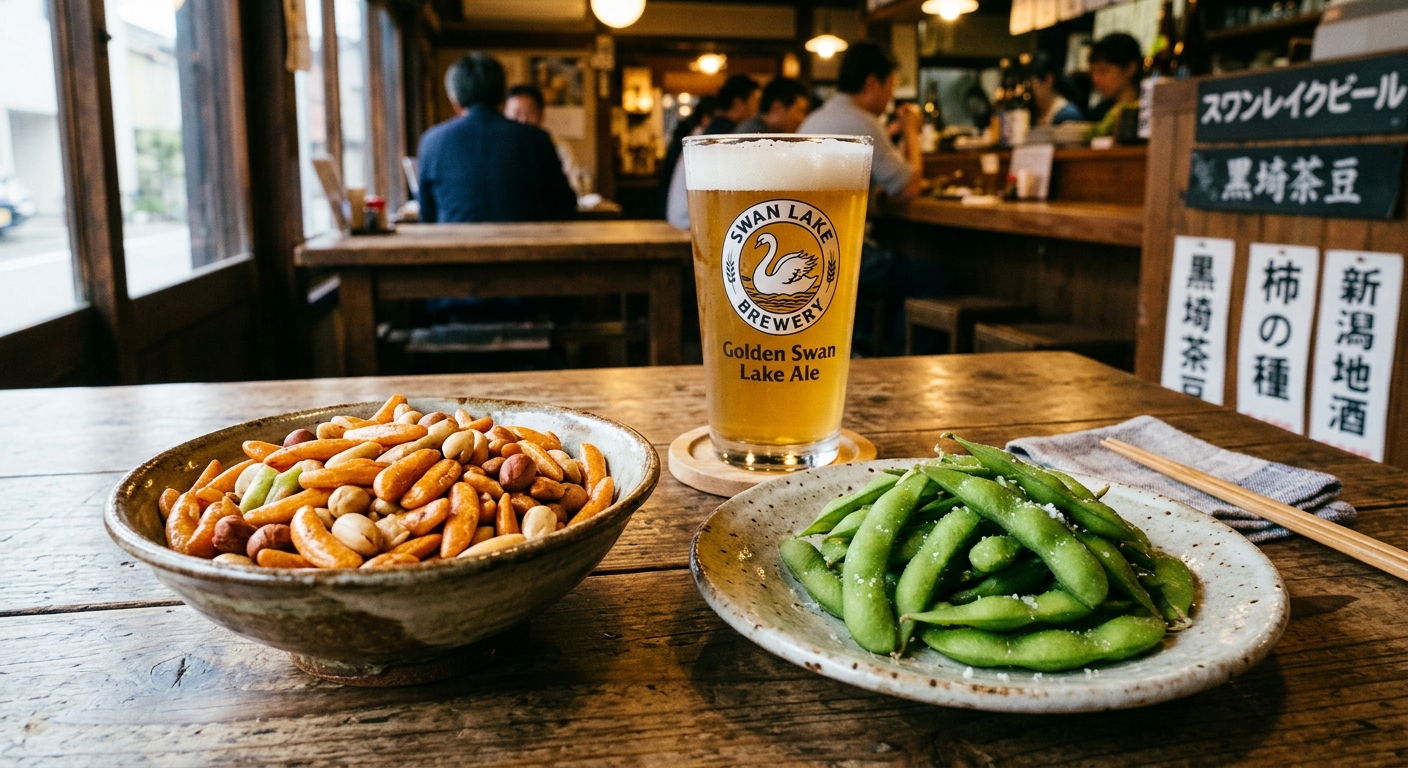
- 柿の種
新潟を代表する米菓。ピリッとした唐辛子の辛味とパリッとした食感が、ゴールデンスワンレイクエールの軽やかな苦みと好相性です。
- くろさき茶豆(枝豆)
新潟市黒埼地区が発祥とされる、香りの強い茶豆系の枝豆。塩ゆでしただけのシンプルな一皿が、ホップの華やかな香りを引き立てます。
科学的にひとこと:枝豆や米菓の塩気は、炭酸とホップの苦み成分(イソα酸)によって後味がすっと引き締まり、次のひと口をまた新鮮に感じさせてくれることが知られています。ゴールデンエールのようにモルトの甘みが控えめなスタイルほど、この「塩気とホップの掛け合い」がはっきり感じられます。
この醸造所をたずねるなら
瓢湖屋敷の杜ブルワリー(スワンレイクビール)
新潟県阿賀野市金屋川端345-1/JR羽越本線「水原駅」から車で約10分、磐越自動車道「安田IC」から車で約15分。
併設のザ・レストランスワンレイクでは、醸造タンクを眺めながら出来たてのビールを味わえます(営業時間11:00〜21:00、定休日:火曜・水曜)。
近くの観光スポット
- 瓢湖(ひょうこ)/阿賀野市|醸造所から車で約5分
毎年10月から3月にかけて、コハクチョウなど約5,000羽が飛来するラムサール条約登録湿地。1954年、地元の吉川重三郎氏が日本で初めて野生の白鳥への給餌に成功した場所で、その活動は「白鳥おじさん」として三代にわたり受け継がれています。
- 水原代官所史跡公園/阿賀野市|醸造所から車で約10分
延享3年(1746年)、幕府直轄領の水原城館跡に置かれた代官所を復元した史跡公園。年貢の収納や民政を扱った公事場、犯罪者の取り調べに使われた白洲などが再現されています。
近くの温泉
- 村杉温泉 共同浴場 薬師の湯/阿賀野市(五頭温泉郷)|醸造所から車で約15〜20分
日本三大ラジウム泉のひとつとされる村杉温泉の共同浴場。年中無休、大人300円で日帰り入浴ができ、婦人病に効くと伝わることから「子宝の湯」とも呼ばれています。
※営業時間・定休日・日帰り入浴の可否は変わることがあります。おでかけ前に各施設の公式情報をご確認ください。
ひとことメモ(ビールの用語)
- クラフトビール:小規模な醸造所が、造り手の個性を前面に出して仕込むビールの総称。大量生産の均一な味とは別の方向を目指しています。
- エール:常温に近い温度で、酵母が液面近くで働く「上面発酵」で造るビール。果実のような香りと厚みのある味わいが出やすいのが特徴です。
- ホップ:ビールに苦みと香りを与えるつる性植物の毬花(まりばな)。品種によって、柑橘・トロピカルフルーツ・草原のように香りが変わります。
- モルト:発芽させた大麦(麦芽)のこと。ビールの甘み・色・コクの土台になり、焙煎の深さで色と香ばしさが決まります。
- ABV:アルコール度数(Alcohol By Volume)のこと。ビールでは5%前後が標準で、8%を超えると飲みごたえのある「強め」の部類になります。
- IBU:苦みの強さを表す国際的な数値。10前後だとほとんど苦みを感じず、60を超えるとはっきり苦いIPAの領域です。
- 地ビール:1994年の酒税法改正で小規模醸造が解禁された後、各地で生まれたビールの呼び名。現在は「クラフトビール」と呼ばれることが多くなっています。
参考
内容に誤りがございましたら、お手数ですが info@soundrecords.jp までご連絡いただけますと幸いです。
Today’s Pairing
▶ If the player above doesn’t play, open it on YouTube
The Story of the Brewery
In Agano City, Niigata, right next to Lake Hyoko — a well-known landing site for wintering swans — sits the Hyoko Yashiki no Mori Brewery. Tenchokaku Co., Ltd. began brewing beer here in 1997, inside the former residence of the Igarashi family, wealthy landowning village headmen from the Meiji and Taisho eras who also helped found the 116th National Bank (later Shibata Bank). Their mansion and garden, spread across roughly 16,500 square meters, have since been maintained as “Igarashi-tei Garden” and were registered as a National Tangible Cultural Property in 2019. The beer is brewed inside that same historic estate.
One of its signature beers, Golden Swan Lake Ale, is a golden ale prized for its clear, bright color, floral aroma and light, easy-drinking body. It won gold at the 2019 Japan Great Beer Awards and silver in both 2023 and 2024, part of a run of steady recognition at beer competitions at home and abroad — Swan Lake Beer as a whole has picked up more than 120 medals across international competitions to date.
The Story of the Land
The brewery’s own name, “Swan Lake,” is simply an English rendering of Lake Hyoko itself. Hyoko is a Ramsar-registered wetland, famous nationwide as a major wintering site for swans — every year between October and March, roughly 5,000 waterfowl, mostly tundra swans, arrive here. What put Hyoko on the national map was a single event in 1954, when a local resident named Jusaburo Yoshikawa became the first person in Japan to successfully hand-feed wild swans. He is said to have believed that “to earn an animal’s trust, you must never lie to it, not even once — rather than simply feeding the birds, you must become a swan yourself.” That philosophy, and the role that came with it, has since passed down through three generations of so-called “swan uncles,” who still feed the birds three times a day.
The Story of the Music
“Swan Lake” is a ballet score composed by the Russian composer Pyotr Ilyich Tchaikovsky between 1875 and 1876, and first performed on March 4, 1877, at the Bolshoi Theatre in Moscow. Set in Germany, it tells the tragic love story of Princess Odette — cursed by the sorcerer Rothbart to live a double life, a swan by day and human only at night — and Prince Siegfried. The only way to break the curse is for a man who has never sworn love to another to pledge his love to Odette forever. But at the fateful ball, Rothbart tricks Siegfried into pledging himself instead to Odile, the Black Swan disguised to look exactly like her. The “Scene,” with its famous oboe melody in Act II — often simply called the “Swan Theme” — is one of the most widely loved passages in the entire ballet repertoire.
Why This Pairing
Both center on a swan’s form concealing a truth that isn’t visible on the surface. Odette, in “Swan Lake,” looks to anyone watching by day like nothing more than a swan — yet hidden inside that form is her real identity as a human princess. The swans of Lake Hyoko aren’t just migratory birds passing through, either. The scene there today rests on more than 70 years of trust built up since that first successful feeding in 1954, carried forward across three generations of people who held to Jusaburo Yoshikawa’s principle that you must never lie to an animal. In both cases, the swan’s simple, familiar shape holds a story built up slowly, underneath.
There’s a second echo in the names themselves. The brewery that makes Golden Swan Lake Ale took the name of its neighboring lake and simply translated it into English, calling itself “Swan Lake.” Tchaikovsky’s ballet, too, is set on a lake in Germany, yet the whole world knows it by the same plain words — “Swan Lake.” Neither one dresses up a name everyone already knows; both just hold it up as it is.
Where to Find This Beer
The Rakuten Ichiba link below is an affiliate link.
These are Japanese storefronts. If you are visiting the brewery, drinking it fresh at their own taproom is by far the best option.
🌡️ How to serve it:Chill it well, to around 6°C. Pour it into a tall pilsner glass or a narrow-mouthed tumbler to show off its clear golden color and let the floral aroma rise.
Pairing Snacks Worth Trying
- Kaki no Tane
A signature Niigata rice cracker snack. Its sharp chili spice and crisp bite pair well with the ale’s light bitterness.
- Kurosaki-cha Mame (edamame)
A highly aromatic variety of edamame said to originate in the Kurosaki district of Niigata City. Simply salt-boiled, its fragrance brings out the beer’s floral hop character.
A note on the science: the saltiness of edamame and rice crackers is known to be cut cleanly by carbonation and by the iso-alpha acids that give hops their bitterness, refreshing the palate for the next bite. That interplay between salt and hops comes through especially clearly in a golden ale like this one, where malt sweetness stays understated.
Visiting the Brewery
Hyoko Yashiki no Mori Brewery (Swan Lake Beer)
345-1 Kanaya-Kawabata, Agano City, Niigata. About a 10-minute drive from Mizuhara Station on the JR Uetsu Line, or about 15 minutes by car from the Yasuda IC on the Ban-etsu Expressway.
The Restaurant Swan Lake, on the same grounds, lets you eat while watching the brewing tanks (open 11:00–21:00, closed Tuesdays and Wednesdays).
Sights Nearby
- Lake Hyoko / Agano City | ~5 min by car from the brewery
A Ramsar-registered wetland where about 5,000 swans, mostly tundra swans, arrive every year between October and March. In 1954, a local resident named Jusaburo Yoshikawa became the first person in Japan to successfully hand-feed wild swans here, and that role has since passed down through three generations of “swan uncles.”
- Mizuhara Daikansho Historic Park / Agano City | ~10 min by car from the brewery
A reconstruction of the local magistrate’s office first established in 1746 on the site of Mizuhara Castle, when the area was placed under direct shogunate control. It recreates the hall where tax collection and local administration were handled, along with the outdoor court used to interrogate suspects.
Hot Springs Nearby
- Murasugi Onsen Public Bathhouse, Yakushi-no-Yu / Agano City (Goto Onsen area) | ~15–20 min by car from the brewery
A public bathhouse at Murasugi Onsen, considered one of Japan’s three great radium hot springs. Open year-round, 300 yen for adults, and traditionally said to help with women’s health — hence its other name, “the hot spring of fertility.”
Opening hours, closing days and day-use bathing availability can change. Please check each facility’s official information before visiting.
A Quick Glossary of Beer Terms
- Craft beer: Beer made by small breweries that put the character of the maker front and centre, as opposed to the uniformity of mass production.
- Ale: Beer made through “top fermentation,” where yeast works near the surface of the liquid at close to room temperature. It tends to produce fruit-like aromas and a fuller body.
- Hops: The cones of a climbing plant, which give beer its bitterness and aroma. Depending on the variety, that aroma can read as citrus, tropical fruit or open grassland.
- Malt: Germinated barley. It forms the foundation of a beer’s sweetness, colour and body; how deeply it is roasted determines colour and toastiness.
- ABV: Alcohol By Volume. Around 5% is standard for beer; anything above 8% is considered a stronger, more full-bodied style.
- IBU: An international scale for measuring bitterness. Around 10 registers as barely bitter at all; above 60 puts you in clearly bitter IPA territory.
- Local beer (ji-beer): The name given to beers that sprang up around Japan after a 1994 revision to the liquor tax law allowed small-scale brewing. These days most are called “craft beer” instead.
Sources
If you notice any errors in this article, please don’t hesitate to reach out at info@soundrecords.jp.
コメントを残す