今日のペアリング
▶ 上のプレーヤーで再生できない場合は、YouTubeで開く
醸造所の話
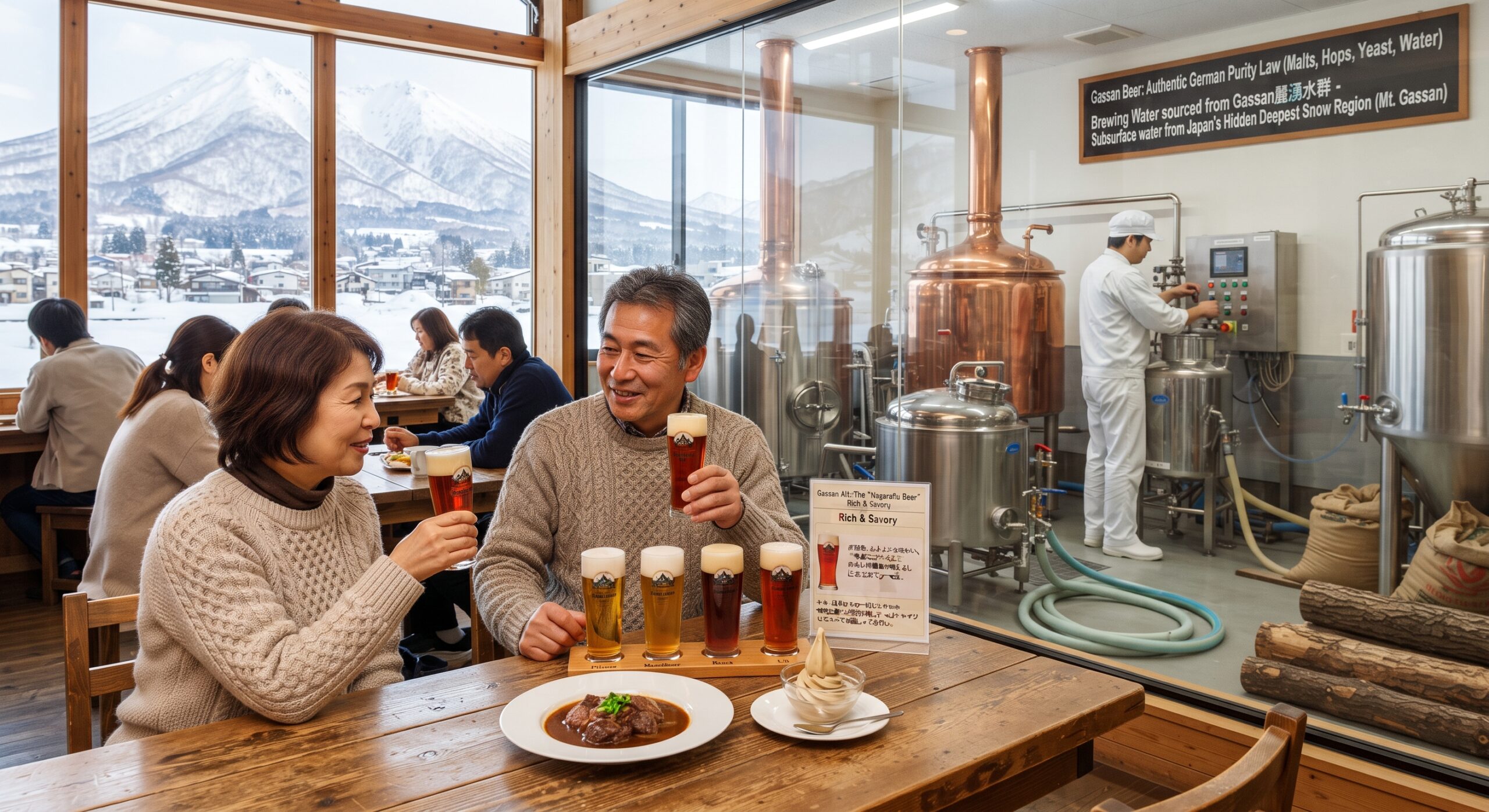
月山ビールを造る西川町総合開発株式会社は、山形県西川町の「道の駅にしかわ」に、山形県で唯一の地ビール醸造工場を併設しています。1998年、「地ビール月山」として醸造を始めました。併設のレストランには奥に醸造釜があり、ガラス越しに眺めながらできたてのビールを飲める造りになっています。名物メニューは「牛肉の地ビール煮」。売店では地ビールを使ったソフトクリームも売られています。
仕込みに使う水は、月山山麓に湧く「月山山麓湧水群」。環境庁(当時)が1985年に選んだ「名水百選」のひとつで、西川町の公式サイトは、冬に10mの積雪も珍しくない豪雪地帯に降った雪が、数百年ともいわれる歳月をかけて土中で濾過され、湧水になると説明しています。原料は、水はこの地のものですが、麦芽・ホップ・酵母はドイツやチェコ産を使い、ドイツのビール純粋令(原料は麦芽・ホップ・水のみ)に則って造られています。醸造機器もドイツ・カスパー・シュルツ社のもので、造り手はドイツで修行した職人です。
定番は「ピルスナー」「ミュンヒナー」「ラオホ」などで、「アルト」もそのラインナップのひとつです。ふるさと納税の返礼品の商品説明は、このアルトを赤褐色でふくよかな味わいの「ながらビール」と呼び、「常温に近づくほど旨味の情報量が増える」として、注いだ直後の一口と、常温に近づいたころの一口を比べて飲むことを勧めています。冷たいうちに喉で飲み切るピルスナーとは、正反対の飲み方を求めるビールです。
土地の話
西川町は山形県のほぼ中央、県都山形市から西へ32kmほどの場所にあります。シンボルは出羽三山の主峰・月山。総人口は4,269人(令和8年9月1日現在)、総面積のほとんどが森林という、小さな山あいの町です。
この町は2019年12月、「日本一の雪国」を宣言しました。月山山麓の姥沢地区は国内有数の積雪を記録し、人が実際に暮らす地域としては、志津地区が過去に最大720cmの積雪を記録しています。志津地区には気象庁の観測所が無いため、この雪深さはあまり知られていません。西川町自身は公式X(旧Twitter)で「積雪量隠れ日本一」と名乗り、山形テレビもこれをルポしています。
月山ビールの仕込み水は、この隠れ豪雪地帯に積もった雪が、何百年もかけて土の中を通り抜けて湧き出したものです。今年降った雪ではなく、何世代も前に降った雪が、ようやく水になって出てくる。醸造所の目の前の山は、そういう時間の貯水庫になっています。
音楽の話
「人生の扉」は竹内まりやが2007年5月23日に発売したアルバム『Denim』に収録した曲です。作詞・作曲は竹内まりや、プロデュースは山下達郎。収録後、ファンからのシングル化の要望が強かったため、同年8月8日に「チャンスの前髪」との両A面シングルとして発売されました(竹内まりや35枚目のシングル、MOON RECORDS)。協和発酵(現・協和発酵キリン)のテレビCMソングとしても使われ、テレビ東京系の新春ドラマスペシャル『娘の結婚』の主題歌にもなりました。Wikipediaによれば、シングル「チャンスの前髪/人生の扉」はオリコン週間最高23位、通算30回チャートに登場しています。
歌詞の構造がはっきりしています。「春がまた来て 今年も咲いた 同じ景色に 少し違う私」と歳月の積み重ねを歌い出し、サビでは10代、20代、30代……と年齢を順にたどりながら、「いくつになっても 恋をしたい」「泣きたいことも あるけれど」と、歳を取ることをそのたびに肯定していきます。竹内まりやは発売当時50代。「人生の扉」というタイトルどおり、ひとつ歳を取るごとに、新しい扉が開くという構成を取っています。
なぜこの組み合わせなのか
月山ビールのアルトは、「冷たいうちに飲み切る」ビールではありません。公式の説明どおり、常温に近づくほど旨味の情報量が増える。注いだ直後と、しばらく置いたあとで、同じ一杯が違う顔を見せます。これは、急いで消費されることを前提にしたビールの対極です。
「人生の扉」も同じ構造を持っています。10代を歌い、20代を歌い、30代、40代……と歳を重ねるごとに、新しい一節が増えていく。歌詞は「いくつになっても」「〜もまたいいよね」というかたちで、年齢という時間の経過そのものを、積み重なる旨味として描いています。若さだけを良いものとせず、時間が経つことで増えていくものに価値を置く。ここがアルトの飲み方とそのまま重なります。
そしてもうひとつ。アルトの仕込み水は、月山の隠れ豪雪地帯に降った雪が、数百年かけて土の中を通って湧き出したものです。今日のグラスの中身は、何世代も前に降った雪です。歳を重ねることを歌う曲と、何百年分の時間を経てグラスに届く水。どちらも、「今すぐ」ではなく「かけた時間の分だけ増える」という同じものを指しています。グラスに注いで、すぐに飲み切らず、常温に近づくのを待ってみてください。曲も、できればアルバム一枚、あるいはシングルのB面「チャンスの前髪」まで通して聴くくらいの時間を取るのが似合います。
この一杯を、探すなら
※楽天市場へのリンクは広告(アフィリエイト)です。醸造所がタップルームや直営店を持っている場合は、できたてを現地で味わうのが一番のおすすめです。
🌡️ おすすめの飲み方(温度とグラス):12〜14℃程度を目安に、冷やしすぎないこと。公式の勧めどおり、注いだ直後の一口と、グラスの中で常温に近づいたころの一口を比べてみてください。グラスは、香りを鼻元にとどめやすい口の狭まった厚手のタンブラーか、デュッセルドルフのアルトビール用に使われるような小ぶりの円筒グラス(シュタンゲ)が向いています。
合わせたい「アテ」
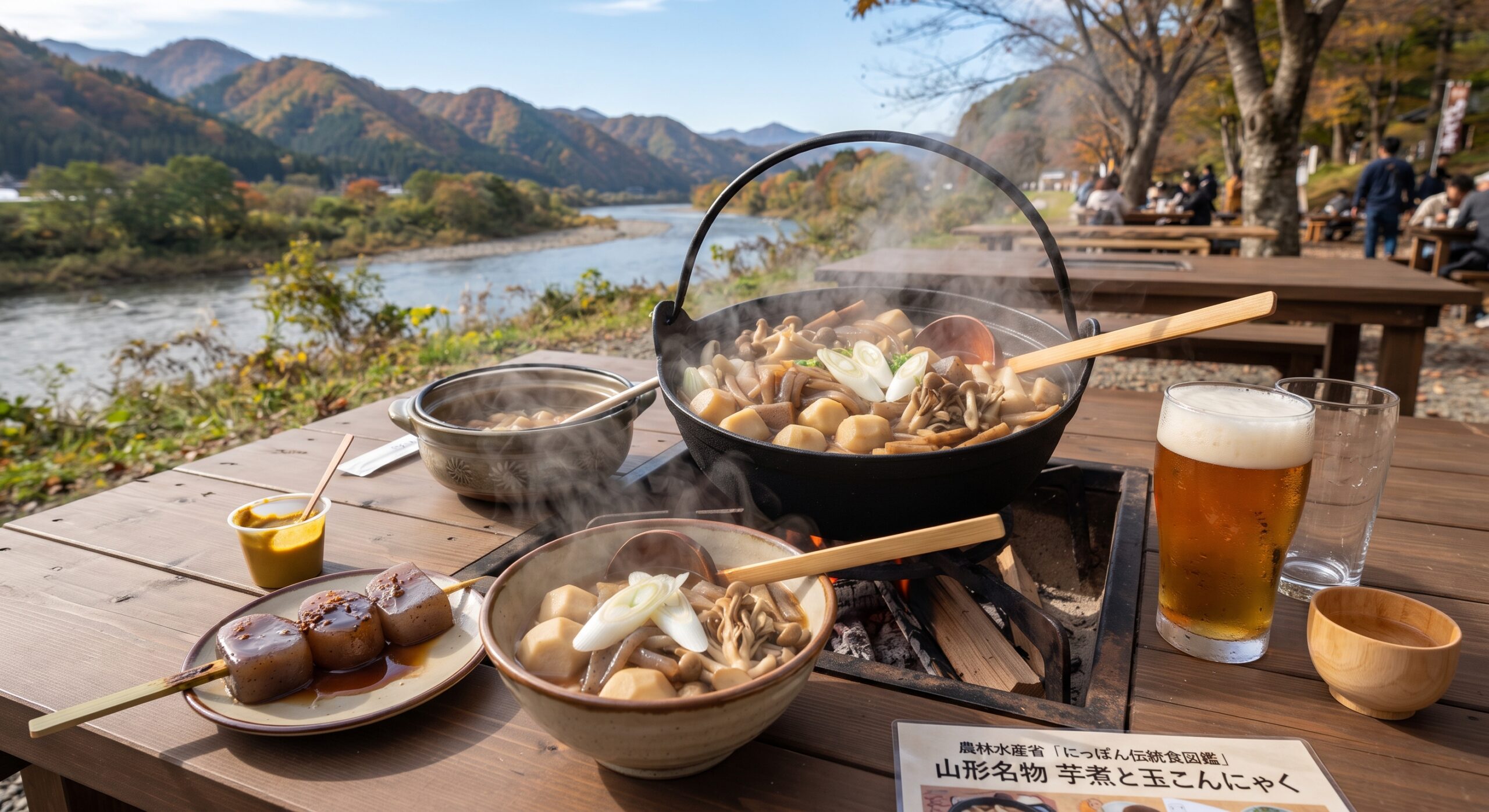
- 芋煮(内陸風)
農林水産省「にっぽん伝統食図鑑」によれば、里芋・牛肉(内陸部)・こんにゃく・ねぎ・きのこ類などを醤油仕立てで煮込む、山形県全域に伝わる秋から冬の鍋料理です。発祥は1600年代半ば、最上川舟運の終点で船頭たちが里芋や棒鱈を鍋で煮て食べたことに遡るとされています。牛肉と醤油の甘辛い味わいに、アルトの麦芽由来の甘みとコクが同じ方向から重なります。
- 玉こんにゃく
同じ「にっぽん伝統食図鑑」が、直径3cmほどの球状のこんにゃくを醤油とするめだしで煮込んだ、山形県に特有の食文化として紹介している一品。観光地や祭りの屋台で串に刺して売られる、山形県民のソウルフードです。軽く炭酸で流しながらつまむのに向いていて、アルトの「ながらビール」という性格ともよく合います。
科学的にひとこと:アルトのような赤褐色の麦芽は、ピルスナー用の麦芽より深く焙煎されており、カラメルやナッツに似た香りの成分を多く含みます。芋煮や玉こんにゃくの醤油だしに含まれる香ばしい香り成分(メイラード反応由来)と系統が近いため、足し算のように香りが重なります。また常温に近づくほど麦芽の甘みがはっきりするので、冷たいビールでは流れてしまう醤油だしの奥の甘さも拾いやすくなります。
この醸造所をたずねるなら
月山ビール(西川町総合開発株式会社)
〒990-0742 山形県西村山郡西川町大字水沢2304/「道の駅にしかわ」併設の醸造工場。山形県唯一の地ビール醸造工場で、併設レストランからガラス越しに醸造釜を眺めながら、できたてのビールを味わえます。
営業時間:直売所・レストランともに8:30〜18:00(ランチタイムは11:00〜15:00)。年末年始(12月31日・1月1日)は休業です。
近くの観光スポット
- 水沢温泉館/道の駅にしかわ併設|醸造所から徒歩約1分・約70m
醸造所と同じ建物群にある日帰り温泉。営業は4〜11月が日〜木7:00〜21:00・金土7:00〜22:00、12〜3月が日〜木8:00〜21:00・金土8:00〜22:00。休館日は第二火曜(祝日の場合は後日)。入浴料は大人350円、サウナを利用する場合は850円。泉質はナトリウム・塩化物温泉です。ビールを一杯やってから、同じ敷地の温泉で汗を流せます。
- 月山湖水の文化館/西川町砂子関|醸造所から鶴岡方面へ車で約10分
国道112号沿い、寒河江ダム(通称・月山湖)のほとりに建つ水をテーマにした展示施設。開館10:00〜16:00、休館日は毎週水曜、入館料は無料です。月山から流れ出す雪解け水が、どのように町の暮らしを支えているかを学べます。
近くの温泉
- 水沢温泉館/道の駅にしかわ併設|醸造所から徒歩約1分・約70m
上の観光スポットと同じ施設です。日帰り入浴の天然温泉で、営業・料金は上記のとおり。醸造所から一番近い寄り道先が、そのまま温泉でもあります。
※営業時間・定休日・日帰り入浴の可否は変わることがあります。おでかけ前に各施設の公式情報をご確認ください。
ひとことメモ(ビールの用語)
- クラフトビール:小規模な醸造所が、造り手の個性を前面に出して仕込むビールの総称。大量生産の均一な味とは別の方向を目指しています。
- エール:常温に近い温度で、酵母が液面近くで働く「上面発酵」で造るビール。果実のような香りと厚みのある味わいが出やすいのが特徴です。
- モルト:発芽させた大麦(麦芽)のこと。ビールの甘み・色・コクの土台になり、焙煎の深さで色と香ばしさが決まります。
- ホップ:ビールに苦みと香りを与えるつる性植物の毬花(まりばな)。品種によって、柑橘・トロピカルフルーツ・草原のように香りが変わります。
- ABV:アルコール度数(Alcohol By Volume)のこと。ビールでは5%前後が標準で、8%を超えると飲みごたえのある「強め」の部類になります。
- 地ビール:1994年の酒税法改正で小規模醸造が解禁された後、各地で生まれたビールの呼び名。現在は「クラフトビール」と呼ばれることが多くなっています。
参考
内容に誤りがございましたら、お手数ですが info@soundrecords.jp までご連絡いただけますと幸いです。
Today’s Pairing
- Craft beer: Gassan Beer “Alt” — 5% ABV; 330 ml; brewed from malt, hops, yeast and water / Nishikawa Town Comprehensive Development Co., Ltd. (2304 Mizusawa, Nishikawa Town, Nishimurayama District, Yamagata Prefecture)
Official site: https://www.gassan.co.jp/facility/01_nishikawa/
- Music: “Jinsei no Tobira” (“The Door of Life”) by Mariya Takeuchi, 2007 / Words and music by Mariya Takeuchi, produced by Tatsuro Yamashita
YouTube: https://www.youtube.com/watch?v=Qt8y0KsngAc
▶ If the player above doesn’t play, open it on YouTube
The Story of the Brewery
Gassan Beer is brewed by Nishikawa Town Comprehensive Development Co., Ltd., inside the roadside station “Michi-no-Eki Nishikawa” in Yamagata Prefecture — the only craft beer factory in the prefecture. Brewing began in 1998 under the name “Ji-biru Gassan” (“Local Beer Gassan”). The attached restaurant has the brewing kettles visible through glass at the back, so you can drink the beer fresh while watching it being made. The signature dish is beef simmered in the local beer; the shop also sells beer-flavoured soft-serve ice cream.
The brewing water comes from a group of springs at the foot of Mount Gassan, designated one of Japan’s “100 Famous Waters” by the Environment Agency (as it then was) in 1985. According to the town’s official site, snow falls here in a heavy-snow region where 10 metres of accumulation is not unusual, and that snow is said to take centuries, filtering through the ground, to emerge as spring water. The water is local, but the malt, hops and yeast come from Germany and the Czech Republic, brewed under the German Beer Purity Law (ingredients limited to malt, hops and water). The brewing equipment is from Germany’s Kaspar Schulz, and the brewer trained in Germany.
The regular line-up includes Pilsner, Münchner and Rauch, among others, with Alt as one of the beers in that range. A product description for a furusato nōzei (hometown tax donation) gift box calls this Alt a reddish-brown, full-bodied “sipping beer,” saying the amount of flavour it gives off increases as it approaches room temperature, and recommends comparing the first sip right after pouring with a later sip once it has warmed. That is the opposite of a Pilsner, which is meant to be drunk cold and fast.
The Story of the Land
Nishikawa Town sits roughly in the middle of Yamagata Prefecture, about 32 km west of Yamagata City. Its symbol is Mount Gassan, the main peak of the Dewa Sanzan (Three Mountains of Dewa). The population is 4,269 (as of September 1, 2026), and most of the town’s area is forest — a small town tucked into the mountains.
In December 2019, the town declared itself “Japan’s number one snow country.” The Ubazawa area, at the foot of Mount Gassan, records some of the heaviest snowfall in the country, and among inhabited areas, the Shizu district has recorded a maximum snow depth of 720 cm. Because Shizu has no official Japan Meteorological Agency observation station, this depth is not widely known. The town itself has described this on its official social media account as a “hidden number one” in snowfall, and a local TV station has reported on it.
The water used to brew Gassan Beer is this snow — snow that fell on a quietly record-breaking snow country and took centuries, moving through the ground, to emerge as spring water. It is not this year’s snow; it is snow that fell generations ago, only now arriving as water. The mountain in front of the brewery works as a kind of reservoir for time itself.
The Story of the Song
“Jinsei no Tobira” (“The Door of Life”) appeared on Mariya Takeuchi’s album Denim, released May 23, 2007. Words and music are by Takeuchi herself, produced by Tatsuro Yamashita. Fan demand for a single release was strong enough that it was issued on August 8 that year as a double A-side with “Chance no Maegami,” her 35th single, on MOON RECORDS. It was also used as a TV commercial song for Kyowa Hakko (now Kyowa Hakko Kirin) and as the theme song for the TV Tokyo New Year drama special Musume no Kekkon (“A Daughter’s Marriage”). According to Wikipedia, the single “Chance no Maegami / Jinsei no Tobira” peaked at No. 23 on Oricon’s weekly chart and appeared on it 30 times in total.
The lyric has a clear structure. It opens with the passing of years — “spring comes again, the same bloom as last year, the same view, a slightly different me” — and in the chorus it moves through one’s twenties, thirties, forties and on, affirming each decade in turn: wanting to fall in love no matter how old you get, days you want to cry but keep going anyway. Takeuchi was in her fifties when it was released. True to its title, the song is built so that each year you age opens a new door.
Why This Pairing
Gassan Beer’s Alt is not a beer meant to be drunk cold and fast. As the official description says, the amount of flavour it gives off increases as it nears room temperature. The same glass shows a different face right after pouring than it does after sitting a while. This is the opposite of a beer built for quick consumption.
“Jinsei no Tobira” has the same structure. It sings through one’s twenties, thirties, forties, and each decade adds a new verse. The lyric frames the simple passage of years — “no matter how old,” “this age is good too” — as flavour that accumulates rather than fades. It doesn’t treat youth as the only good thing; it puts value in what grows with time. That lines up exactly with how you’re meant to drink the Alt.
And one more thing. The water for this Alt is snow that fell on Mount Gassan’s quietly record-breaking snow country and took centuries, moving through the ground, to come out as spring water. What’s in tonight’s glass is snow that fell generations ago. A song about accumulating years, and water that reaches the glass only after centuries of time. Both point to the same thing: not “right now,” but “more, the longer it takes.” Pour it, don’t drink it straight down, and let it warm a little before the next sip. The song suits the same kind of patience — worth hearing through the whole album, or at least as far as the B-side, “Chance no Maegami.”
Where to Find This Beer
The Rakuten Ichiba link below is an affiliate link.
These are Japanese storefronts. If you are visiting the brewery, drinking it fresh at their own taproom is by far the best option.
🌡️ How to serve it: Serve around 12–14°C — don’t over-chill it. As the official description suggests, compare the first sip right after pouring with a later sip once the glass has warmed closer to room temperature. A thick-walled tumbler with a narrowed mouth, which holds the aroma near your nose, or a small cylindrical “Stange” glass of the kind used for Düsseldorf altbier, both suit this beer.
Pairing Dishes Worth Trying
- Imoni (inland-style taro stew)
According to the Ministry of Agriculture, Forestry and Fisheries’ “Traditional Foods of Japan,” this is a soy-sauce-based hotpot found across Yamagata Prefecture, eaten in autumn and winter, built on taro, beef (in the inland style), konnyaku, green onion and mushrooms. Its origin is traced to the mid-1600s, when boatmen at the terminus of the Mogami River shipping route simmered taro and dried cod in a pot. The sweet-savoury beef and soy sauce meet the Alt’s malt sweetness and body from the same direction.
- Tama-konnyaku (ball-shaped konnyaku)
The same MAFF source describes this as a food culture unique to Yamagata: konnyaku rolled into balls about 3 cm across, simmered in a soy-sauce-and-dried-squid broth. It’s sold skewered at tourist spots and festival stalls, and is something of a soul food for the prefecture. It suits being nibbled alongside a beer, which fits the Alt’s character as a beer for sipping slowly rather than draining fast.
A note on the science: the reddish-brown malt used for an Alt is roasted darker than Pilsner malt, giving it more caramel- and nut-like aromatic compounds. These sit close to the toasty aromas (from the Maillard reaction) in the soy-based broths of imoni and tama-konnyaku, so the flavours add to each other rather than compete. And since the Alt’s malt sweetness comes through more clearly as it nears room temperature, it also picks up the deeper sweetness in the soy broth that a cold beer would wash past.
Visiting the Brewery
Gassan Beer (Nishikawa Town Comprehensive Development Co., Ltd.)
2304 Mizusawa, Nishikawa Town, Nishimurayama District, Yamagata Prefecture. The brewery sits inside the roadside station “Michi-no-Eki Nishikawa” — the only craft beer factory in Yamagata Prefecture. From the attached restaurant you can watch the brewing kettles through glass while drinking the beer fresh.
Opening hours: the direct-sales shop and restaurant are both open 8:30–18:00 (lunch service 11:00–15:00). Closed December 31 and January 1.
Sights Nearby
- Mizusawa Onsen-kan / attached to Michi-no-Eki Nishikawa | ~1 min, ~70 m on foot from the brewery
A day-use hot spring in the same building complex as the brewery. Open 7:00–21:00 Sunday–Thursday and 7:00–22:00 Friday–Saturday from April to November; 8:00–21:00 and 8:00–22:00 respectively from December to March. Closed on the second Tuesday of the month (the following day if that is a public holiday). Admission is ¥350 for adults, ¥850 if you use the sauna. The water is a sodium chloride spring. You can have a beer, then wash it off at the hot spring on the same grounds.
- Gassan-ko Water Culture Hall / Sunagoseki, Nishikawa Town | ~10 min by car toward Tsuruoka from the brewery
A water-themed exhibition hall on Route 112, beside the Sagae Dam (known locally as Lake Gassan). Open 10:00–16:00, closed every Wednesday, free admission. It explains how meltwater flowing down from Mount Gassan supports life in the town.
Hot Springs Nearby
- Mizusawa Onsen-kan / attached to Michi-no-Eki Nishikawa | ~1 min, ~70 m on foot from the brewery
The same facility listed above. A natural, day-use hot spring; hours and prices as above. The closest side trip from the brewery happens to also be the hot spring.
Opening hours, closing days and day-use bathing availability can change. Please check each facility’s official information before visiting.
A Quick Glossary of Beer Terms
- Craft beer: Beer made by small breweries that put the character of the maker front and centre, as opposed to the uniformity of mass production.
- Ale: Beer made by top fermentation, with the yeast working near the surface at close to room temperature. It tends toward fruity aromas and a fuller body.
- Malt: Germinated barley. It forms the foundation of a beer’s sweetness, colour and body; how deeply it is roasted determines colour and toastiness.
- Hops: The cones of a climbing plant, which give beer its bitterness and aroma. Depending on the variety, that aroma can read as citrus, tropical fruit or open grassland.
- ABV: Alcohol By Volume. Beer typically runs around 5%; above 8% is considered a strong, heavier-drinking beer.
- Ji-biru: The name given to the beers that appeared across Japan after the 1994 liquor tax reform opened small-scale brewing. Today most of them are simply called craft beer.
Sources
If you notice any errors in this article, please don’t hesitate to reach out at info@soundrecords.jp.
コメントを残す