今日のペアリング
▶ 上のプレーヤーで再生できない場合は、YouTubeで開く
酒蔵の話
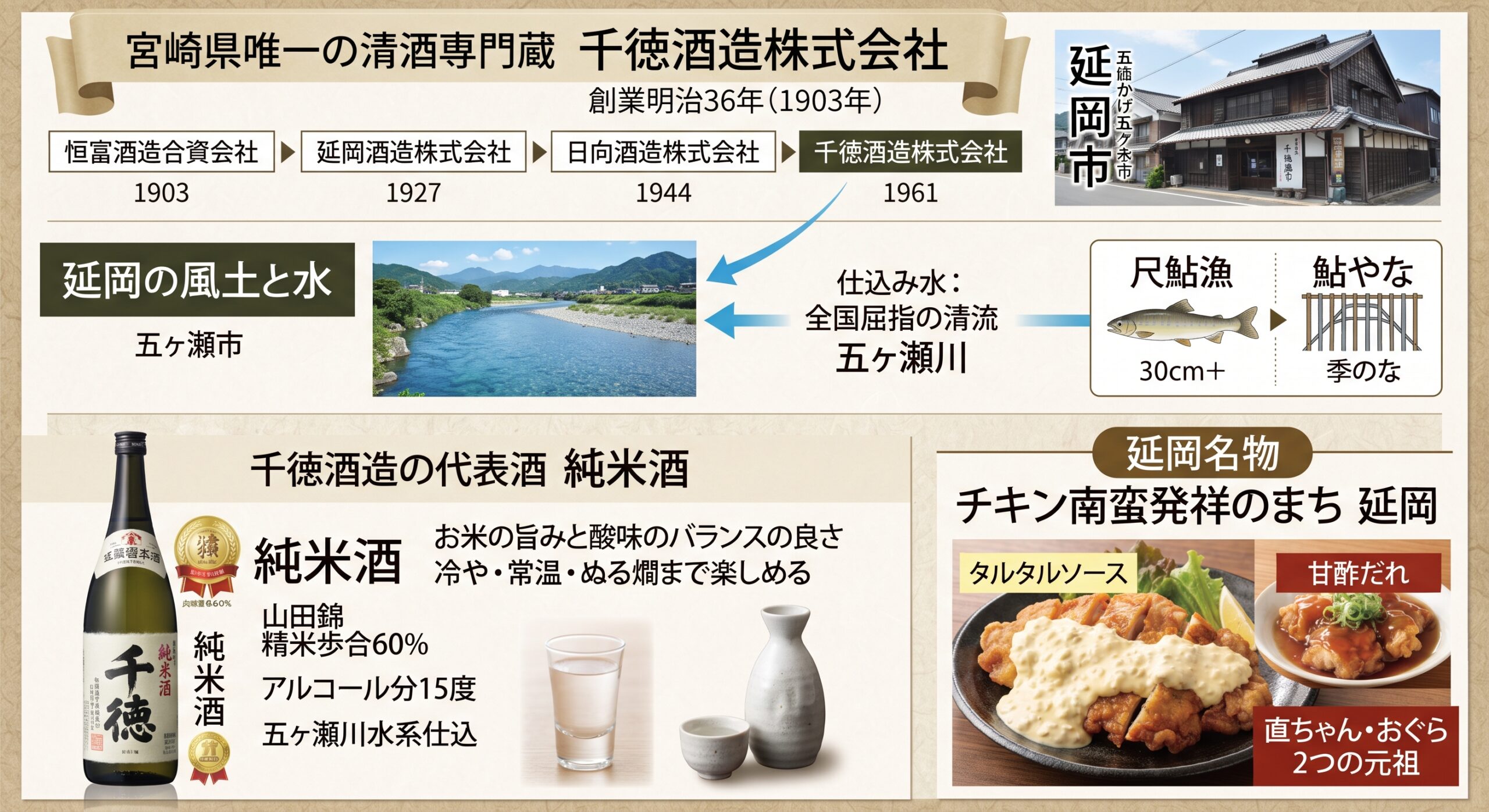
千徳酒造株式会社は、宮崎県延岡市大瀬町に蔵を構える、宮崎県で唯一の清酒専門蔵です。創業は明治36年(1903年)、恒富村新小路(現在の蔵の場所)に「恒富酒造合資会社」として立ち上げられたのが始まりでした。その後、昭和2年(1927年)に「延岡酒造株式会社」へ改組。昭和19年(1944年)には戦時下の企業統制によって、日平商店・興梠国治酒造・延岡酒造の3社が統合され「日向酒造株式会社」となり、昭和36年(1961年)に社屋を改築したのを機に、現在の「千徳酒造」へ社名を改めました。実に4つの名前を経て、今の姿にたどり着いた蔵です。現在の代表取締役・門田賢士氏は、この蔵の杜氏も務めています。
仕込み水に使うのは、蔵のすぐそばを流れる五ヶ瀬川の水。国土交通省が毎年まとめている一級河川の水質調査で、五ヶ瀬川は長年にわたり全国でも上位の清流として名前が挙がる川です。今回合わせる「純米酒」は、契約栽培された山田錦を精米歩合60%まで磨き、アルコール度数15度に仕込んだ一本。蔵の案内では、お米の旨みと酸味のバランスの良さが持ち味とされ、常温・冷や・ぬる燗のどの温度でも楽しめる一本と紹介されています。2000年代以降、全国新酒鑑評会での金賞6回・入賞5回、熊本国税局鑑評会での優等賞13回、2019年度全米日本酒歓評会での金賞受賞など、品質の確かさを重ねてきた蔵の、いちばん基本となる一本です。
土地の話
延岡市は宮崎県の北部、五ヶ瀬川の河口に広がる街です。清らかな流れとコケの豊富さから「尺鮎」と呼ばれる30センチを超える鮎も育つほどで、延岡は昔から「鮎の宝庫」と呼ばれてきました。市街地を流れる五ヶ瀬川には、10月末から12月上旬にかけて300年以上続く伝統漁法「鮎やな」が架かり、子持ち鮎の塩焼きや鮎めしを味わえる季節の風物詩になっています。
延岡市はまた、「チキン南蛮」発祥の地としても知られています。農林水産省の資料によれば、昭和30年代、延岡市内の洋食店で賄い料理として考案されたのが始まりとされ、平成21年(2009年)7月8日には延岡市が「チキン南蛮発祥のまち」を宣言しました。今も市内には、甘酢だれだけで仕上げる「直ちゃん」と、タルタルソースをかける「おぐら」という、2つの”元祖”を名乗る店が営業を続けています。
音楽の話
水森かおりは1973年8月31日、東京都北区生まれ。1995年、「おしろい花」で歌手デビューしました。2003年発売の「鳥取砂丘」が大ヒットしたことをきっかけに、以降は毎年のように日本各地の観光地・地名を題材にした新曲を発表し続け、「ご当地ソングの女王」と呼ばれるようになりました。「東尋坊」「釧路湿原」「五能線」「熊野古道」など、これまでに歌にしてきた土地は数十を数えます。
「日向岬」は2023年1月24日発売の33作目のシングルで、作詞はかず翼、作曲は弦哲也、編曲は伊戸のりおが手がけました。カップリング曲「離愁…高千穂」も同じ宮崎県を題材にした一曲です。この「日向岬」は、同年のNHK紅白歌合戦でも「日向岬〜紅白ドミノチャレンジSP〜」として披露されました。日向岬は、千徳酒造のある延岡市のすぐ南、日向市の日向灘に面した景勝地です。
なぜこの組み合わせなのか
千徳酒造は、明治36年の創業から4つの名前を経て、今の姿にたどり着いた蔵です。恒富酒造、延岡酒造、日向酒造、そして千徳――時代の都合で何度も名前を変えながらも、この蔵は一度も場所を変えることなく、宮崎県で唯一の清酒専門蔵として、ずっと同じ五ヶ瀬川のほとりに立ち続けてきました。
一方、水森かおりは「ご当地ソングの女王」として、毎年のように新しい土地を訪ね、その土地の名前をそのまま曲名にして歌にしてきた歌手です。2023年に彼女が選んだのは、千徳酒造が蔵を構える延岡市のすぐお隣、日向市の「日向岬」でした。
名前を変えながらも一つの場所に根を張り続けた蔵と、日本中の土地の名前を一つずつ歌にして歩いてきた歌声。たまたま同じ五ヶ瀬川・日向灘の流域で重なった、ふたつの”変わらないもの”と”旅するもの”の物語です。
この一本を、探すなら
※楽天市場へのリンクは広告(アフィリエイト)です。在庫・取扱いは変動します。お近くの酒販店でも、ぜひ銘柄名を伝えて探してみてください。
🌡️ おすすめの飲み方:常温・冷や・ぬる燗、どの温度でも。蔵元も薦める飲み方で、ぬる燗にするとお米の旨みがふくらみます。
合わせたい「アテ」
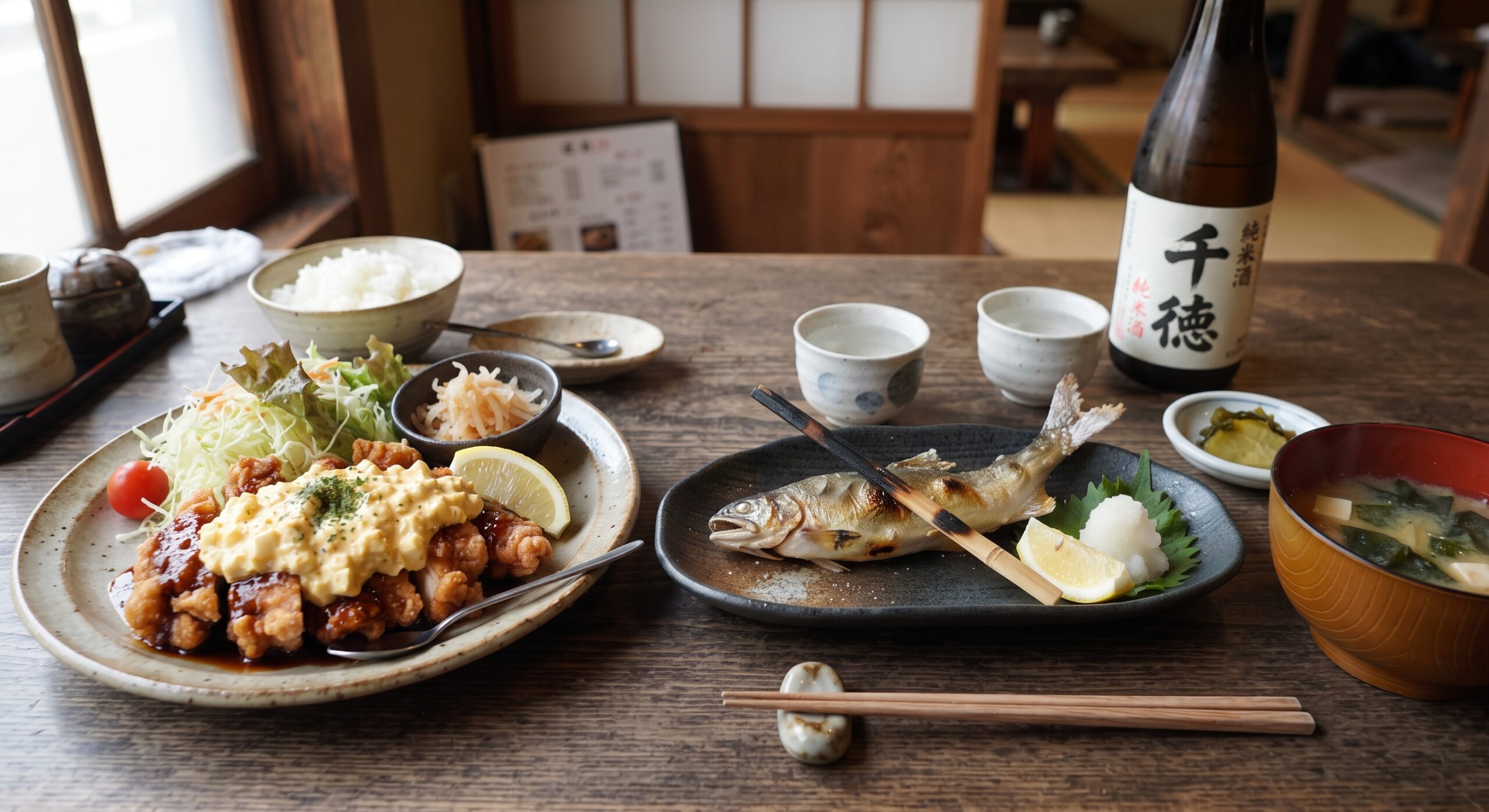
- チキン南蛮
延岡市が発祥とされる、鶏の唐揚げに甘酢だれをからめた一品。甘酢の酸味と鶏の脂のコントラストに、純米酒のふくよかな旨みと穏やかな酸が寄り添います。
レシピはこちら:クラシル「定番 チキン南蛮」
- 鮎の塩焼き
千徳酒造の仕込み水と同じ五ヶ瀬川で育つ、延岡の秋の味覚。鮎特有のほろ苦い香りと上品な旨みに、米の旨みをまっすぐ感じられる純米酒が自然と重なります。
レシピはこちら:クックパッド「鮎の塩焼き」
科学的にひとこと:甘酢だれに含まれる酢の酸味は、揚げ物特有の脂のくどさを後味からすっと切ってくれます。純米酒が持つ穏やかな酸味も同じ働きをするため、酸味同士が競うのではなく重なり合って、口の中をより軽く感じさせてくれます。鮎の内臓(ワタ)に特有のほろ苦さは、米由来の落ち着いた旨みと響き合い、互いの個性を消すことなく引き立て合います。
この蔵をたずねるなら
千徳酒造株式会社
宮崎県延岡市大瀬町2-1-8/JR延岡駅から徒歩約15分、東九州自動車道 延岡ICから車で約10分。
宮崎県で唯一の清酒専門蔵で、延岡市街地の中心部にあります。
近くの観光スポット
- 延岡城跡・城山公園/延岡市東本小路|蔵から車で約5分・約1km
延岡藩の城があった高台を整備した公園。石垣や天守台跡が残り、桜の名所としても知られています。頂上には「城山の鐘」があり、入園は無料です。
- 愛宕山展望台/延岡市中心部|蔵から車で約15〜20分
標高251メートルの山頂展望台から延岡市街と日向灘を一望できます。「日本夜景遺産」にも選ばれた夜景スポットで、山頂まで車で上がれます(延岡市公式サイトはJR延岡駅から車で約20分と案内)。
近くの温泉
- ヘルストピア延岡/延岡市長浜町3-1954-2|蔵から車で約10分・約3km
ごみ焼却施設の余熱を利用した「準天然光明石温泉」の日帰り入浴施設。大浴場・サウナ・露天風呂があり、入浴時間は10:00〜21:00(月曜定休、入浴料は高校生以上520円)。訪問前に営業日をご確認ください。
※営業時間・定休日・日帰り入浴の可否は変わることがあります。おでかけ前に各施設の公式情報をご確認ください。
ひとことメモ(日本酒の用語)
- 純米酒:米・米麹・水だけで造られ、醸造アルコールを添加していない日本酒。米の旨みをまっすぐ感じられるのが特徴です。
- 精米歩合:玄米を削り、残った部分の割合。数値が低いほど、米を多く磨いていることを示します。
参考
内容に誤りがございましたら、お手数ですが info@soundrecords.jp までご連絡いただけますと幸いです。
Today’s Pairing
- Sake: Sentoku Junmai — brewed with Yamada Nishiki rice, rice-polishing ratio (seimai buai) 60%, 15% alcohol / Sentoku Shuzo Co., Ltd. (2-1-8 Oose-machi, Nobeoka City, Miyazaki Prefecture)
Official site: http://www.sentoku.com/
- Kayoukyoku (classic Japanese popular song): “Hyuga-misaki” (“Hyuga Cape”) by Mizumori Kaori, 2023
YouTube: https://www.youtube.com/watch?v=F_gAIzPDsE4
▶ If the player above doesn’t play, open it on YouTube
The Story of the Brewery
Sentoku Shuzo Co., Ltd., based in the Oose neighborhood of Nobeoka City, is Miyazaki Prefecture’s only brewery dedicated solely to sake. It was founded in 1903 as “Tsunetomi Shuzo,” a partnership started in what was then Tsunetomi Village (the site of today’s brewery). In 1927 it was reorganized as “Nobeoka Shuzo Co., Ltd.” Then, in 1944, under wartime industry consolidation, three companies — Hihira Shoten, Korogi Kunji Shuzo, and Nobeoka Shuzo — merged into “Hyuga Shuzo Co., Ltd.” Finally, in 1961, when the brewery rebuilt its facilities, it took its present name, Sentoku Shuzo. The brewery has passed through four names to become what it is today. Its current president, Kadota Kenji, also serves as the brewery’s toji (master brewer).
The brewing water comes from the Gokase River, which flows right past the brewery. In the Ministry of Land, Infrastructure, Transport and Tourism’s annual water-quality survey of Japan’s major rivers, the Gokase has ranked among the cleanest in the country year after year. The bottle in this pairing, simply called Junmai (pure rice sake), is brewed with contract-grown Yamada Nishiki rice polished to a seimai buai of 60%, at 15% alcohol. The brewery describes it as a sake with a good balance of rice umami and acidity, one that can be enjoyed at room temperature, chilled, or gently warmed (nurukan). It’s the brewery’s most fundamental bottle, backed by a steady record of quality since the 2000s: six gold medals and five honorable mentions at the National New Sake Awards, thirteen honor awards at the Kumamoto Regional Taxation Bureau’s tasting, and a gold medal at the 2019 U.S. National Sake Appraisal.
The Story of the Land
Nobeoka City sits in northern Miyazaki Prefecture, spread along the mouth of the Gokase River. The river runs so clear, and its mossy stones feed the fish so well, that it raises “shaku-ayu” — sweetfish over 30 centimeters long — and Nobeoka has long been called a treasure house of ayu. From late October through early December, a traditional fishing method called “ayu-yana,” a weir-trap technique over 300 years old, is set up along the river running through the city, and salt-grilled roe-bearing ayu and ayu rice become the season’s signature treat.
Nobeoka is also known as the birthplace of chicken nanban, a dish of fried chicken glazed in sweet vinegar. According to Japan’s Ministry of Agriculture, Forestry and Fisheries, it was invented in the 1950s as a staff meal at a Western-style restaurant in Nobeoka, and on July 8, 2009, the city officially declared itself “the birthplace of chicken nanban.” Two restaurants, each claiming to be the original, are still open in the city today: “Naochan,” which serves it with sweet vinegar alone, and “Oguro,” which tops it with tartar sauce.
The Story of the Song
Mizumori Kaori was born on August 31, 1973, in Kita Ward, Tokyo. She debuted as a singer in 1995 with “Oshiroi Bana.” After her 2003 single “Tottori Sakyu” (“Tottori Sand Dunes”) became a major hit, she went on to release new songs centered on a different place in Japan nearly every year, earning her the title “Queen of Local-Themed Songs” (go-tochi songs). Over the years, she has sung about dozens of places, including Toujinbo, Kushiro Shitsugen (Kushiro Marsh), the Gono Line, and the Kumano Kodo pilgrimage route.
“Hyuga-misaki” is her 33rd single, released on January 24, 2023, with lyrics by Kazu Tsubasa, music by Gen Tetsuya, and arrangement by Ito Norio. Its coupling track, “Rishu… Takachiho,” is also set in Miyazaki Prefecture. “Hyuga-misaki” was performed that same year on NHK’s Kohaku Uta Gassen (Year-End Song Festival) as part of a special “Hyuga-misaki: Kohaku Domino Challenge” segment. Hyuga Cape itself lies just south of Nobeoka, where Sentoku Shuzo is based, on the Hyuga-nada coast in neighboring Hyuga City.
Why This Pairing
Sentoku Shuzo has passed through four names since its founding in 1903: Tsunetomi Shuzo, Nobeoka Shuzo, Hyuga Shuzo, and finally Sentoku. Through all those changes of name, forced by the circumstances of each era, the brewery never once changed its location — it has stood on the same bank of the Gokase River the whole time, as Miyazaki’s only dedicated sake brewery.
Mizumori Kaori, meanwhile, has made a career of doing the opposite: as the “Queen of Local-Themed Songs,” she travels to a new place nearly every year and turns its very name into a song title. In 2023, the place she chose was Hyuga Cape, just next door to the city where Sentoku Shuzo has stood all along.
A brewery that kept its roots in one place while its name kept changing, and a voice that has traveled the country turning one place after another into song. The two happen to meet along the same stretch of the Gokase River and the Hyuga-nada Sea — one story of staying, and one story of traveling.
Where to Find This Bottle
The Rakuten Ichiba link below is an affiliate link.
Note: the links above lead to Japan-based retailers. They’re most convenient for readers in Japan, or for those elsewhere who are able to arrange international shipping. Stock and availability change over time, so if you’re near a specialty sake shop, it’s well worth asking for this label by name.
🌡️ Recommended way to drink it: Room temperature, chilled, or gently warmed (nurukan) — the brewery recommends all three. Warming it gently brings out more of the rice’s umami.
Pairing Dishes Worth Trying
- Chicken nanban
Fried chicken glazed in sweet vinegar, said to have originated right here in Nobeoka. The contrast between the vinegar’s acidity and the chicken’s richness pairs naturally with this junmai’s full umami and gentle acidity.
Recipe (in Japanese): Kurashiru, “Classic Chicken Nanban”
- Salt-grilled ayu (sweetfish)
A autumn delicacy from the same Gokase River that supplies the brewery’s water. The fish’s faintly bitter aroma and refined umami sit naturally alongside a junmai sake that lets the rice’s own umami come through directly.
Recipe (in Japanese): Cookpad, “Salt-Grilled Ayu”
A note on the science: the acidity in the sweet-vinegar glaze cuts through the richness of the fried chicken’s fat on the palate. Junmai sake carries its own gentle acidity that works the same way, so instead of competing, the two acidities layer together and leave the mouth feeling lighter. The faint bitterness in ayu’s inner organs (wata) resonates with the quiet umami that comes from rice, each bringing out the other without canceling it out.
Visiting the Brewery
Sentoku Shuzo Co., Ltd.
2-1-8 Oose-machi, Nobeoka City, Miyazaki Prefecture. About a 15-minute walk from JR Nobeoka Station; about 10 minutes by car from the Nobeoka IC on the Higashi-Kyushu Expressway.
Miyazaki Prefecture’s only sake-specialty brewery, located right in central Nobeoka.
Sights Nearby
- Nobeoka Castle Ruins & Shiroyama Park / Higashihon-koji, Nobeoka | ~5 min, ~1 km by car from Sentoku
A hilltop park built on the ruins of Nobeoka Castle, with surviving stone walls and the old keep’s foundation. Also known for its cherry blossoms. The hilltop bell, “Shiroyama no Kane,” is free to visit.
- Atagoyama Observatory / central Nobeoka | ~15–20 min by car from Sentoku
An observation deck atop a 251-meter hill with sweeping views of Nobeoka city and the Hyuga-nada Sea. Named one of Japan’s “Night View Heritage” sites, with a road all the way to the summit (the city’s official site lists it as about 20 minutes by car from JR Nobeoka Station).
Hot Springs Nearby
- Healthtopia Nobeoka / Nagahama-machi, Nobeoka | ~10 min, ~3 km by car from Sentoku
A day-use bathing facility heated by waste-incineration plant heat, offering a “semi-natural Komeiseki” mineral bath, sauna, and open-air bath. Open 10:00–21:00, closed Mondays (bathing fee ¥520 for high-school age and up). Please check opening days before visiting.
Opening hours, closing days and day-use bathing availability can change. Please check each facility’s official information before visiting.
A Quick Glossary of Sake Terms
- Junmai-shu: Sake made only from rice, rice koji, and water, with no added brewing alcohol. It lets the rice’s own umami come through directly.
- Seimai buai (rice-polishing ratio): The percentage of the original grain remaining after milling. The lower the number, the more the rice has been polished down.
Sources
If you notice any errors in this article, please don’t hesitate to reach out at info@soundrecords.jp.
コメントを残す