今日のペアリング
▶ 上のプレーヤーで再生できない場合は、YouTubeで開く
醸造所の話
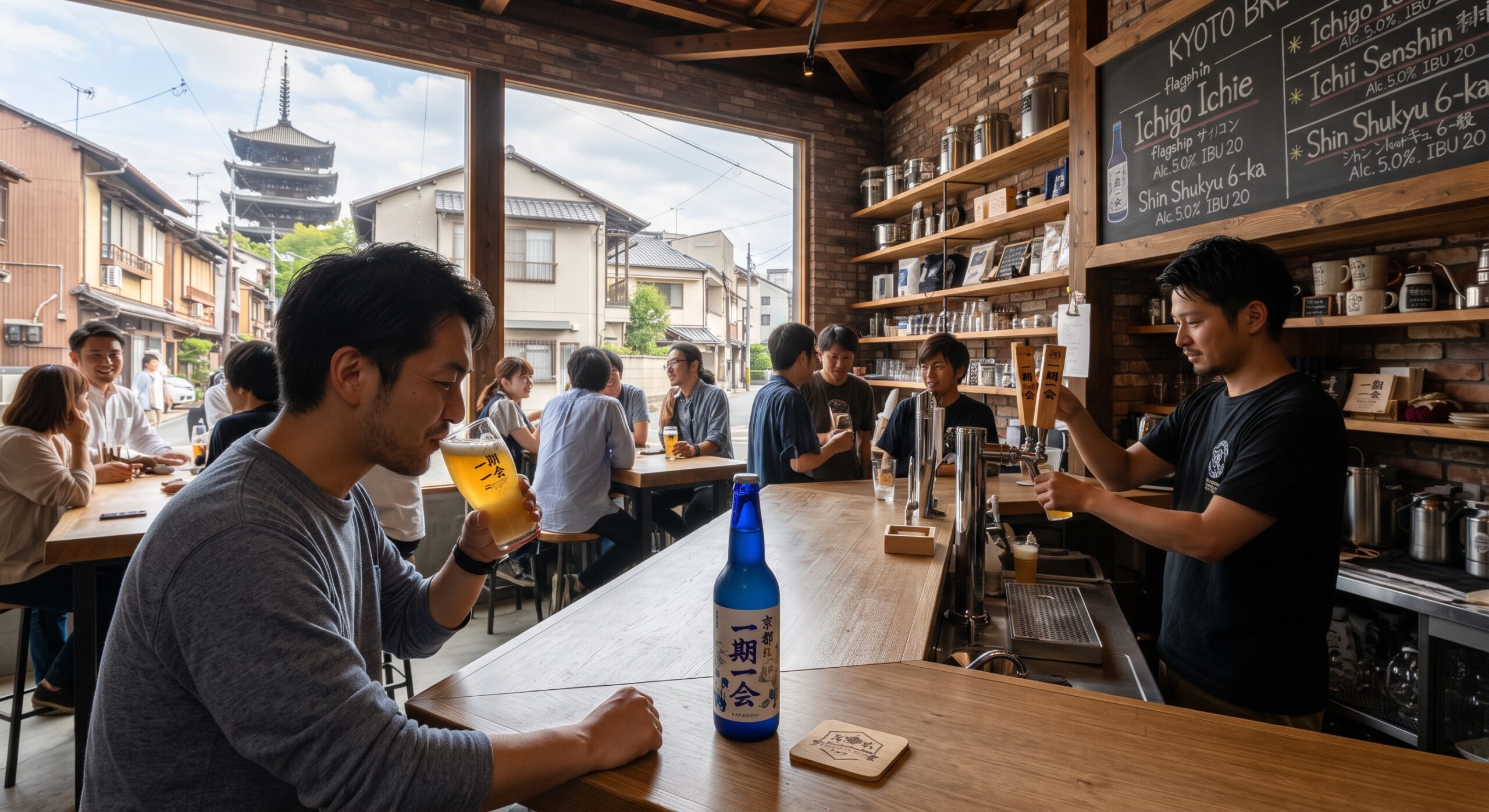
京都醸造は2015年、京都市南区、東寺の南にひろがる閑静な住宅街の一角で始まりました。立ち上げたのは三人。京都市の公式サイトのインタビューによれば、醸造を担うクリスはアメリカ出身、財務とITを担うポールはカナダ出身、営業を担うベンジャミン・ファルクはイギリス・ウェールズ出身です。京都で生まれ育った造り手が蔵を継いだ、という話ではありません。別々の国から来た三人が、京都という町を選んでビールを造りはじめた――それがこの醸造所の出発点です。
選んだ道具も、日本の地ビールの定番からは少しずれています。公式サイトが掲げる定番は「一期一会」「一意専心」「新 週休6日」の三種類で、いずれもベルギーの酵母を使ったビールです。ベルギー酵母は、発酵のあいだに果実や香辛料を思わせる香りの成分(エステル・フェノール)を出し、味に層をつくります。ピルスナーやIPAのように「ホップで押す」のとは違う方向から、味の複雑さをつくる酵母です。
今回合わせる「一期一会」は、その定番の一本目。公式サイトの商品ページによれば、スタイルはベルギー発祥のセゾン、アルコール分5.0%、IBUは20。ホップはCascadeと、ニュージーランド産のMotuekaを厳選して使っています。公式の説明は「穏やかな苦みとすっきり柔らかな口当たり、そして厳選したニュージーランドホップの鮮やかなフルーツ香」。ブルワーノートではさらに、ベルギー酵母による層のような味の多様さ、極めてドライな後味、そしてラガーと同等の飲みやすさを備えていると説明されています。
IBU20というのは、クラフトビールの世界ではかなり低い数字です。苦味で主張するのではなく、香りを立てて、後味は乾かして引く。そういう設計の一杯です。
土地の話
醸造所の住所は京都市南区西九条高畠町25-1。近鉄京都線の「東寺」駅や「十条」駅から歩ける場所で、北へ1.5kmほど行けば、国宝の五重塔が立つ東寺があります。観光客が思い浮かべる「京都」の中心からは、少し南へ外れた町です。社寺と町家の観光地ではなく、ふつうの住宅と小さな工場が混ざった通りの中に、醸造所とタップルームがあります。
そのタップルームは、公式サイトの案内によれば金曜の夕方と土日の昼に開きます。基本の時間は金曜17:00〜21:00(ラストオーダー20:30)、土曜・日曜12:00〜18:00(ラストオーダー17:30)。1階がバーカウンターと屋外の飲食スペース、2階が座席です。ただし公式サイトは実際の営業日をカレンダーで案内しており、イベント出店の週末は閉まることもあります。毎日開いている店ではなく、行けば必ず飲める店でもないのです(訪問前にカレンダーの確認を)。
「一期一会」という名前の意味を、ここで思い出しておきたくなります。茶の湯から来た言葉で、この出会いは一度きり、同じ顔ぶれで同じ時間をもう一度は持てない、という心構えを指します。京都という町が長い時間をかけて言葉にしてきた考え方を、別の国から来た三人が、自分たちの看板の一本に付けたわけです。
音楽の話
くるりは、公式サイトのプロフィールによれば1996年9月頃、立命館大学(京都市北区)の音楽サークル「ロック・コミューン」で結成されたバンドです。現在のメンバーは岸田繁(ボーカル・ギター)と佐藤征史(ベース・ボーカル)。京都の大学の、サークルの部室から始まったバンドでした。
「ばらの花」は2001年1月24日発売のシングル。作詞・作曲は岸田繁、レーベルはビクターエンタテインメント。オリジナルアルバムとしては『TEAM ROCK』に収められ、オリコン週間チャートの最高は20位でした。のちに2004年のTBS系ドラマ『オレンジデイズ』の挿入歌として使われ、さらに『令和5年度 高等学校用教科書 音楽Ⅱ 高校生の音楽2』にも掲載されています。ミュージックビデオは岸田繁と写真家の佐内正史が監督し、福島県いわき市の薄磯海水浴場と塩屋埼灯台で撮影されました。公式サイトのお知らせによれば、長いあいだYouTubeではショート尺しか公開されていませんでしたが、2023年1月24日、発売から22年後の同じ日付に、フルサイズがくるりのオフィシャルYouTubeチャンネルで公開されました。
曲そのものは、派手なところがありません。淡々としたテンポで、声を張らず、情景だけが置かれていきます。そして歌の途中、主人公はジンジャーエールを買って飲みます。恋の歌でありながら、歌の中でいちばん具体的なのは、この一杯の飲みものです。
なぜこの組み合わせなのか
まず、どちらも京都から始まっています。立命館大学のサークルの部室から出てきたバンドと、東寺の南の住宅街から出てきた醸造所。社寺と観光のイメージの外側にある京都です。
そして、どちらも「乾いている」。「一期一会」の公式の説明は、極めてドライな後味を美点として挙げています。IBU20という低い苦味で、香りだけを残して、口の中を乾かして引いていく。「ばらの花」も、声を張らず、泣かせにかからず、淡々と終わる曲です。感情を盛るのではなく、言わずに置いていく。ドライという言葉は、ビールと音楽で同じようには使われませんが、「後に残るものが、押しつけられていない」という点では同じことを指していると思います。
さらに、歌の中には飲みものが出てきます。ジンジャーエールです。グラスを持った手、炭酸、そして何も解決しないまま続く時間――これほどビールの記事に似合う一行は、そうありません。炭酸の立つ乾いた一杯を飲みながらこの曲を聴くと、歌の主人公と同じ姿勢で座っていることになります。
最後に、名前です。「一期一会」は、この出会いは一度きりだという言葉。タップルームは毎日は開かず、その日に注がれているビールもいつも同じではありません。「ばらの花」のミュージックビデオも、22年のあいだフルでは観られないものでした。一度きりのものを一度きりとして受け取る――そういう飲み方が、この一杯にはよく似合います。
この一杯を、探すなら
※楽天市場へのリンクは広告(アフィリエイト)です。醸造所がタップルームや直営店を持っている場合は、できたてを現地で味わうのが一番のおすすめです。
🌡️ おすすめの飲み方(温度とグラス):8〜10℃に冷やして。冷やしすぎるとベルギー酵母由来の果実や香辛料を思わせる香りが閉じてしまうので、キンキンにはしないこと。グラスは口がすぼまったチューリップ型か、ワイングラスでもよく、香りを溜めてから鼻に届けてくれます。細長いピルスナーグラスより、ふくらみのある形の方がこのビールには向いています。
合わせたい「アテ」
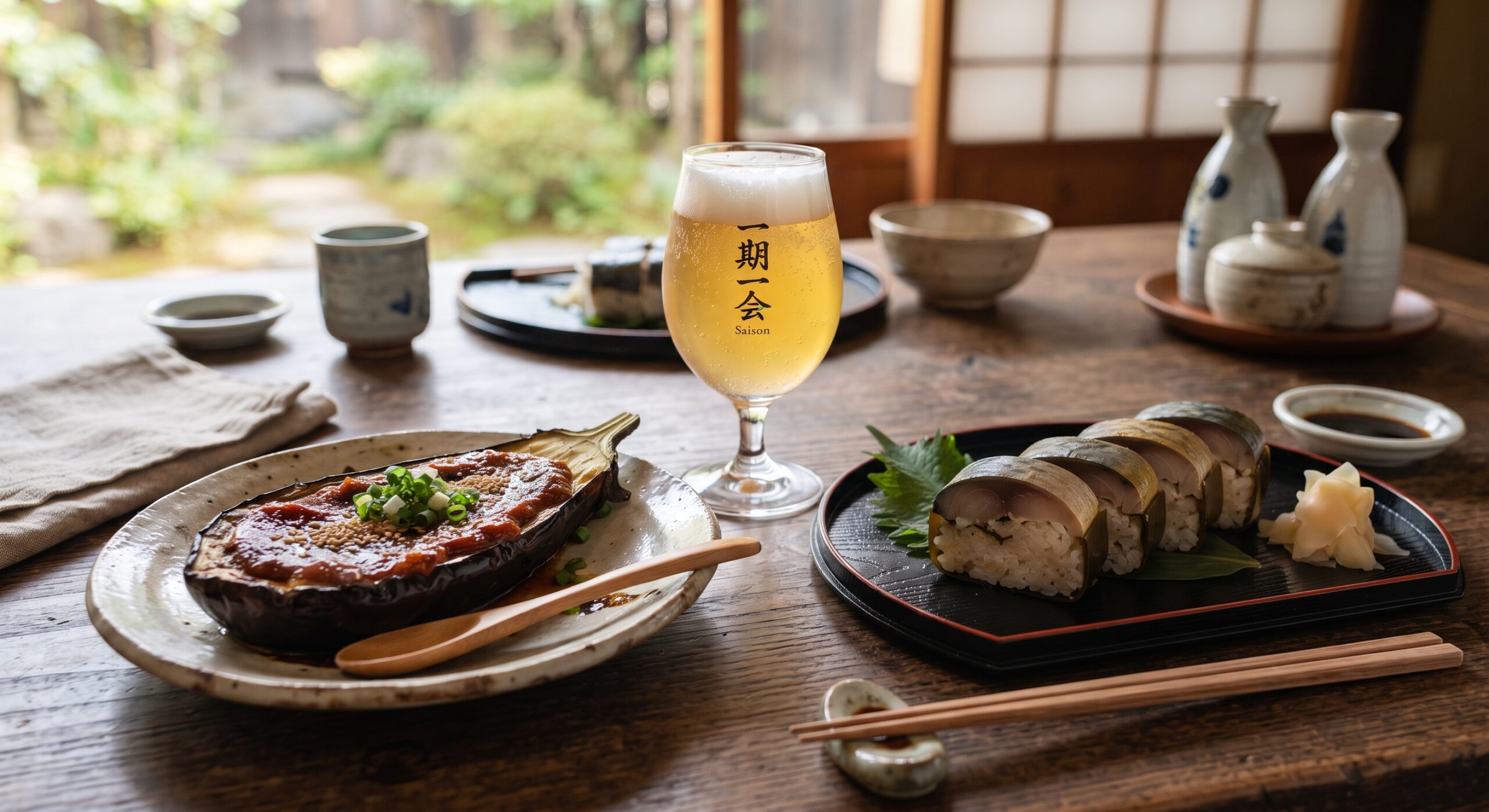
- 賀茂なすの田楽
京都の伝統野菜・賀茂なすを焼いて、甘めの味噌をのせた一皿。なすの油と味噌のコクは、それだけだと口に残りますが、「一期一会」の極めてドライな後味と炭酸が、きれいに流してくれます。セゾンの果実を思わせる香りは、焼いた味噌の香ばしさとも喧嘩しません。
- 鯖寿司
京都の鯖寿司は、酢で締めた鯖と酢飯を昆布で巻いた、祭りや祝いの席の一品です。青魚の脂と酢の酸味という組み合わせに、低い苦味(IBU20)とドライな後味の相性がよく、脂をリセットしながら酸味は邪魔しません。
科学的にひとこと:ホップの苦み成分と炭酸は、脂で重くなった口の中をリセットする働きがあります。苦味が強すぎると青魚や味噌の風味とぶつかりますが、IBU20という低い苦味なら、脂を流すだけ流して味の邪魔はしません。またベルギー酵母が発酵中につくるエステル(果実のような香り)は、焼いた味噌の香ばしさや酢の酸味と重なる方向の香りなので、料理の香りを押しのけずに足し算になります。
この醸造所をたずねるなら
京都醸造株式会社(Kyoto Brewing Co.)
京都府京都市南区西九条高畠町25-1/近鉄京都線「東寺」駅・「十条」駅から徒歩圏内、東寺の南側の住宅街にあります。
醸造所併設のタップルームは金曜17:00〜21:00(ラストオーダー20:30)、土曜・日曜12:00〜18:00(ラストオーダー17:30)。1階がバーカウンターと屋外の飲食スペース、2階が座席です。イベント出店の週末は休むことがあるので、訪問前に公式サイトでご確認ください。
近くの観光スポット
- 東寺(教王護国寺)/京都市南区九条町|京都醸造から車で約6分・約1.5km
世界遺産であり、真言宗の総本山。国宝の五重塔は京都の町のどこからでも目印になる高さで立っています。金堂・講堂の拝観は8:00〜17:00(受付は16:30まで)、通年拝観は大人800円・高校生400円・中学生以下300円(特別公開の期間は料金が変わります)。京都醸造は「東寺の南の住宅街」にある醸造所で、タップルームの帰りに歩いて寄れる距離です。
- 京都鉄道博物館/京都市下京区観喜寺町|京都醸造から車で約13分・約4km
梅小路公園に隣接する鉄道の博物館。開館10:00〜17:00(入館は16:30まで)、入館料は一般1,500円・大学生/高校生1,300円・中学生/小学生500円・幼児(3歳以上)200円。毎週水曜休館(祝日・学休期間は開館)、年末年始は休館です。訪問前に公式サイトでご確認ください。
近くの温泉
- 京都桂温泉 仁左衛門の湯/京都市西京区樫原盆山|京都醸造から車で約25分・約9km
源泉かけ流しの湯を二つ持つ日帰り温泉。仁の湯(46.6℃)と壱の湯(26.2℃)で、いずれも弱アルカリ性泉です。営業は10時〜深夜1時(日曜・祝日は8時から、最終受付0時30分)、入浴料は中学生以上が平日900円・土日祝1,050円。料金・時間は訪問前にご確認ください。
※営業時間・定休日・日帰り入浴の可否は変わることがあります。おでかけ前に各施設の公式情報をご確認ください。
ひとことメモ(ビールの用語)
- クラフトビール:小規模な醸造所が、造り手の個性を前面に出して仕込むビールの総称。大量生産の均一な味とは別の方向を目指しています。
- エール:常温に近い温度で、酵母が液面近くで働く「上面発酵」で造るビール。果実のような香りと厚みのある味わいが出やすいのが特徴です。
- ホップ:ビールに苦みと香りを与えるつる性植物の毬花(まりばな)。品種によって、柑橘・トロピカルフルーツ・草原のように香りが変わります。
- モルト:発芽させた大麦(麦芽)のこと。ビールの甘み・色・コクの土台になり、焙煎の深さで色と香ばしさが決まります。
- ABV:アルコール度数(Alcohol By Volume)のこと。ビールでは5%前後が標準で、8%を超えると飲みごたえのある「強め」の部類になります。
- IBU:苦みの強さを表す国際的な数値。10前後だとほとんど苦みを感じず、60を超えるとはっきり苦いIPAの領域です。
参考
内容に誤りがございましたら、お手数ですが info@soundrecords.jp までご連絡いただけますと幸いです。
Today’s Pairing
- Craft beer: Kyoto Brewing Co. “Ichigo Ichie” — saison; hops: Cascade and Motueka (New Zealand); 5.0% ABV; IBU 20 / Kyoto Brewing Co., Ltd. (25-1 Nishikujo Takahata-cho, Minami-ku, Kyoto City, Kyoto Prefecture)
Official site: https://kyotobrewing.com/
- Music: “Bara no Hana” (“The Rose”) by Quruli, 2001 / Words and music by Shigeru Kishida
YouTube: https://www.youtube.com/watch?v=baNgL0jFkAs
▶ If the player above doesn’t play, open it on YouTube
The Story of the Brewery
Kyoto Brewing Co. began in 2015, in a quiet residential pocket of Minami-ku, Kyoto, just south of Toji temple. Three people started it. According to an interview on the City of Kyoto’s official site, Chris, who handles brewing, is from the United States; Paul, who handles finance and IT, is from Canada; and Benjamin Falck, who handles sales, is from Wales. This is not the story of a Kyoto-born brewer taking over a family business. Three people from three different countries chose this city and started making beer in it — that is where this brewery starts.
The tools they chose sit slightly off to one side of the Japanese craft-beer mainstream, too. The official site lists three year-round beers — Ichigo Ichie, Ichii Senshin, and New 6-Day Weekend — all of them brewed with Belgian yeast. Belgian yeast throws aromatic compounds during fermentation (esters and phenols) that suggest fruit and spice, and it builds flavor in layers. It creates complexity from a different direction than pilsners and IPAs, which lean on hops to do that work.
Ichigo Ichie, the beer in this pairing, is the first of those three. According to its official product page, the style is saison, a Belgian original; 5.0% ABV, IBU 20. The hops are Cascade and carefully selected Motueka from New Zealand. The official description: “a gentle bitterness and a clean, soft mouthfeel, with the vivid fruit aroma of carefully chosen New Zealand hops.” The brewer’s notes add that the Belgian yeast gives a layered variety of flavor, an extremely dry finish, and the same easy drinkability as a lager.
IBU 20 is a notably low number in the craft beer world. Rather than asserting itself through bitterness, this beer lifts its aroma and then dries the palate as it leaves. That is the design.
The Story of the Land
The brewery’s address is 25-1 Nishikujo Takahata-cho, Minami-ku, Kyoto. It is walkable from Toji and Jujo stations on the Kintetsu Kyoto Line, and about 1.5 km north stands Toji, with its National Treasure five-storied pagoda. This is a part of town slightly south of the “Kyoto” visitors picture. Not a district of temples and machiya townhouses, but a street where ordinary houses and small factories sit side by side — and in among them, a brewery and its taproom.
That taproom, per the official site, opens on Friday evenings and weekend afternoons: the standard hours are Friday 17:00–21:00 (last order 20:30) and Saturday and Sunday 12:00–18:00 (last order 17:30). The bar counter and an outdoor drinking area are on the first floor, with seating upstairs. The official site publishes the actual opening days as a calendar, though, and the taproom occasionally closes on weekends when the brewery is out at an event. It is not open every day, and not a place where turning up guarantees you a pint — check the calendar before you go.
Which makes it a good moment to remember what the beer’s name means. “Ichigo ichie” comes from the tea ceremony: this meeting happens once, and you will never have this same time with these same people again. A way of thinking that this city spent centuries putting into words — and three people from other countries put it on their flagship beer.
The Story of the Song
According to the profile on their official site, Quruli formed around September 1996 in the music club “Rock Commune” at Ritsumeikan University in Kita-ku, Kyoto. The current members are Shigeru Kishida (vocals, guitar) and Masashi Sato (bass, vocals). A band that began in a university club room in Kyoto.
“Bara no Hana” was released as a single on January 24, 2001, written and composed by Shigeru Kishida and issued by Victor Entertainment. It appears on the original album TEAM ROCK, and peaked at No. 20 on Oricon’s weekly chart. It was later used as an insert song in the 2004 TBS drama Orange Days, and is included in a Japanese high school music textbook. The music video was directed by Kishida together with the photographer Masafumi Sanai, and shot at Usuiso Beach and Shioyazaki Lighthouse in Iwaki City, Fukushima Prefecture. According to the band’s official site, YouTube carried only a short edit of it for years; the full-size version was released on Quruli’s official YouTube channel on January 24, 2023 — the same date, 22 years on.
The song itself has nothing showy about it. A level tempo, a voice that never pushes, scenery simply set down. And partway through, the narrator buys a ginger ale and drinks it. For a love song, the most concrete thing in it is that one glass of something to drink.
Why This Pairing
First, both of them start in Kyoto. A band that came out of a university club room at Ritsumeikan, and a brewery that came out of a residential street south of Toji. The Kyoto that sits outside the image of temples and sightseeing.
Second, both are dry. The official description of Ichigo Ichie names its extremely dry finish as a virtue: with bitterness as low as IBU 20, it leaves the aroma behind, dries the palate and withdraws. “Bara no Hana” likewise never raises its voice, never reaches for tears, and simply ends. It doesn’t pile on emotion; it sets things down without saying them. “Dry” doesn’t mean quite the same thing in beer and in music, but in the sense that what remains afterward is never forced on you, I think the two words point at the same thing.
Third, there is a drink in the song: a ginger ale. A hand holding a glass, carbonation, and time continuing without anything being resolved — it is hard to imagine a line better suited to a beer article. Drink a dry, lively glass while this song plays, and you are sitting in the same posture as the song’s narrator.
And last, the name. “Ichigo ichie” says that this meeting happens only once. The taproom is not open every day, and what is on tap is not always the same. The music video for “Bara no Hana” was something you could not watch in full for 22 years. Receiving a once-only thing as a once-only thing — that is a fitting way to drink this beer.
Where to Find This Beer
The Rakuten Ichiba link below is an affiliate link.
These are Japanese storefronts. If you are visiting the brewery, drinking it fresh at their own taproom is by far the best option.
🌡️ How to serve it: Chill to 8–10°C. Too cold and the fruit-and-spice aromas from the Belgian yeast close up, so don’t serve it ice cold. A tulip glass that narrows at the rim works well, and a wine glass is fine too — both collect the aroma and deliver it to your nose. A rounded shape suits this beer better than a tall, straight pilsner glass.
Pairing Dishes Worth Trying
- Kamo nasu dengaku (grilled eggplant with sweet miso)
Kamo nasu, a traditional Kyoto eggplant, grilled and topped with a sweetened miso. The oil in the eggplant and the richness of the miso would linger on their own, but Ichigo Ichie’s extremely dry finish and carbonation clear it away. The fruity saison aroma doesn’t fight the toasted smell of the grilled miso either.
- Saba-zushi (mackerel sushi)
Kyoto’s saba-zushi is vinegar-cured mackerel and vinegared rice wrapped in kelp — a dish for festivals and celebrations. Low bitterness (IBU 20) and a dry finish pair well with the combination of oily fish and vinegar: the fat gets reset without the acidity being trampled.
A note on the science: hop bitter compounds and carbonation reset a palate weighed down by fat. Bitterness that is too strong collides with the flavors of oily fish and miso, but at IBU 20 it clears the fat without getting in the food’s way. And the esters Belgian yeast produces during fermentation — the fruity aromas — run in the same direction as the toasted miso and the vinegar, so they add to the dish’s aroma rather than crowding it out.
Visiting the Brewery
Kyoto Brewing Co.
25-1 Nishikujo Takahata-cho, Minami-ku, Kyoto City, Kyoto. Within walking distance of Toji and Jujo stations on the Kintetsu Kyoto Line, in a quiet residential area just south of Toji temple.
The taproom attached to the brewery is open Friday 17:00–21:00 (last order 20:30) and Saturday and Sunday 12:00–18:00 (last order 17:30). The bar counter and an outdoor drinking area are on the first floor, with indoor seating upstairs. It occasionally closes on weekends when the brewery is out at an event, so check the official site before you go.
Sights Nearby
- Toji Temple (Kyoogokoku-ji) / Kujo-cho, Minami-ku, Kyoto | ~6 min, ~1.5 km by car from Kyoto Brewing
A World Heritage site and the head temple of Shingon Buddhism. Its National Treasure five-storied pagoda stands tall enough to serve as a landmark from anywhere in the city. The Kondo and Kodo halls are open 8:00–17:00 (reception until 16:30); year-round admission is ¥800 for adults, ¥400 for high school students and ¥300 for junior high students and younger (prices differ during special exhibition periods). Kyoto Brewing sits in the residential streets just south of Toji — close enough to walk from the taproom.
- Kyoto Railway Museum / Kankiji-cho, Shimogyo-ku, Kyoto | ~13 min, ~4 km by car from Kyoto Brewing
A railway museum next to Umekoji Park. Open 10:00–17:00 (last entry 16:30); admission ¥1,500 general, ¥1,300 university and high school students, ¥500 junior high and elementary students, ¥200 children aged 3 and over. Closed Wednesdays (open on public holidays and during school vacation periods) and over the New Year. Check the official site before visiting.
Hot Springs Nearby
- Kyoto Katsura Onsen Nizaemon no Yu / Katagihara Bonzan, Nishikyo-ku, Kyoto | ~25 min, ~9 km by car from Kyoto Brewing
A day-use hot spring with two free-flowing sources: Jin no Yu (46.6°C) and Ichi no Yu (26.2°C), both weakly alkaline. Open 10:00 to 1:00 the following morning (from 8:00 on Sundays and public holidays; last reception 0:30). Bathing is ¥900 on weekdays and ¥1,050 on weekends and holidays for junior high students and above. Please confirm prices and hours before visiting.
Opening hours, closing days and day-use bathing availability can change. Please check each facility’s official information before visiting.
A Quick Glossary of Beer Terms
- Craft beer: Beer made by small breweries that put the character of the maker front and centre, as opposed to the uniformity of mass production.
- Ale: Beer made by top fermentation, with the yeast working near the surface at close to room temperature. It tends toward fruity aromas and a fuller body.
- Hops: The cones of a climbing plant, which give beer its bitterness and aroma. Depending on the variety, that aroma can read as citrus, tropical fruit or open grassland.
- Malt: Germinated barley. It forms the foundation of a beer’s sweetness, colour and body; how deeply it is roasted determines colour and toastiness.
- ABV: Alcohol By Volume. Beer typically runs around 5%; above 8% is considered a strong, heavier-drinking beer.
- IBU: International Bitterness Units, a scale for how bitter a beer tastes. Around 10 is barely noticeable bitterness; above 60 lands in clearly bitter IPA territory.
Sources
If you notice any errors in this article, please don’t hesitate to reach out at info@soundrecords.jp.
コメントを残す