今日のペアリング
▶ 上のプレーヤーで再生できない場合は、YouTubeで開く
酒蔵の話
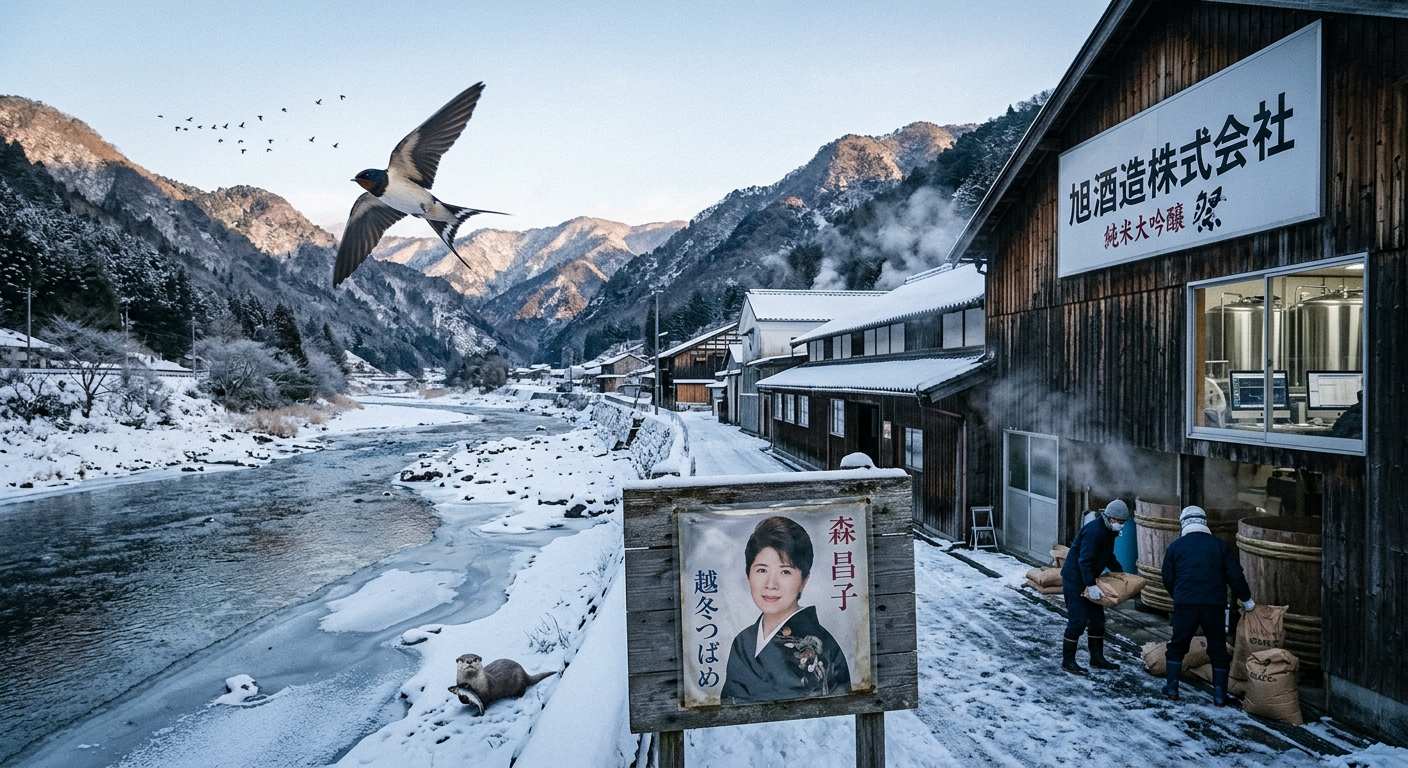
「獺祭」を醸す株式会社獺祭(2025年5月まで旭酒造株式会社)は1948年1月創業。山口県岩国市の中心部からさらに山あいへ入った周東町、獺越(おそごえ)という谷あいの集落に蔵を構えています。
3代目蔵元・桜井博志さんが蔵を継いだのは1984年、父の急逝がきっかけでした。当時の蔵は普通酒「旭富士」を細々と造るだけの状態で、売上は前年比85%まで落ち込んでいたといいます。追い打ちをかけるように1987年には飲食店経営と地ビール事業に進出するも失敗し、多額の負債を抱えることに。桜井さんと酒造りの方向性で意見が合わなかった杜氏は、蔵の将来を見限って去っていきました。
杜氏を失った蔵に残された道は、経験と勘に頼らない酒造りでした。桜井さんは精米歩合50%まで磨いた純米酒への反応の良さに手応えを感じ、杜氏の勘に代わってデータをもとに醸造を行う、当時としては前例のない体制へと舵を切ります。試行錯誤を重ねること6年、1990年についに純米大吟醸「獺祭」が誕生し、1992年には精米歩合23%まで磨いた「磨き二割三分」を発売。今では四季を通じて酒を仕込める設備を整え、世界中で飲まれる銘柄へと育ちました。
「獺祭」という名前は、蔵のあった地名「獺越」と、正岡子規が名乗った雅号「獺祭書屋主人」に由来します。酔うための酒ではなく、味わい愛でるための酒でありたいという想いが込められているといいます。
土地の話
岩国市周東町は、市街地から車で30分ほど山へ入った、静かな谷あいの土地です。かつて杜氏も蔵人も去っていくような、決して恵まれた立地ではありませんでした。
けれどこの地から、伝統的な杜氏制度に頼らない、データに基づく酒造りという新しい道が生まれ、世界に届く一杯になりました。不利な条件からでも、やり方次第で遠くまで行ける――そんな物語を持つ土地です。
音楽の話
森昌子さんの「越冬つばめ」は1983年8月21日発売、41枚目のシングル。作詞は石原信一、作曲は篠原義彦(シンガーソングライター・円広志の本名)、編曲は竜崎孝路が手がけました。この曲で第25回日本レコード大賞最優秀歌唱賞を受賞し、同年の第34回NHK紅白歌合戦では、歌う森さんが感極まって涙を見せる場面もありました。
タイトルの通り、南へ渡らずに冬を越えることを選んだつばめを歌った曲です。13歳で「スター誕生!」から歌手デビューして以来、明るく愛らしいアイドルとして活動してきた森さんにとって、この曲は本格的な演歌歌手としての実力を示す転機となりました。
なぜこの組み合わせなのか
杜氏を失い、多額の負債を抱えた1980年代半ばの旭酒造。伝統的なやり方を手放してでも自分たちの道を進むと決めたその姿勢は、群れを離れ、渡らずに冬を越える一羽のつばめに重なります。
1990年、6年の試行錯誤の末に「獺祭」が生まれたように、「越冬つばめ」もまた、アイドルから実力派の演歌歌手へと生まれ変わろうとしていた森昌子さんにとっての一曲でした。厳しい季節をやり過ごした先に澄んだ景色が待っている――そんな共通の物語を、この蔵とこの曲は持っています。
この一本を、探すなら
※楽天市場へのリンクは広告(アフィリエイト)です。在庫・取扱いは変動します。お近くの酒販店でも、ぜひ銘柄名を伝えて探してみてください。
🌡️ おすすめの飲み方:よく冷やして、できればワイングラスで。10℃前後まで冷やすことで、山田錦由来の華やかな吟醸香とやわらかな甘みが、もっとも澄んだかたちで感じられます。
合わせたい「アテ」
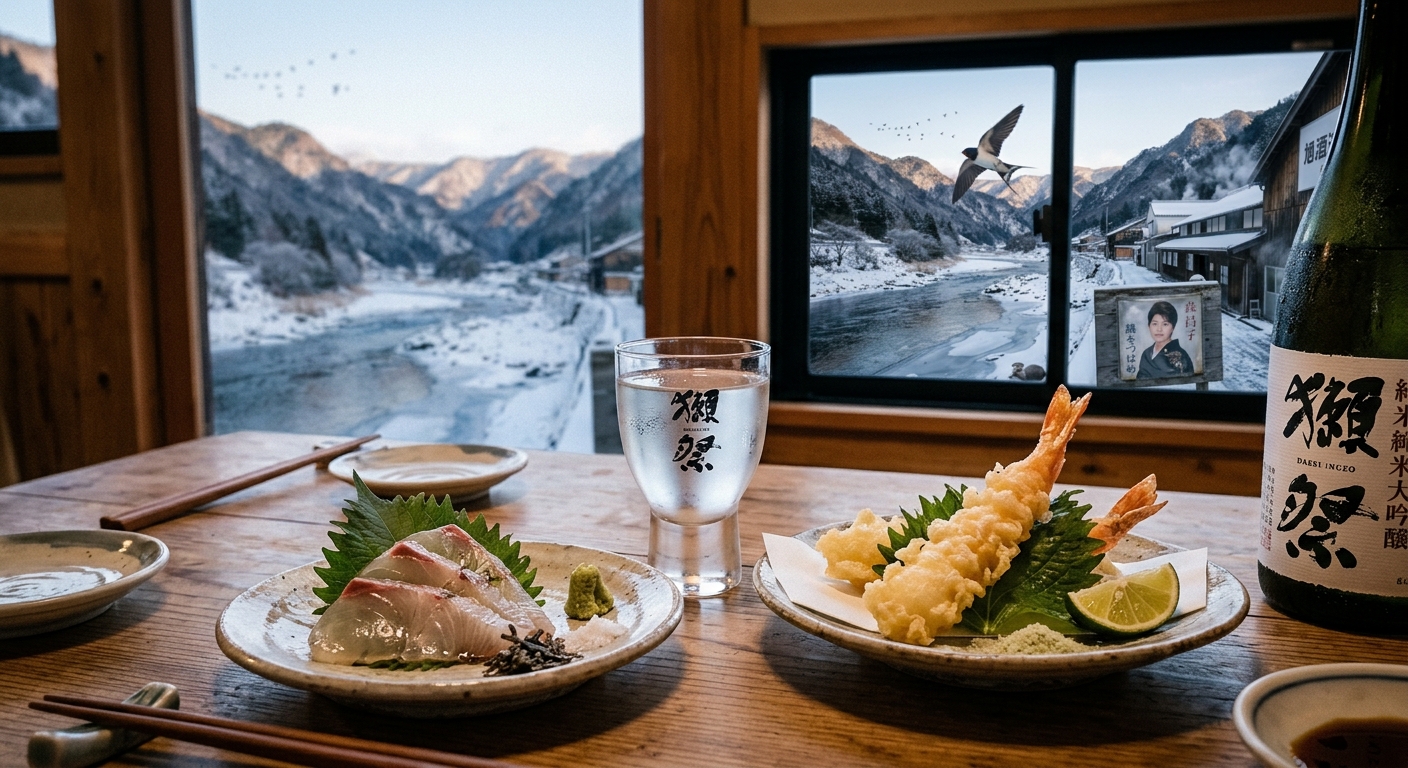
科学的にひとこと:昆布と鯛の組み合わせは、昆布のグルタミン酸と魚のイノシン酸が重なり合う”旨味の相乗効果”の代表例で、米の旨みが豊かな純米大吟醸とよく調和します。天ぷらの油は、吟醸酒特有の華やかな香気成分とすっきりとした後味によって口の中がリセットされ、次の一口をまた新鮮に感じさせてくれます。
ひとことメモ(日本酒の用語)
- 純米大吟醸酒:精米歩合50%以下まで磨いた米で醸す、香り高く上品な純米酒の最高峰にあたるランクです。
- 精米歩合:玄米を削り、残った部分の割合。数値が低いほど、米を多く磨いていることを示します。
参考
内容に誤りがございましたら、お手数ですが info@soundrecords.jp までご連絡いただけますと幸いです。
Today’s Pairing
▶ If the player above doesn’t play, open it on YouTube
The Story of the Brewery
Dassai Co., Ltd. (known as Asahi Shuzo Co., Ltd. until May 2025), the brewery behind Dassai, was founded in January 1948. It stands in Osogoe, a small hamlet in Shuto-cho, further up into the hills from central Iwakuni, Yamaguchi Prefecture.
Sakurai Hiroshi, the third-generation owner, took over the brewery in 1984 after his father’s sudden death. At the time the brewery was barely getting by on a modest futsushu (ordinary-grade sake) called “Asahifuji,” with sales down to 85% of the previous year. Things got worse in 1987, when a restaurant venture and a local craft-beer business both failed, leaving the brewery deep in debt. The toji (master brewer), who disagreed with Sakurai over the direction the brewing should take, gave up on the brewery’s future and left.
With no toji left, the only way forward was one that didn’t rely on a craftsman’s experience and intuition. Sakurai had seen how well a junmai sake polished to a seimai buai of 50% was received, and he turned to something unheard of at the time: brewing guided by data rather than a toji’s instinct. After six years of trial and error, the junmai daiginjo “Dassai” was born in 1990, followed in 1992 by “Migaki Nisshi Sanbu,” polished down to a seimai buai of 23%. Today the brewery can brew through all four seasons, and Dassai has grown into a label enjoyed around the world.
The name “Dassai” draws on Osogoe, the place name where the brewery stands, and on “Dassai Shooku Shujin,” a pen name once used by the haiku poet Masaoka Shiki. It’s said to carry the wish that the sake be made not simply to get drunk on, but to be savored and appreciated.
The Story of the Land
Shuto-cho, in Iwakuni, is a quiet valley about thirty minutes by car up into the mountains from the city center — hardly an easy place for a brewery, one that had already watched its toji and brewery workers leave.
And yet from this land came a new path that didn’t depend on the traditional toji system: brewing guided by data, which went on to reach the whole world. It’s a place with a story of its own — that even from an unfavorable position, the right approach can carry you a long way.
The Story of the Song
Mori Masako’s “Etto Tsubame” was released on August 21, 1983, her 41st single. The lyrics are by Ishihara Shinichi, the music by Shinohara Yoshihiko (the birth name of the singer-songwriter Madoka Hiroshi), and the arrangement by Ryuzaki Koji. The song won the Best Vocal Performance award at the 25th Japan Record Awards that year, and at the 34th NHK Kohaku Uta Gassen the same year, Mori was visibly moved to tears while singing it.
As the title suggests, it’s a song about a swallow that chooses to winter over rather than fly south. For Mori, who had made her singing debut at thirteen through the talent show “Star Tanjo!” and had built her career as a bright, endearing idol, this song marked a turning point toward establishing herself as a serious enka singer.
Why This Pairing
Asahi Shuzo in the mid-1980s had lost its toji and was carrying heavy debt. Its decision to let go of the traditional way of doing things and press forward on its own path echoes the single swallow that leaves the flock and winters over rather than migrating.
Just as “Dassai” was born in 1990 after six years of trial and error, “Etto Tsubame” was a song for Mori Masako at the very moment she was remaking herself from idol into a serious enka singer. Both share the same underlying story — a clear view waiting on the far side of a hard season.
Where to Find This Bottle
The Rakuten Ichiba link below is an affiliate link.
Note: both Rakuten and Amazon links above lead to Japan-based retailers. They’re most convenient for readers in Japan, or for those elsewhere who are able to arrange international shipping. Stock and availability change over time, so if you’re near a specialty sake shop, it’s well worth asking for this label by name.
🌡️ Recommended way to drink it: Well chilled, ideally in a wine glass. Chilling it to around 10°C brings out, at their clearest, the showy ginjo aroma and soft sweetness that come from the Yamada Nishiki rice.
A Pairing Dish Worth Trying
A note on the science: kombu and sea bream are a classic case of umami synergy, where the kombu’s glutamic acid and the fish’s inosinic acid amplify each other — a pairing that harmonizes well with a rice-forward junmai daiginjo. The oil in the tempura is cut through by the ginjo sake’s showy aroma compounds and clean finish, resetting the palate and making the next bite taste fresh again.
A Quick Glossary of Sake Terms
- Junmai Daiginjo: The top grade of junmai (pure rice) sake, brewed from rice polished down to a seimai buai of 50% or less — fragrant and refined.
- Seimai buai (rice-polishing ratio): The percentage of the original brown rice grain remaining after polishing. The lower the number, the more the rice has been polished down.
Sources
If you notice any errors in this article, please don’t hesitate to reach out at info@soundrecords.jp.
コメントを残す