今日のペアリング
▶ 上のプレーヤーで再生できない場合は、YouTubeで開く
酒蔵の話
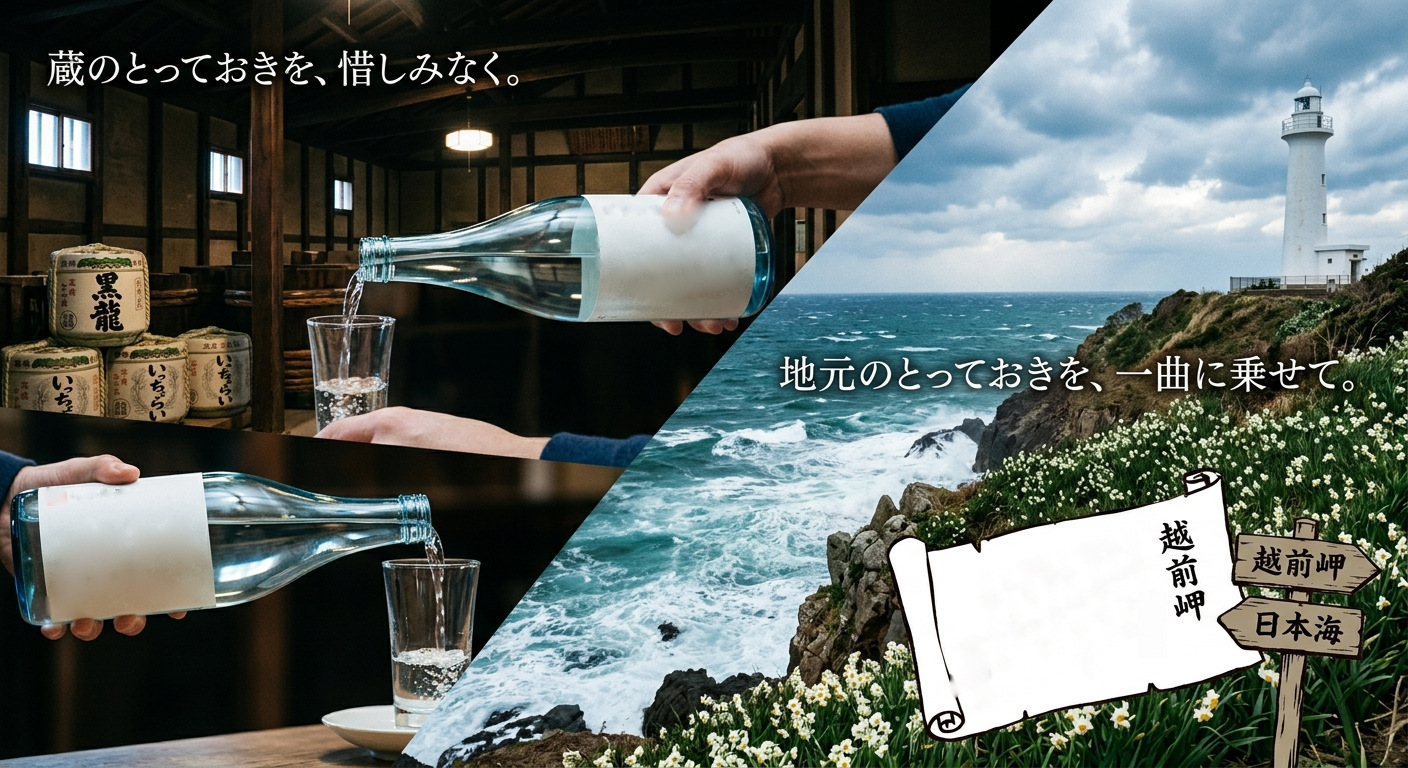
黒龍酒造は1804年(文化元年)、初代・石田屋二左衛門が福井県吉田郡永平寺町松岡に創業した老舗蔵です。白山山系の伏流水に恵まれたこの地で、代々「良い酒を造る」という一念を受け継ぎ、現在は8代目蔵元・水野直人氏が舵を取っています。
蔵の大きな転機となったのが、7代目蔵元・水野正人氏の時代でした。ワインに深い関心を持ち、25歳でフランスへ渡った水野氏は、帰国後、ワインの熟成技術を日本酒に応用できないか試行錯誤を重ねます。当時、大吟醸酒は品評会で蔵の技術を競うためだけに造られる、いわば”見せる酒”でした。その大吟醸を市販するという、全国的にも先駆けとなる挑戦の末に、1975年「黒龍 大吟醸 龍」が誕生します。これをきっかけに「黒龍=吟醸」というブランドイメージが広まり、蔵は”吟醸蔵”としての地位を確立しました。
今回合わせる「いっちょらい 純吟」は、福井県産の酒造好適米・五百万石を精米歩合55%まで磨いて醸した純米吟醸酒。アルコール度数は15〜16度です。「いっちょらい」とは、よそ行きの一張羅を意味する福井弁。とっておきの一本を惜しみなく差し出すという、蔵の心意気がその名前に込められています。
土地の話
永平寺町は、曹洞宗大本山・永平寺の門前町として知られる、静かで厳かな土地です。一方で福井県には、日本海の荒波が刻んだ断崖絶壁が連なる越前海岸もあります。今回の歌の舞台「越前岬」は、福井県丹生郡越前町、日本海(若狭湾東端)に面した岬。丹生山地の急斜面がそのまま海へ落ち込む地形で、高さ100メートルに達する海食崖が連なり、海蝕洞や奇岩奇石が点在する景勝地です。冬には一面に越前水仙が咲き誇ることでも知られ、1940年3月に初点灯した越前岬灯台が、今も海を見守っています。
禅の静けさを守る山あいの町と、荒波にさらされ続ける海の岬。同じ福井県の中に、対照的な二つの表情が同居しています。
音楽の話
「越前岬」は1982年8月5日発売、川中美幸のシングル。作詞は吉岡治、作曲は岸本健介です。オリコン週間チャートでは最高20位を記録しました。
断崖とスイセンが織りなす越前海岸の風景を歌に乗せ、地元の人にしか知られていなかったような荒々しい景色を、歌謡曲というかたちで全国区の景色に変えた一曲です。
なぜこの組み合わせなのか
黒龍の7代目蔵元は、それまで品評会という限られた場所でしか味わえなかった大吟醸酒を、思い切って市中へ解き放ちました。「いっちょらい」という名前が示す通り、蔵にとってのとっておきの一本を、惜しみなく差し出す心意気がそこにあります。
「越前岬」もまた、地元の人だけが知っていたような荒々しい海岸の風景を、一曲の歌謡曲によって全国区の景色に変えました。断崖とスイセンが織りなす、福井の”とっておきの景色”を、隠さずに差し出したのです。
蔵の中でしか味わえなかった一献と、地元でしか知られていなかった一景。どちらも、とっておきを惜しみなく差し出すことで、遠くの誰かに福井の魅力を届けています。
この一本を、探すなら
※楽天市場へのリンクは広告(アフィリエイト)です。在庫・取扱いは変動します。お近くの酒販店でも、ぜひ銘柄名を伝えて探してみてください。
🌡️ おすすめの飲み方:よく冷やして、10℃前後で。五百万石らしいすっきりとした米の旨みと、純米吟醸ならではの穏やかな香りが、いちばん澄んだかたちで感じられます。
合わせたい「アテ」
- 越前おろしそば
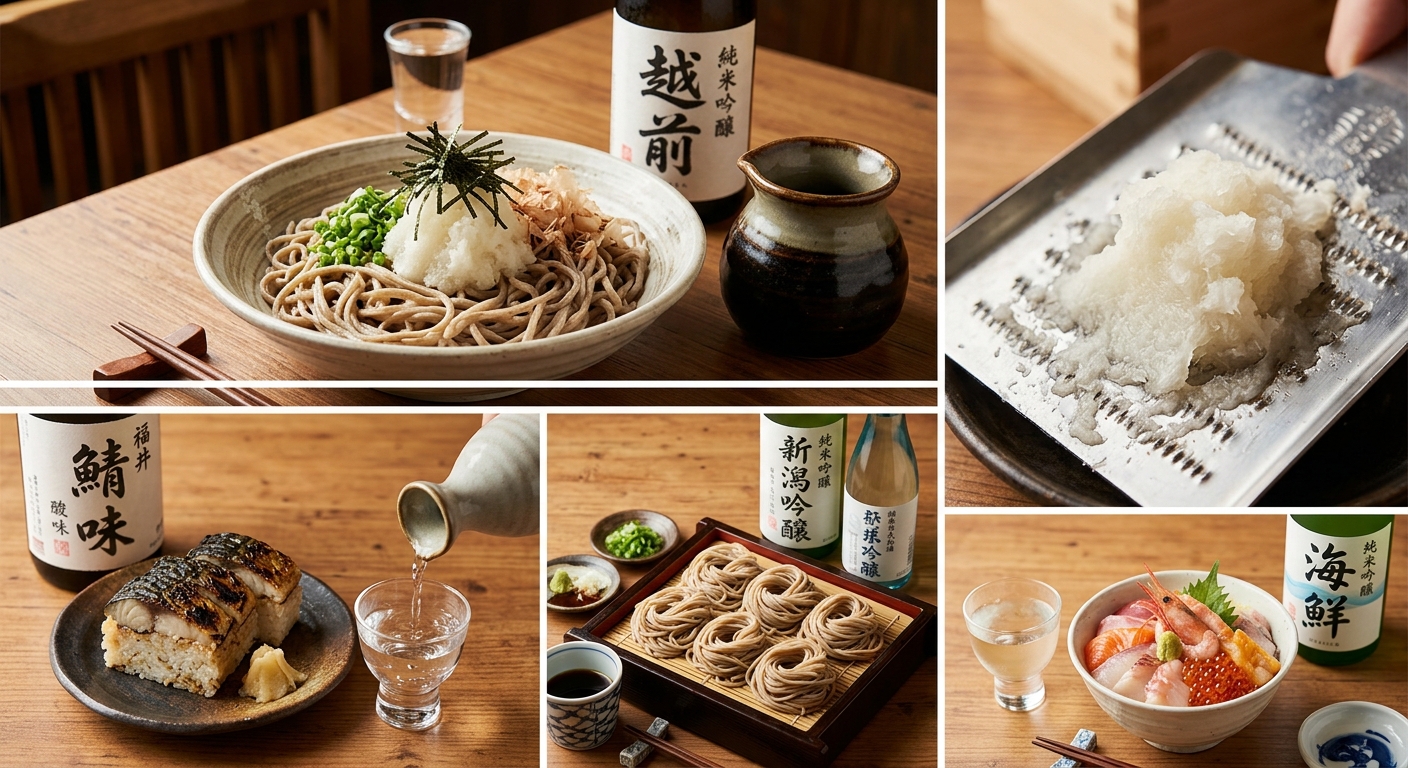
大根おろしをたっぷりのせた、福井を代表する郷土そば。大根おろしの爽やかな辛みが、純米吟醸の穏やかな香りを邪魔せず引き立て、そばつゆの出汁の旨みが酒の旨みと重なり合います。
レシピはこちら:クラシル「さっぱり♪越前風おろしそば」
- 焼き鯖寿司
福井の食卓に欠かせない、香ばしく焼いた鯖の寿司。鯖の脂の旨みを、純米吟醸のキレのある酸がすっきりと洗い流し、酢飯の酸味とも自然になじみます。
レシピはこちら:クックパッド「簡単☆おいしい♪焼き鯖寿司」
科学的にひとこと:大根おろしに含まれる辛み成分は揮発性が高く、吟醸酒の華やかな香気成分と鼻先で重なり合うことで、香りの印象をより引き立てます。鯖のような脂の多い青魚には、日本酒の酸味が脂を洗い流す”リセット効果”があり、後味を軽やかに整えてくれます。
この蔵をたずねるなら
黒龍酒造
福井県吉田郡永平寺町松岡(兼定島「酒造りの里」)/JR「福井駅」から車で約20分。
九頭竜川の伏流水で仕込む、1804年創業の蔵です。
近くの観光スポット
- 大本山永平寺/吉田郡永平寺町志比|蔵から車で約15分・約7km
1244年に道元が開いた曹洞宗の大本山。杉木立に70余りの伽藍が立ち並び、参拝(拝観料あり)できます。
- 一乗谷朝倉氏遺跡/福井市城戸ノ内町|蔵から車で約30分・約15km
戦国大名・朝倉氏の城下町の跡(特別史跡・特別名勝)。復原町並で当時の暮らしを歩いて見られます。
近くの温泉
- 永平寺温泉 禅の里/吉田郡永平寺町|蔵から車で約10分・約5km
道の駅「禅の里」のとなりにある日帰り天然温泉。地下約1,700mから湧く湯で、露天風呂やサウナがあります。
※営業時間・定休日・日帰り入浴の可否は変わることがあります。おでかけ前に各施設の公式情報をご確認ください。
ひとことメモ(日本酒の用語)
- 純米吟醸酒:精米歩合60%以下まで磨いた米を低温でじっくり発酵させた純米酒。華やかな香りが特徴です。
- 精米歩合:玄米を削り、残った部分の割合。数値が低いほど、米を多く磨いていることを示します。
参考
内容に誤りがございましたら、お手数ですが info@soundrecords.jp までご連絡いただけますと幸いです。
Today’s Pairing
▶ If the player above doesn’t play, open it on YouTube
The Story of the Brewery
Kokuryu Shuzo was founded in 1804 by its first-generation owner, Ishidaya Nizaemon, in Matsuoka, Eiheiji Town, Fukui Prefecture — a place blessed with underground water flowing down from the Hakusan mountain range. The brewery’s guiding principle, “make good sake,” has been passed down through the generations, and it is now led by its eighth-generation owner, Mizuno Naoto.
A turning point for the brewery came under its seventh-generation owner, Mizuno Masato. Deeply interested in wine, he traveled to France at the age of 25, and after returning to Japan he experimented with applying wine-aging techniques to sake. At the time, daiginjo — sake brewed from rice polished to an especially high degree — was made almost exclusively for brewing competitions, a way for breweries to show off their technical skill rather than something sold to ordinary drinkers. Kokuryu’s decision to sell a daiginjo commercially was, by the brewery’s own account, a nationwide pioneering move, and in 1975 it released “Kokuryu Daiginjo Ryu.” That release spread the image of Kokuryu as synonymous with ginjo-style sake, and established the brewery’s reputation as a “ginjo brewery.”
The bottle in this pairing, Junmai Ginjo “Icchorai Junjin,” is brewed from Gohyakumangoku, a sake rice grown in Fukui Prefecture, polished to a seimai buai (rice-polishing ratio) of 55%. It comes in at 15–16% alcohol. “Icchorai” is a word in the Fukui dialect meaning one’s finest, best-kept outfit — the one saved for special occasions — and the name captures the brewery’s spirit of offering its finest work without holding back.
The Story of the Land
Eiheiji Town is known as the quiet, solemn approach to Eihei-ji, the head temple of the Soto school of Zen Buddhism. Fukui Prefecture also has another face: the Echizen Coast, where the rough waves of the Sea of Japan have carved a long line of sheer cliffs. The setting of this song, Echizen Misaki (Echizen Cape), sits in Echizen Town, Nyu District, facing the Sea of Japan at the eastern edge of Wakasa Bay. Here the steep slopes of the Nyu mountains drop straight into the sea, forming sea cliffs that reach 100 meters in height, dotted with sea caves and oddly shaped rock formations. The cape is also known for its fields of Echizen narcissus, which bloom in winter, and the Echizen Misaki Lighthouse, first lit in March 1940, still watches over the water today.
A quiet mountain town that guards the stillness of Zen, and a sea cape that is forever battered by rough waves — two contrasting faces exist side by side within the same prefecture.
The Story of the Song
“Echizen Misaki” was released as a single by Kawanaka Miyuki on August 5, 1982, with lyrics by Yoshioka Osamu and music by Kishimoto Kensuke. It reached a peak of number 20 on the weekly Oricon chart.
The song set the scenery of the Echizen Coast — its cliffs and its narcissus — to music, turning a wild landscape once known mainly to locals into scenery recognized across the country through the medium of a popular song.
Why This Pairing
Kokuryu’s seventh-generation owner took a daiginjo that, until then, could only be tasted in the closed world of brewing competitions, and boldly released it to the public. The name “Icchorai” — one’s finest, best-kept outfit — captures that same spirit: offering the brewery’s finest work without holding anything back.
“Echizen Misaki” did something similar. A wild stretch of coastline once known mainly to locals was turned, through a single popular song, into scenery recognized across the country. The cliffs and narcissus of Echizen — one of Fukui’s own finest, best-kept sights — were put on display for all to see.
A cup once tasted only within the brewery, and a view once known only to locals. Both share the same gesture: offering up something finest and best-kept, without reservation, so that its appeal can reach someone far away.
Where to Find This Bottle
The Rakuten Ichiba link below is an affiliate link.
Note: both Rakuten and Amazon links above lead to Japan-based retailers. They’re most convenient for readers in Japan, or for those elsewhere who are able to arrange international shipping. Stock and availability change over time, so if you’re near a specialty sake shop, it’s well worth asking for this label by name.
🌡️ Recommended way to drink it: Chill it well, to around 10°C (50°F). At that temperature, the clean, rice-forward flavor typical of Gohyakumangoku and the gentle aroma of a junmai ginjo come through most clearly.
Pairing Dishes Worth Trying
- Echizen oroshi soba (buckwheat noodles with grated daikon)
Fukui’s signature soba dish, topped with a generous mound of grated daikon radish. The bright bite of the daikon doesn’t fight the junmai ginjo’s gentle aroma but sets it off, while the umami in the noodle broth echoes the umami in the sake.
Recipe (in Japanese): Kurashiru, “Refreshing Echizen-Style Oroshi Soba”
- Yaki-saba sushi (grilled mackerel sushi)
A staple of Fukui’s table: sushi made with mackerel grilled until fragrant. The rich fat of the mackerel is cut cleanly by the junmai ginjo’s crisp acidity, which also sits naturally alongside the vinegar in the sushi rice.
Recipe (in Japanese): Cookpad, “Easy and Delicious Yaki-Saba Sushi”
A note on the science: the pungent compounds in grated daikon are highly volatile, and overlap in the nose with the fragrant aromatic compounds of a ginjo-style sake, reinforcing the perceived aroma of both. With an oily blue fish like mackerel, the acidity in sake cuts through the fat, a “reset effect” that keeps the aftertaste light.
Visiting the Brewery
Kokuryu Sake Brewery
Matsuoka (the “Kanejojima sake-making village”), Eiheiji Town, Yoshida District, Fukui. About 20 min by car from Fukui Station.
Founded in 1804, the brewery brews with groundwater from the Kuzuryu River.
Sights Nearby
- Eiheiji Temple / Eiheiji Town | ~15 min, ~7 km by car from the brewery
The head temple of the Soto school of Zen, founded by Dogen in 1244. More than seventy halls stand among old cedars, open for visits (admission charged).
- Ichijodani Asakura Family Historic Ruins / Fukui City | ~30 min, ~15 km by car from the brewery
The remains of the castle town of the warlord Asakura clan (a Special Historic Site and Special Place of Scenic Beauty), with a reconstructed townscape you can walk through.
Hot Springs Nearby
- Eiheiji Onsen Zen no Sato / Eiheiji Town | ~10 min, ~5 km by car from the brewery
A day-use natural hot spring next to the “Zen no Sato” roadside station, with water drawn from about 1,700 m underground, plus an open-air bath and sauna.
Opening hours, closing days and day-use bathing availability can change. Please check each facility’s official information before visiting.
A Quick Glossary of Sake Terms
- Junmai Ginjo: A junmai (pure rice) sake — made only from rice, rice koji, and water, with no added brewing alcohol — brewed from rice polished to 60% or less of its original size (a “ginjo” level of polish) and fermented slowly at low temperatures, giving it a fragrant aroma.
- Seimai buai (rice-polishing ratio): The percentage of the original brown rice grain remaining after polishing. The lower the number, the more the rice has been polished down.
Sources
If you notice any errors in this article, please don’t hesitate to reach out at info@soundrecords.jp.
コメントを残す