今日のペアリング
▶ 上のプレーヤーで再生できない場合は、YouTubeで開く
酒蔵の話
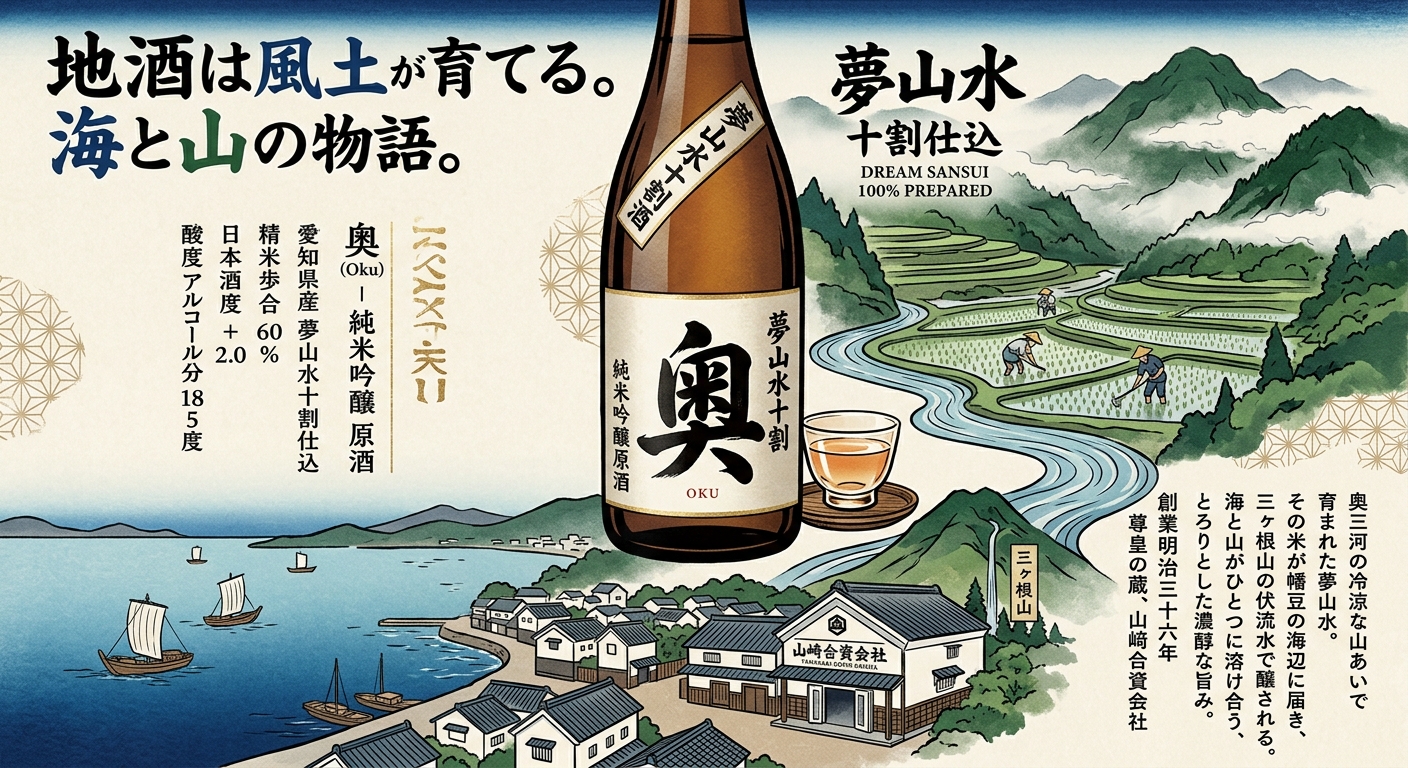
山﨑合資会社が愛知県西尾市の幡豆(はず)に蔵を構えたのは1903年(明治36年)のことです。1920年に生まれた看板銘柄「尊皇」は、百年を超えていまも蔵の顔であり続けています。三ヶ根山の麓から湧く伏流水を仕込み水に使い、酒米は95%以上を愛知県産でまかなう。「地酒は風土が育てる」という信条を、原料の調達から一貫して守り続けてきた蔵です。
その蔵が、限られた店にだけ卸すつもりで新しく開発したのが「奥(おく)」でした。名前のとおり、愛知県北東部の山間地・奥三河で契約栽培された酒米を使います。使うのは「夢山水(ゆめさんすい)」。平成8年から愛知県で栽培が始まった比較的新しい酒米で、冷涼な山あいの気候の中で育ちます。その夢山水を、混ぜものなしの十割で仕込む。銘柄名に「夢山水十割」と掲げているのは、その一点に賭けているという宣言でもあります。
精米歩合は60%、日本酒度+2.0、酸度1.8。特筆すべきはアルコール度数で、加水をしない原酒ゆえに18.5度に達します。日本酒としてはかなり高い部類で、口に含むととろみと呼びたくなるような密度があります。ただ重いだけの酒ではなく、香りは純米吟醸らしく上品に立ち上がる。濃さと端正さが同居しているのが、この一本の性格です。
土地の話
蔵のある幡豆は、三河湾に面した海辺の町です。三河湾国定公園に指定されたこの海は、目の前に小島が点在する穏やかな内海で、その表情から「東海の瀬戸内海」と呼ばれることもあります。背後には三ヶ根山。海と山の両方をすぐそばに持つ土地です。
一方、酒米が育つ奥三河は、同じ愛知県でありながらまったく表情の違う土地です。県の北東部、長野・静岡との県境に近い山あいで、夏でも夜は冷え込む。稲がゆっくり実を太らせるこの冷涼さが、酒米にとっては都合がいい。
穏やかな海の町と、冷える山の里。奥三河で育った米が、山を下って幡豆の蔵に届き、海のそばで酒になる。「奥」という名前には、この距離がそのまま入っています。
音楽の話
「舟唄」は1979年5月25日に発売された八代亜紀のシングルです。作詞は阿久悠、作曲は浜圭介。同年の日本レコード大賞で金賞を受けました。
この曲は、八代亜紀にとって初めての「男歌」でした。それまで女性の情感を歌ってきた歌手が、酒場でひとり静かに杯を傾ける男の視点に立つ。歌い出しは、酒の温度、肴、灯りの明るさ、そして隣にいてほしい相手のありようまでを、ひとつずつ「これでいい」と並べていきます。多くを望まない。望まないことを、贅沢として歌う。派手な盛り上がりがあるわけでもないのに、四十年以上も歌い継がれてきたのは、この静けさに強度があるからでしょう。
そして海。曲の後半には、沖を行く舟と鴎の情景が広がります。酒場の小さな灯りと、その外に広がる暗い海。この二重の景色が、歌に奥行きを与えています。
なぜこの組み合わせなのか
「奥」は、ぐいぐい飲む酒ではありません。18.5度という度数は、盃を重ねる速さを自然と落とさせます。少量を口に含んで、とろりとした密度が舌の上でほどけていくのを待つ。そういう飲み方を、酒のほうから要求してくる一本です。
「舟唄」が歌うのも、まさにそういう時間です。にぎやかに騒ぐ酒ではなく、ぼんやりした灯りの下で、無口なまま長く過ごす酒。一杯を急がない人の歌です。
そして両者はどちらも、海のそばにあります。幡豆の蔵は三河湾を目の前にして酒を醸し、舟唄は沖の舟を見ながら杯を傾ける。違うのは、酒が山から下りてきたものだということ。奥三河の冷たい空気の中で実った米が、海辺の蔵で酒になり、海を見ながら飲まれる。山と海をひとつの盃の中でつなぐ酒として、この歌の静けさはちょうどいい器なのだと思います。
この一本を、探すなら
※楽天市場へのリンクは広告(アフィリエイト)です。在庫・取扱いは変動します。お近くの酒販店でも、ぜひ銘柄名を伝えて探してみてください。
🌡️ おすすめの飲み方:まずはよく冷やして、小さめの盃で。18.5度の原酒ならではのとろみと、夢山水の濃密な旨みがはっきり出ます。氷を落としても味が痩せないので、ロックも合います。少し温度が上がると香りがふくらむので、一杯目と三杯目で表情が変わるのを楽しんでください。度数が高いので、水を一緒に。
合わせたい「アテ」
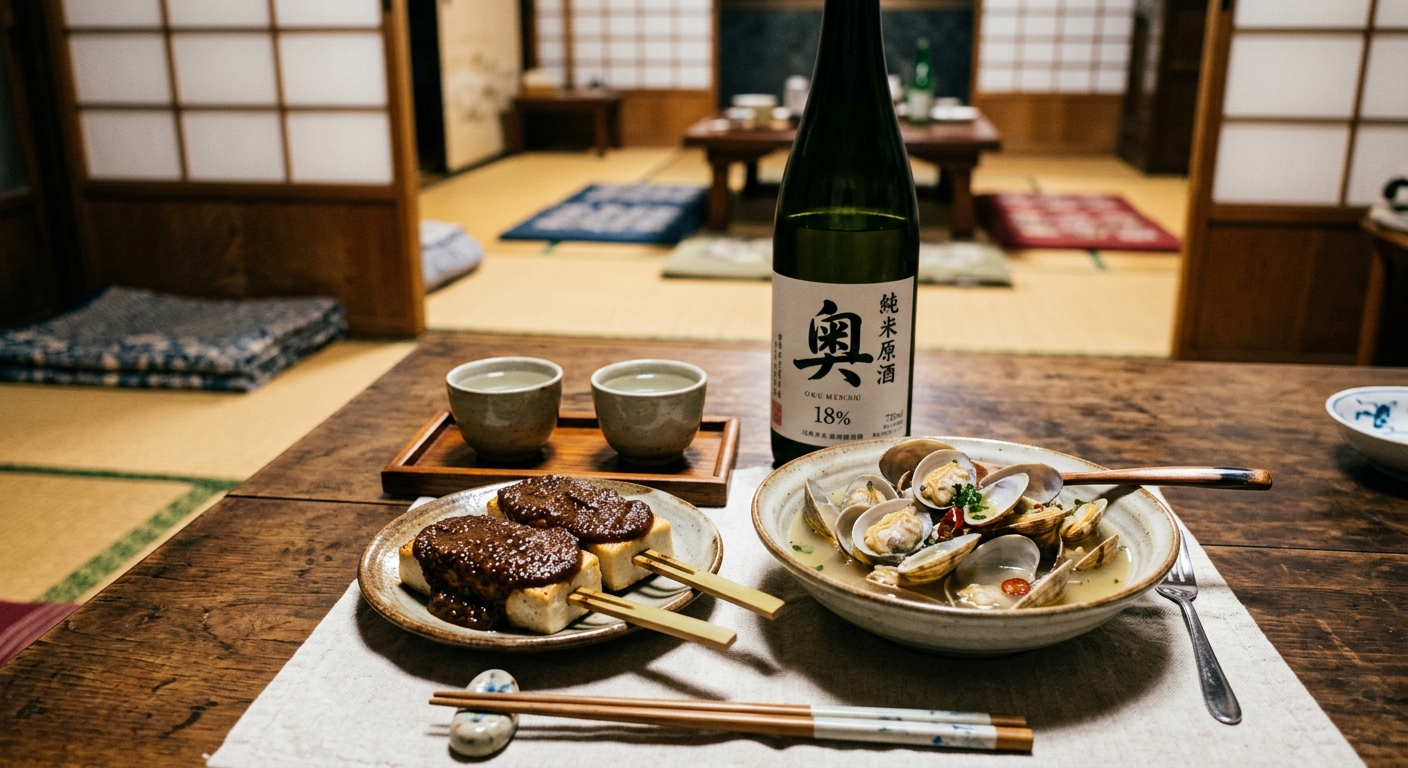
- 味噌田楽(八丁味噌)
愛知の食卓を代表する濃い味。豆味噌のどっしりした塩気と旨みは、軽い酒だと簡単に負けてしまいます。18度超の「奥」なら真正面から受け止めて、味噌のあとに米の甘みを残してくれます。
レシピはこちら:クラシル「お手軽 田楽みそ」
- あさりの酒蒸し
三河湾はあさりの好漁場で、愛知県は全国有数の産地です。貝の出汁のきれいな旨みが、原酒の濃さの角を取ってくれます。蔵の目の前の海の幸を、その海のそばで醸された酒で。
レシピはこちら:クラシル「あさりのバター醤油酒蒸し」
科学的にひとこと:八丁味噌のような豆味噌は塩分と旨味成分の濃度がどちらも高く、味の弱い酒だと押し切られてしまいます。原酒はアルコールと旨味の密度が高いぶん拮抗できるため、料理と酒のどちらも輪郭を保てます。あさりに多いコハク酸は、日本酒の米由来のアミノ酸と重なると旨味の相乗効果を生み、貝の出汁が酒の余韻を長く伸ばしてくれます。
この蔵をたずねるなら
尊皇蔵元 山﨑合資会社(奥・尊皇)
愛知県西尾市西幡豆町柿田57/名鉄蒲郡線「西幡豆駅」から徒歩約8分。
三河湾に面した幡豆の蔵です(直売所あり。見学の可否は蔵へお問い合わせください)。
近くの観光スポット
- 愛知こどもの国/西尾市東幡豆町|蔵から車で約7分・約4km
「あさひが丘」「ゆうひが丘」の二つの丘からなる大きな児童遊園。9:00〜17:00、入園無料で、SLや大型遊具、三河湾の眺めがあります。
- 三ヶ根山スカイライン/西尾市東幡豆町〜蒲郡市|蔵から登り口まで車で約10分
標高約350mの尾根を走る全長5.1kmの有料道路(普通車420円、料金徴収8:00〜20:00)。初夏のあじさいと三河湾の展望で知られます。
近くの温泉
- 吉良温泉/西尾市吉良町宮崎|蔵から車で約15分・約8km
三河湾を望む海辺の温泉地(塩化物泉)。宮嶋舘や竜宮ホテルなどで日帰り入浴ができます。受付時間は各施設でご確認ください。
※営業時間・定休日・日帰り入浴の可否は変わることがあります。おでかけ前に各施設の公式情報をご確認ください。
ひとことメモ(日本酒の用語)
- 純米吟醸酒:精米歩合60%以下まで磨いた米を低温でじっくり発酵させた純米酒。華やかな香りが特徴です。
- 原酒:水を加えて度数を調整していない、搾ったままの酒。アルコール度数が高めになる傾向があります。
- 精米歩合:玄米を削り、残った部分の割合。数値が低いほど、米を多く磨いていることを示します。
参考
内容に誤りがございましたら、お手数ですが info@soundrecords.jp までご連絡いただけますと幸いです。
Today’s Pairing
- Sake: Oku “Yumesansui Juwari” Junmai Ginjo Genshu — Aichi-grown Yumesansui rice 100%, rice-polishing ratio (seimai buai) 60%, 18.5% alcohol / Yamazaki Gohshi Kaisha, Sonnoh Brewery (Hazu, Nishio City, Aichi Prefecture)
Official site: https://www.sonnoh.co.jp/
- Kayoukyoku: “Funauta” (Boatman’s Song) by Yashiro Aki, 1979
YouTube: https://www.youtube.com/watch?v=yGI0QZ4Gk34
▶ If the player above doesn’t play, open it on YouTube
The Story of the Brewery
Yamazaki Gohshi Kaisha set up its brewery in Hazu, in what is now Nishio City, Aichi Prefecture, in 1903. Sonnoh, the flagship label launched in 1920, has been the face of the house for more than a century. The brewing water comes from springs at the foot of Mount Sangane, and more than 95% of the rice is grown in Aichi. “Local sake is raised by local land” is the brewery’s stated creed, and it holds to it all the way back to where the grain comes from.
Oku is a label this brewery developed for a deliberately narrow distribution — a bottle meant for specialist sake shops rather than the mass market. The name means “the interior,” and it points to Okumikawa, the mountainous northeast of Aichi, where the rice is grown under contract. The variety is Yumesansui, a relatively new sake rice whose cultivation in Aichi began in 1996, raised in the cool air of the hills. Oku is brewed from Yumesansui and nothing else, which is what the phrase “Yumesansui Juwari” — one hundred percent Yumesansui — on the label declares.
The rice is milled to 60%, with a sake meter value of +2.0 and acidity of 1.8. The number that stands out is the alcohol: because no water is added after pressing, this genshu reaches 18.5%. That is high for sake, and you feel it as density on the palate, almost a viscosity. Yet it is not merely heavy — the aroma lifts with the refinement you expect from a junmai ginjo. Richness and poise, in the same glass.
The Story of the Land
Hazu, where the brewery stands, faces Mikawa Bay. Designated part of a quasi-national park, this is a calm inland sea dotted with small islands, gentle enough that people sometimes call it “the Seto Inland Sea of the Tokai region.” Mount Sangane rises behind the town. Sea and mountain are both within easy reach.
Okumikawa, where the rice grows, is the same prefecture wearing a completely different face: a highland region in the northeast, near the borders with Nagano and Shizuoka, where the nights turn cold even in summer. That coolness lets the grain fill out slowly, which suits sake rice well.
A quiet seaside town and a cold mountain valley. Rice raised in Okumikawa comes down out of the hills to a brewery beside the bay, and becomes sake within sight of the water. The distance between those two places is built into the name Oku.
The Story of the Song
“Funauta” was released on 25 May 1979 as a single by Yashiro Aki, with words by Aku Yu and music by Hama Keisuke. It took a Gold Prize at that year’s Japan Record Awards.
It was the first song Yashiro Aki sang in a man’s voice. A singer who had until then given shape to women’s feelings steps instead into the perspective of a man drinking alone in a bar. The opening lines set out, one by one, the temperature of the sake, the food beside it, how brightly the lamp should burn, even what kind of company he would want — and each time the answer is that this, as it is, will do. He asks for little. The song makes that modesty sound like a luxury. There is no soaring climax, and yet it has been sung for more than forty years, which suggests there is real strength in its quietness.
And then the sea. In the later verses a boat moves offshore and gulls cross above it. A small lamp inside, dark water outside: it is that double frame that gives the song its depth.
Why This Pairing
Oku is not a bottle you drink quickly. Eighteen and a half percent alcohol slows the hand on its own. You take a small mouthful and wait while the density unwinds across the tongue. The sake asks to be drunk that way.
“Funauta” is about exactly that kind of hour. Not sake for a crowded room, but sake for a dim lamp and a long silence — the song of someone in no hurry with a single cup.
Both of them, too, sit beside the sea. The Hazu brewery works within sight of Mikawa Bay; the song looks out at a boat on the water. The difference is that this sake came down from the mountains first. Grain that ripened in the cold air of Okumikawa is brewed beside the bay and drunk facing the sea. For a sake that ties mountain and coast together in one cup, the stillness of this song makes a fitting vessel.
Where to Find This Bottle
The Rakuten Ichiba link below is an affiliate link.
The Rakuten Ichiba link below is an affiliate link.
Note: The Rakuten Ichiba link above is an affiliate link. Rakuten Ichiba and Amazon.co.jp are Japan-based retailers, so these links are most useful for readers in Japan or those who can arrange international shipping. Stock and availability change over time, and a local sake shop may also be able to source this bottle by name.
🌡️ Recommended way to drink it: Well chilled to start, in a small cup. That is where the viscosity of an 18.5% genshu and the dense richness of Yumesansui show most clearly. It holds up over ice without thinning out, and as the temperature climbs the aroma opens, so the third cup tastes different from the first. Given the strength, keep water alongside.
Pairing Dishes Worth Trying
- Miso dengaku with Hatcho miso
The defining strong flavor of the Aichi table. The weight of salt and umami in this dark soybean miso will simply overpower a light sake. At over 18% alcohol, Oku meets it head-on and leaves the sweetness of the rice behind the miso.
Recipe (in Japanese): Kurashiru, “Easy dengaku miso”
- Asari clams steamed in sake
Mikawa Bay is prime ground for asari clams, and Aichi is one of Japan’s leading producers. The clean savory depth of the shellfish broth rounds off the edges of a genshu this concentrated — the sea in front of the brewery, met by the sake brewed beside it.
Recipe (in Japanese): Kurashiru, “Asari steamed with butter and soy sauce”
A quick scientific note: soybean misos like Hatcho are high in both salt and umami compounds, and a lighter sake gets pushed aside by them. A genshu carries enough alcohol and umami density to hold its ground, so neither the dish nor the sake loses its outline. Asari are rich in succinic acid, which layers with the rice-derived amino acids in sake to create a synergistic lift in umami — the clam broth stretches the sake’s finish out longer.
Visiting the Brewery
Sonno Brewery — Yamazaki Goshi Kaisha (Oku, Sonno)
57 Kakita, Nishi-hazu-cho, Nishio City, Aichi. About an 8-min walk from Nishi-hazu Station (Meitetsu Gamagori Line).
The brewery faces Mikawa Bay in the Hazu district (it has a shop; ask the brewery about visits).
Sights Nearby
- Aichi Children’s Land / Nishio City | ~7 min, ~4 km by car from the brewery
A large children’s park across two hills, “Asahi-ga-oka” and “Yuhi-ga-oka.” 9:00-17:00, free entry, with a steam locomotive, big play structures and views of Mikawa Bay.
- Sangane-san Skyline / Nishio City to Gamagori City | ~10 min by car to the toll gate from the brewery
A 5.1 km toll road along a ridge about 350 m high (¥420 for a standard car; toll gate open 8:00-20:00), known for early-summer hydrangeas and views over Mikawa Bay.
Hot Springs Nearby
- Kira Onsen / Nishio City | ~15 min, ~8 km by car from the brewery
A seaside hot spring looking out over Mikawa Bay (a chloride spring). Inns such as Miyajimakan and Ryugu Hotel accept day-use bathers; check each one’s hours.
Opening hours, closing days and day-use bathing availability can change. Please check each facility’s official information before visiting.
A Quick Glossary of Sake Terms
- Junmai Ginjo: A junmai sake made from rice milled down to 60% or less of its original size and fermented slowly at low temperatures. Known for its fragrant, floral aroma.
- Genshu: Sake bottled without adding water after pressing, so the alcohol stays where fermentation left it — usually higher, with a denser flavor.
- Seimai buai: The percentage of the grain remaining after milling. The lower the number, the more of the rice has been polished away.
Sources
If you notice any errors in this article, please don’t hesitate to reach out at info@soundrecords.jp.
コメントを残す