今日のペアリング
▶ 上のプレーヤーで再生できない場合は、YouTubeで開く
酒蔵の話
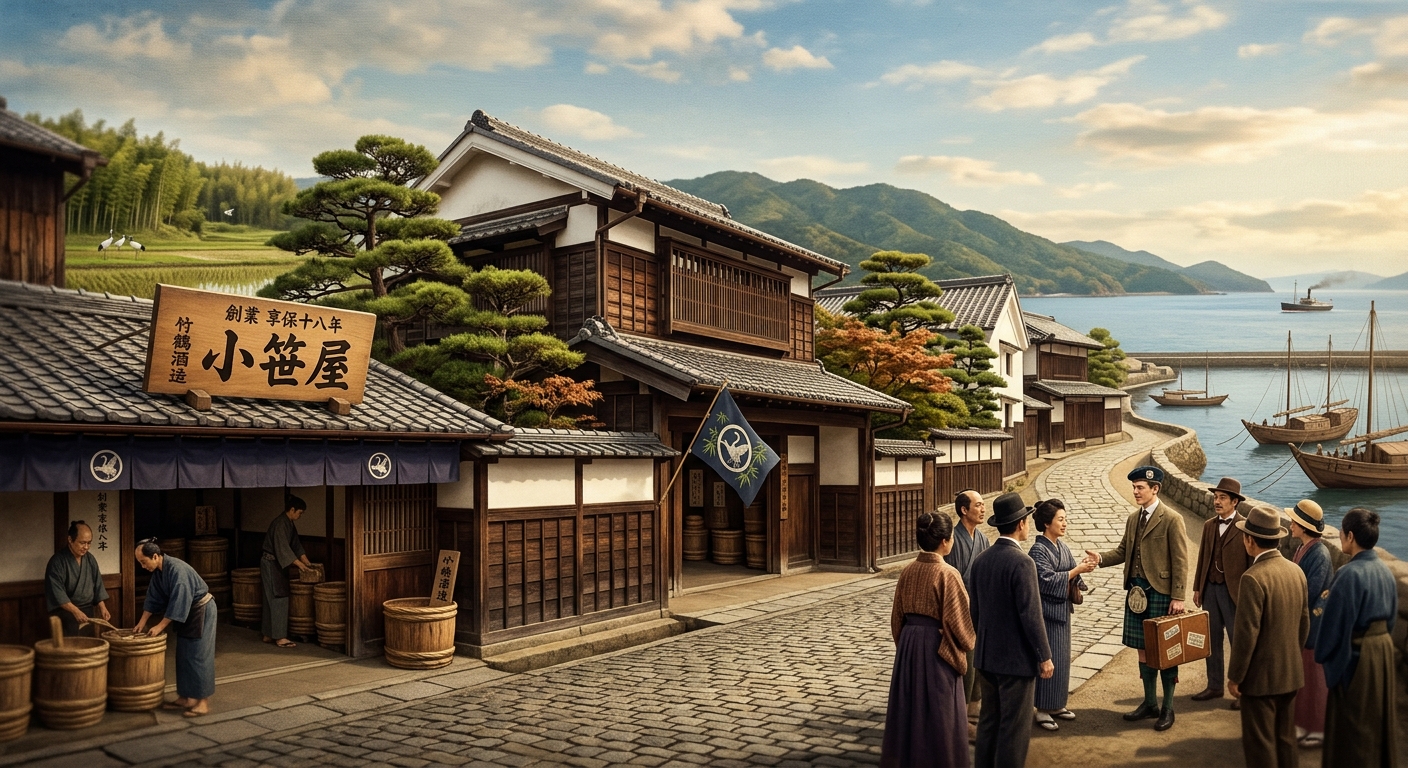
竹鶴酒造の歴史は、17世紀初め、和歌山から瀬戸内海に面する竹原へ移り住んだ一族が、蔵の裏の竹藪に鶴が巣を作ったことを瑞兆として、姓を「竹鶴」に改めたことに始まります。1650年頃に製塩業へ、享保18年(1733年)には酒造業へと事業を広げ、19世紀半ばには屋号を「小笹屋」に改称。明治21年(1888年)には広島県で最初の酒造組合に加わり、昭和7年(1932年)には酒造りを本業に据え、昭和26年(1951年)に株式会社として法人化しました。現在の代表取締役社長は竹鶴敏夫氏です。
この蔵は、のちに「日本のウイスキーの父」と呼ばれることになるニッカウヰスキー創業者・竹鶴政孝の生家としても知られています。1894年、竹原町(現・竹原市)で生まれた政孝は、1918年にスコットランドへ渡ってグラスゴー大学で応用化学とウイスキー造りを学び、帰国後の1934年、遠く離れた北海道余市町で大日本果汁株式会社(現・ニッカウヰスキー)を興しました。竹原の蔵で生まれ育った一人の青年が、海を越えて技術を学び、さらに海を渡って北の大地で新しい酒造りを始めた物語です。蔵の建物は、2014年放送のNHK連続テレビ小説「マッサン」のロケ地にもなりました。
今回合わせる「清酒竹鶴 生酛純米」は、広島県産の八反錦1号を精米歩合70%まで磨き、乳酸菌を自然に取り込んで酒母を育てる生酛造りで醸した一本。アルコール度数15.6%、日本酒度+19.0という数字が示す通り、どっしりとした酸とキレのある辛口が持ち味です。蔵の看板銘柄群はいずれも米と米麹だけで造られる純米酒で統一されており、料理の脇に置かれてこそ真価を発揮する「食中酒」であることを掲げています。
土地の話
竹原市は瀬戸内海に面した港町です。平安時代、京都・賀茂社(現在の下鴨神社)に寄進された荘園「安芸国竹原荘」の名がこの地に残ることから、「安芸の小京都」とも呼ばれてきました。江戸時代に入ると広島藩の命で新田開発が試みられますが、土壌の塩分が強すぎて水田には向かず、播州赤穂から技術者を招いて17世紀半ばから製塩業へと舵を切ります。塩田経営で富を築いた商人たちが築いた町並みは、今も「竹原町並み保存地区」として大切に残されています。
製塩と酒造、そして廻船で栄えたこの港町からは、海の向こうへ出ていった人も少なくありません。竹鶴政孝もその一人でした。生まれ育った蔵は変わらずこの地に残り、生酛造りという昔ながらの手法で今も酒を醸し続けています。海を渡って新しい酒を生み出した息子と、渡らずにこの町で酒を守り続けた蔵――同じ一族の中に息づく、対照的な二つの選択です。
音楽の話
「津軽海峡・冬景色」は1977年1月1日発売、石川さゆりにとって15枚目のシングル。作詞は阿久悠、作曲・編曲は三木たかしが手がけました。もともとは前年11月発売のコンセプトアルバム『365日恋もよう』に収められた1曲でしたが、単独シングルとして送り出されると評判を呼び、売上はミリオンセラーを記録。同年の第19回日本レコード大賞歌唱賞、’77 FNS歌謡祭のグランプリ・最優秀歌唱賞、第10回日本作詩大賞大衆賞と、その年の主要な音楽賞を数多く受賞しました。
上野発の夜行列車に乗り、青函連絡船で本州から北海道へ渡っていく女性の心情を描いた一曲です。それまでアイドル歌手として活動していた石川さゆりにとって、この曲は本格的な演歌歌手への転機となり、以降、世代を超えて歌い継がれる代表曲となりました。
なぜこの組み合わせなのか
「津軽海峡・冬景色」が描くのは、住み慣れた場所を離れ、海を渡って北の大地を目指す一人の女性の姿です。竹鶴政孝もまた、瀬戸内海に面したこの町を出て、まずスコットランドへ、そして北海道・余市へと、二度にわたり海を渡ってウイスキー造りの道を切り開きました。歌の主人公の足取りと、蔵から巣立った青年の足取りは、遠く重なります。
一方で、政孝が生まれ育った竹鶴酒造そのものは、海を渡ることなく竹原の地に残り、乳酸菌の力を借りて酒母を育てる生酛造りという、昔ながらの手法を今も守り続けています。「渡っていったもの」と「残り続けたもの」、対照的な二つの選択が同じ一族の中にある――そんな物語を思い浮かべながら、どっしりとした酸を持つこの一本を傾けてみてください。
この一本を、探すなら
※楽天市場へのリンクは広告(アフィリエイト)です。在庫・取扱いは変動します。お近くの酒販店でも、ぜひ銘柄名を伝えて探してみてください。
🌡️ おすすめの飲み方:常温から、ぬる燗(40℃前後)で。生酛造りならではのどっしりとした酸と力強さは、温めることでやわらぎ、隠れていた米の旨みがふわりと開きます。
合わせたい「アテ」
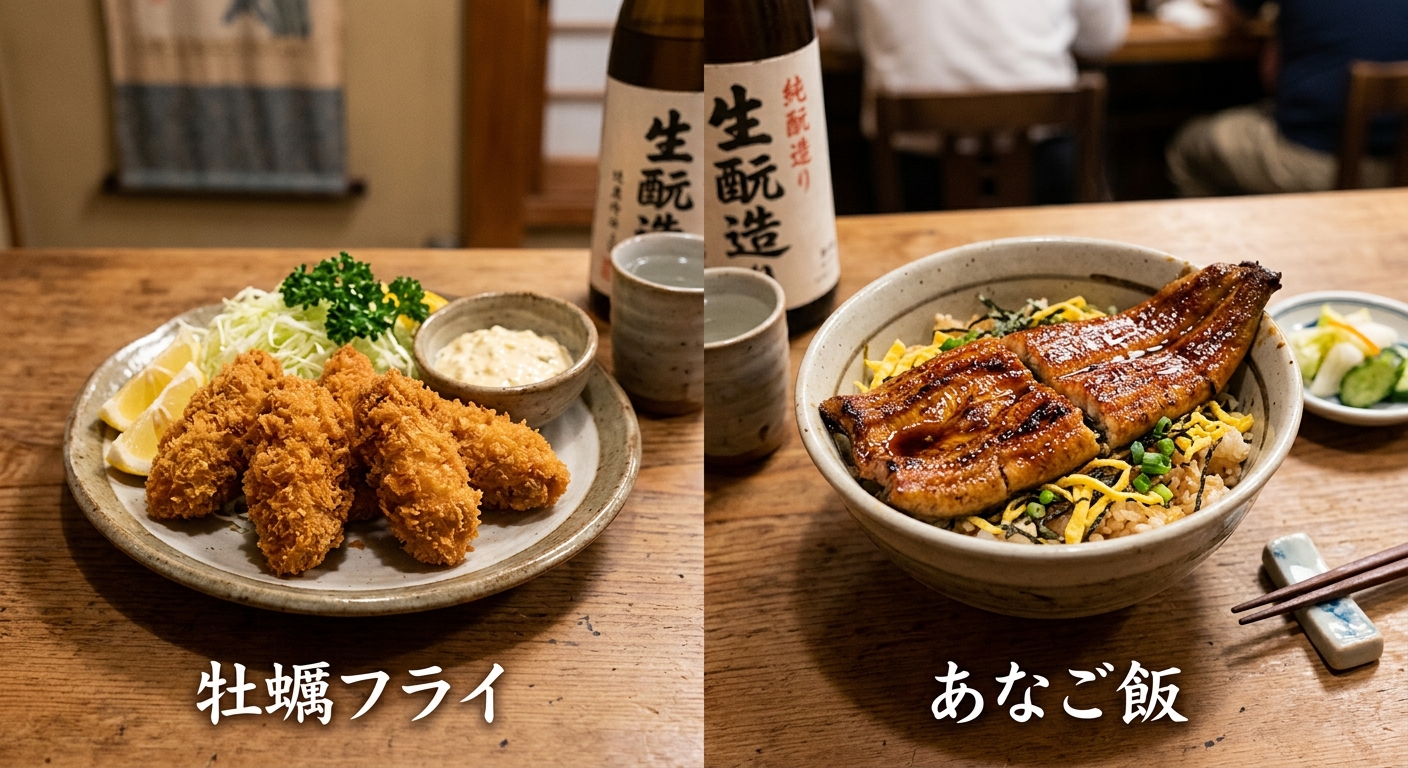
- 牡蠣フライ
広島を代表する海の幸、牡蠣を使った定番の一皿。ころもの香ばしさと牡蠣の濃厚な旨みに、生酛造りのどっしりとした酸がすっと寄り添い、後味を軽やかに引き締めてくれます。
レシピはこちら:クラシル「サクサクカキフライ」
- あなご飯
広島・宮島周辺の郷土料理として知られる、甘辛いタレで炊き上げた穴子をのせたご飯。じんわりとした甘みと香ばしさが、常温からぬる燗にした酒の膨らむ旨みと静かに響き合います。
レシピはこちら:クックパッド「あなご飯」
科学的にひとこと:牡蠣に多く含まれるグリコーゲンやコハク酸などの旨味成分は、生酛造りが持つしっかりとした酸と調和しやすく、酸味が油っぽさや磯の香りを爽やかに洗い流してくれます。あなご飯の甘辛いタレは加熱によって香ばしい香気成分を生み出しており、酒を温めることで立ちのぼる香りと響き合い、口の中の余韻を長く感じさせてくれます。
この蔵をたずねるなら
竹鶴酒造
広島県竹原市本町3-10-29/JR呉線「竹原駅」から徒歩約12分。
町並み保存地区の中にある蔵で、ニッカウヰスキー創業者・竹鶴政孝の生家でもあります。
近くの観光スポット
- 竹原 町並み保存地区/竹原市本町|蔵はこの一角にあります
江戸時代に製塩で栄えた商家の町並みが残る、重要伝統的建造物群保存地区。「安芸の小京都」と呼ばれます。
- 大久野島(うさぎ島)/竹原市忠海町|忠海港まで蔵から車で約15分・約10km、そこからフェリー約15分
約900羽の野生化したウサギがすむ島。旧陸軍の毒ガス貯蔵庫跡が今も残り、資料館があります。
近くの温泉
- 賀茂川荘/竹原市西野町|蔵から車で約10分・約5km
竹原の日帰り入浴ができる旅館。大人800円で、実施日・時間は公式の営業カレンダーでご確認ください。
※営業時間・定休日・日帰り入浴の可否は変わることがあります。おでかけ前に各施設の公式情報をご確認ください。
ひとことメモ(日本酒の用語)
- 純米酒:米・米麹・水だけで造られ、醸造アルコールを添加していない日本酒。米の旨みをまっすぐ感じられるのが特徴です。
- 生酛(きもと)造り:乳酸菌を自然に取り込んで酒母(酛)を育てる、手間ひまのかかる伝統的な製法です。
- 精米歩合:玄米を削り、残った部分の割合。数値が低いほど、米を多く磨いていることを示します。
参考
内容に誤りがございましたら、お手数ですが info@soundrecords.jp までご連絡いただけますと幸いです。
Today’s Pairing
- Sake: Seishu Taketsuru “Kimoto Junmai” — 100% Hiroshima-grown Hattannishiki No.1 rice, rice-polishing ratio (seimai buai) 70%, 15.6% alcohol / Taketsuru Shuzo Co., Ltd. (Honmachi 3-chome, Takehara City, Hiroshima Prefecture)
Official site: https://www.taketsuru-shuzou.co.jp/
- Kayoukyoku (classic Japanese popular song): “Tsugaru Kaikyo Fuyugeshiki” (“Winter Scenery of the Tsugaru Strait”) by Ishikawa Sayuri, 1977
YouTube: https://www.youtube.com/watch?v=QhGJQcN70gU
▶ If the player above doesn’t play, open it on YouTube
The Story of the Brewery
Taketsuru Shuzo’s history begins in the early 1600s, when a family that had moved from Wakayama settled in Takehara, a town on Hiroshima’s Seto Inland Sea coast, and took the name “Taketsuru” (bamboo crane) after a crane was said to have nested, as a good omen, in the bamboo grove behind their home. The family entered the salt-making business around 1650, then expanded into sake brewing in 1733, and adopted the trade name “Ozasaya” in the mid-1800s. In 1888 the brewery joined Hiroshima Prefecture’s first sake brewers’ association, in 1932 sake brewing became its core business, and in 1951 it was incorporated as a stock company. Today’s company president is Taketsuru Toshio.
The brewery is also known as the birthplace of Taketsuru Masataka, who later founded Nikka Whisky and came to be called “the father of Japanese whisky.” Born in Takehara in 1894, Masataka traveled to Scotland in 1918 to study applied chemistry and whisky-making at the University of Glasgow. After returning to Japan, he founded Dai Nippon Kaju Co., Ltd. (now Nikka Whisky) in 1934, in the distant town of Yoichi, Hokkaido. It’s the story of a young man, raised at this brewery, who crossed the sea to learn a craft abroad, then crossed the sea again to start a new kind of brewing in the far north. The brewery’s historic building later served as a filming location for the 2014 NHK morning drama “Massan,” based loosely on Masataka’s life.
The bottle in this pairing, Seishu Taketsuru “Kimoto Junmai,” is brewed from Hiroshima-grown Hattannishiki No.1 rice polished to 70%, using kimoto — a traditional method that cultivates the sake’s fermentation starter by drawing in naturally occurring lactic acid bacteria rather than adding it directly. At 15.6% alcohol and a sake meter value (nihonshu-do) of +19.0, it carries a full-bodied acidity and a crisp, notably dry character. All of the brewery’s core labels are junmai — made only from rice, rice koji, and water — and the brewery describes its sake as meant to be enjoyed alongside food, not on its own.
The Story of the Land
Takehara is a port town on the Seto Inland Sea. Its name appears as far back as the Heian period, in records of the “Aki no Kuni Takehara-sho” estate, land donated to Kyoto’s Kamo Shrine (today’s Shimogamo Shrine) — a history that has earned Takehara the nickname “the little Kyoto of Aki.” In the Edo period, the Hiroshima domain ordered land reclamation here, but the soil proved too salty for rice paddies. Engineers were brought in from Ako, in present-day Hyogo, and from the mid-1600s the town turned to salt production instead. The streets built by merchants who made their fortunes in the salt trade are preserved today as the Takehara Old Town Preservation District.
This port town, which prospered through salt, sake, and coastal shipping, sent no shortage of its people out across the sea. Masataka Taketsuru was one of them. The brewery where he was born and raised has stayed rooted in this same spot, still practicing kimoto, its old traditional method. A son who crossed the sea to create something new, and a brewery that stayed behind to keep its sake alive — two contrasting paths within the same family.
The Story of the Song
“Tsugaru Kaikyo Fuyugeshiki” was released on January 1, 1977, Ishikawa Sayuri’s 15th single. The lyrics are by Aku Yu, with music and arrangement by Miki Takashi. Originally one track on a concept album, “365-nichi Koi Moyou,” released the previous November, it drew wide attention once issued as a standalone single, going on to become a million-seller. That year it won the Japan Record Award for Best Vocal Performance, the Grand Prix and Best Vocal Performance awards at the ’77 FNS Music Festival, and the Popular Award at the 10th Japan Lyricists Award, sweeping many of the year’s major music honors.
The song follows the feelings of a woman boarding an overnight train from Ueno and crossing from Honshu to Hokkaido on the Seikan ferry. For Ishikawa Sayuri, who had until then worked as an idol singer, this song marked her turning point into a full-fledged enka singer, and it has remained her signature song, sung across generations ever since.
Why This Pairing
“Tsugaru Kaikyo Fuyugeshiki” portrays a woman leaving the place she knows, crossing the sea toward the northern land. Masataka Taketsuru, too, left this town on the Seto Inland Sea, crossing the sea twice — first to Scotland, then to Yoichi in Hokkaido — to forge his own path in whisky-making. The song’s protagonist and the young man who left this brewery follow strikingly similar routes, seen from a distance.
And yet the brewery where Masataka was born and raised never crossed the sea itself. It has stayed in Takehara, still cultivating its fermentation starter the old way, through kimoto, drawing on naturally occurring lactic acid bacteria. What crossed over, and what stayed behind — two contrasting choices within a single family. Keep that story in mind as you raise a glass of this full-bodied, acidic sake.
Where to Find This Bottle
The Rakuten Ichiba link below is an affiliate link.
Note: the links above lead to Japan-based retailers. They’re most convenient for readers in Japan, or for those elsewhere who are able to arrange international shipping. Stock and availability change over time, so if you’re near a specialty sake shop, it’s well worth asking for this label by name.
🌡️ Recommended way to drink it: From room temperature up to a gentle “nurukan” warmth (around 40°C/104°F). Warming softens the full-bodied acidity that defines kimoto brewing and opens up the rice’s umami hidden underneath.
Pairing Dishes Worth Trying
- Kaki fry (fried oysters)
A classic dish built on Hiroshima’s famous oysters. The savory crunch of the breading and the oyster’s deep umami are met by the kimoto sake’s full-bodied acidity, which keeps the finish clean and light.
Recipe (in Japanese): Kurashiru, “Crispy Kaki Fry”
- Anago-meshi (grilled conger eel rice)
A local specialty around Hiroshima and Miyajima: rice topped with conger eel glazed in a sweet-savory sauce. Its gentle sweetness and toasted aroma echo quietly against the expanding umami of the sake once warmed.
Recipe (in Japanese): Cookpad, “Anago-meshi”
A note on the science: the glycogen and succinic acid that give oysters their umami harmonize well with the pronounced acidity of kimoto-brewed sake, which in turn cuts cleanly through richness and any briny edge. The caramelized, savory-sweet glaze on grilled conger eel develops aromatic compounds through heat, which resonate with the aromas that rise as the sake is warmed, stretching out the lingering finish on the palate.
Visiting the Brewery
Taketsuru Sake Brewery
3-10-29 Honmachi, Takehara City, Hiroshima. About a 12-min walk from Takehara Station (JR Kure Line).
The brewery stands within the preserved historic district, and is also the childhood home of Taketsuru Masataka, founder of Nikka Whisky.
Sights Nearby
- Takehara Preserved Historic District / Takehara City | the brewery is within this district
A district of merchant houses from the Edo period, when Takehara prospered on salt production; a nationally designated preservation district known as “Aki’s Little Kyoto.”
- Okunoshima (Rabbit Island) / Takehara City | ~15 min, ~10 km by car to Tadanoumi port from the brewery, then a ~15-min ferry
An island home to some 900 feral rabbits. The ruins of a former Imperial Army poison-gas storehouse remain, with a museum on site.
Hot Springs Nearby
- Kamogawaso / Takehara City | ~10 min, ~5 km by car from the brewery
An inn in Takehara that accepts day-use bathers. ¥800 for adults; check the days and hours on its official calendar.
Opening hours, closing days and day-use bathing availability can change. Please check each facility’s official information before visiting.
A Quick Glossary of Sake Terms
- Junmai: Sake made only from rice, rice koji, and water, with no added brewing alcohol. Its flavor carries the straightforward umami of rice.
- Kimoto: A traditional, labor-intensive method of cultivating the fermentation starter (moto) by drawing in naturally occurring lactic acid bacteria, rather than adding lactic acid directly.
- Seimai buai (rice-polishing ratio): The percentage of the original grain remaining after milling. The lower the number, the more the rice has been polished down.
Sources
If you notice any errors in this article, please don’t hesitate to reach out at info@soundrecords.jp.
コメントを残す