今日のペアリング
▶ 上のプレーヤーで再生できない場合は、YouTubeで開く
醸造所の話
ヘリオス酒造は1961年、沖縄県名護市字許田に生まれました。もともとは沖縄のサトウキビを原料にしたラム酒や、古酒「くら」に代表される泡盛の造り手で、現在は泡盛・スピリッツ・ウイスキー・リキュール・ビール・発泡酒と、6種類の酒類製造免許を持つ総合酒類メーカーです。
クラフトビールに手を広げたのは、1994年の酒税法改正で小規模醸造が解禁された後のこと。ヘリオスビール「最初の一杯」は1996年6月20日に生まれました。今回の一本「ゴーヤーDRY」は、沖縄で夏の食卓に欠かせないゴーヤー(にがうり)を主役にした一杯です。麦芽とホップに、沖縄県産ゴーヤー果汁を100%使って仕込む、酒税法上は「発泡酒」に分類される飲み物で、2003年に商品化されました。
この一杯の面白さは、苦みの「時差」にあります。まずホップ由来の苦みが最初のひと口でぐっとやってきて、すっと引いていく。そのあとから、ゴーヤーの風味を伴った爽やかな苦みが追いかけてくる。2011年8月、日本地ビール協会主催の「インターナショナル・ビアコンペティション2011」に初めて出品し、「フリー・ライトラガースタイル部門」で金賞を受賞。同年のジャパン・ビアフェスティバル横浜2011の来場者人気投票でも「神奈川県知事賞」と「横浜市長賞」を受賞し、3冠を達成しました。
土地の話
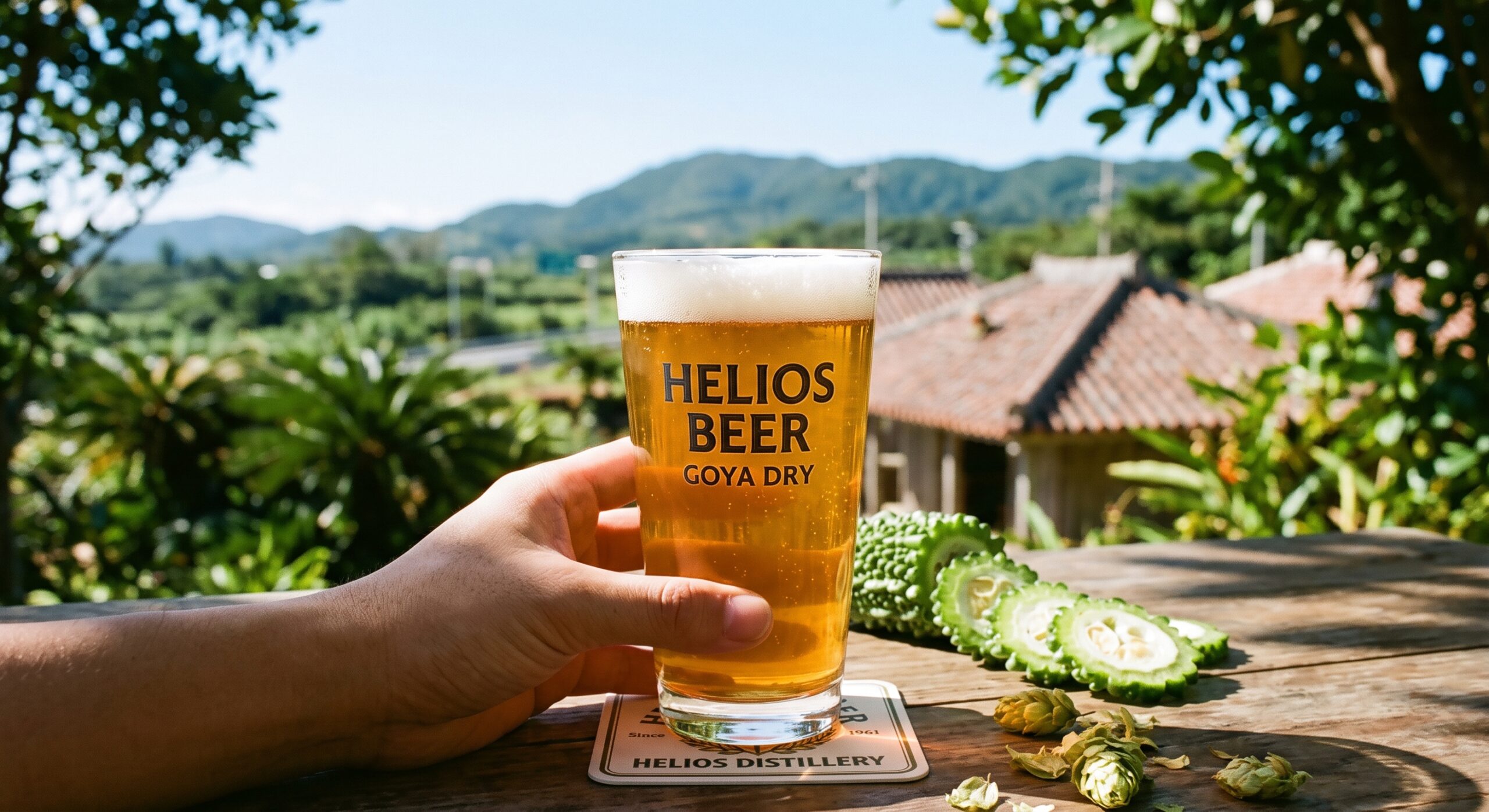
ヘリオス酒造がある名護市許田は、沖縄本島北部・やんばる地域への入り口にあたる場所です。すぐそばの沖縄自動車道「許田IC」を降りると、南国の緑が濃くなっていく。ゴーヤーは、その強い日差しの下で育つ沖縄の夏を代表する野菜で、独特の苦みから「ニガテ」という人もいますが、沖縄では昔から「沖縄の夏はゴーヤーで乗り切る」と言われるほど親しまれてきた食材です。
最初は身構えてしまう苦み。けれど食べ慣れていくうちに、それが無いと物足りなくなる。ヘリオスの造り手たちは、そんなゴーヤーの個性を、遠ざけるのではなくビールの中に正面から取り込むことを選びました。
音楽の話
「島人ぬ宝」は2002年5月22日、BEGINの23枚目のシングルとして発売されました。作詞・作曲・編曲のすべてをBEGIN自身が手がけ、アルバム『ビギンの島唄 ~オモトタケオ2~』に収録。同年はちょうど沖縄の本土復帰から30年の節目にあたり、NHK沖縄放送局の「沖縄本土復帰30周年」イメージソングとしてタイアップし、2003年には第3回山本健吉文学賞の歌詞部門を受賞しています。
BEGINは比嘉栄昇・島袋優・上地等の3人からなるバンドで、いずれも沖縄県石垣島出身の幼なじみ。1988年に東京で結成し、1989年にテレビの勝ち抜きバンド勝負番組に出場、1990年3月21日にメジャーデビューしました。
「島人ぬ宝」が歌う「宝」は、金銀財宝のような分かりやすい豊かさではありません。空を見上げること、海に潜ること、トゥバラーマやデンサー節といった島に伝わる唄を口ずさむこと――生まれ育った島について、自分がどれだけ知っているかを問い直す歌です。観光資源としてではなく、暮らしの記憶や祖父母から親、子へと受け継がれてきたものとして、島の自然や唄を見つめ直しています。
なぜこの組み合わせなのか
どちらも、「遠くへ探しに行かなくていい」という話をしています。「島人ぬ宝」が歌う宝物は、派手な観光地の向こうにあるのではなく、生まれ育った島の空や海、口ずさめる唄という、すぐそばにあるものでした。ゴーヤーDRYの苦みも同じです。最初はとっつきにくく感じるかもしれない、けれど食べ慣れた沖縄の人たちにとっては、夏になると恋しくなる味。遠ざけていた苦みの奥に、実は探していたものがあった、という構造がよく似ています。
味の面でも、この一杯は「時差」で楽しませてくれます。ホップの苦みが最初に来て、引いたあとにゴーヤーの爽やかな苦みが追いかけてくる。一度で終わらず、あとからもう一度届くところが、何度も歌い継がれ、聴くたびに違う一節が心に残るこの曲の楽しみ方とも重なります。
この一杯を、探すなら
※楽天市場へのリンクは広告(アフィリエイト)です。醸造所がタップルームや直営店を持っている場合は、できたてを現地で味わうのが一番のおすすめです。
🌡️ おすすめの飲み方(温度とグラス):よく冷やして4〜6℃、沖縄の夏の暑さに負けないくらいキンキンに冷やすのがこのビールの正解です。グラスはストレートタイプの背の高いタンブラーで、ゴーヤーDRYらしいキレのいい飲み口をまっすぐ楽しんでください。
合わせたい「アテ」
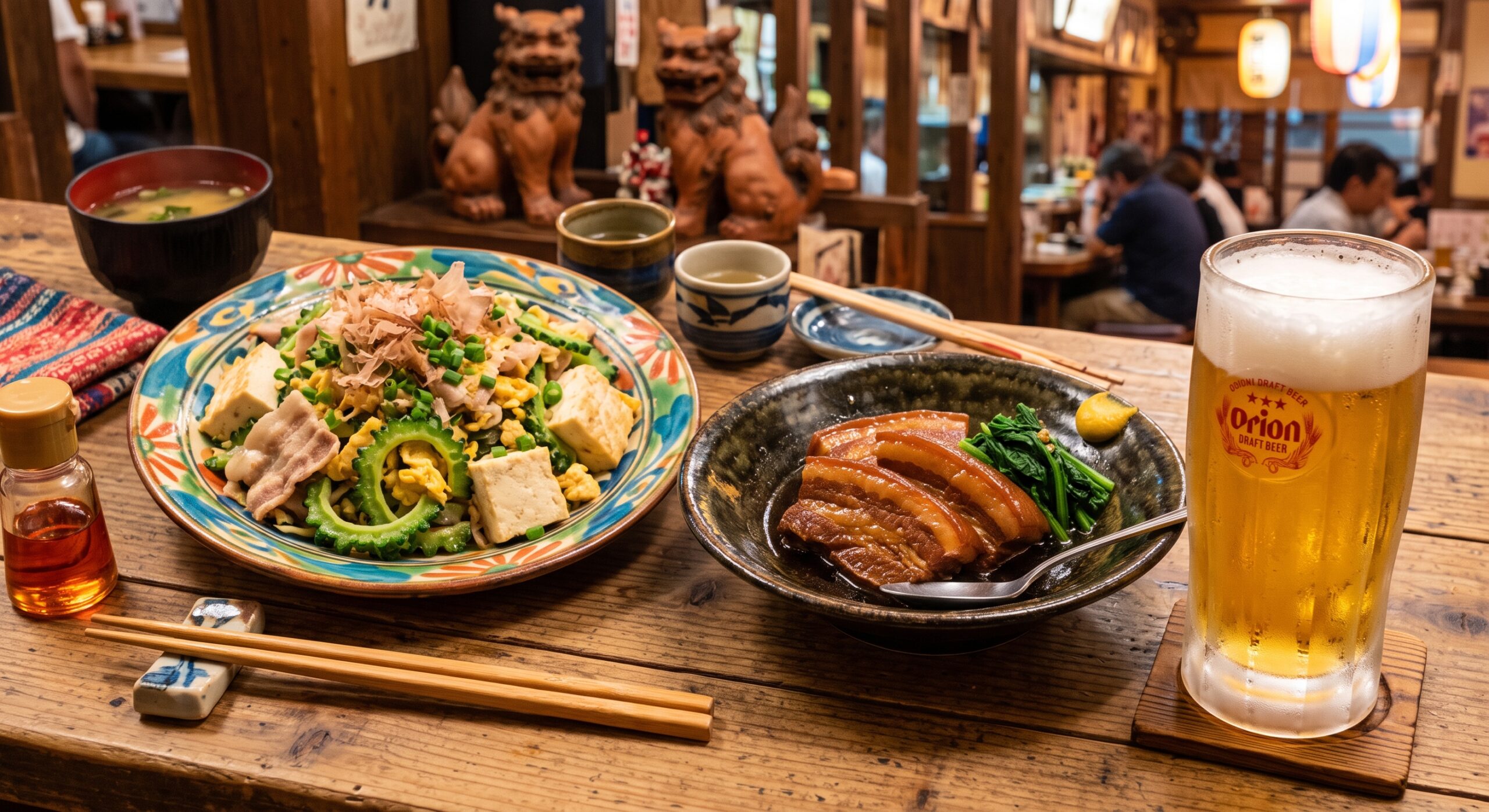
- ゴーヤーチャンプルー
ビールと同じゴーヤーを使った沖縄の定番家庭料理。豚肉や豆腐、卵と一緒に炒めることで、ゴーヤー単体よりも苦みがまろやかになり、ビールの中のゴーヤー風味と呼応します。
- ラフテー(豚の角煮)
沖縄を代表する豚肉料理。とろけるような脂を、ホップの苦みと炭酸が洗い流してくれるので、脂の多い一切れのあとも次のひと口が重たくなりません。
科学的にひとこと:脂肪分やたんぱく質のうま味は、舌の上で苦みの感じ方をやわらげることが知られています。ラフテーの脂やゴーヤーチャンプルーの豚肉・卵のうま味は、ゴーヤーDRYの苦みを丸くしてくれ、そこにホップの苦み成分(イソα酸)と炭酸のガス圧が加わることで、脂の膜を洗い流し、次のひと口をまた新鮮に味わわせてくれます。
この醸造所をたずねるなら
ヘリオス酒造株式会社
沖縄県名護市字許田405/沖縄自動車道「許田IC」のすぐそば。
酒蔵見学を受け付けており、蒸留・醸造の様子を見学できます。
近くの観光スポット
- 道の駅許田(やんばる物産センター)/名護市許田|醸造所から車で約5分・約2km
1994年開業の沖縄県内第一号の道の駅で、やんばる地域(本島北部12市町村)の特産品を扱う「やんばるの玄関口」。2021年には道路情報ターミナルがリニューアルされ、海側に展望デッキ付きの駐車場も加わりました。
- 名護城公園/名護市|醸造所から車で約20分・約9km
敷地69万平方メートルの公園で、日本で最も早く咲くとされるカンヒザクラ(寒緋桜)の名所。毎年1月には「名護さくら祭り」が開かれます。
- オリオンハッピーパーク(オリオンビール名護工場)/名護市|醸造所から車で約15分・約8km
大手ビールメーカー・オリオンビールの工場見学施設。見学35分と試飲20分、あわせて約60分のコースでビールの仕込みから瓶詰めまでを見学できます。
※営業時間・定休日は変わることがあります。おでかけ前に各施設の公式情報をご確認ください。
ひとことメモ(ビールの用語)
- クラフトビール:小規模な醸造所が、造り手の個性を前面に出して仕込むビールの総称。大量生産の均一な味とは別の方向を目指しています。
- 地ビール:1994年の酒税法改正で小規模醸造が解禁された後、各地で生まれたビールの呼び名。現在は「クラフトビール」と呼ばれることが多くなっています。
- ホップ:ビールに苦みと香りを与えるつる性植物の毬花(まりばな)。品種によって、柑橘・トロピカルフルーツ・草原のように香りが変わります。
- モルト:発芽させた大麦(麦芽)のこと。ビールの甘み・色・コクの土台になり、焙煎の深さで色と香ばしさが決まります。
参考
内容に誤りがございましたら、お手数ですが info@soundrecords.jp までご連絡いただけますと幸いです。
Today’s Pairing
▶ If the player above doesn’t play, open it on YouTube
The Story of the Brewery
Helios Distillery was founded in 1961 in Kyoda, Nago City, Okinawa. It began as a maker of rum from Okinawan sugarcane and awamori — its “Kura” aged awamori is one of its best-known labels — and today holds six separate manufacturing licenses covering awamori, spirits, whisky, liqueurs, beer and happoshu.
It moved into craft beer after a 1994 revision to Japan’s liquor tax law opened the door to small-scale brewing. The very first batch of Helios Beer was born on June 20, 1996. Goya Dry, the beer featured here, puts goya (bitter melon) — a vegetable essential to the Okinawan summer table — front and center. Brewed from malt and hops with 100% Okinawan-grown goya juice, it is classified as “happoshu” under the liquor tax law, and was commercialized in 2003.
What makes this beer interesting is a kind of time lag in its bitterness. Hop bitterness hits hard on the first sip and then fades quickly — and then the refreshing bitterness of the goya follows behind it. In August 2011, on its first-ever entry, it won gold in the “Free Light Lager Style” category at the International Beer Competition 2011, hosted by the Japan Craft Beer Association. That same year, at the Japan Beer Festival Yokohama 2011, it also took the Kanagawa Governor’s Award and the Yokohama Mayor’s Award in the attendee popularity vote — a triple crown.
The Story of the Land
Kyoda, where Helios Distillery stands, sits at the entrance to Yanbaru, the northern region of Okinawa’s main island. Step off the Okinawa Expressway at the Kyoda Interchange nearby, and the subtropical green only grows thicker. Goya is the vegetable of the Okinawan summer, grown under that same strong sun — its bitterness puts some people off, but there is an old Okinawan saying that you get through the summer on goya.
It is a flavor that puts you on guard at first. But the more you eat it, the more you miss it when it’s gone. Rather than smoothing that bitterness away, Helios’s brewers chose to bring goya’s particular character straight into the beer.
The Story of the Song
“Shimanchu nu Takara” was released on May 22, 2002, as BEGIN’s 23rd single. BEGIN wrote, composed and arranged it themselves, and it appears on the album Begin no Shimauta ~Omoto Takeo 2~. 2002 also marked the 30th anniversary of Okinawa’s reversion to mainland Japan, and the song was used as the image song for NHK Okinawa’s coverage of that anniversary. In 2003 it won the lyrics category of the 3rd Yamamoto Kenkichi Literary Award.
BEGIN is made up of Eisho Higa, Yu Shimabukuro and Hitoshi Uechi — three childhood friends, all from Ishigaki Island in Okinawa Prefecture. They formed the band in Tokyo in 1988, appeared on a televised battle-of-the-bands show in 1989, and made their major-label debut on March 21, 1990.
The “treasure” in “Shimanchu nu Takara” is not the obvious kind — no gold, no silver. It is looking up at the sky, diving into the sea, humming songs handed down on the island like Tubaraama and Densaa-bushi — a song that asks how much you really know about the island where you grew up. It looks at nature not as a tourist resource but as something bound up with memory, passed from grandparents to parents to children.
Why This Pairing
Both are stories about not having to search far away. The treasure “Shimanchu nu Takara” sings about is not somewhere beyond the tourist map — it’s the island’s own sky and sea, songs you already know how to hum, all close at hand. Goya Dry’s bitterness works the same way. It may put you off at first, but for Okinawans who grew up on it, it’s a flavor you find yourself missing every summer. In both cases, the thing you were looking for turns out to have been inside the very bitterness you were keeping at arm’s length.
The flavor plays out the same way, in time lag. Hop bitterness arrives first, fades, and then the brighter bitterness of goya comes in behind it — a second wave rather than a single hit. That’s not unlike a song you keep returning to, where a different line catches you each time you listen.
Where to Find This Beer
The Rakuten Ichiba link below is an affiliate link.
These are Japanese storefronts. If you are visiting the brewery, drinking it fresh at their own taproom is by far the best option.
🌡️ How to serve it:Well chilled, 4–6°C — as cold as you’d want it against Okinawa’s summer heat. Use a tall, straight tumbler so the crisp, clean finish this beer is known for comes through directly.
Pairing Dishes Worth Trying
- Goya champuru
Okinawa’s staple home-cooked dish, stir-frying the same goya used in the beer with pork, tofu and egg. Cooking it this way softens the bitterness compared to eating goya on its own, and it echoes the goya notes already in the glass.
- Rafute (braised pork belly)
A signature Okinawan pork dish. The hop bitterness and carbonation wash away the richness of the melting fat, so the next bite never feels heavy.
A note on the science: fat and umami are known to soften how bitterness registers on the palate. The fat in rafute and the umami from the pork and egg in goya champuru round off Goya Dry’s bitterness, while the iso-alpha acids from the hops and the beer’s carbonation cut through the oily film left behind, keeping each next bite tasting fresh.
Visiting the Brewery
Helios Distillery Co., Ltd.
405 Kyoda, Nago City, Okinawa. Right by the Kyoda Interchange on the Okinawa Expressway.
Brewery tours are offered, where visitors can see the distilling and brewing process.
Sights Nearby
- Michi-no-Eki Kyoda (Yanbaru Products Center) / Nago City | ~5 min, ~2 km by car from the brewery
Okinawa Prefecture’s very first roadside station, opened in 1994, known as the “gateway to Yanbaru” (the twelve municipalities of northern Okinawa) and selling their local specialty goods. Its road information terminal was renewed in 2021, adding a seaside parking area with an observation deck.
- Nago Castle Park / Nago City | ~20 min, ~9 km by car from the brewery
A 690,000-square-meter park said to have the earliest-blooming cherry blossoms in Japan, thanks to its Kanhizakura trees. The city holds its Nago Cherry Blossom Festival here every January.
- Orion Happy Park (Orion Beer’s Nago Brewery) / Nago City | ~15 min, ~8 km by car from the brewery
A brewery tour facility run by Orion Beer, one of Japan’s major brewers. The roughly 60-minute course, made up of a 35-minute tour and a 20-minute tasting, walks visitors from brewing through to bottling.
Opening hours and closing days can change. Please check each facility’s official information before visiting.
A Quick Glossary of Beer Terms
- Craft beer: Beer made by small breweries that put the character of the maker front and centre, as opposed to the uniformity of mass production.
- Local beer (ji-beer): The name given to beers that sprang up around Japan after a 1994 revision to the liquor tax law allowed small-scale brewing. These days most are called “craft beer” instead.
- Hops: The cones of a climbing plant, which give beer its bitterness and aroma. Depending on the variety, that aroma can read as citrus, tropical fruit or open grassland.
- Malt: Germinated barley. It forms the foundation of a beer’s sweetness, colour and body; how deeply it is roasted determines colour and toastiness.
Sources
If you notice any errors in this article, please don’t hesitate to reach out at info@soundrecords.jp.
コメントを残す