今日のペアリング
▶ 上のプレーヤーで再生できない場合は、YouTubeで開く
酒蔵の話
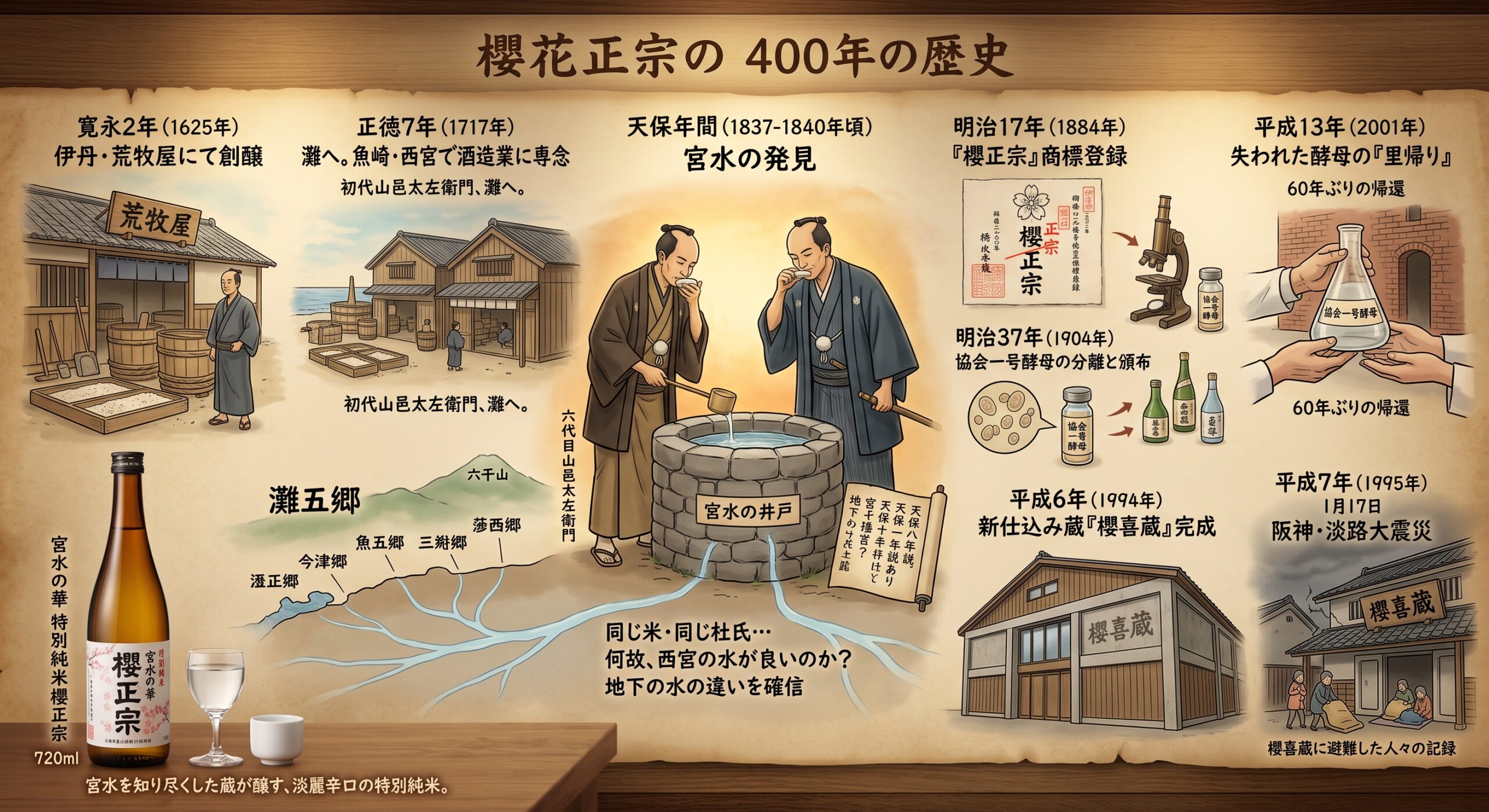
櫻正宗株式会社の創醸は寛永2年(1625年)。荒牧屋として摂津国伊丹で始まり、正徳7年(1717年)、初代山邑太左衛門を名乗って灘の魚崎・西宮で酒造業に専念したことが、蔵としての創業年とされています。以来「山邑太左衛門」の名は代々の蔵元に受け継がれ、現在は11代目にあたります。
六代目太左衛門の時代、蔵は西宮と魚崎の二か所で酒を仕込んでいましたが、同じ米・同じ杜氏で造っているはずなのに、なぜか西宮の酒の方が常に優れていることに気づきました。試行錯誤の末にたどり着いた答えは、水の違い。西宮・梅の木蔵に湧く井戸水こそが、その差の正体でした。この発見が、のちに「宮水」と呼ばれ灘の酒どころとしての名声を支えることになる、江戸時代末期・天保年間の出来事です(何年のことかは史料によって天保8年・天保11年など説が分かれており、正確な年は特定されていません)。目に見えない地面の下の水の違いを見抜いたこの発見によって、灘の酒は大きく品質を高めていきました。
明治17年(1884年)、蔵は「正宗」を商標として登録しようとしましたが、すでに広く使われていた普通名称として却下され、屋号の「櫻」を冠した「櫻正宗」として登録し直しています。さらに明治37年(1904年)には、この蔵の醪から分離された酵母が「協会一号酵母」として全国の蔵元に頒布され、日本各地の酒質向上を支えました。ところが、この酵母は戦後の混乱の中で蔵からは失われたと考えられていました。それが平成13年(2001年)、外部で保存されていたものが見つかり、60年ぶりに蔵へ「里帰り」を果たします。一度は失われたと思われていたものが、静かに戻ってきた出来事でした。
平成6年(1994年)には新しい仕込み蔵「櫻喜蔵」が完成します。その翌年、平成7年(1995年)1月17日、阪神・淡路大震災が発生。蔵の記録によれば、被災した近隣の住民の中には、建ったばかりの櫻喜蔵の姿を見つけて一時避難してきた人も少なくなかったといいます。今回合わせる「宮水の華 特別純米」は、その宮水を知り尽くした蔵元が、兵庫県産山田錦を65%まで磨いて醸した、淡麗でやや辛口の純米酒です。
土地の話
神戸市東灘区の魚崎は、「灘五郷」と呼ばれる日本有数の酒どころ(西宮郷・今津郷・魚崎郷・御影郷・西郷の五つの地区の総称)のひとつ、魚崎郷にあたります。灘五郷酒造組合によれば、宮水の正体は六甲山系から流れ出る地下水。同じ魚崎・住吉の一帯には、櫻正宗のほかにも菊正宗や白鶴といった灘を代表する酒造会社が蔵を構えており、狭いエリアに歴史ある蔵が並ぶ、日本酒好きにとっては特別な土地です。
音楽の話
「そして、神戸」は1972年11月15日発売、内山田洋とクール・ファイブの14枚目のシングルです。作詞は千家和也、作曲は浜圭介、編曲は森岡賢一郎。オリコン最高6位を記録し、第15回日本レコード大賞では作曲賞を、第6回日本有線大賞を受賞しました。
リードボーカルを務めた前川清は、この曲をNHK紅白歌合戦で複数回歌っています。1991年(第42回)、1995年(第46回)、2004年(第55回、ゴスペラーズとの共演)、2007年(第58回、クール・ファイブとの共演)です。中でも1995年の紅白は、まさにこの曲の舞台である神戸を中心に甚大な被害をもたらした阪神・淡路大震災が発生した、その年の年末にあたります。
なぜこの組み合わせなのか
この蔵の歴史には、目に見えないところで街を支えてきたものが、いくつも登場します。地面の下に湧いていた宮水は、六代目蔵元が見抜くまで誰にも気づかれないまま、灘の酒の質を静かに左右していました。全国に広まった協会一号酵母は、一度は失われたと思われながら、60年の時を経て蔵へ帰ってきました。そして、完成したばかりの蔵の建物は、街を大きく揺るがした大地震の中で、逆に人々を受け止める場所になりました。
「そして、神戸」が歌われた1995年の年末は、その大地震から一年も経たない年でした。曲そのものは震災を歌ったものではありませんが、神戸という土地を舞台にしたこの歌が、街が最も大きな傷を負った年に、あらためて全国のお茶の間に流れていたことになります。
地面の下に眠っていた水も、蔵に戻ってきた酵母も、揺れに耐えた建物も、普段は目立たないまま、静かに街を支え続けてきました。この一杯を口にするとき、そんな「地面の下で街を守ってきたもの」に、少しだけ思いを馳せてみてください。
この一本を、探すなら
※楽天市場へのリンクは広告(アフィリエイト)です。在庫・取扱いは変動します。お近くの酒販店でも、ぜひ銘柄名を伝えて探してみてください。
🌡️ おすすめの飲み方:常温で、ゆっくりと。もう少し温めて人肌燗〜ぬる燗(35〜40℃)にすると、宮水由来のやわらかな米の旨みがじんわりと広がります。
合わせたい「アテ」
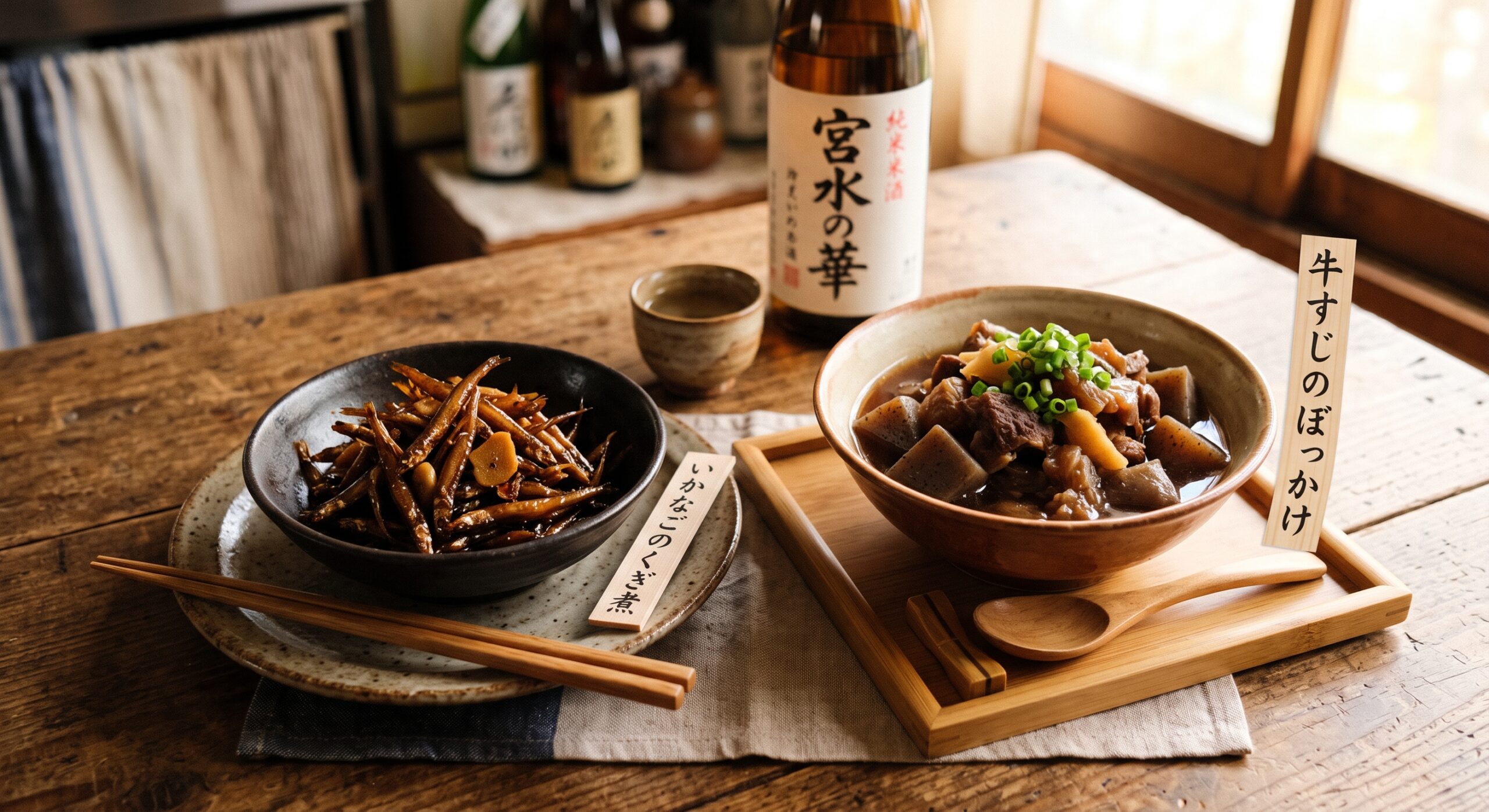
- いかなごのくぎ煮
神戸・兵庫県が発祥とされる、春を告げる郷土料理。いかなごの稚魚を醤油・砂糖・生姜で甘辛く煮上げた佃煮で、灘の海の恵みそのものです。醤油と砂糖が煮詰まってできる香ばしい風味と、じんわりとした甘辛さに、宮水の華のやや辛口ですっきりとした後味がよく寄り添います。
レシピはこちら:クックパッド「簡単!コツで失敗無し*いかなごのくぎ煮」
- 牛すじのぼっかけ
牛すじとこんにゃくを甘辛く煮込んだ、神戸の街に根付いたソウルフード。じっくり煮込んだ牛すじのとろりとした食感と濃厚な旨みに、米の旨みをまっすぐ感じられる特別純米酒が負けずに寄り添います。
レシピはこちら:クラシル「丁寧に作る 甘辛牛すじぼっかけ」
科学的にひとこと:いかなごのくぎ煮や牛すじの甘辛い煮汁には、長時間の加熱でメイラード反応によって生まれる香ばしい香気成分と、素材由来のグルタミン酸などの旨味成分がたっぷり溶け込んでいます。これらは純米酒に含まれるアミノ酸系の旨味と重なり合い、口の中で旨味の相乗効果を生み出してくれます。
この蔵をたずねるなら
櫻正宗(本社蔵)
兵庫県神戸市東灘区魚崎南町5-10-1/阪神電車「魚崎駅」・六甲ライナー「南魚崎駅」から徒歩圏内。
灘五郷のひとつ「魚崎郷」にあり、同じ地区には菊正宗・白鶴など灘を代表する酒造会社の蔵や資料館が集まっています。
近くの観光スポット
- 菊正宗酒造記念館/神戸市東灘区魚崎西町|櫻正宗から徒歩約10分
同じ魚崎郷に蔵を構える菊正宗の酒造資料館。入館無料(9:00〜16:30、2026年4月からは火曜日と年末年始が定休日)。灘の酒造りで使われてきた道具や桶を実際に見学できます。
- 白鶴酒造資料館/神戸市東灘区住吉南町|櫻正宗から車で約10分・約2km
隣接する魚崎郷・住吉エリアにある白鶴酒造の資料館。入館無料。等身大の人形と道具で、灘の酒造りの一年の工程を再現しています。2026年時点で新蔵建設工事に伴う駐車場の一部利用制限があるため、訪問前に公式サイトでご確認ください。
近くの温泉
- 恋野温泉 うはらの湯/神戸市東灘区住吉東町|櫻正宗から車で約10分・約3km
地下からくみ上げた天然温泉を使った日帰り温浴施設。日帰り入浴6:00〜23:30(大人1,200円、土日祝1,300円)。バスタオル・フェイスタオルが1セット無料で付いてきます。
※営業時間・定休日・日帰り入浴の可否は変わることがあります。おでかけ前に各施設の公式情報をご確認ください。
ひとことメモ(日本酒の用語)
- 特別純米酒:特別な製法や原料米を用い、その内容をラベルに表示している純米酒です。
- 精米歩合:玄米を削り、残った部分の割合。数値が低いほど、米を多く磨いていることを示します。
参考
内容に誤りがございましたら、お手数ですが info@soundrecords.jp までご連絡いただけますと幸いです。
Today’s Pairing
- Sake: “Miyamizu no Hana” Tokubetsu Junmai — brewed with 100% Hyogo-grown Yamada Nishiki sake rice, rice-polishing ratio (seimai buai) 65%, 15–16% alcohol / Sakuramasamune Co., Ltd. (5-10-1 Uozaki-Minamimachi, Higashinada-ku, Kobe, Hyogo Prefecture)
Official site: https://www.sakuramasamune.co.jp/
- Kayoukyoku (classic Japanese popular song): “Soshite, Kobe” (“And, Kobe”) by Uchiyamada Hiroshi and Cool Five, 1972
YouTube: https://www.youtube.com/watch?v=nIV6gbn3JhU
▶ If the player above doesn’t play, open it on YouTube
The Story of the Brewery
Sakuramasamune Co., Ltd. traces its brewing back to 1625, when it began as Aramaki-ya in Itami, in what was then Settsu Province. In 1717, the first-generation Yamamura Tazaemon took that name and devoted the business fully to sake brewing in Uozaki and Nishinomiya, in the Nada region — the year the company now recognizes as its founding as a brewery. The name Yamamura Tazaemon has been passed down through the generations ever since; the current head of the brewery is the 11th to bear it.
In the time of the sixth-generation Tazaemon, the brewery was making sake at two locations, Nishinomiya and Uozaki. Despite using the same rice and the same toji (master brewer), the Nishinomiya sake was always noticeably better. After much trial and error, he traced the difference to the water — specifically, the well water at the Umenoki brewery in Nishinomiya. This discovery, later known as “Miyamizu,” would go on to underpin Nada’s reputation as one of Japan’s great sake-brewing regions. It happened sometime in the late Edo period, during the Tenpo era; historical accounts differ on the exact year (some say 1837, others 1840), so no single date can be pinned down here. By identifying a difference in underground water invisible to the eye, this discovery dramatically improved the quality of Nada’s sake.
In 1884, the brewery attempted to register “Masamune” as a trademark, but the application was rejected because the term was already in common use; it registered instead as “Sakuramasamune,” adding its own house name, Sakura (“cherry blossom”). Then, in 1904, a yeast strain isolated from this brewery’s fermenting mash was distributed nationwide as “Kyokai (Brewing Society) Yeast No. 1,” helping raise sake quality at breweries across Japan. That strain was believed to have been lost from the brewery amid the chaos of the postwar years. In 2001, however, a sample preserved outside the brewery was found, and the yeast made its way “home” after 60 years — something once thought lost, quietly returning.
In 1994, the brewery completed a new fermentation building, Sakuki-gura. The following year, on January 17, 1995, the Great Hanshin-Awaji Earthquake struck. According to the brewery’s own records, many local residents who had lost their homes found their way to the newly built Sakuki-gura and took shelter there for a time. The bottle in this pairing, “Miyamizu no Hana” Tokubetsu Junmai, is a light, slightly dry junmai brewed by a brewery that knows that water intimately, using Hyogo-grown Yamada Nishiki rice polished to a seimai buai of 65%.
The Story of the Land
Uozaki, in Kobe’s Higashinada Ward, sits within Uozaki-go, one of the five brewing districts collectively known as “Nada Gogo” (Nishinomiya-go, Imazu-go, Uozaki-go, Mikage-go, and Nishi-go) — one of Japan’s foremost sake-producing regions. According to the Nada Gogo Brewers’ Association, Miyamizu is groundwater flowing down from the Rokko mountain range. Sakuramasamune shares this same Uozaki-Sumiyoshi stretch of the city with other major Nada breweries such as Kikumasamune and Hakutsuru, making it a small area packed with historic sake houses — a special place for anyone who loves Japanese sake.
The Story of the Song
“Soshite, Kobe” was released on November 15, 1972, the 14th single by Uchiyamada Hiroshi and Cool Five. The lyrics are by Senke Kazuya, the music by Hama Keisuke, and the arrangement by Morioka Kenichiro. It reached a peak of No. 6 on the Oricon charts and won the Composition Award at the 15th Japan Record Awards, as well as the 6th Japan Cable Broadcasting Grand Prize.
Maekawa Kiyoshi, the group’s lead vocalist, has performed the song multiple times on NHK’s Kohaku Uta Gassen year-end song contest: in 1991 (the 42nd edition), 1995 (the 46th), 2004 (the 55th, with The Gospellers), and 2007 (the 58th, with Cool Five). The 1995 performance fell at the very end of the year in which the Great Hanshin-Awaji Earthquake caused massive damage centered on Kobe, the city at the heart of this song.
Why This Pairing
This brewery’s history is full of things that supported the city from out of sight. Miyamizu had been welling up beneath the ground all along, quietly shaping the quality of Nada’s sake long before the sixth-generation brewer ever noticed it. The Kyokai No. 1 yeast, once distributed across the country, was thought lost — only to make its way back to the brewery sixty years later. And a fermentation building, just completed, ended up doing the opposite of what a major earthquake might have done to it: it became a place where people found shelter.
The end of 1995, when “Soshite, Kobe” was sung on Kohaku, came less than a year after that earthquake. The song itself isn’t about the disaster, but a song set in Kobe was, once again, playing in living rooms across the country in the very year the city had been hit hardest.
Water that had been resting unseen underground, yeast that found its way back to the brewery, and a building that held firm through the shaking — each of them quietly supported the city without drawing attention to itself. As you take a sip of this sake, take a moment to think about the things that hold a city up from beneath the ground.
Where to Find This Bottle
The Rakuten Ichiba link below is an affiliate link.
Note: the links above lead to Japan-based retailers. They’re most convenient for readers in Japan, or for those elsewhere who are able to arrange international shipping. Stock and availability change over time, so if you’re near a specialty sake shop, it’s well worth asking for this label by name.
🌡️ Recommended way to drink it: At room temperature, taken slowly. Warmed slightly to around 35–40°C (hitohada-kan to nuru-kan) also brings out the gentle rice-derived umami that comes from the Miyamizu water.
Pairing Dishes Worth Trying
- Ikanago no Kugini (simmered young sand lance)
A springtime local specialty said to have originated in Kobe and Hyogo. Young sand lance are simmered down in soy sauce, sugar, and ginger into a sweet-savory preserve — a taste of the sea right off Nada’s coast. Its toasty, caramelized notes and gentle sweet-and-salty balance pair naturally with the crisp, slightly dry finish of “Miyamizu no Hana.”
Recipe (in Japanese): Cookpad, “Easy, No-Fail Ikanago no Kugini”
- Gyusuji no Bokkake (simmered beef tendon and konnyaku)
A Kobe soul food: beef tendon and konnyaku simmered in a sweet-savory sauce until tender. The rich, gelatinous depth of the long-simmered beef tendon stands up well to a junmai sake with a straightforward, rice-forward umami.
Recipe (in Japanese): Kurashiru, “Carefully Made Sweet-and-Savory Beef Tendon Bokkake”
A note on the science: the long-simmered sweet-savory sauces in both dishes are rich in Maillard-reaction aromatic compounds from prolonged heating, along with glutamic acid and other umami compounds from the ingredients themselves. These resonate with the amino-acid umami in junmai sake, producing a synergistic boost of savoriness on the palate.
Visiting the Brewery
Sakuramasamune (head brewery)
5-10-1 Uozaki-Minamimachi, Higashinada-ku, Kobe, Hyogo. Within walking distance of Hanshin Railway’s Uozaki Station and the Rokko Liner’s Minami-Uozaki Station.
It stands in Uozaki-go, one of the five brewing districts of Nada; the same neighborhood is home to the breweries and museums of other major Nada sake makers such as Kikumasamune and Hakutsuru.
Sights Nearby
- Kikumasamune Sake Brewery Memorial Museum / Uozaki, Higashinada-ku | ~10 min on foot from Sakuramasamune
A sake-brewing museum run by Kikumasamune, another brewery in the same Uozaki-go district. Free admission (9:00–16:30; closed Tuesdays from April 2026 onward, plus New Year’s). See the tools and vats once used for brewing in Nada up close.
- Hakutsuru Sake Brewery Museum / Sumiyoshi-Minamimachi, Higashinada-ku | ~10 min, ~2 km by car from Sakuramasamune
A museum in the neighboring Sumiyoshi area, in the same Uozaki brewing district. Free admission. Life-size figures and tools recreate a full year of sake brewing in Nada. As of 2026, construction of a new brewhouse limits some parking, so check the official site before visiting.
Hot Springs Nearby
- Koino-yu Onsen Uhara no Yu / Sumiyoshi-Higashimachi, Higashinada-ku | ~10 min, ~3 km by car from Sakuramasamune
A day-use bathhouse drawing on natural hot spring water pumped from underground. Open 6:00–23:30 (adults ¥1,200, ¥1,300 on weekends/holidays). A bath towel and face towel set is included free of charge.
Opening hours, closing days and day-use bathing availability can change. Please check each facility’s official information before visiting.
A Quick Glossary of Sake Terms
- Tokubetsu Junmai: Junmai (sake made only from rice, rice koji, and water, with no added brewing alcohol) brewed with a special method or rice, disclosed on the label.
- Seimai buai (rice-polishing ratio): The percentage of the original grain remaining after milling. The lower the number, the more the rice has been polished down.
Sources
If you notice any errors in this article, please don’t hesitate to reach out at info@soundrecords.jp.
コメントを残す