今日のペアリング
▶ 上のプレーヤーで再生できない場合は、YouTubeで開く
蔵の話
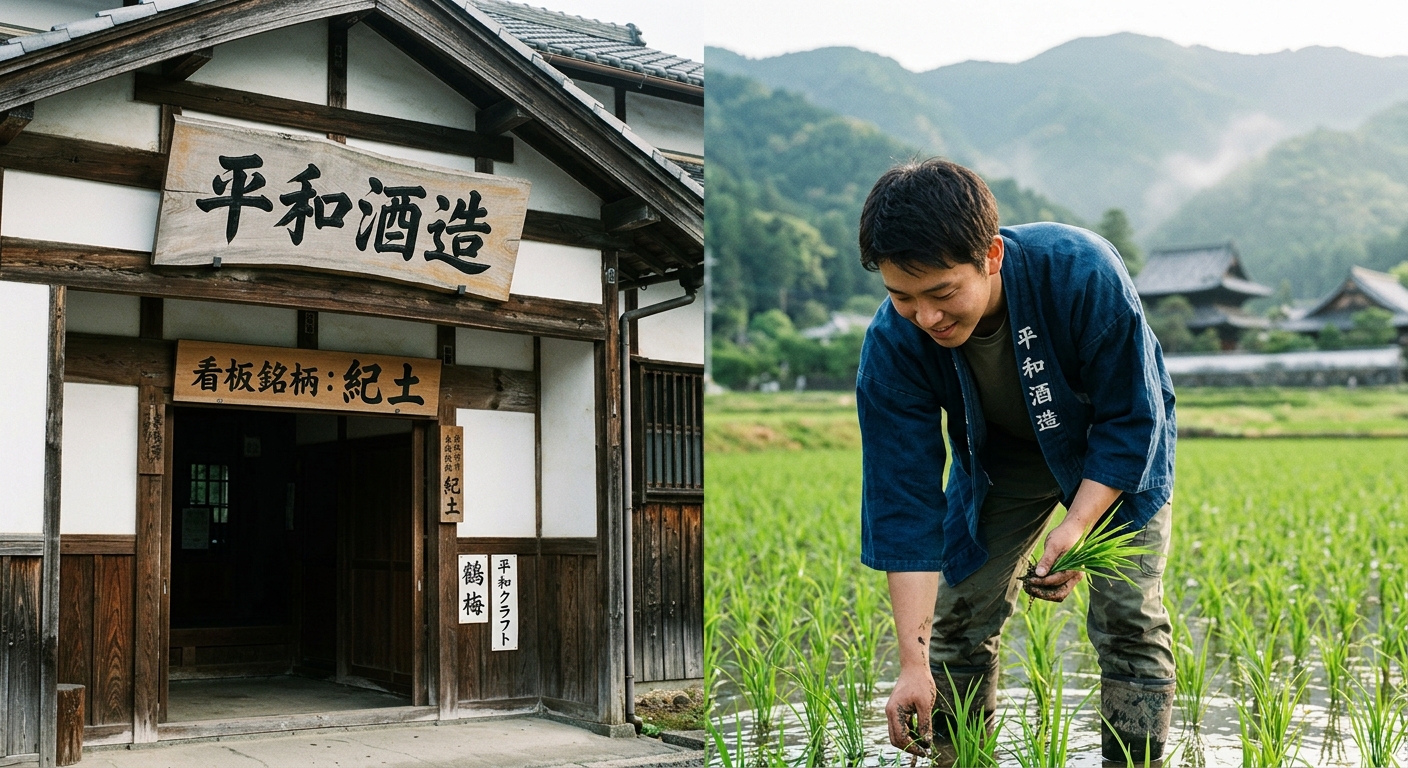
平和酒造は、和歌山県海南市溝ノ口にある蔵です。
創業は昭和3年(1928年)。
江戸時代から続く谷口酒造の谷口保さんが、婿養子として山本家の家督を継ぎ、酒好きが高じて自分の蔵を始めた、というのが始まりだと公式サイトは書いています。
蔵の名前の由来は、そのあとにあります。
戦時中、この蔵は休業していました。
二代目の山本保正さんは、酒造りを再開する許可を求めて国会まで陳情に行きます。
そこで語ったのが、「戦後の平和な時代に酒造りをしたい」という想いでした。
その想いが、そのまま蔵の名前になりました。
「平和」という二文字は、めでたい名前として選ばれたのではありません。
酒を造れなかった時代を通り抜けた人が、次の時代に向けて置いた言葉です。
いまの看板銘柄が「紀土(KID)」です。
梅酒の「鶴梅」シリーズ、クラフトビールの「平和クラフト」も同じ蔵で造られています。
酒米についても、この蔵には書き残していることがあります。
冬に酒を造る杜氏や蔵人自身が、初夏に苗を植え、稲刈りまでの管理をしている。
酔狂で始めたことではなく、後継者不足に悩む地域の声と、稲作農家出身の若い蔵人の気持ちが出会って実現した、と公式サイトにあります。
「酒は生き物、人は掛け橋」というのが、この蔵の言葉です。
土地の話
海南市のある紀伊半島の西側には、千年単位で続いてきたものが点在しています。
蔵から車で20分ほどの長保寺は、長保2年――西暦1000年――に、一条天皇の勅願によって創建されたと伝わります。
本堂、多宝塔、大門の3棟がそろって国宝で、この3つがそろう寺は奈良の法隆寺とここだけだと、寺自身が書いています。
寛文6年(1666年)には、紀州徳川家の初代・頼宣がここを菩提寺に定めました。
千年続いた寺のある土地で、戦争で一度止まった蔵が、また酒を造り始めた。
時間の長さがずいぶん違う二つですが、どちらも「続ける」という同じことをしています。
音楽の話
坂本冬美さんは1967年3月30日、和歌山県西牟婁郡上富田町の生まれです。
1986年4月から約2年間、作曲家・猪俣公章さんの内弟子となり、1987年に「あばれ太鼓」でデビューしました。
「祝い酒」は1988年の曲。
作詞はたかたかしさん、作曲は師匠である猪俣公章さん、編曲は小杉仁三さんです。
この年の第30回日本レコード大賞で金賞を受け、同じ年の暮れ、第39回NHK紅白歌合戦に初出場したときに歌ったのもこの曲でした。
めでたい席で酌み交わす酒を、まっすぐに歌った一曲です。
なぜこの組み合わせなのか
「祝い酒」は、祝うために注がれる酒の歌です。
そして「平和」という蔵名は、祝える時代が来てほしいという願いから付きました。
順番が逆なのが面白いところだと思います。
歌のほうは、すでに訪れた祝いの場にある酒を歌っています。
蔵のほうは、まだ来ていない平和に向けて名前を付けました。
和歌山で生まれた歌手が、1988年に歌った祝いの酒。
和歌山で、戦後に名前を付け直した蔵が、いま造っている酒。
同じ県から出た二つを並べると、「酒を酌み交わせること自体が、実はそんなに当たり前ではない」ということが、少しだけ見えてきます。
紀土の純米大吟醸は、華やかで澄んだ味わいの一本です。
祝いの席にも、何でもない夜にも合います。
何でもない夜に飲めることのほうが、たぶんありがたいことです。
この一本を、探すなら
※楽天市場へのリンクは広告(アフィリエイト)です。在庫・取扱いは変動します。お近くの酒販店でも、ぜひ銘柄名を伝えて探してみてください。
🌡️ おすすめの飲み方:よく冷やして10℃前後で。純米大吟醸の澄んだ香りは、冷やしすぎると閉じてしまうので、冷蔵庫から出して少し置くくらいがちょうどよい温度です。グラスは口がすぼまったワイングラス型だと、香りが立ちます。
合わせたい「アテ」
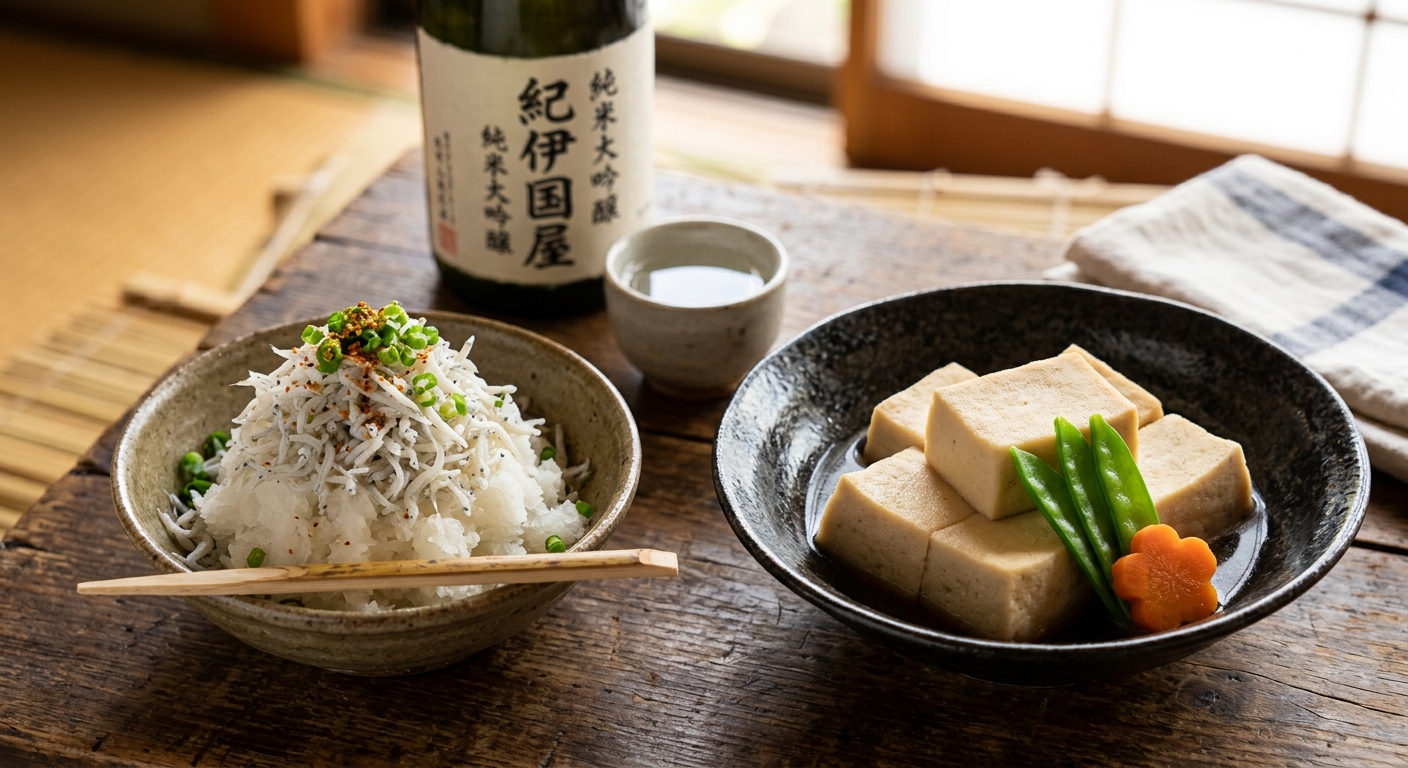
- しらすおろし
和歌山は加太や湯浅など、しらす漁の盛んな土地です。大根おろしの辛みとしらすの塩気だけの、手のかからない一皿。純米大吟醸の澄んだ香りを邪魔しません。
レシピはこちら:クラシル「カブのしらすおろし」(大根でも同じ作り方でできます)
- 高野豆腐の含め煮
高野豆腐は、和歌山の高野山で生まれたと伝わる保存食です。だしを含ませた穏やかな味で、酒の香りを立てたまま口をいったん落ち着かせてくれます。
レシピはこちら:クラシル「高野豆腐の含め煮」
科学的にひとこと:大根おろしに含まれる辛味成分(イソチオシアネート類)は揮発性が高く、口の中の脂や生臭さの印象を短時間で引き下げます。一方、高野豆腐のように出汁をたっぷり含んだ煮物は、グルタミン酸などの旨味成分が口に残り、次の一口の酒を甘く感じさせます。香りの立つ純米大吟醸は、こうした「いったん整える」アテと相性がよい組み合わせです。
この蔵をたずねるなら
平和酒造株式会社
和歌山県海南市溝ノ口119番地/JR紀勢本線「海南駅」から車で約15分。
日本酒「紀土」のほか、鶴梅の梅酒シリーズ、クラフトビール「平和クラフト」もここで造られています。
近くの観光スポット
- 長保寺/海南市|蔵から車で約20分・約18km
長保2年(1000年)、一条天皇の勅願により創建されたと伝わる古刹。本堂・多宝塔・大門の3棟がそろって国宝で、この3つがそろう寺は奈良の法隆寺とここだけだと公式サイトは記しています。寛文6年(1666年)に紀州徳川家初代・頼宣が菩提寺に定めました。
- 紀三井寺/和歌山市|蔵から車で約18分・約15km
宝亀元年(770年)、唐から渡った為光上人の開基と伝わります。桜の名所として知られ、西国三十三所観音巡礼は日本遺産に登録されています。
近くの温泉
- 紀州黒潮温泉/和歌山市(和歌山マリーナシティ内)|蔵から車で約15分・約12km
海を見ながら入れる日帰り温泉。11:00〜23:00(最終受付22:00)で、入浴料は大人が平日1,100円、土日祝1,200円です。
※営業時間・定休日・日帰り入浴の可否は変わることがあります。おでかけ前に各施設の公式情報をご確認ください。
ひとことメモ(日本酒の用語)
- 純米大吟醸酒:精米歩合50%以下まで磨いた米で醸す、香り高く上品な純米酒の最高峰にあたるランクです。
- 精米歩合:玄米を削り、残った部分の割合。数値が低いほど、米を多く磨いていることを示します。
参考
内容に誤りがございましたら、お手数ですが info@soundrecords.jp までご連絡いただけますと幸いです。
Today’s Pairing
▶ If the player above doesn’t play, open it on YouTube
The Story of the Brewery
Heiwa Shuzou stands in the Mizonokuchi district of Kainan, Wakayama, and was founded in 1928. By the brewery’s own account, it began when Tamotsu Taniguchi — of Taniguchi Shuzou, a brewing house dating back to the Edo period — married into the Yamamoto family, took over as head of the household, and let his love of sake carry him into starting a brewery of his own.
The name came later.
During the war the brewery was shut down. Yasumasa Yamamoto, the second-generation head, went as far as the National Diet to petition for permission to resume brewing. What he spoke of there was his wish to brew sake in the peaceful era that would follow the war. That wish became the name of the brewery: heiwa, peace.
Those two characters were not chosen because they sounded auspicious. They were set down by someone who had lived through a time when sake could not be made, and who was looking at what came next.
The brewery’s flagship sake today is Kid. The Tsurume plum wine series and a craft beer line, Heiwa Craft, come from the same house.
There is one more thing the brewery has written down, about its rice. The toji and the brewery staff who make the sake in winter plant the seedlings themselves in early summer and tend the fields through to the harvest. This was not started as a whim, the site says: it came about when the worries of an area short of successors met the feelings of a young brewery worker who had grown up in a rice-farming family. “Sake is alive; people are the bridge” is how the brewery puts it.
The Story of the Land
On the western side of the Kii Peninsula, where Kainan sits, things that have lasted a thousand years are scattered about.
Chohoji Temple, a twenty-minute drive from the brewery, is said to have been founded in the year 1000 by imperial decree of Emperor Ichijo. Its main hall, its pagoda and its great gate are all three National Treasures — a set the temple notes is matched only by Horyuji in Nara. In 1666 it was designated the family temple of Yorinobu, the first lord of the Kishu branch of the Tokugawa clan.
In a place where a temple has stood for a thousand years, a brewery that was stopped once by a war started making sake again. The two run on very different timescales, and yet both are doing the same thing: continuing.
The Story of the Song
Fuyumi Sakamoto was born on 30 March 1967 in Kamitonda, Nishimuro District, Wakayama. From April 1986 she spent roughly two years as a live-in apprentice to the composer Koshou Inomata, and in 1987 she made her debut with “Abare Daiko.”
“Iwai-zake” came in 1988, with lyrics by Kashi Takata, music by her teacher Inomata, and arrangement by Jinzou Kosugi. It won a Gold Prize at the 30th Japan Record Awards that year, and it was the song she sang at the end of that same year on her first appearance at the 39th NHK Kohaku Uta Gassen.
It is a song about the sake poured at a celebration, sung straight.
Why This Pairing
“Iwai-zake” is a song about sake poured in order to celebrate. And the name Heiwa was given out of a wish for a time in which celebration would be possible.
What I find interesting is that the order is reversed. The song stands inside a celebration that has already arrived. The brewery named itself toward a peace that had not yet come.
A singer born in Wakayama, singing in 1988 about celebratory sake. A brewery in Wakayama that renamed itself after the war and is brewing still. Put the two side by side and something becomes faintly visible: that being able to pour a drink for one another is not quite as ordinary as it looks.
Kid Junmai Daiginjo is fragrant and clear. It suits a celebration, and it suits an evening with nothing in particular happening. Being able to drink it on an evening with nothing happening is probably the greater luxury.
Where to Find This Bottle
The Rakuten Ichiba link below is an affiliate link.
Note: the links above lead to Japan-based retailers. They’re most convenient for readers in Japan, or for those elsewhere who are able to arrange international shipping. Stock and availability change over time, so if you’re near a specialty sake shop, it’s well worth asking for this label by name.
🌡️ How to drink it: Well chilled, around 10°C. The clean aroma of a junmai daiginjo closes up if it is too cold, so taking it out of the fridge and letting it sit for a few minutes is about right. A wine glass with a tapered mouth lifts the aroma.
Pairing Dishes Worth Trying
- Shirasu oroshi (whitebait with grated daikon)
Wakayama has active whitebait fisheries at Kada, Yuasa and elsewhere. Nothing more than the sharpness of grated daikon and the salt of the fish — a dish that asks almost nothing of you and does not get in the way of a daiginjo’s clean aroma.
Recipe (in Japanese): Kurashiru, “Turnip Shirasu Oroshi” (the same method works with daikon)
- Koya-dofu simmered in dashi
Koya-dofu, freeze-dried tofu, is said to have originated on Mount Koya in Wakayama. Simmered full of dashi, its quiet flavor settles the palate without flattening the sake’s aroma.
Recipe (in Japanese): Kurashiru, “Koya-dofu Simmered in Dashi”
A note on the science: the pungent compounds in grated daikon (isothiocyanates) are highly volatile and quickly lower the impression of fat or fishiness in the mouth. Simmered dishes heavy with dashi, like koya-dofu, leave umami compounds such as glutamate behind instead, which makes the next sip of sake read as sweeter. A fragrant junmai daiginjo pairs well with dishes that reset the palate this way.
Visiting the Brewery
Heiwa Shuzou Co., Ltd.
119 Mizonokuchi, Kainan, Wakayama. About a 15-minute drive from Kainan Station on the JR Kisei Main Line.
Besides the sake brand Kid, the brewery makes the Tsurume plum wine series and a craft beer line, Heiwa Craft.
Sights Nearby
- Chohoji Temple / Kainan | ~20 min, ~18 km by car from the brewery
Founded in the year 1000 by imperial decree of Emperor Ichijo, according to tradition. Its main hall, pagoda and great gate are all three designated National Treasures — a combination the temple’s own site notes is shared only with Horyuji in Nara. In 1666 it was made the family temple of the Kishu branch of the Tokugawa clan.
- Kimiidera Temple / Wakayama City | ~18 min, ~15 km by car from the brewery
Said to have been founded in 770 by Ikou, a monk who came from Tang China. It is known for its cherry blossoms, and the Saigoku Kannon pilgrimage it belongs to is registered as a Japan Heritage route.
Hot Springs Nearby
- Kishu Kuroshio Onsen / Wakayama City (inside Wakayama Marina City) | ~15 min, ~12 km by car from the brewery
A day-use hot spring looking out over the sea, open 11:00–23:00 (last entry 22:00). Admission is 1,100 yen for adults on weekdays, 1,200 yen on weekends and holidays.
Opening hours, closing days and day-use bathing availability can change. Please check each facility’s official information before visiting.
A Quick Glossary of Sake Terms
- Junmai daiginjo: sake made only from rice, rice koji and water, with the rice polished down to 50% or less of its original size. It tends toward fragrance and clarity.
- Seimai buai (rice-polishing ratio): the percentage of the rice grain that remains after milling. A lower number means more of the outside has been polished away.
Sources
If you notice any errors in this article, please don’t hesitate to reach out at info@soundrecords.jp.
コメントを残す