この記事を耳で聞く
表示中の言語で読み上げます。音声は端末の設定によって異なります。
今日のペアリング
- 日本酒:仁喜多津(にきたつ) 伊予の薄墨桜 純米酒/愛媛県産酒米「松山三井」100%使用・精米歩合70%・アルコール度数15.5度・日本酒度+3/水口酒造株式会社(愛媛県松山市道後喜多町3-23)
公式サイト:https://minakuchi-shuzo.jp/ - 歌謡曲:「伊予の女」北島三郎(1968年)
YouTube:https://www.youtube.com/watch?v=vDk-CLnC3jU
▶ 上のプレーヤーで再生できない場合は、YouTubeで開く
酒蔵の話
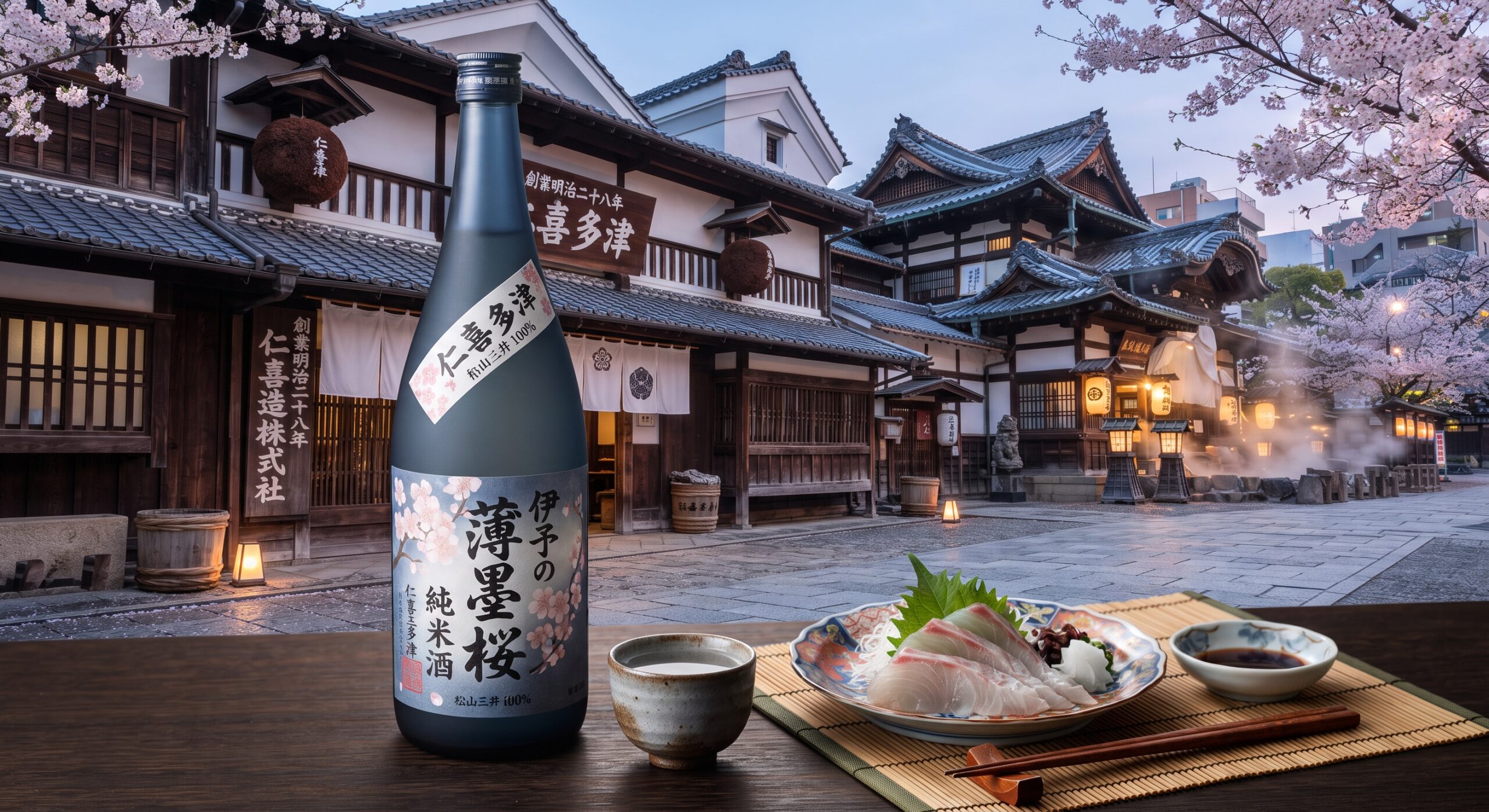
水口酒造株式会社は、1895年(明治28年)、初代・水口大七郎によって道後温泉のすぐそばに創業しました。以来、愛媛・松山・道後地区では唯一の造り酒屋として、120年以上にわたって地域の酒文化を支えてきています。店舗兼主屋は1917年(大正6年)に建てられた木造2階建てで、現在は国登録有形文化財に指定されています。2024年10月からは6代目として水口皓介氏が代表取締役社長を務めています。
蔵の看板銘柄「仁喜多津」は、創業と同じ年に誕生しました。蔵元によれば、万葉集に額田王が詠んだ歌に登場する道後の古称「熟田津(にきたつ)」から名をいただいたもので、「仁愛と喜び多き津渡」の意を込めているといいます。今回合わせる「伊予の薄墨桜 純米酒」は、愛媛県産の酒米「松山三井」を100%使用し、精米歩合70%、アルコール度数15.5度、日本酒度+3で仕込まれた一本。淡麗ですっきりとした飲み口で、蔵元は愛媛の鯛の刺身との相性を勧めています。
その名の由来は、松山市下伊台町の西法寺にある一本の桜です。天武天皇の御代、皇后が道後温泉で療養していた眼病が本尊の薬師如来への祈願で快癒したお礼に、天皇から薄墨色の綸旨とともに桜の木が賜られたと伝わり、その綸旨の色にちなんで「薄墨桜」と名づけられたといいます。この桜は松山市指定天然記念物で、江戸時代の民謡「伊予節」「伊予万歳」にも詠まれ、今に歌い継がれてきました。
土地の話
水口酒造が蔵を構える道後は、「日本最古の温泉」と伝わる道後温泉を中心に広がる土地です。蔵のすぐそばに立つ道後温泉本館は、現在も日帰り入浴ができる国指定重要文化財の木造建築で、蔵と温泉は同じ道後の湯気の中で、100年以上並んで時を重ねてきました。
この土地の歴史はさらに古く遡ります。万葉集には、額田王が熟田津(道後の古称とされる港)から船出する様子を詠んだ歌が収められており、「仁喜多津」という銘柄名はこの歌にちなんでいます。道後は、歌に詠まれるほど古くから人々の行き交う土地だったということです。
音楽の話
「伊予の女」は1968年7月1日、日本クラウンから発売された北島三郎のシングルです。作詞は星野哲郎、作曲・編曲は島津伸男。北島三郎が手がけた「女(ひと)シリーズ」の一曲で、愛媛県松山市を舞台に、歌詞には三津ヶ浜・道後・石手川といった地名が織り込まれています。
北島三郎は1936年10月4日、北海道上磯郡知内村(現・知内町)生まれ。1962年に「なみだ船」でミリオンセラーを記録して以降、「函館の女」「兄弟仁義」「与作」「まつり」など数々のヒット曲を世に送り出し、NHK紅白歌合戦には1963年の第14回から出場を重ねてきました。「伊予の女」は、そうした全国各地を舞台にした「女シリーズ」の一曲として、松山の地名を歌に刻んでいます。
なぜこの組み合わせなのか
「仁喜多津」という酒の名前は、額田王が万葉集に詠んだ道後の古い港の名「熟田津」から受け継がれたものでした。千三百年以上前の歌が、今も盃の銘柄名として生き続けています。一方「伊予の女」は、道後・三津ヶ浜・石手川という、今も地図の上に実在する松山の地名を歌詞に織り込んだ、昭和の歌謡曲です。
古代の歌に由来する酒の名前と、昭和の歌に刻まれた土地の名前。どちらも道後という同じ土地を、別々の時代から見つめてきました。さらに、この酒の名の由来となった「薄墨桜」自体も、天皇から賜った桜を道後の人々が江戸時代の民謡にまで歌い継いできたという、もう一つの「歌になった道後」の物語を背負っています。盃を傾けながら、千三百年分の道後の時間に思いを馳せてみてください。
この一本を、探すなら
- 蔵元の公式サイト:https://minakuchi-shuzo.jp/
- 楽天市場で買う:「仁喜多津 伊予の薄墨桜」の商品ページを見る(720ml・1,540円)
※楽天市場へのリンクは広告(アフィリエイト)です。在庫・取扱いは変動します。お近くの酒販店でも、ぜひ銘柄名を伝えて探してみてください。
合わせたい「アテ」
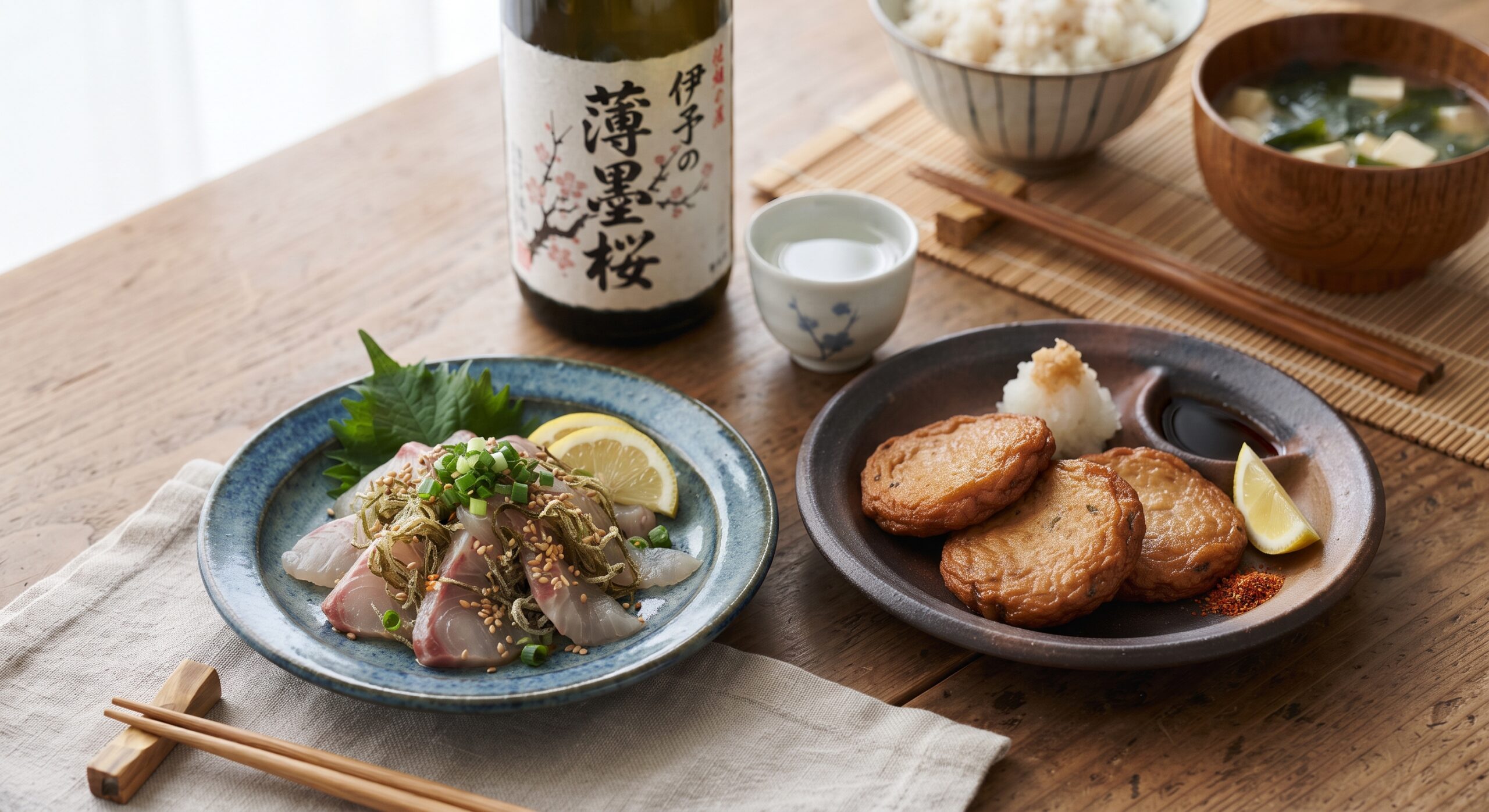
- 鯛の刺身の塩昆布漬け
蔵元自身がこの酒との相性を勧める「愛媛の鯛の刺身」。塩昆布とごま油でさっと和えるだけで、鯛の旨みがぐっと引き立ちます。淡麗でやや辛口な「伊予の薄墨桜」の後味のきれいなキレが、脂の少ない鯛の繊細な甘みを邪魔せず寄り添います。
レシピはこちら:クラシル「鯛の刺身で簡単 塩昆布漬け」 - じゃこ天
愛媛県南予地方生まれの、白身魚のすり身を揚げた郷土料理。松山でもポピュラーな酒の肴です。揚げたての香ばしさと魚のすり身の旨みに、純米酒のふくよかな米の旨みが寄り添います。
レシピはこちら:クックパッド「じゃこ天」
科学的にひとこと:塩昆布に含まれるグルタミン酸と、鯛の身に含まれるイノシン酸は、組み合わさることで旨味を何倍にも感じさせる相乗効果を生みます。じゃこ天のような揚げ物は、高温で加熱することで香ばしい香気成分(メイラード反応による生成物)が生まれ、純米酒の穏やかな香りと響き合うと同時に、日本酒のアルコールが油の重さを後味からすっと洗い流してくれます。
この蔵をたずねるなら
水口酒造(道後蔵)
愛媛県松山市道後喜多町3-23/伊予鉄道「道後温泉」電停から徒歩約5分、松山自動車道 松山ICから車で約28分・約8.6km(NAVITIME調べ、道後温泉駐車場までの経路)。
道後温泉本館の表参道近く、1917年築の木造2階建ての店舗兼主屋(国登録有形文化財)で、今も日本酒・地ビール等を造り続けています。
近くの観光スポット
- 伊佐爾波神社/松山市道後町|水口酒造から徒歩約5分
全国に3例しかない「八幡造」の社殿(1967年国指定重要文化財)で知られる、道後温泉の守り神。135段の石段の上に、桃山風の豪華な社殿が立ちます。 - 石手寺/松山市石手|水口酒造から車で約5分・約1.6km
四国八十八ヶ所第51番札所。仁王門は国宝、三重塔・鐘楼などは国指定重要文化財。お遍路文化を間近で感じられる古刹です(拝観時間は訪問前にご確認ください)。 - 松山城/松山市丸之内|水口酒造から車で約9分・約2.4km
現存12天守のひとつで、天守は国指定重要文化財。ロープウェイ・リフトで本丸まで登ることができます。
近くの温泉
- 道後温泉本館/松山市道後湯之町|水口酒造から徒歩約5分
日本最古と伝わる温泉で、本館は国指定重要文化財。2024年7月に全館営業を再開しており、日帰り入浴が可能です(神の湯階下=大人700円など、営業時間6:00〜23:00・札止22:30)。
※営業時間・定休日・日帰り入浴の可否は変わることがあります。おでかけ前に各施設の公式情報をご確認ください。
ひとことメモ(日本酒の用語)
- 純米酒:米・米麹・水だけで造られ、醸造アルコールを添加していない日本酒。米の旨みをまっすぐ感じられるのが特徴です。
- 精米歩合:玄米を削り、残った部分の割合。数値が低いほど、米を多く磨いていることを示します。
参考
- 水口酒造株式会社 公式サイト
- 仁喜多津 伊予の薄墨桜 純米酒 720ml | 水口酒造公式オンラインストア
- 温泉のすぐそばにある酒蔵「水口酒造」|水口酒造株式会社(note)
- 伊予の女 – Wikipedia
- 北島三郎 – Wikipedia
- 営業時間と料金案内 | 道後温泉本館 – 松山市公式ホームページ
- 伊予薄墨 | 桜図鑑 – 公益財団法人日本さくらの会
内容に誤りがございましたら、お手数ですが info@soundrecords.jp までご連絡いただけますと幸いです。
오늘의 페어링
- 니혼슈: 니키타쓰 이요노 우스즈미자쿠라 준마이슈/에히메현산 양조용 쌀 「마쓰야마미이」 100% 사용·정미율 70%·알코올 도수 15.5도·니혼슈도 +3/미나쿠치 주조 주식회사(에히메현 마쓰야마시 도고키타마치 3-23) 공식 사이트:https://minakuchi-shuzo.jp/
- 가요: 「이요의 여인」 기타지마 사부로(1968년) YouTube:https://www.youtube.com/watch?v=vDk-CLnC3jU
▶ 위 플레이어에서 재생되지 않으면 YouTube에서 열기
양조장 이야기
미나쿠치 주조 주식회사는 1895년(메이지 28년) 초대 미나쿠치 다이시치로가 도고 온천 바로 곁에서 창업했습니다. 이후 에히메·마쓰야마·도고 지구 유일의 양조장으로 120년 이상 지역의 술 문화를 지탱해 왔습니다. 점포를 겸하는 본채는 1917년(다이쇼 6년)에 세운 목조 2층 건물로 현재 국가 등록 유형문화재로 지정되어 있습니다. 2024년 10월부터는 6대째인 미나쿠치 고스케 씨가 대표이사 사장을 맡고 있습니다. 양조장의 대표 브랜드 「니키타쓰」는 창업과 같은 해에 탄생했습니다. 양조장에 따르면 『만요슈』에 누카타노 오키미가 지은 노래에 나오는 도고의 옛 이름 「니키타쓰(熟田津)」에서 이름을 따왔으며 「인애와 기쁨이 많은 나루」라는 뜻을 담았다고 합니다. 이번에 곁들이는 「이요노 우스즈미자쿠라 준마이슈」는 에히메현산 양조용 쌀 「마쓰야마미이」를 100% 사용하고 정미율 70%, 알코올 도수 15.5도, 니혼슈도 +3으로 빚은 한 병입니다. 담백하고 산뜻한 목 넘김을 지녀 양조장은 에히메산 도미회와의 조합을 추천합니다. 그 이름의 유래는 마쓰야마시 시모이다이마치 사이호지에 있는 벚나무 한 그루입니다. 덴무 천황 시대에 황후가 도고 온천에서 요양하던 눈병이 본존인 약사여래에게 기원한 끝에 나았고, 그 감사의 뜻으로 천황이 연한 먹빛의 윤지와 함께 벚나무를 내렸다고 전해집니다. 그 윤지의 색에서 따와 「우스즈미자쿠라」라고 이름 붙였다고 합니다. 이 벚나무는 마쓰야마시 지정 천연기념물이며 에도 시대 민요 「이요부시」와 「이요만자이」에도 등장해 지금까지 노래로 이어져 왔습니다.
지역 이야기
미나쿠치 주조가 있는 도고는 「일본에서 가장 오래된 온천」으로 전해지는 도고 온천을 중심으로 펼쳐진 지역입니다. 양조장 바로 곁에 선 도고 온천 본관은 지금도 당일 입욕이 가능한 국가 지정 중요문화재인 목조 건축물입니다. 양조장과 온천은 같은 도고의 김 속에서 100년 이상 나란히 시간을 쌓아 왔습니다. 이 땅의 역사는 더 오래전으로 거슬러 올라갑니다. 『만요슈』에는 누카타노 오키미가 니키타쓰(도고의 옛 이름으로 여겨지는 항구)에서 배를 타고 떠나는 모습을 읊은 노래가 수록되어 있으며 「니키타쓰」라는 술 이름은 이 노래에서 따왔습니다. 도고는 노래에 읊어질 만큼 오래전부터 사람들이 오가던 땅이었다는 뜻입니다.
음악 이야기
「이요의 여인」은 1968년 7월 1일 일본 크라운에서 발매한 기타지마 사부로의 싱글입니다. 작사는 호시노 데쓰로, 작곡·편곡은 시마즈 노부오가 맡았습니다. 기타지마 사부로의 「여인 시리즈」 중 한 곡으로 에히메현 마쓰야마시를 무대로 하며 가사에는 미쓰가하마·도고·이시테강 같은 지명이 담겨 있습니다. 기타지마 사부로는 1936년 10월 4일 홋카이도 가미이소군 시리우치무라(현 시리우치초)에서 태어났습니다. 1962년 「눈물의 배」로 밀리언셀러를 기록한 이후 「하코다테의 여인」 「형제의 의리」 「요사쿠」 「축제」 등 수많은 히트곡을 선보였고 NHK 홍백가합전에는 1963년 제14회부터 거듭 출연했습니다. 「이요의 여인」은 그렇게 전국 각지를 무대로 한 「여인 시리즈」의 한 곡으로 마쓰야마의 지명을 노래에 새기고 있습니다.
이 조합을 고른 이유
「니키타쓰」라는 술 이름은 누카타노 오키미가 『만요슈』에 읊은 도고의 옛 항구 이름 「니키타쓰(熟田津)」에서 이어받은 것이었습니다. 천삼백 년 이상 된 노래가 지금도 술잔의 브랜드 이름으로 살아 있습니다. 한편 「이요의 여인」은 도고·미쓰가하마·이시테강이라는 지금도 지도에 실재하는 마쓰야마의 지명을 가사에 담은 쇼와 시대 가요입니다. 고대 노래에서 유래한 술 이름과 쇼와 시대 노래에 새겨진 땅 이름. 둘 다 도고라는 같은 땅을 서로 다른 시대에서 바라봐 왔습니다. 더 나아가 이 술 이름의 유래인 「우스즈미자쿠라」 자체도 천황에게 받은 벚나무를 도고 사람들이 에도 시대 민요로까지 노래하며 이어 왔다는 또 하나의 「노래가 된 도고」 이야기를 짊어지고 있습니다. 술잔을 기울이며 천삼백 년에 걸친 도고의 시간을 떠올려 보세요.
이 한 병을 찾으신다면
- 양조장 공식 사이트:https://minakuchi-shuzo.jp/
- 라쿠텐 시장에서 구매하기:「니키타쓰 이요노 우스즈미자쿠라」 상품 페이지 보기(720ml·1,540엔)
※ 라쿠텐 시장 링크는 광고(제휴 마케팅)입니다. 재고와 취급 여부는 달라질 수 있습니다. 가까운 주류 판매점에도 꼭 제품 이름을 알려 주고 찾아보세요.
🌡️ 추천 음용법:충분히 차갑게 하거나 상온으로 드세요. 담백하고 약간 드라이한 준마이슈이므로 도미회처럼 산뜻한 안주에 곁들일수록 시원하게 식혔을 때 매력이 돋보입니다.
함께 먹고 싶은 「안주」
- 도미회 소금 다시마 절임양조장 스스로 이 술과 잘 어울린다고 추천하는 「에히메산 도미회」입니다. 소금 다시마와 참기름으로 가볍게 무치기만 해도 도미의 감칠맛이 한층 살아납니다. 담백하고 약간 드라이한 「이요노 우스즈미자쿠라」의 깔끔하게 떨어지는 끝맛이 기름기 적은 도미의 섬세한 단맛을 방해하지 않고 어우러집니다. 레시피는 여기:구라시루 「도미회로 간단하게 소금 다시마 절임」
- 자코텐에히메현 난요 지방에서 탄생한 흰살생선 살을 갈아 튀긴 향토 요리입니다. 마쓰야마에서도 흔한 술안주입니다. 갓 튀긴 고소함과 생선살의 감칠맛에 준마이슈의 풍성한 쌀 감칠맛이 어우러집니다. 레시피는 여기:쿡패드 「자코텐」
과학적으로 한마디: 소금 다시마에 든 글루탐산과 도미살에 든 이노신산이 결합하면 감칠맛을 몇 배로 느끼게 하는 상승효과가 생깁니다. 자코텐 같은 튀김은 고온으로 가열하면 고소한 향 성분(마이야르 반응 생성물)이 생겨 준마이슈의 은은한 향과 호응하고, 동시에 니혼슈의 알코올이 뒷맛에서 기름의 무거움을 산뜻하게 씻어 줍니다.
이 양조장을 방문하신다면
미나쿠치 주조(도고 양조장)에히메현 마쓰야마시 도고키타마치 3-23/이요 철도 「도고 온천」 전차 정류장에서 도보 약 5분, 마쓰야마 자동차도 마쓰야마 IC에서 차로 약 28분·약 8.6km(NAVITIME 조사, 도고 온천 주차장까지의 경로). 도고 온천 본관 앞 참배길 근처에 있는 1917년 건립 목조 2층 점포 겸 본채(국가 등록 유형문화재)에서 지금도 니혼슈와 지역 맥주 등을 계속 만들고 있습니다.
가까운 관광 명소
- 이사니와 신사/마쓰야마시 도고마치|미나쿠치 주조에서 도보 약 5분전국에 3곳밖에 없는 「하치만즈쿠리」 양식의 신전(1967년 국가 지정 중요문화재)으로 알려진 도고 온천의 수호신입니다. 135개의 돌계단 위에 모모야마풍의 화려한 신전이 서 있습니다.
- 이시테지/마쓰야마시 이시테|미나쿠치 주조에서 차로 약 5분·약 1.6km시코쿠 팔십팔 개소 제51번 순례 사찰입니다. 니오몬은 국보이며 삼중탑·종루 등은 국가 지정 중요문화재입니다. 순례 문화를 가까이에서 느낄 수 있는 고찰입니다(관람시간은 방문 전에 확인해 주세요).
- 마쓰야마성/마쓰야마시 마루노우치|미나쿠치 주조에서 차로 약 9분·약 2.4km현존하는 12개 천수각 중 하나로 천수각은 국가 지정 중요문화재입니다. 로프웨이와 리프트로 혼마루까지 올라갈 수 있습니다.
가까운 온천
- 도고 온천 본관/마쓰야마시 도고유노마치|미나쿠치 주조에서 도보 약 5분일본에서 가장 오래되었다고 전해지는 온천으로 본관은 국가 지정 중요문화재입니다. 2024년 7월에 전관 영업을 재개했으며 당일 입욕이 가능합니다(가미노유 아래층=성인 700엔 등, 영업시간 6:00~23:00·접수 마감 22:30).
※ 영업시간·정기휴일·당일 입욕 가능 여부는 바뀔 수 있습니다. 방문 전에 각 시설의 공식 정보를 확인해 주세요.
한마디 메모(니혼슈 용어)
- 준마이슈: 쌀·쌀누룩·물만으로 만들고 양조 알코올을 첨가하지 않은 니혼슈입니다. 쌀의 감칠맛을 곧바로 느낄 수 있는 것이 특징입니다.
- 정미율: 현미를 깎은 뒤 남은 부분의 비율입니다. 수치가 낮을수록 쌀을 많이 깎았다는 뜻입니다.
참고 자료
- 미나쿠치 주조 주식회사 공식 사이트
- 니키타쓰 이요노 우스즈미자쿠라 준마이슈 720ml | 미나쿠치 주조 공식 온라인 스토어
- 온천 바로 곁의 양조장 「미나쿠치 주조」|미나쿠치 주조 주식회사(note)
- 이요의 여인 – Wikipedia
- 기타지마 사부로 – Wikipedia
- 영업시간과 요금 안내 | 도고 온천 본관 – 마쓰야마시 공식 홈페이지
- 이요우스즈미 | 벚꽃 도감 – 공익재단법인 일본 벚꽃회
내용에 오류가 있다면 번거로우시겠지만info@soundrecords.jp으로 알려 주시면 감사하겠습니다.
コメントを残す