日本語で読む | This is the English version of a bilingual article.
Today’s Pairing
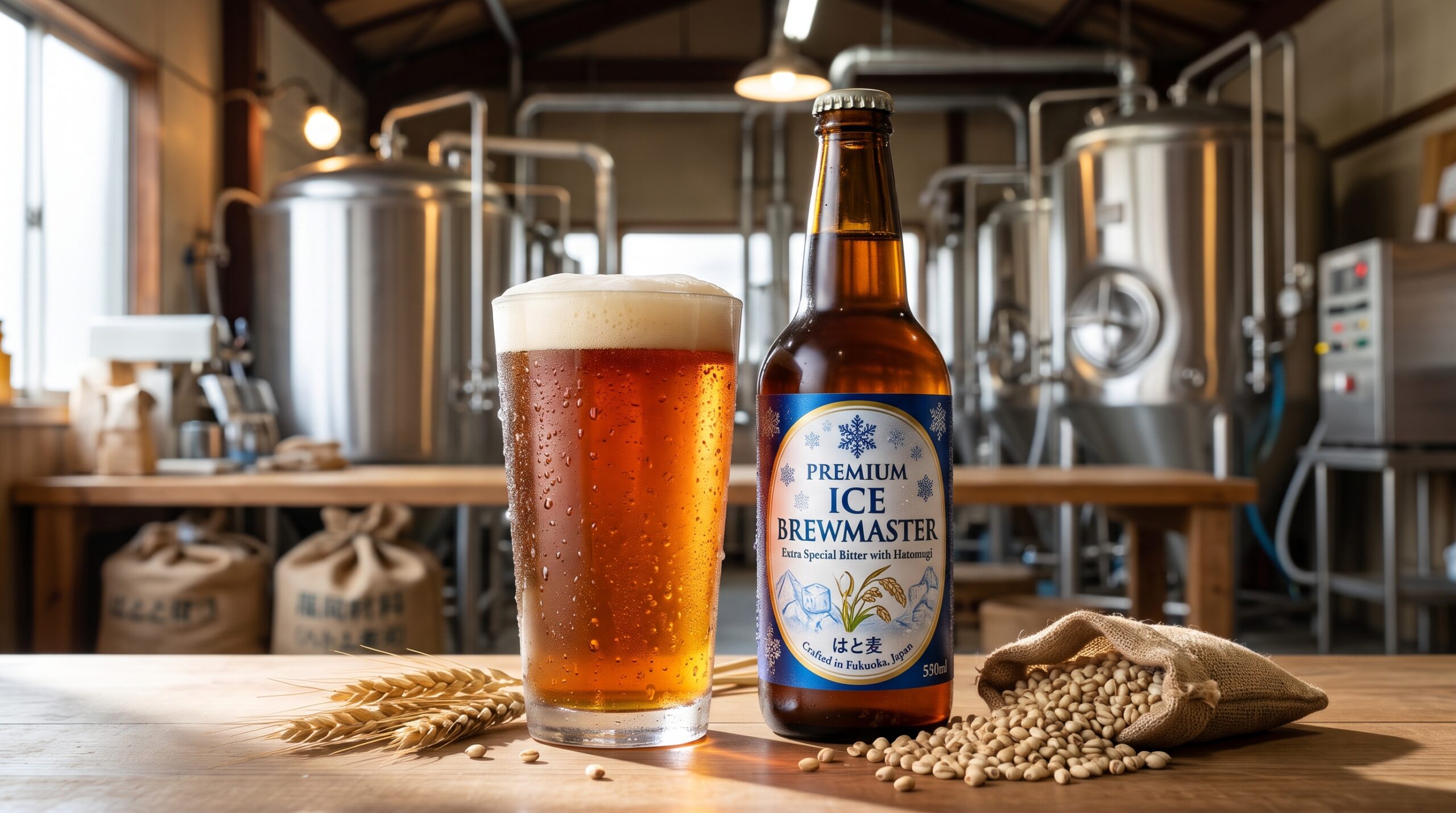
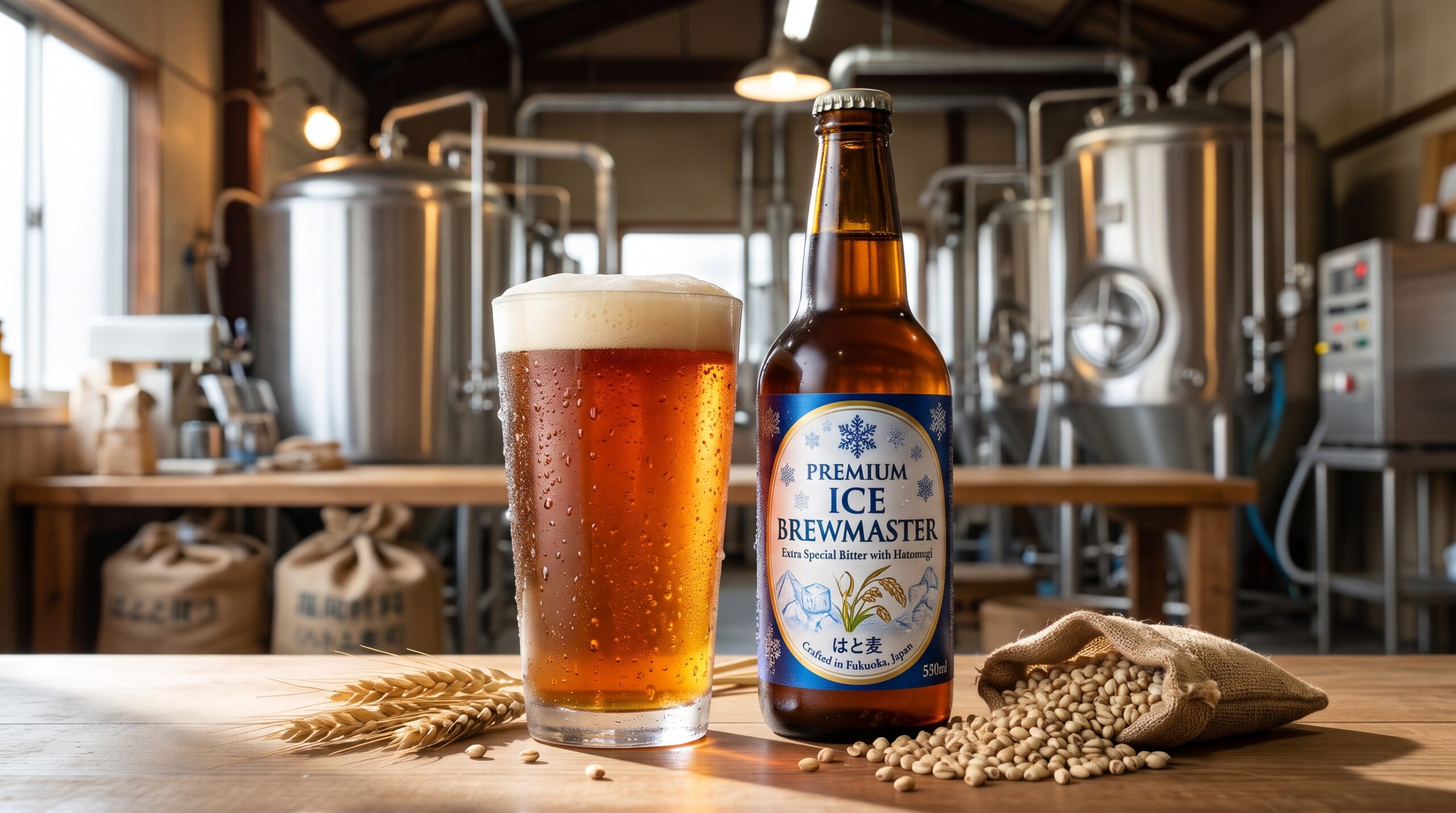
- Craft beer: The Brewmaster “Premium Ice Brewmaster” — Extra Special Bitter (ESB), 5.0% ABV, 40 IBU, brewed from American malt and hops with hatomugi (Job’s tears/pearl barley) grown in Kurume City, Fukuoka, and aged slowly at a temperature just short of freezing / K’s Brewing Company, Ltd. (Befu, Jonan Ward, Fukuoka City, Fukuoka Prefecture)
Official site: https://www.brewmaster2002.com/ - Music: “Shonen Jidai” (“Boyhood”) by Yosui Inoue (1990)
YouTube: https://www.youtube.com/watch?v=71MgEPmdPuI
▶ If the player above doesn’t play, open it on YouTube
The Story of the Brewery
K’s Brewing Company, Ltd. was founded in Fukuoka City in May 2001. Its representative, Hidenori Kato, first encountered craft beer in 1993, while working on beer-can research and development at a can manufacturer and coming across cans from small American breweries. He took leave to travel to California, where visiting more than twenty breweries and brewpubs changed the course of his life. He left the can company in 1995 and studied brewing in Los Angeles, and after returning to Japan, decided to brew for himself after finding that, at the time, not a single brewery in Japan was making fruit beer. The flagship brand “The Brewmaster” launched in 2002, starting with “White Strawberry,” made with Fukuoka’s “Toyonoka” brand strawberries, followed by a steady stream of fruit beers using Kyushu specialties such as Oita’s kabosu citrus. “Kabosu & Honey” became a talking point at the 2008 Yokohama Beer Fest and took first place in the popularity vote the following year.
The beer featured here, Premium Ice Brewmaster, is an Extra Special Bitter (ESB), a style that originated in England. It runs 5.0% ABV and 40 IBU, brewed from American malt and hops with the addition of hatomugi grown in Kurume City, Fukuoka Prefecture, with malt making up over 99% of the grain bill (because it contains hatomugi, Japanese liquor tax law classifies it as happoshu, not beer). Four high-alpha aroma hop varieties bring out citrus notes, and it’s fermented with a top-fermenting ale yeast. Rather than finishing quickly, it’s aged slowly at a temperature just short of freezing — colder than most beers — concentrating its flavor into a smooth, rounded drink. It’s also part of the “Hatomugi Monogatari” lineup, a project built around making use of Kurume’s hatomugi.
The Story of the Land
Kurume City is known within Fukuoka Prefecture as a hatomugi-growing area. Hatomugi, a grain long valued in traditional Chinese medicine and as a health food, has been the focus of local product development led by the area’s chamber of commerce. The resulting goods range widely — bread, cookies, dumplings, makgeolli — and Premium Ice Brewmaster is one entry in that lineup.
The beer is brewed in Jonan Ward, Fukuoka City; the hatomugi that goes into it is grown in Kurume City. Seen from the brewery, a sack of grain from another corner of the same prefecture ends up meeting in a single glass.
The Story of the Song
Yosui Inoue was born on August 30, 1948, in Koubukuro-machi, Kaho District, Fukuoka Prefecture (now the Koubukuro area of Iizuka City), and grew up in Itada Town, Tagawa District — the Chikuho region, once a thriving coal-mining area. He debuted under the name Andre Candre on CBS Sony in September 1969.
“Shonen Jidai” (“Boyhood”) was written as the theme song for the film of the same name, directed by Masahiro Shinoda and based on Hyozo Kashiwabara’s novel “Nagai Michi” and the manga by Fujiko Fujio A. The film opened on August 11, 1990. Inoue wrote both the lyrics and the music; the co-composer credited as “Natsumi Hirai” is a pen name for producer Shinji Kawahara. Released on September 21, 1990, on the For Life Records label as Inoue’s 28th single, it peaked at No. 4 on the Oricon weekly chart soon after release. The following year, 1991, it was used in a TV commercial for Sony’s Handycam video camera, which spread its reputation and turned it into a song that kept selling for years. The Recording Industry Association of Japan certified it a million-seller in July 1997, with cumulative shipments reaching 1.36 million copies. The film “Shonen Jidai” itself won six awards, including Picture of the Year, at the 14th Japan Academy Film Prize.
Why This Pairing
Premium Ice Brewmaster doesn’t concentrate its flavor by finishing quickly. It does it by aging slowly, over time, at a temperature just short of freezing — colder than most beer gets. “Shonen Jidai” didn’t spread all at once the moment it was released, either. At release in September 1990 it reached only No. 4 on the Oricon weekly chart; it was a TV commercial the following year that spread its reputation, and it wasn’t certified a million-seller until 1997. Both of them owe less to the force of the moment they were finished than to the time spent afterward, concentrating.
Inside the glass, two different corners of the same prefecture meet — a brewery in Fukuoka City and hatomugi grown in Kurume City. Inside the song, a grown man raised in Chikuho looks back, from a distance, at his own boyhood — a time he can no longer return to. Both of them share the same motion: deliberately calling back a place, or a time, that has already moved on.
Where to Find This Beer
The Rakuten Ichiba link below is an affiliate link.
- Brewery official site:https://www.brewmaster2002.com/
- Buy on Rakuten Ichiba: View the product page (set of 3, ¥3,310)
These are Japanese storefronts. If you are visiting the brewery, drinking it fresh at their own taproom is by far the best option.
Pairing Dishes Worth Trying
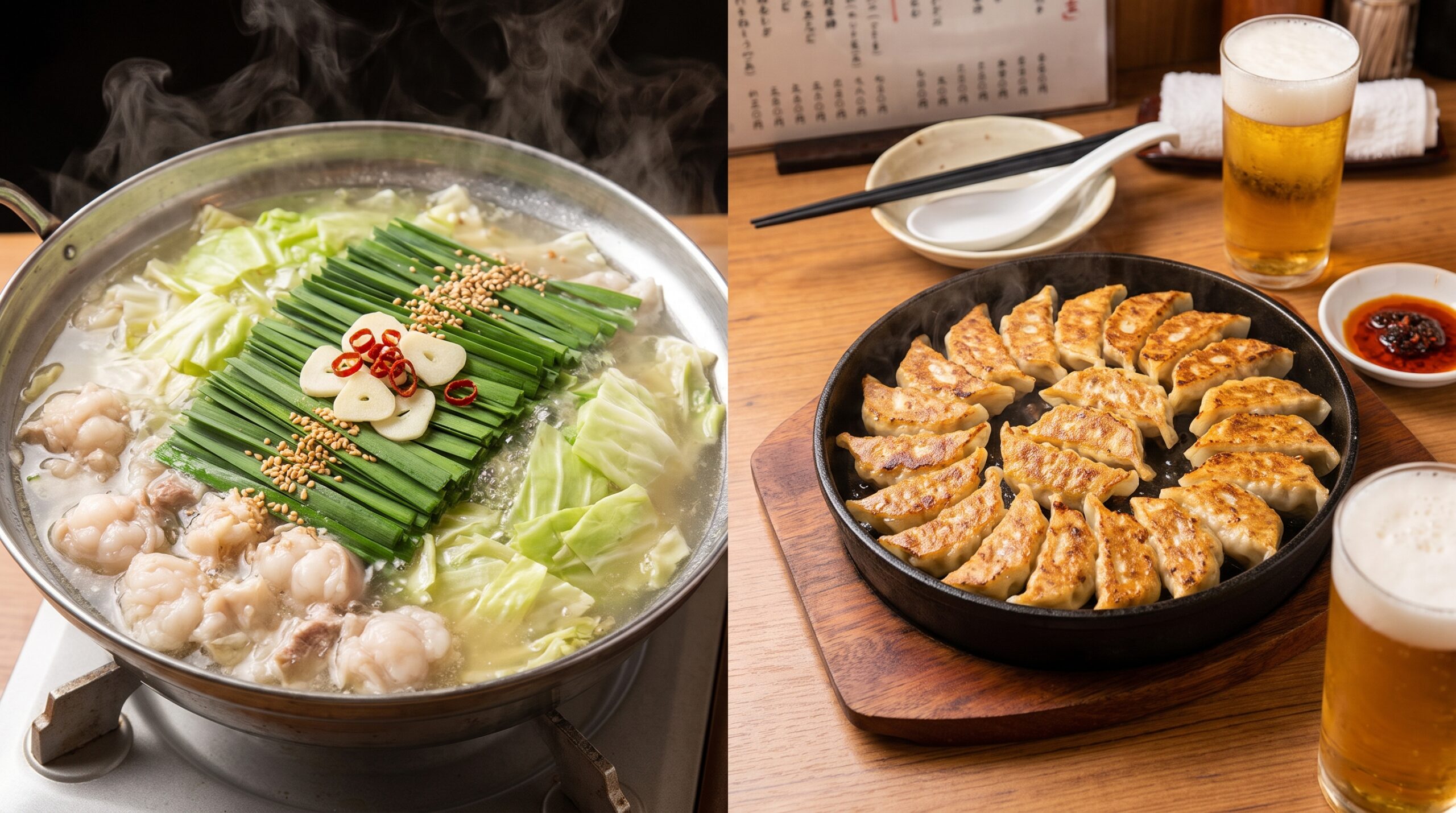
- Hakata-style salt motsunabe (beef offal hot pot)
A Hakata staple: beef offal simmered until meltingly tender in a garlic-and-chive-scented salt broth. The caramel malt’s sweetness echoes the richness of the offal, while the hop bitterness and carbonation cut cleanly through the fat.
Recipe: Kurashiru, “Authentic Hakata-Style Salt Motsunabe, Made at Home” - Hakata iron-pan gyoza
Bite-sized dumplings from Hakata, served straight from the iron pan they’re fried in. The aroma from the browned skin and the roasted-malt aroma of the beer sit in the same family of toasty notes, so they layer together naturally.
Recipe: Cookpad, “Crispy-Skinned Hakata Iron-Pan Gyoza, Our Family’s Way”
A note on the science: the bitter compounds from hops, together with carbonation, strip away the film of fat that motsunabe leaves in the mouth, resetting the palate. The aroma compounds created by the Maillard reaction as gyoza skin browns, and the aroma compounds created when malt is roasted, both belong to the same family of toasty, roasted notes — which is why layering them together doesn’t clash.
Visiting the Brewery
The Brewmaster (K’s Brewing Company)
1-19-1 Befu, Jonan Ward, Fukuoka City, Fukuoka Prefecture. About a 3-minute walk from Befu Station on the Fukuoka City Subway Nanakuma Line. The brewery doubles as a brewpub, so you can drink it fresh on the spot or buy bottles to take home.
Sights Nearby
- Ohori Park / Chuo Ward, Fukuoka City | ~10 min, ~4 km by car from the brewery
A beloved park for Fukuoka City residents, with a roughly 2 km path circling the pond. Free and open 24 hours, with a Japanese garden, boat rentals and the Fukuoka Art Museum next door.
Hot Springs Nearby
- Hakata Onsen Ryokan Fujinoen / Minami Ward, Fukuoka City | ~20 min, ~8 km by car from the brewery
Founded in 1972, a hot-spring inn running its spring water straight from the source with no added water, heating or recirculation — a chloride spring at around 45°C. Day bathing 10:00-22:00 (Tuesdays, bathing only, 16:00-22:00).
Opening hours, closing days and day-use bathing availability can change. Please check each facility’s official information before visiting.
A Quick Glossary of Beer Terms
- Craft beer: Beer made by small breweries that put the character of the maker front and centre, as opposed to the uniformity of mass production.
- Ale: Beer made by top fermentation, with the yeast working near the surface at close to room temperature. It tends toward fruity aromas and a fuller body.
- Hops: The cones of a climbing plant, which give beer its bitterness and aroma. Depending on the variety, that aroma can read as citrus, tropical fruit or open grassland.
- Malt: Germinated barley. It forms the foundation of a beer’s sweetness, colour and body; how deeply it is roasted determines colour and toastiness.
- ABV: Alcohol By Volume. Beer typically runs around 5%; above 8% is considered a strong, heavier-drinking beer.
- IBU: International Bitterness Units, a scale for how bitter a beer tastes. Around 10 is barely noticeable bitterness; above 60 lands in clearly bitter IPA territory.
Sources
- The Brewmaster, official site
- Premium Ice Brewmaster, product page
- “The Origin Story of Fukuoka’s Famed Brewery ‘The Brewmaster’” — BE-PAL (Japanese)
- Yosui Inoue — Wikipedia (Japanese)
- “Shonen Jidai” (the song) — Wikipedia (Japanese)
- “Shonen Jidai” (the film) — Wikipedia (Japanese)
If you notice any errors in this article, please don’t hesitate to reach out at info@soundrecords.jp.
Keep reading in English
Craft Beer and Music
- Two Steps Back, Three Steps Forward
- Until the Scrap Wood Becomes Fire, Until the Melting Snow Becomes a Letter
- A Glass That Crossed the Sea, a Bride Who Crossed the Sea
Browse all articles in English
Read this article in Japanese: 凍る手前で、いちばん濃くなる