今日のペアリング
▶ 上のプレーヤーで再生できない場合は、YouTubeで開く
醸造所の話
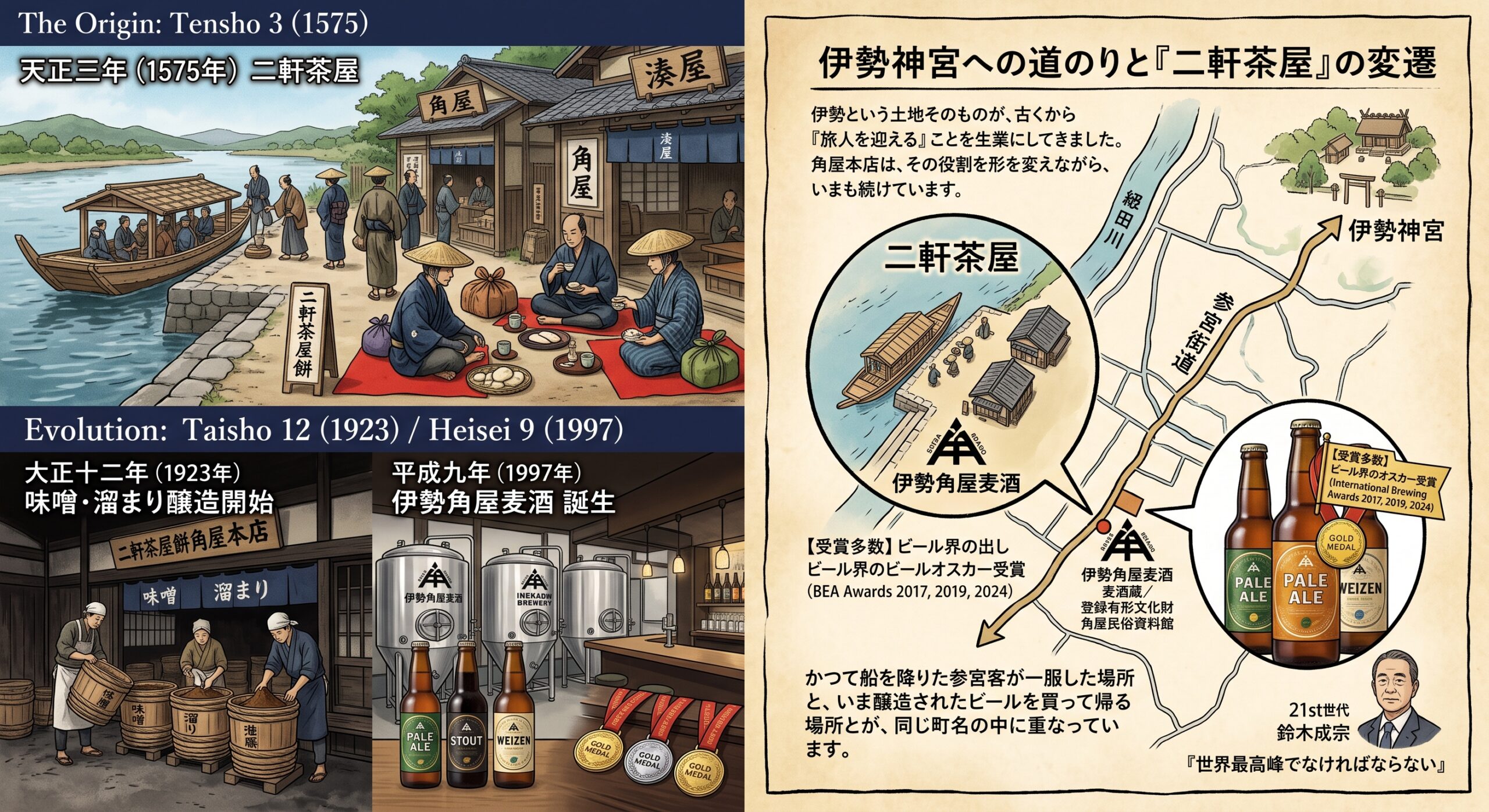
伊勢角屋麦酒を造る有限会社二軒茶屋餅角屋本店の始まりは、天正3年(1575年)にさかのぼります。伊勢神宮へお参りする人々を乗せた船が着く、勢田川の船着き場のそばに開いた一軒の茶店でした。同じ船着き場には「角屋」と「湊屋」という二軒の茶屋があったことから、この土地はいつしか「二軒茶屋」と呼ばれるようになります。旅人たちはここで一服し、腹ごしらえをしてから、伊勢神宮への道を歩き出しました。
時代が下り、大正12年(1923年)には18代目当主・鈴木藤吉が味噌・溜まりの醸造業を興します。太平洋戦争中はこの味噌・醤油の商いが会社を支えました。平成6年(1994年)に法人化し、そして平成9年(1997年)、21代目当主となる鈴木成宗が「世界最高峰でなければならない」という決意のもとに立ち上げたのが、クラフトビール事業でした。ペールエール、スタウト、ヴァイツェンの3種類からのスタートです。
その決意は、絵に描いた餅では終わりませんでした。2003年、看板商品となるペールエールがオーストラリア国際ビール大会で金賞を受賞します。日本のクラフトビールとしては初めてのことでした。その後も「ビール界のオスカー」とも呼ばれる英国の国際大会・International Brewing Awards(2年に1度開催)で、ペールエールは2017年・2019年・2024年に金賞を受賞。ISEKADOとしては2017年から2024年まで4大会連続で金賞を守り続けています。450年前に旅人へ一服の茶を出していた店が、いまは世界の審査員にビールを注いでいるのです。
土地の話
伊勢角屋麦酒の直売店「麦酒蔵」があるのは、伊勢市中心部の神久(かみく)というエリアです。JR・近鉄の伊勢市駅からバスでおよそ10分、「二軒茶屋」のバス停で降りればすぐ。店内では、限定醸造を含むビールをその場で購入できます。かつて船を降りた参宮客が一服した場所と、いま醸造されたビールを買って帰る場所とが、同じ町名の中に重なっています。
伊勢という土地そのものが、古くから「旅人を迎える」ことを生業にしてきました。伊勢神宮への参拝、いわゆる「お伊勢参り」は江戸時代を通じて庶民のあこがれであり、二軒茶屋のような茶屋や宿が、その最後の一区切りを支えてきたのです。角屋本店は、その役割を茶店から味噌醤油屋へ、そしてクラフトビールの醸造所へと形を変えながら、いまも続けています。
音楽の話
「なごり雪」は1974年3月12日、フォークグループ・かぐや姫のアルバム『三階建の詩』に収録されて世に出ました。作詞・作曲は、メンバーの伊勢正三。当時22歳前後だった伊勢にとって、プロとしてはじめて書き上げた作品だったと伝えられています。東京駅のホームで、旅立つ人を見送る場面。線路にはもう積もらない、季節外れの名残惜しい雪。そんな情景を歌に描きました。
この曲を全国的な大ヒットに押し上げたのは、1975年11月5日に発売された、女性シンガーソングライター・イルカによるカバーバージョンです。編曲を手がけたのは松任谷正隆。フォークというよりポップスに近いサウンドに仕上がったこの一枚は、世代を超えて歌い継がれ、いまではむしろイルカの代表曲として広く知られています。
作詞・作曲を手がけた伊勢正三は、本名も伊勢正三といいますが、生まれは伊勢神宮とは離れた大分県津久見市です。三重県や伊勢市に、彼自身の血縁やゆかりがあるわけではありません。それでも、「伊勢」という同じ名前を持つ人が書いた曲だという事実は、変わりません。
なぜこの組み合わせなのか
いちばん分かりやすいのは、名前の重なりです。伊勢角屋麦酒の「伊勢」は三重県伊勢市の地名であり、「なごり雪」を書いた人の名は伊勢正三。血縁もゆかりもない、まったくの偶然の一致ですが、それでもこの曲を選ぶ理由としては十分だと思えました。
もうひとつ、名前より奥にある重なりもあります。二軒茶屋は450年のあいだ、旅人を迎え、そして送り出してきた場所です。茶屋として、味噌醤油屋として、いまはクラフトビールの醸造所として、商いの形を変えながらも、「ここを通り過ぎていく人を送り出す」という役割そのものは変えていません。「なごり雪」もまた、旅立っていく人を見送る歌です。歌い手はかぐや姫からイルカへと変わり、50年以上のあいだ、聴く人を変えながら歌い継がれてきました。形や歌い手は変わっても、根っこにあるものは変わらない。そういう二つの物語です。
この一杯を、探すなら
※楽天市場へのリンクは広告(アフィリエイト)です。醸造所がタップルームや直営店を持っている場合は、できたてを現地で味わうのが一番のおすすめです。
🌡️ おすすめの飲み方(温度とグラス):6〜8℃程度に冷やして。グラスは口の広いタンブラーやチューリップ型のグラスがおすすめです。ペールエールらしいグレープフルーツを思わせる柑橘の香りが、グラスの中で開きやすくなります。
合わせたい「アテ」
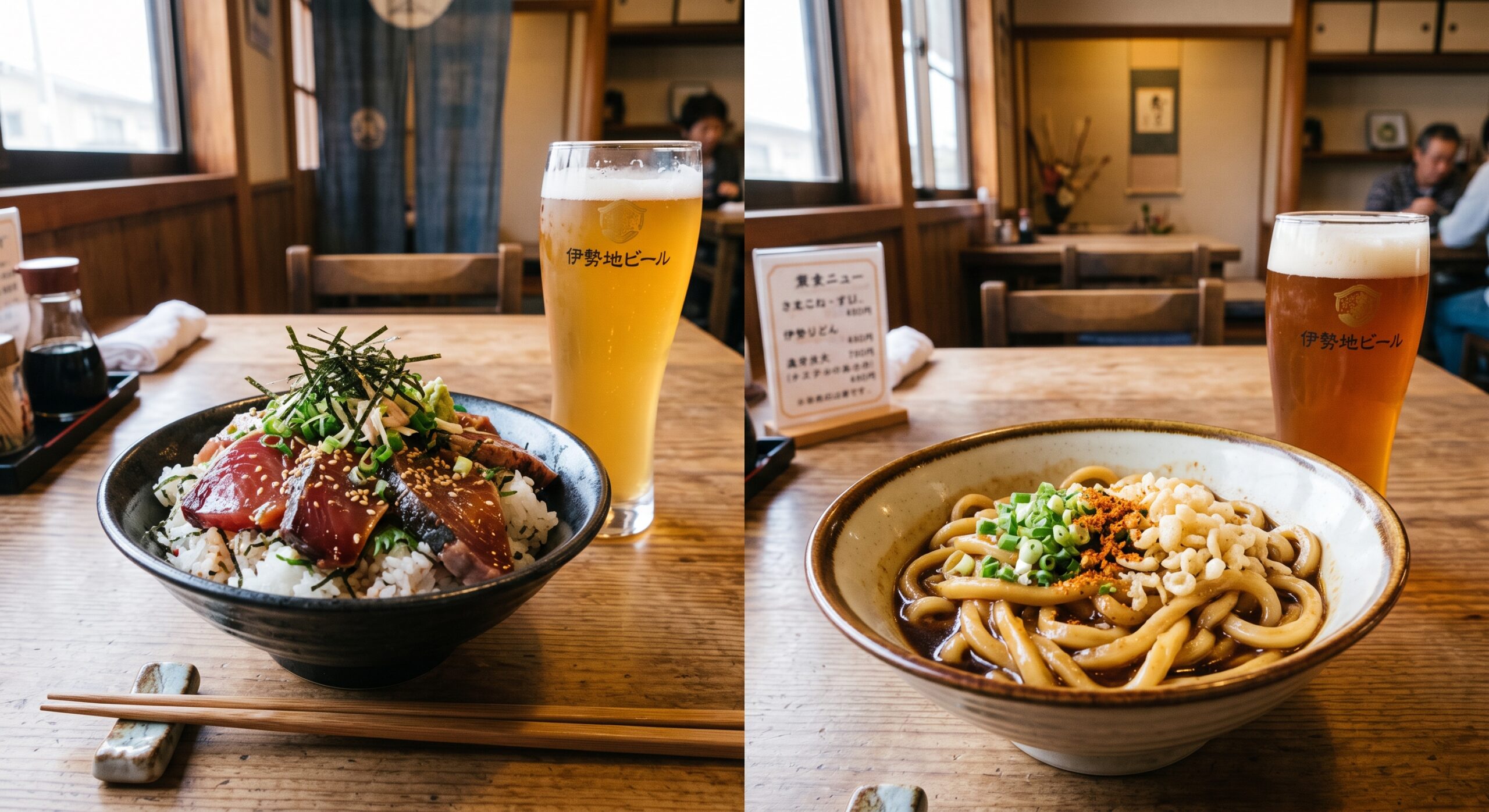
- てこね寿司
伊勢志摩地方に伝わる郷土料理。カツオなどの赤身魚を醤油ダレに漬け込み、酢飯と混ぜ合わせた漁師料理です。柑橘系のホップの香りと軽やかな苦みが、漬けダレのコクをすっきりと流してくれます。
- 伊勢うどん
太くやわらかい麺に、たまり醤油ベースの黒く濃いタレをからめた伊勢の名物。見た目ほど塩辛くなく、旨みと甘みの強いタレに、ペールエールの麦芽の甘みと苦みがちょうどよく重なります。
科学的にひとこと:ホップの苦み成分であるイソα酸と炭酸は、脂やタレのコクで重くなった口の中をリセットする働きがあります。てこね寿司の漬けダレや伊勢うどんのたまり醤油が持つ旨み・塩味は、ペールエールの柑橘系の香りと苦みによって後味がすっきりとし、次のひと口をまた新鮮に感じさせてくれます。
ひとことメモ(ビールの用語)
- クラフトビール:小規模な醸造所が、造り手の個性を前面に出して仕込むビールの総称。大量生産の均一な味とは別の方向を目指しています。
- ペールエール:淡い色のエール。麦の甘みとホップの香りのバランスが取れた、エール入門にあたるスタイルです。
- ホップ:ビールに苦みと香りを与えるつる性植物の毬花(まりばな)。品種によって、柑橘・トロピカルフルーツ・草原のように香りが変わります。
- モルト:発芽させた大麦(麦芽)のこと。ビールの甘み・色・コクの土台になり、焙煎の深さで色と香ばしさが決まります。
- ABV:アルコール度数(Alcohol By Volume)のこと。ビールでは5%前後が標準で、8%を超えると飲みごたえのある「強め」の部類になります。
- IBU:苦みの強さを表す国際的な数値。10前後だとほとんど苦みを感じず、60を超えるとはっきり苦いIPAの領域です。
参考
内容に誤りがございましたら、お手数ですが info@soundrecords.jp までご連絡いただけますと幸いです。
Today’s Pairing
- Craft beer: Isekado Pale Ale (affectionately nicknamed “Ise-pe”) — American-style pale ale, malted barley from the US and Canada, three North American hop varieties, 5.0% ABV, 35 IBU / Nikenjayamochi Kadoya Honten, Ltd. (Ise City, Mie)
Official site: https://www.isekado.co.jp/
- Music: “Nagori Yuki” (“The Snow That Lingers”) by Kaguyahime (1974), written and composed by Shozo Ise (a cover by singer Iruka later became a nationwide hit)
YouTube: https://www.youtube.com/watch?v=3-y-VregNqg
▶ If the player above doesn’t play, open it on YouTube
The Story of the Brewery
The company behind Isekado Pale Ale, Nikenjayamochi Kadoya Honten, traces back to 1575, when it opened as a single teahouse beside a boat landing on the Seta River — the port where pilgrims bound for Ise Grand Shrine came ashore. Two teahouses stood at that landing, “Kadoya” and “Minatoya,” and the area came to be known as “Nikenjaya” (“two teahouses”). Travelers would rest and eat there before setting out on the road to the shrine.
In 1923, the 18th-generation head of the family, Tokichi Suzuki, started a miso and tamari soy sauce business, which carried the company through the years of the Pacific War. The company incorporated in 1994, and in 1997 the 21st-generation head, Narihiro Suzuki, launched its craft beer venture with a stated resolve: it “had to be the best in the world.” The brewery started with three beers — Pale Ale, Stout, and Weizen.
That resolve did not stay just words. In 2003, the flagship Pale Ale won gold at the Australian International Beer Awards — the first such win for a Japanese craft beer. It has since won gold at the UK’s International Brewing Awards, often called “the Oscars of the beer world” and held once every two years, in 2017, 2019, and 2024. As a brewery, ISEKADO has taken gold at every edition of that competition from 2017 through 2024, four in a row. A shop that once served a cup of tea to travelers 450 years ago now pours beer for judges from around the world.
The Story of the Land
Isekado’s direct-sales shop, “Biyagura,” sits in the Kamiku area of central Ise City, about a 10-minute bus ride from Ise-shi Station (JR and Kintetsu lines), getting off at the “Nikenjaya” stop. Inside, visitors can buy the beers on the spot, including limited-batch brews. The place where boat pilgrims once stepped ashore to rest, and the place where people now buy freshly brewed beer to take home, sit within the same old neighborhood name.
Ise itself has long made a living from receiving travelers. Pilgrimage to Ise Grand Shrine — known as “Ise Mairi” — was a widespread aspiration for ordinary people throughout the Edo period, and teahouses and inns like Nikenjaya supported that final stretch of the journey. Kadoya Honten has kept playing that same role while changing its shape — from teahouse, to miso and soy sauce maker, to craft brewery — right up to today.
The Story of the Song
“Nagori Yuki” was released on March 12, 1974, on Sangaidate no Uta, an album by the folk group Kaguyahime. It was written and composed by band member Shozo Ise, then about 22 years old — said to be the first song he ever wrote professionally. It pictures a platform at Tokyo Station, someone seeing off another who is leaving, and a last, out-of-season snowfall that no longer settles on the tracks.
What turned the song into a nationwide hit was a cover version by the singer-songwriter Iruka, released as a single on November 5, 1975, arranged by Masataka Matsutoya. The result leaned closer to pop than folk, and it has been sung across generations ever since — today it’s often thought of as Iruka’s signature song more than Kaguyahime’s.
Shozo Ise’s real name is, in fact, Shozo Ise — but he was born in Tsukumi City, in Oita Prefecture, far from Ise Grand Shrine. He has no family ties or personal connection to Mie Prefecture or Ise City. What doesn’t change, though, is that the song was written by someone who happens to share that name.
Why This Pairing
The most obvious reason is the name itself. “Ise” in Isekado Pale Ale refers to Ise City in Mie Prefecture; the man who wrote “Nagori Yuki” is named Shozo Ise. There’s no blood tie or personal connection behind the coincidence, but it still felt like reason enough to pick this song.
There’s a deeper echo too, underneath the name. For 450 years, Nikenjaya has been a place that receives travelers and sends them on their way — first as a teahouse, then as a miso and soy sauce maker, and now as a craft brewery. The business has changed shape again and again, but the role of seeing people through and off has never changed. “Nagori Yuki” is also a song about seeing someone off on a journey. Its singer changed from Kaguyahime to Iruka, and it has been sung to different listeners for more than fifty years since. The shape changes, the singer changes, but what sits underneath stays the same. Both are stories like that.
Where to Find This Beer
The Rakuten Ichiba link below is an affiliate link.
These are Japanese storefronts. If you are visiting the brewery, drinking it fresh at their own taproom is by far the best option.
🌡️ How to serve it:Chilled to about 6–8°C, in a wide-mouthed tumbler or a tulip-shaped glass. That lets the pale ale’s grapefruit-like citrus hop aroma open up in the glass.
Pairing Dishes Worth Trying
- Tekone-zushi
A fisherman’s dish from the Ise-Shima region: bonito or other red-fleshed fish marinated in a soy-based sauce and mixed with vinegared rice. The pale ale’s citrusy hop aroma and light bitterness cut cleanly through the richness of the marinade.
- Ise udon
Ise’s signature noodle dish: thick, soft noodles coated in a small amount of dark, tamari-based sauce. It looks saltier than it tastes, carrying more umami and sweetness than salt, which sits well against the pale ale’s malt sweetness and bitterness.
A note on the science: the iso-alpha acids that give hops their bitterness, together with carbonation, are known to reset a palate weighed down by rich sauces or oil. The umami and saltiness in tekone-zushi’s marinade and in Ise udon’s tamari sauce come out cleaner against the pale ale’s citrus aroma and bitterness, making the next bite taste fresh again.
A Quick Glossary of Beer Terms
- Craft beer: Beer made by small breweries that put the character of the maker front and centre, as opposed to the uniformity of mass production.
- Pale ale: A pale-colored ale that balances malt sweetness with hop aroma — often considered an entry point into ales.
- Hops: The cones of a climbing plant, which give beer its bitterness and aroma. Depending on the variety, that aroma can read as citrus, tropical fruit or open grassland.
- Malt: Germinated barley. It forms the foundation of a beer’s sweetness, colour and body; how deeply it is roasted determines colour and toastiness.
- ABV: Alcohol By Volume. Around 5% is standard for beer; anything above 8% is considered a stronger, more full-bodied style.
- IBU: An international scale for measuring bitterness. Around 10 registers as barely bitter at all; above 60 puts you in clearly bitter IPA territory.
Sources
If you notice any errors in this article, please don’t hesitate to reach out at info@soundrecords.jp.
コメントを残す