今日のペアリング
▶ 上のプレーヤーで再生できない場合は、YouTubeで開く
酒蔵の話
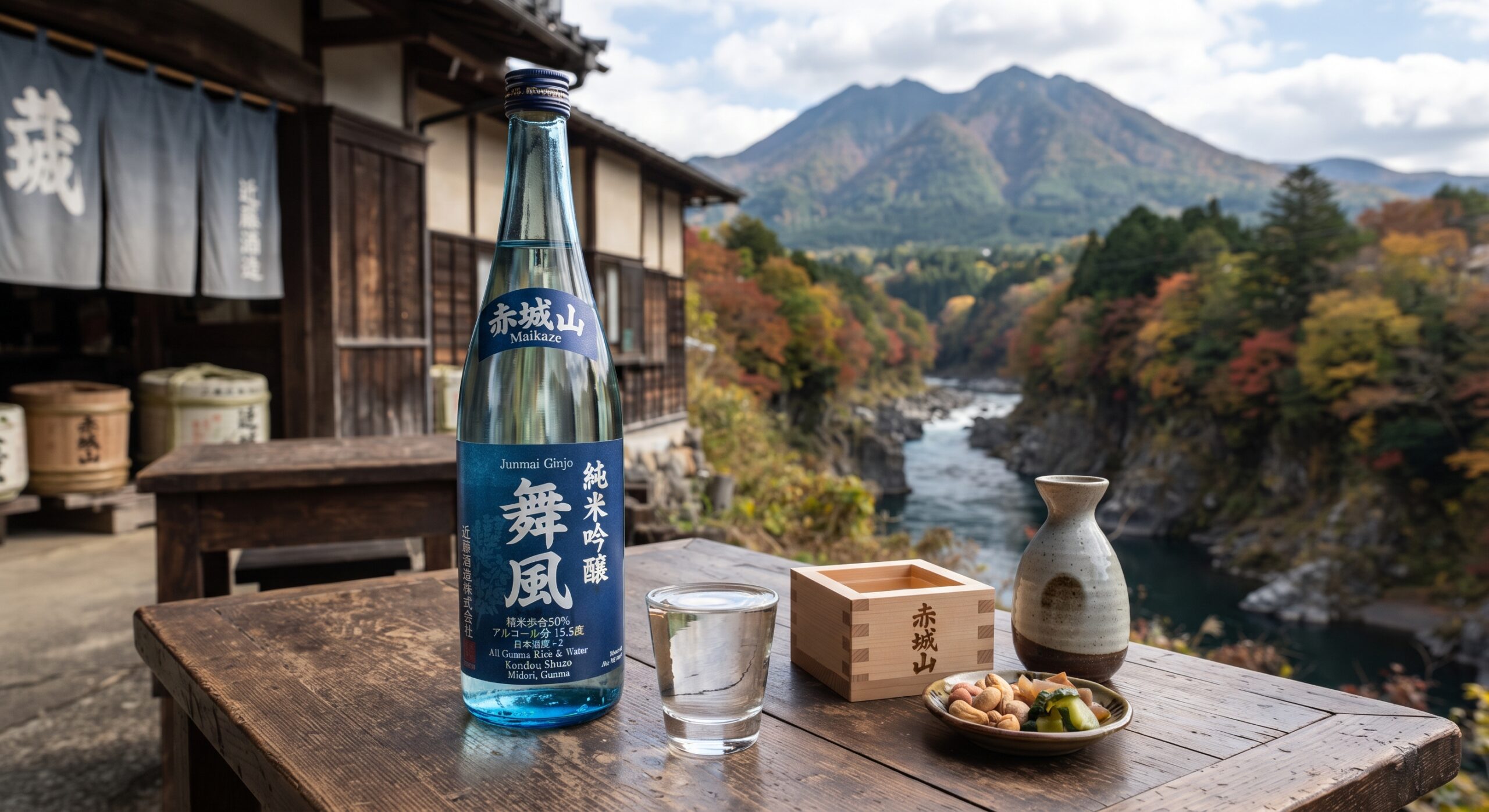
近藤酒造株式会社の創業は明治8年(1875年)。創業者・近藤亀吉が群馬県みどり市大間々町で酒造りを始めたとき、屋号は「田中屋」でした。赤城山の麓に蔵を構えていたことから、酒の銘柄はまず「赤城」と名付けられ、その後「赤城正宗」へと改められます。そして3代目蔵元の時代、当主が月を好んでいたことから、国定忠治の「名月赤城山」に合わせて、銘柄名は現在の「赤城山」となりました。創業以来、蔵の敷地内の地下から湧く赤城山の伏流水を仕込み水に、辛口一筋の酒造りを続けています。「酒づくりは人づくりでありチームである」を合言葉に醸す酒は、平成18年(2006年)、関東信越国税局酒類鑑評会で241蔵の中の最優秀首席に選ばれました。
今回合わせる「赤城山 舞風 純米吟醸」は、群馬県酒造組合の要請を受けて群馬県農業技術センターが開発した酒造好適米「舞風」を100%使用した一本です。舞風は平成23年(2011年)に農林水産省へ品種登録され、翌年から発売が始まった、群馬県生まれの酒米。「舞風」を名乗るためには、県産の舞風米を100%使い、群馬県産の水で仕込んだ純米系の酒であることが条件とされています。このお酒はさらに「群馬KAZE酵母2号」という群馬県産酵母を使い、精米歩合50%、アルコール度数15.5度、日本酒度+2に仕上げられた、米も水も酵母もすべて群馬県産という「オール群馬」の純米吟醸酒です。旨口でありながら飲み口はさっぱりとしていて、冷やしても燗をつけても楽しめる一本と紹介されています。
土地の話
蔵のあるみどり市大間々町は、赤城山の南麓、渡良瀬川沿いに開けた町です。江戸時代、この地は足尾銅山で採れた銅を江戸へ運ぶ「あかがね街道(銅山街道)」の宿場町のひとつでした。さらに1658年に絹の市が開かれて以降は、東毛地域随一の商業地としても栄え、今も大間々の町なかには戦前に建てられた蔵や洋館が数多く残っています。蔵から歩いてすぐの高津戸峡は、渡良瀬川が刻んだ渓谷で「関東の耶馬渓」とも称される景勝地。この渓谷を見下ろす高台には、四季の花々と紅葉の名所として知られるながめ公園も広がっています。
音楽の話
「赤城の子守唄」は1934年(昭和9年)2月、日本ポリドール蓄音器株式会社から発売されました。作詞は佐藤惣之助、作曲は竹岡信幸、歌は東海林太郎。もともとは、幕末の侠客・国定忠治の子分であった板割浅太郎を主人公にした松竹の時代劇映画『浅太郎赤城の唄』(主演・高田浩吉)の主題歌として作られた曲でしたが、発売されるやいなや空前の大ヒットとなり、後に映画の題名自体が「赤城の子守唄」に変更されるほどの人気を博しました。蓄音機の普及台数が全国で100万台という時代に、レコードが50万枚売れたとも伝えられています。
歌ったのは、1898年(明治31年)に秋田市で生まれた東海林太郎。1933年にプロ歌手としてデビューし、ロイド眼鏡に燕尾服、直立不動の姿勢で歌う独特のスタイルで知られました。「赤城の子守唄」はこの東海林太郎の出世作となりました。NHK紅白歌合戦には1951年の第1回から計4回出場し、そのうち1956年と1965年の2回でこの曲を歌っています。1963年には日本歌手協会の初代会長にも就任しました。
なぜこの組み合わせなのか
「赤城山」という酒の名前と、「赤城の子守唄」という歌の題名。このふたつは、実はどちらも同じひとつの伝説にたどり着きます。江戸時代の侠客・国定忠治は赤城山を舞台にした逃亡劇で知られ、芝居の中で口にする「赤城の山も今夜を限り」という名せりふは、歌舞伎の名台詞と並び称されるほど広く知られてきました。近藤酒造が銘柄名を「赤城山」に改めたのも、月を好んだ3代目当主が、忠治ゆかりの「名月赤城山」に合わせたからだといいます。一方の「赤城の子守唄」も、忠治の子分・板割浅太郎を描いた映画のために作られた曲でした。
酒の名前と、歌の名前。別々の作り手が、別々の時代に、同じ山の伝説から名前を選び取りました。そう思うと、盃を傾けながら聴くこの曲は、少し違って聞こえてくるかもしれません。
この一本を、探すなら
※楽天市場へのリンクは広告(アフィリエイト)です。在庫・取扱いは変動します。お近くの酒販店でも、ぜひ銘柄名を伝えて探してみてください。
🌡️ おすすめの飲み方:常温から、ぬる燗で。日本酒度+2のすっきりとした後味は、ぬる燗(40℃前後)にすると米の旨みがふわりと広がります。もちろん、よく冷やして飲み口のさっぱり感を楽しむのもおすすめです。
合わせたい「アテ」
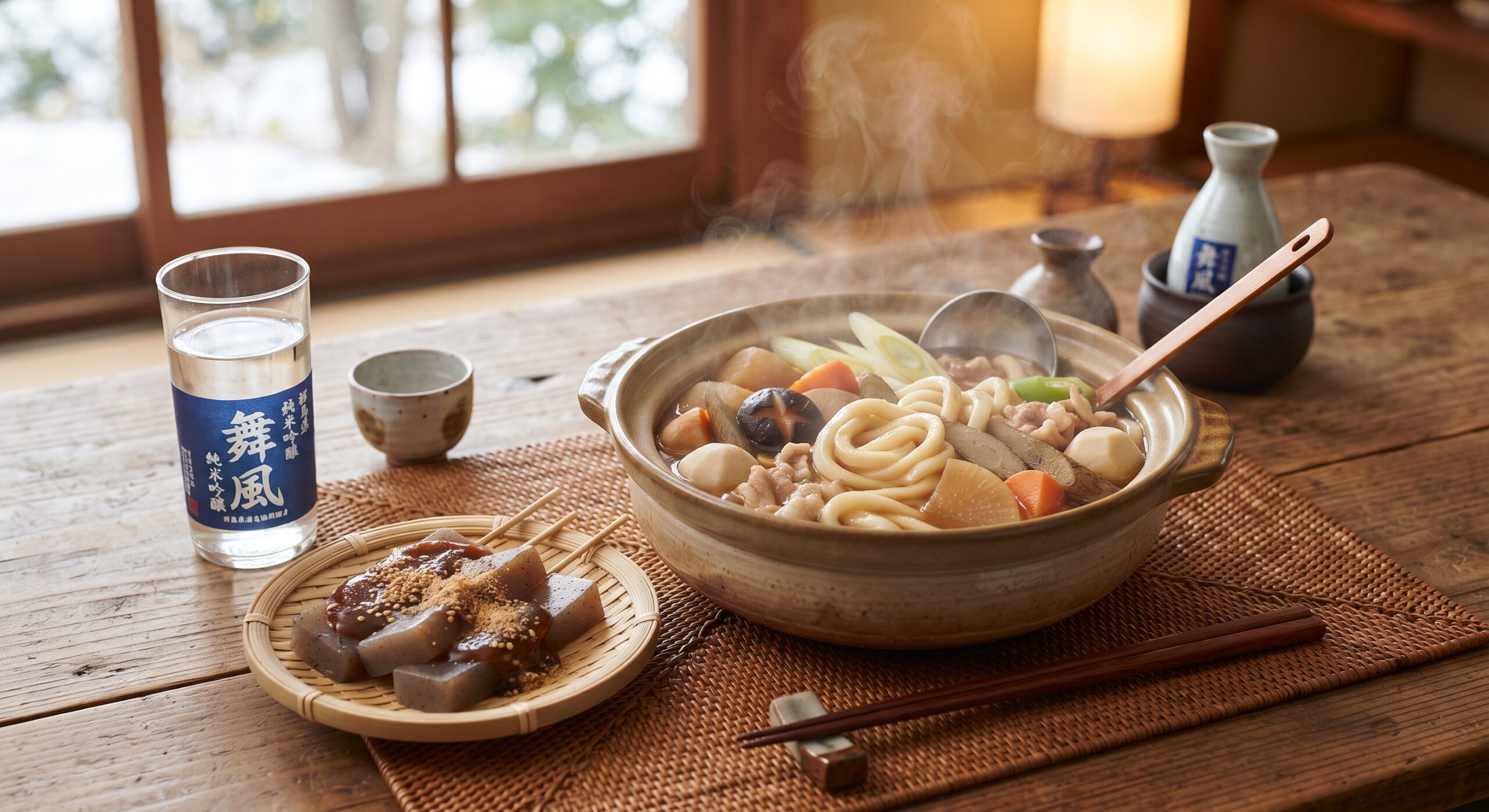
- おっきりこみ
群馬・埼玉北部に伝わる郷土料理。幅広の生麺を、根菜と一緒に醤油だしでことこと煮込みます。赤城颪が吹きすさぶ冬の寒さの中で親しまれてきた料理で、根菜の甘みと醤油だしの旨みに、舞風純米吟醸のすっきりとした後味がよく寄り添います。
レシピはこちら:クラシル「醤油味であったか おっきりこみ」
- こんにゃくの味噌田楽
群馬県はこんにゃく芋の生産量日本一。茹でたこんにゃくに、甘辛い味噌だれをからめた素朴な一皿です。発酵食品である味噌の香りと、純米吟醸酒の穏やかな吟醸香が響き合います。
レシピはこちら:クラシル「味噌こんにゃく♩(田楽)」
科学的にひとこと:味噌も醤油だしも、麹の発酵によってグルタミン酸などのうま味成分を豊富に含んでいます。これは日本酒に含まれるアミノ酸系のうま味と重なり合い、口の中でうま味の相乗効果を生み出します。あわせて、発酵によって生まれる香気成分同士が呼応し合うことで、料理と酒の香りに一体感が生まれます。
この蔵をたずねるなら
近藤酒造株式会社
群馬県みどり市大間々町大間々1002/わたらせ渓谷鐵道 大間々駅から徒歩約5分。
渡良瀬川沿い、赤城山の南麓に開けた町にあり、敷地内の地下からは赤城山の伏流水が湧いています。
近くの観光スポット
- 高津戸峡/みどり市大間々町|近藤酒造から徒歩約8分(大間々駅から徒歩約8分)
「関東の耶馬渓」とも称される、渡良瀬川中流の渓谷。はねたき橋から高津戸橋までの約500mの遊歩道で、新緑や紅葉、ゴリラ岩などの景観が楽しめます。入場無料、駐車場70台。
- ながめ公園/みどり市大間々町|近藤酒造から徒歩約10分
高津戸峡を見下ろす高台にある公園。四季の花々が楽しめ、秋には「関東菊花大会」が開かれます(会期中のみ有料、通常は無料)。隣接する「ながめ余興場」は大正時代に建てられた芝居小屋です。
近くの温泉
- 湯〜トピアみどモスパ/みどり市笠懸町鹿2562|近藤酒造から車で約15分・約6km(地図上の概算)
2026年5月24日に開業したばかりのみどり市の日帰り温浴施設。地下1,600mから湧くナトリウム-硫酸塩温泉を使った露天風呂・炭酸泉などがあり、市外の大人料金は3時間650円〜。距離はおおよその目安のため、訪問前に経路・営業時間をご確認ください。
※営業時間・定休日・日帰り入浴の可否は変わることがあります。おでかけ前に各施設の公式情報をご確認ください。
ひとことメモ(日本酒の用語)
- 純米吟醸酒:精米歩合60%以下まで磨いた米を低温でじっくり発酵させた純米酒。華やかな香りが特徴です。
- 精米歩合:玄米を削り、残った部分の割合。数値が低いほど、米を多く磨いていることを示します。
参考
内容に誤りがございましたら、お手数ですが info@soundrecords.jp までご連絡いただけますと幸いです。
Today’s Pairing
- Sake: Akagisan “Maikaze” Junmai Ginjo — brewed 100% with Gunma’s own sake rice variety Maikaze, rice-polishing ratio (seimai buai) 50%, 15.5% alcohol / Kondo Shuzo Co., Ltd. (1002 Omama, Omama-cho, Midori City, Gunma Prefecture)
Official site: https://akagisan.com/
- Kayoukyoku (classic Japanese popular song): “Akagi no Komoriuta” (“Akagi’s Lullaby”) by Tokairin Taro, 1934
YouTube: https://www.youtube.com/watch?v=dy1lXecEG70
▶ If the player above doesn’t play, open it on YouTube
The Story of the Brewery
Kondo Shuzo Co., Ltd. was founded in 1875 by Kondo Kamekichi in what is now Omama-cho, Midori City, Gunma Prefecture, under the shop name “Tanakaya.” Because the brewery stood at the foot of Mt. Akagi, its sake was first sold under the name “Akagi,” later changed to “Akagi Masamune.” Under the third-generation owner, the name changed again — to its present form, “Akagisan” (“Mt. Akagi”) — because that owner loved the moon, and the new name echoed “Meigetsu Akagiyama” (“The Bright Moon over Mt. Akagi”), a title tied to the legend of the outlaw Kunisada Chuji. Since its founding, the brewery has drawn its brewing water from a spring fed by Mt. Akagi, welling up from beneath its own grounds, and has stayed true to dry-style sake throughout. Its brewers work under the motto “brewing sake means building people, as a team” — and in 2006, their sake was ranked best among 241 breweries at the Kanto-Shin’etsu Regional Taxation Bureau’s sake competition.
The bottle in this pairing, “Akagisan Maikaze Junmai Ginjo,” is brewed 100% with Maikaze, a sake rice variety developed by the Gunma Prefectural Agricultural Technology Center at the request of the Gunma Sake Brewers’ Association. Maikaze was registered with the Ministry of Agriculture, Forestry and Fisheries in 2011 and went on sale the following year — a rice born and bred in Gunma. To carry the Maikaze name, a sake must use 100% Gunma-grown Maikaze rice and Gunma’s own water, and must be a junmai-style sake (made only from rice, rice koji, and water). This bottle goes further still, using a Gunma-developed yeast called “Gunma KAZE Yeast No. 2,” polished to a seimai buai of 50%, at 15.5% alcohol, with a sake meter value (nihonshu-do) of +2 — an “all-Gunma” junmai ginjo where the rice, water, and yeast all come from the prefecture. It’s described as rich in umami yet clean on the finish, equally enjoyable served chilled or warmed.
The Story of the Land
Omama-cho, where the brewery stands, spreads along the Watarase River at the southern foot of Mt. Akagi. During the Edo period, this area was one of the post towns along the “Akagane Kaido” (Copper Road), which carried copper mined at the Ashio Copper Mine to Edo. After a silk market opened here in 1658, Omama also grew into the leading commercial town of the eastern Gunma region, and many storehouses and Western-style buildings from the prewar era still line its streets today. A short walk from the brewery is Kozudo Gorge, carved by the Watarase River and sometimes called “the Yabakei of the Kanto region.” On the bluff overlooking that gorge sits Nagame Park, known for its seasonal flowers and autumn foliage.
The Story of the Song
“Akagi no Komoriuta” was released in February 1934 by Nippon Polydor. The lyrics are by Sato Sonosuke, the music by Takeoka Nobuyuki, and it was sung by Tokairin Taro. It was originally written as the theme song for a Shochiku period film, “Asataro Akagi no Uta,” starring Takada Hiroyoshi, about Itawari Asataro, a follower of the late-Edo-period outlaw Kunisada Chuji. The song became an overnight sensation as soon as it was released — so popular that the film itself was later retitled “Akagi no Komoriuta” to match. At a time when phonographs numbered about a million nationwide, the record is said to have sold 500,000 copies.
The singer, Tokairin Taro, was born in Akita City in 1898. He debuted as a professional singer in 1933 and became known for his distinctive style — round glasses, a tailcoat, and standing bolt upright as he sang. “Akagi no Komoriuta” became his breakthrough hit, and he appeared four times on NHK’s Kohaku Uta Gassen (Red and White Song Festival), starting with the very first one in 1951 — singing this song there in 1956 and 1965. In 1963, he became the first president of the Japan Singers Association.
Why This Pairing
The sake’s name, “Akagisan,” and the song’s title, “Akagi no Komoriuta,” both trace back to the very same legend. The Edo-period outlaw Kunisada Chuji is remembered above all for his flight through the mountains of Akagi, and the line he delivers in the stage versions of his story — “Tonight is my last night on Mt. Akagi” — is counted among the most famous lines in Japanese popular theater, on a par with kabuki’s own classic phrases. Kondo Shuzo renamed its sake “Akagisan” because its moon-loving third-generation owner wanted the name to echo “Meigetsu Akagiyama,” a title tied to Chuji’s legend. “Akagi no Komoriuta,” for its part, was written for a film about Chuji’s own follower, Asataro.
A sake’s name and a song’s title — chosen by different people, in different eras, yet both drawn from the same mountain’s legend. Keep that in mind as you listen with a cup in hand, and the song may sound a little different.
Where to Find This Bottle
The Rakuten Ichiba link below is an affiliate link.
Note: the links above lead to Japan-based retailers. They’re most convenient for readers in Japan, or for those elsewhere who are able to arrange international shipping. Stock and availability change over time, so if you’re near a specialty sake shop, it’s well worth asking for this label by name.
🌡️ Recommended way to drink it: Room temperature to lukewarm (nurukan). The clean finish that comes from a nihonshu-do of +2 blossoms into a fuller rice sweetness when warmed to around 40°C. It’s just as good served well chilled, if you’d rather enjoy that crisp, clean edge.
Pairing Dishes Worth Trying
- Okkirikomi
A local dish from Gunma and northern Saitama: wide, flat, hand-cut noodles simmered slowly with root vegetables in a soy-based broth. It’s a dish long loved through the cold winters carried in on the “Akagi-oroshi,” the dry wind that blows down off Mt. Akagi — and the sweetness of its root vegetables and the umami of its soy broth pair naturally with the clean finish of this junmai ginjo.
Recipe (in Japanese): Kurashiru, “Warm Soy-Flavored Okkirikomi”
- Konnyaku dengaku (miso-glazed konjac)
Gunma produces more konjac (konnyaku) potato than any other prefecture in Japan. This simple dish coats boiled konjac in a sweet-savory miso glaze. The aroma of fermented miso echoes the gentle ginjo aroma of a junmai ginjo sake.
Recipe (in Japanese): Kurashiru, “Miso Konnyaku (Dengaku)”
A note on the science: both miso and soy-based dashi are rich in umami compounds, such as glutamic acid, produced through koji fermentation. These resonate with the amino-acid umami found in sake, creating a synergistic boost of savoriness on the palate. At the same time, aromatic compounds born of fermentation in both the dish and the sake echo one another, giving the pairing a sense of unity.
Visiting the Brewery
Kondo Shuzo Co., Ltd.
1002 Omama, Omama-cho, Midori City, Gunma Prefecture. About a 5-minute walk from Omama Station on the Watarase Keikoku Railway.
The brewery sits in a town along the Watarase River, at the southern foot of Mt. Akagi, and draws its brewing water from a spring fed by the mountain, right beneath the brewery grounds.
Sights Nearby
- Kozudo Gorge / Omama-cho, Midori City | about an 8-min walk from Kondo Shuzo (8 min from Omama Station)
A gorge carved by the Watarase River, sometimes called “the Yabakei of the Kanto region.” A roughly 500m walking path runs between Hanetaki Bridge and Kozudo Bridge, with fresh greenery in spring and autumn colors in fall. Free admission; parking for 70 cars.
- Nagame Park / Omama-cho, Midori City | about a 10-min walk from Kondo Shuzo
A hilltop park overlooking Kozudo Gorge, known for seasonal flowers. Every autumn it hosts the Kanto Chrysanthemum Exhibition (admission charged only during that event; free the rest of the year). The adjoining Nagame Yokyojo is a playhouse built in the Taisho era.
Hot Springs Nearby
- Yu-Topia Midomospa / 2562 Shika, Kasakake-cho, Midori City | about 15 min, ~6 km by car from Kondo Shuzo (an approximate map-based estimate)
A day-use hot spring facility run by Midori City, opened May 24, 2026. Its sodium-sulfate spring water is drawn from 1,600m underground and feeds an open-air bath, a carbonated bath, and more; non-resident adult admission starts at ¥650 for 3 hours. Since the distance here is an approximate estimate, please confirm the route and hours before visiting.
Opening hours, closing days and day-use bathing availability can change. Please check each facility’s official information before visiting.
A Quick Glossary of Sake Terms
- Junmai Ginjo: Junmai (sake made only from rice, rice koji, and water, with no added brewing alcohol) that has been polished to a seimai buai of 60% or less and fermented slowly at low temperatures, giving it a fragrant aroma.
- Seimai buai (rice-polishing ratio): The percentage of the original grain remaining after milling. The lower the number, the more the rice has been polished down.
Sources
If you notice any errors in this article, please don’t hesitate to reach out at info@soundrecords.jp.
コメントを残す