この記事を耳で聞く
表示中の言語で読み上げます。音声は端末の設定によって異なります。
今日のペアリング
- 日本酒:日置桜 純米大吟醸 強力/鳥取県産酒米「強力(ごうりき)」100%・精米歩合45%・アルコール度数15度/有限会社山根酒造場(鳥取県鳥取市青谷町大坪、明治20年[1887年]創業)
公式サイト:https://hiokizakura.jp/ - 歌謡曲:「鳥取砂丘」水森かおり(2003年)
YouTube:https://www.youtube.com/watch?v=i0_Bk66TCnE
▶ 上のプレーヤーで再生できない場合は、YouTubeで開く
酒蔵の話
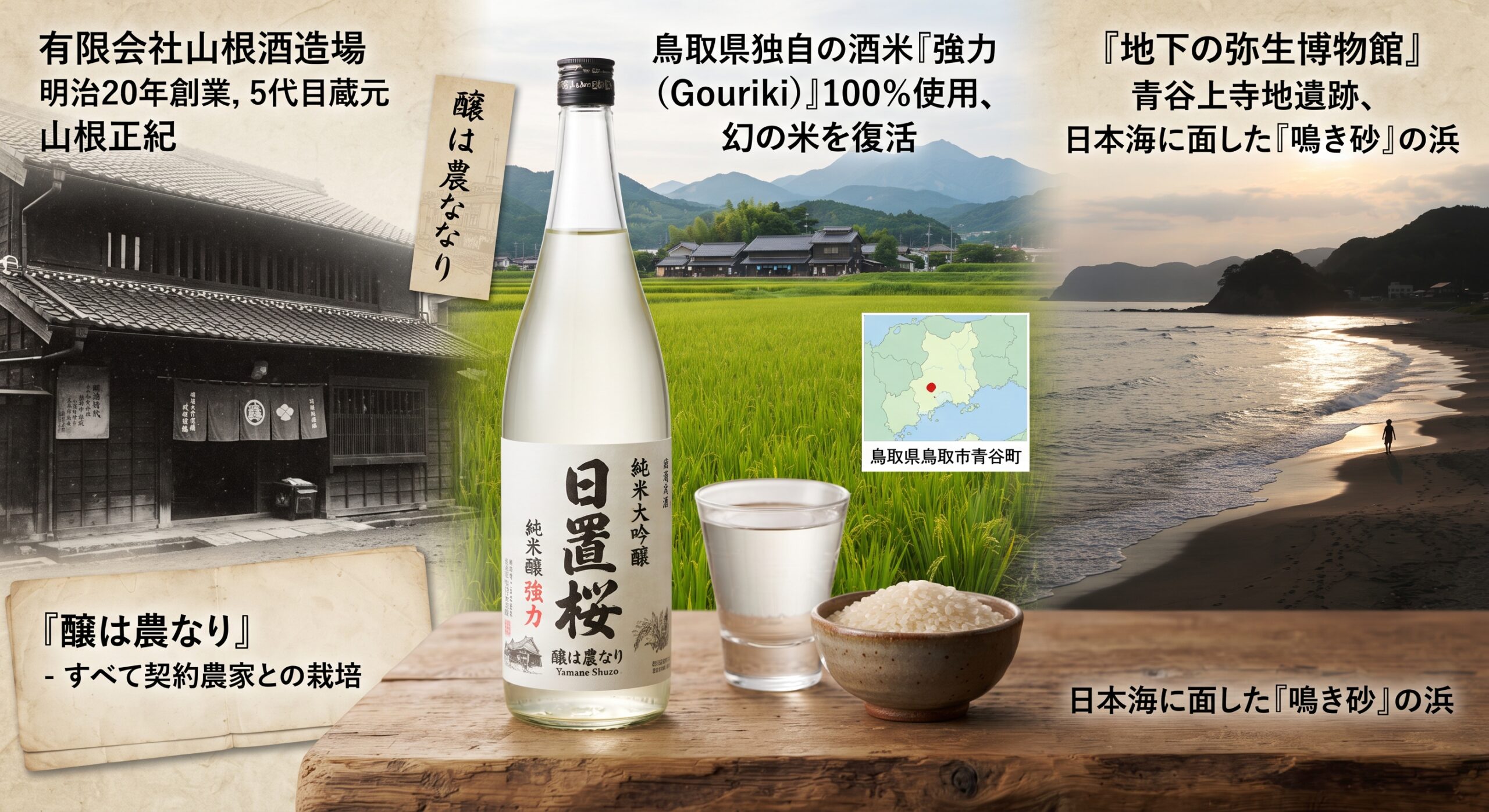
有限会社山根酒造場は、明治20年(1887年)、鳥取市青谷町大坪の日置谷で創業しました。現在は5代目蔵元・山根正紀さんが「醸は農なり」を合言葉に蔵を率いています。酒蔵のただ一つの銘柄「日置桜」が使う酒米は、すべて契約農家との栽培によるもの。「酒は純化していくことこそ進化であり、未来に継承されるべきもの」という方針のもと、糖分を酵母にしっかり食べさせきる完全発酵を目指し、新酒のうちは苦味や渋みを残しながら、日を置くほどに旨味を増していく酒を造り続けています。
今回合わせる「純米大吟醸 強力」は、鳥取県独自の酒米「強力(ごうりき)」を100%使用し、精米歩合45%まで磨いた一本。伸びのある太めの酸と深いコクを持ち、香り主体ではなく、昭和の吟醸酒を思わせる骨太な味わいが持ち味です。
「強力」は、鳥取県東伯郡下中山村(現在の西伯郡大山町)の渡邊信平が、在来の稲の中から選抜・育成した酒米です。大正から昭和にかけて鳥取県の奨励品種として広く栽培されましたが、丈が高く倒れやすい性質だったため、昭和20年(1945年)に奨励品種から外れ、昭和29年(1954年)頃には県内から姿を消しました。その後、中川酒造と山根酒造場が中心となり、鳥取大学農学部にわずかに保存されていた種籾をもとに復活栽培を進め、平成2年(1990年)、純米大吟醸酒として現代によみがえらせました。平成10年(1998年)には、復活に尽力した中川酒造の呼びかけで「強力をはぐくむ会」が発足し、原種の保全と種子の管理が続けられています。日置桜は、この一度は鳥取から消えた米を自らの手で蘇らせた蔵のひとつです。
土地の話
蔵のある鳥取市青谷町は、日本海に面した静かな町ですが、実はこの町の地中には「地下の弥生博物館」と呼ばれる遺跡が眠っています。山陰自動車道の建設に伴って発見された青谷上寺地遺跡は、今から約2400年前から1700年前にかけての弥生時代の集落跡。低湿地の酸素が少ない環境に守られ、通常の遺跡では残りにくい木製品や、殺傷痕のある人骨、さらには弥生人の脳の一部までもが良好な状態で出土しました。鳥取県はこの発見を「世界的にも貴重な大発見」と位置づけています。1353点もの出土品が国の重要文化財に指定されており、現在は隣接する青谷かみじち史跡公園で見学できます。
同じ青谷町には、「鳴き砂」で知られる井手ヶ浜・青谷海岸もあります。砂の上を歩くとキュッキュッと音が鳴る、全国でも珍しい浜辺で、日本一低く美しい音と評されたこともあるほど。地域の住民やサーファーたちが清掃活動を続けることで、その澄んだ音色が守られています。目立たない海辺の町に、一度は時の底に沈みながら、今はまた光を浴びているものが幾つも眠っている――それが青谷という土地です。
音楽の話
水森かおりは1995年9月25日、「おしろい花」でデビュー。オリコン演歌・歌謡ランキング初登場3位という華々しいスタートを切りましたが、その後は大きなヒットに恵まれない時期が続きます。転機の兆しが見えたのは2002年、10枚目のシングル「東尋坊」。カラオケファンの支持を得て、メジャー歌手としての足がかりをつかみました。そして2003年4月2日、11枚目のシングルとして発売されたのが「鳥取砂丘」です。作詞は木下龍太郎、作曲は弦哲也、編曲は前田俊明。オリコン週間チャート最高16位という決して派手な数字ではありませんでしたが、息の長いヒットとなり、日本レコード協会のプラチナ認定を受けたほか、第45回日本レコード大賞では金賞を受賞しました。この年、水森かおりは初めてNHK紅白歌合戦に出場します。
「鳥取砂丘」の大ヒット以降、水森かおりは日本各地の地名を一曲ずつ歌にする「ご当地ソング」を次々と発表し、「ご当地ソングの女王」と呼ばれるようになりました。デビューから8年近く、11枚目のシングルでようやく訪れた大きな転機が、その後の長いキャリアの土台になったのです。
なぜこの組み合わせなのか
「強力」という酒米は、かつて鳥取県の奨励品種として広く栽培されながら、一度は県内から姿を完全に消しました。それを日置桜の蔵元自身を含む蔵元や農家の手で再び育て上げ、今はこうして盃の中で味わうことができます。井手ヶ浜の鳴き砂や、地中深くに眠っていた青谷上寺地遺跡の木製品や脳の一部も、時の流れに埋もれかけながら、今に姿を見せているものです。
水森かおりもまた、1995年のデビューから8年近く、11枚目のシングルを出すまで、大きな注目を浴びることのない時期を過ごしました。その彼女が歌った「鳥取砂丘」が、ようやく広く届く歌になったとき、彼女はその後「ご当地ソングの女王」として、日本各地の目立たない土地に光を当て続ける歌手になります。一度は見過ごされていたものに、もう一度光が差す――鳥取の酒米と、鳥取を初めて全国区の歌にした一曲に、同じ物語を見つけることができます。
この一本を、探すなら
- 蔵元の公式サイト:https://hiokizakura.jp/
- 楽天市場で買う:「日置桜 純米大吟醸 強力」の商品ページを見る(720ml・4,048円)
※楽天市場へのリンクは広告(アフィリエイト)です。在庫・取扱いは変動します。お近くの酒販店でも、ぜひ銘柄名を伝えて探してみてください。
合わせたい「アテ」
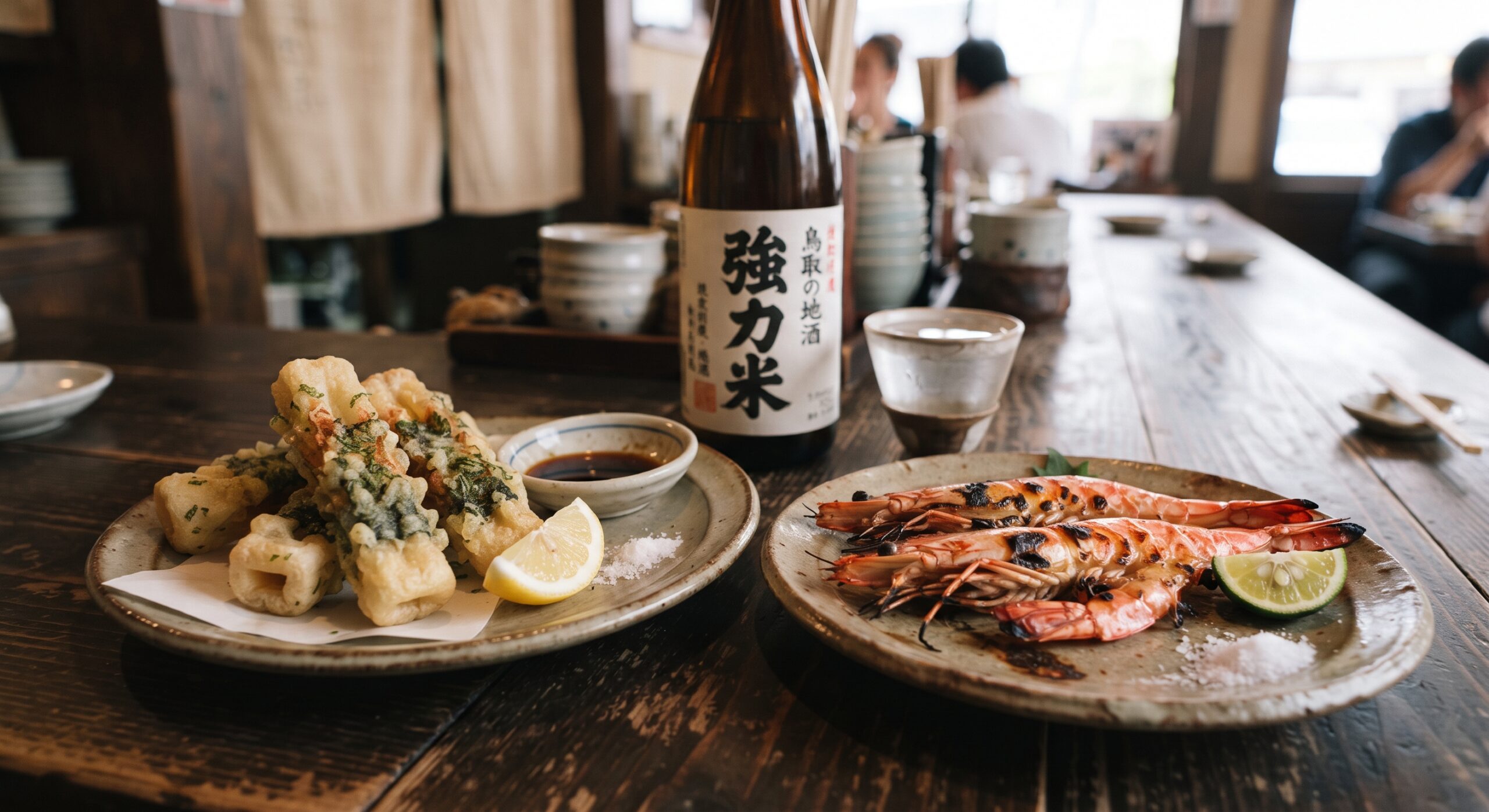
- とうふちくわの磯辺揚げ
鳥取県東部に伝わるソウルフード「とうふちくわ」。魚のすり身に豆腐を練り込んだ、ふわふわとした独特の食感が持ち味です。磯辺揚げにして香ばしさを加えると、強力米の太い酸とコクが受け止めてくれます。
レシピはこちら:クラシル「シンプルでおいしい ちくわの磯辺揚げ」(とうふちくわでも同じ作り方でできます) - モサエビの塩焼き
鳥取県でクロザコエビと呼ばれる、鮮度が落ちやすく地元でしか味わえない「幻のエビ」。殻ごと塩焼きにすることで、甘エビ以上とも言われる甘みと旨味が引き立ちます。
レシピはこちら:クックパッド「モサエビの塩焼き」(ばっとまん。さん)
科学的にひとこと:揚げ物の油分は日本酒の酸味によって口の中でさっぱりと切れるため、揚げたてのとうふちくわとの相性がよくなります。モサエビのように甘み・旨味の強い素材は、アミノ酸由来の旨味を持つ純米大吟醸と合わせることで、互いの旨味成分が重なり合い、味わいに厚みが生まれます。
この蔵をたずねるなら
日置桜(有限会社山根酒造場)
鳥取県鳥取市青谷町大坪/JR山陰本線・青谷駅から徒歩圏内、山陰自動車道 青谷ICのすぐそば。
明治20年(1887年)創業、「醸は農なり」を掲げ、使用する酒米はすべて契約栽培という一つの酒蔵です。
近くの観光スポット
- 青谷かみじち史跡公園(青谷上寺地遺跡)/鳥取市青谷町吉川|蔵から車で約5分
弥生時代前期末(約2400年前)から古墳時代前期(約1700年前)の集落跡。低湿地の酸素の少ない環境に守られ、弥生人の脳の一部や精巧な木製品が良好な状態で出土した「地下の弥生博物館」です。9:00〜17:00開館、毎月第4月曜・年末年始休館、入館無料(重要文化財棟のみ有料)。 - 井手ヶ浜・青谷海岸/鳥取市青谷町井手|蔵から車で約10分
西因幡県立自然公園に指定される、「鳴き砂」で知られる海岸。夏は海水浴場として開放され、サーフィンも楽しめます。地域住民やサーファーの清掃活動によって砂の鳴る美しさが守られています。
※営業時間・定休日は変わることがあります。おでかけ前に各施設の公式情報をご確認ください。
ひとことメモ(日本酒の用語)
- 純米大吟醸酒:精米歩合50%以下まで磨いた米で醸す、香り高く上品な純米酒の最高峰にあたるランクです。
- 精米歩合:玄米を削り、残った部分の割合。数値が低いほど、米を多く磨いていることを示します。
参考
- 山根酒造場 公式サイト
- 蔵元あいさつ | 山根酒造場
- 商品一覧 | 山根酒造場
- 山根酒造場 | とりネット・鳥取県公式サイト
- 酒米の暴れ馬「強力」とは | SAKE Street
- 強力 (米) – Wikipedia
- 鳥取砂丘 (水森かおりの曲) – Wikipedia
- 水森かおり – Wikipedia
- プロフィール / 水森かおり | 徳間ジャパンコミュニケーションズ
- 特集/よみがえる弥生の王国~青谷上寺地遺跡~ | とりネット・鳥取県公式サイト
- 青谷かみじち史跡公園 公式サイト(アクセス)
- 井手ヶ浜+青谷海岸 | 青谷町観光協会
- モサエビの塩焼き by ばっとまん。 | クックパッド
内容に誤りがございましたら、お手数ですが info@soundrecords.jp までご連絡いただけますと幸いです。
오늘의 페어링
- 사케: 히오키자쿠라 준마이 다이긴조 고리키 / 돗토리현산 주조용 쌀 고리키 100%·정미율 45%·알코올 도수 15% / 유한회사 야마네 주조장(돗토리현 돗토리시 아오야초 오쓰보, 메이지 20년[1887년] 창업)
공식 사이트: https://hiokizakura.jp/ - 가요: 미즈모리 가오리의 돗토리 사구(2003년)
YouTube: https://www.youtube.com/watch?v=i0_Bk66TCnE
▶ 위 플레이어에서 재생되지 않으면 YouTube에서 열기
양조장 이야기
유한회사 야마네 주조장은 메이지 20년(1887년), 돗토리시 아오야초 오쓰보의 히오키다니에서 문을 열었습니다. 현재는 5대 양조장 주인인 야마네 마사노리 씨가 ‘술 빚기는 곧 농사’라는 신조로 양조장을 이끌고 있습니다. 이 양조장의 유일한 브랜드인 히오키자쿠라에 사용하는 주조용 쌀은 모두 계약 농가가 재배합니다. ‘술이 더욱 순수해지는 것이 곧 진화이며, 그 가치를 미래에 이어 가야 한다’는 방침 아래, 효모가 당분을 충분히 소비하도록 완전 발효를 지향합니다. 갓 빚었을 때는 쓴맛과 떫은맛이 남아 있어도, 시간이 흐를수록 감칠맛이 깊어지는 술을 꾸준히 만들고 있습니다.
이번에 곁들이는 준마이 다이긴조 고리키는 돗토리현 고유의 주조용 쌀 고리키를 100% 사용하고, 정미율 45%까지 쌀을 깎아 빚은 술입니다. 힘 있게 이어지는 굵직한 산미와 깊은 풍미를 지녔습니다. 향을 앞세우기보다는 쇼와 시대의 긴조슈를 떠올리게 하는 탄탄한 맛이 특징입니다.
고리키는 돗토리현 도하쿠군 시모나카야마촌(현재의 사이하쿠군 다이센초)의 와타나베 신페이가 재래 벼 가운데서 선발하고 육성한 주조용 쌀입니다. 다이쇼 시대부터 쇼와 시대에 걸쳐 돗토리현의 장려 품종으로 널리 재배되었지만, 키가 크고 잘 쓰러지는 특성 때문에 쇼와 20년(1945년)에 장려 품종에서 제외되었으며, 쇼와 29년(1954년) 무렵에는 현내에서 자취를 감추었습니다. 이후 나카가와 주조와 야마네 주조장이 중심이 되어 돗토리대학 농학부에 소량 보존되어 있던 볍씨로 재배를 되살렸고, 헤이세이 2년(1990년)에 준마이 다이긴조슈로 다시 선보였습니다. 헤이세이 10년(1998년)에는 복원에 힘쓴 나카가와 주조의 제안으로 ‘고리키를 기르는 모임’이 발족하여 원종 보존과 종자 관리를 이어 가고 있습니다. 히오키자쿠라는 한때 돗토리에서 사라졌던 이 쌀을 직접 되살린 양조장 가운데 하나입니다.
지역 이야기
양조장이 있는 돗토리시 아오야초는 동해(일본해)에 면한 조용한 마을입니다. 그런데 이 마을의 땅속에는 ‘지하의 야요이 박물관’이라 불리는 유적이 잠들어 있습니다. 산인 자동차도로 건설 과정에서 발견된 아오야 가미지치 유적은 약 2400년 전부터 1700년 전까지 이어진 야요이 시대의 취락 터입니다. 산소가 적은 저습지 환경 덕분에 일반적인 유적에서는 남기 어려운 목제품과 살상 흔적이 있는 인골, 심지어 야요이인의 뇌 일부까지 양호한 상태로 출토되었습니다. 돗토리현은 이를 ‘세계적으로도 귀중한 대발견’으로 평가합니다. 출토품 1353점이 국가 중요문화재로 지정되었으며, 현재는 인접한 아오야 가미지치 사적공원에서 관람할 수 있습니다.
같은 아오야초에는 ‘우는 모래’로 알려진 이데가하마·아오야 해안도 있습니다. 모래 위를 걸으면 ‘뀨뀨’ 소리가 나는, 일본에서도 보기 드문 해변입니다. 일본에서 가장 낮고 아름다운 소리라는 평가를 받기도 했습니다. 지역 주민과 서퍼들이 꾸준히 청소 활동을 하며 그 맑은 소리를 지켜 가고 있습니다. 눈에 잘 띄지 않는 바닷가 마을에, 한때 시간 속에 묻혔다가 다시 빛을 보는 것들이 여럿 남아 있는 곳. 아오야는 그런 땅입니다.
음악 이야기
미즈모리 가오리는 1995년 9월 25일, 오시로이바나로 데뷔했습니다. 오리콘 엔카·가요 순위에서 첫 등장 3위를 기록하며 화려하게 출발했지만, 이후에는 큰 히트곡을 만나지 못한 시기가 이어졌습니다. 전환의 조짐이 보인 것은 2002년의 10번째 싱글 도진보였습니다. 노래방 팬들의 지지를 얻어 주요 가수로 자리 잡을 발판을 마련했습니다. 그리고 2003년 4월 2일, 11번째 싱글로 발표한 곡이 돗토리 사구입니다. 작사는 기노시타 류타로, 작곡은 겐 데쓰야, 편곡은 마에다 도시아키가 맡았습니다. 오리콘 주간 차트 최고 16위라는 기록 자체는 화려하지 않았지만, 오랫동안 사랑받으며 일본레코드협회의 플래티넘 인증을 받았고, 제45회 일본레코드대상에서는 금상을 수상했습니다. 이 해 미즈모리 가오리는 NHK 홍백가합전에 처음 출연합니다.
돗토리 사구의 큰 성공 이후, 미즈모리 가오리는 일본 각지의 지명을 한 곡씩 노래에 담는 ‘지역 노래’를 잇달아 발표하며 ‘지역 노래의 여왕’으로 불리게 되었습니다. 데뷔로부터 거의 8년, 11번째 싱글에서 마침내 찾아온 커다란 전환점이 이후의 오랜 활동을 뒷받침하는 토대가 된 것입니다.
왜 이 조합일까요
고리키라는 주조용 쌀은 한때 돗토리현의 장려 품종으로 널리 재배되었지만, 현내에서 완전히 자취를 감춘 적이 있습니다. 히오키자쿠라의 양조장 주인을 비롯한 양조업자와 농가가 다시 길러 낸 덕분에, 지금은 이렇게 술잔 속에서 맛볼 수 있습니다. 이데가하마의 우는 모래, 땅속 깊이 잠들어 있던 아오야 가미지치 유적의 목제품과 뇌 일부 역시 시간 속에 묻힐 뻔했다가 오늘날 모습을 드러낸 것들입니다.
미즈모리 가오리 또한 1995년 데뷔 이후 거의 8년 동안, 11번째 싱글을 발표할 때까지 크게 주목받지 못한 시기를 보냈습니다. 그녀가 부른 돗토리 사구가 마침내 널리 전해지는 노래가 되었을 때, 그녀는 이후 ‘지역 노래의 여왕’으로서 일본 곳곳의 눈에 띄지 않는 지역에 빛을 비추는 가수가 됩니다. 한때 지나쳐졌던 것에 다시 빛이 비치는 이야기. 돗토리의 주조용 쌀과, 돗토리를 처음으로 전국에 알린 이 노래에서 같은 이야기를 발견할 수 있습니다.
이 술을 찾으신다면
- 양조장 공식 사이트: https://hiokizakura.jp/
- 라쿠텐 이치바에서 구매하기: 히오키자쿠라 준마이 다이긴조 고리키 상품 페이지 보기(720ml·4,048엔)
※ 라쿠텐 이치바 링크는 광고(제휴 링크)입니다. 재고와 판매 여부는 달라질 수 있습니다. 가까운 주류 판매점에서도 제품명을 알려 주고 찾아보세요.
🌡️ 추천 음용 방법: 상온부터 누루칸(약 35℃로 미지근하게 데운 상태)까지 즐겨 보세요. 고리키 쌀 특유의 힘 있는 산미와 깊은 풍미는 온도를 높일수록 다양한 표정을 보여 줍니다. 먼저 상온에서 맛보고, 조금 아쉽게 느껴지면 살짝 데워 보세요.
곁들이고 싶은 안주
- 두부 지쿠와 김 튀김
돗토리현 동부의 소울푸드인 두부 지쿠와는 생선 살에 두부를 섞어 만드는 음식으로, 폭신하고 독특한 식감이 매력입니다. 김을 넣은 튀김옷을 입혀 바삭하고 고소하게 튀기면 고리키 쌀의 힘 있는 산미와 풍미가 그 맛을 받아 줍니다.
레시피: 쿠라시루 ‘간단하고 맛있는 지쿠와 김 튀김’(두부 지쿠와로도 같은 방법으로 만들 수 있습니다) - 모사에비 소금구이
돗토리현에서 구로자코에비라고 부르는 새우로, 신선도가 빨리 떨어져 현지에서만 맛볼 수 있는 ‘환상의 새우’로 알려져 있습니다. 껍질째 소금을 뿌려 구우면 단새우보다도 뛰어나다고 하는 단맛과 감칠맛이 더욱 살아납니다.
레시피: 쿡패드 ‘모사에비 소금구이’(작성자: 밧토만.)
과학적으로 한마디: 튀김의 기름기는 사케의 산미 덕분에 입안에서 산뜻하게 정리되어 갓 튀긴 두부 지쿠와와 잘 어울립니다. 모사에비처럼 단맛과 감칠맛이 강한 재료를 아미노산에서 비롯된 감칠맛을 지닌 준마이 다이긴조와 함께 즐기면, 서로의 감칠맛 성분이 겹쳐져 맛에 깊이가 더해집니다.
양조장을 방문하신다면
히오키자쿠라(유한회사 야마네 주조장)
돗토리현 돗토리시 아오야초 오쓰보 / JR 산인 본선 아오야역에서 걸어서 갈 수 있으며, 산인 자동차도로 아오야 IC 바로 근처입니다.
메이지 20년(1887년)에 창업했으며, ‘술 빚기는 곧 농사’라는 신조 아래 사용하는 주조용 쌀을 모두 계약 재배하는 양조장입니다.
주변 관광 명소
- 아오야 가미지치 사적공원(아오야 가미지치 유적) / 돗토리시 아오야초 요시카와 | 양조장에서 차로 약 5분
야요이 시대 전기 말(약 2400년 전)부터 고훈 시대 전기(약 1700년 전)까지 이어진 취락 터입니다. 산소가 적은 저습지 환경 덕분에 야요이인의 뇌 일부와 정교한 목제품이 양호한 상태로 출토되어 ‘지하의 야요이 박물관’으로 불립니다. 관람 시간은 9:00~17:00이며, 매월 4번째 월요일과 연말연시에 휴관합니다. 입장료는 무료입니다(중요문화재동만 유료). - 이데가하마·아오야 해안 / 돗토리시 아오야초 이데 | 양조장에서 차로 약 10분
니시이나바 현립 자연공원으로 지정된, ‘우는 모래’로 유명한 해안입니다. 여름에는 해수욕장으로 개방되며 서핑도 즐길 수 있습니다. 지역 주민과 서퍼들의 청소 활동이 모래가 소리 내는 아름다움을 지켜 줍니다.
※ 운영 시간과 휴무일은 변경될 수 있습니다. 방문 전에 각 시설의 공식 정보를 확인해 주세요.
알아 두면 좋은 사케 용어
- 준마이 다이긴조슈: 정미율 50% 이하로 깎은 쌀로 빚는, 향이 풍부하고 우아한 준마이슈의 최고 등급에 해당하는 술입니다.
- 정미율: 현미를 깎은 뒤 남은 부분의 비율입니다. 수치가 낮을수록 쌀을 더 많이 깎았다는 뜻입니다.
참고 자료
- 야마네 주조장 공식 사이트
- 양조장 주인의 인사말 | 야마네 주조장
- 상품 목록 | 야마네 주조장
- 야마네 주조장 | 도리넷·돗토리현 공식 사이트
- 주조용 쌀의 야생마 ‘고리키’란 | SAKE Street
- 고리키(쌀) – Wikipedia
- 돗토리 사구(미즈모리 가오리의 곡) – Wikipedia
- 미즈모리 가오리 – Wikipedia
- 프로필 / 미즈모리 가오리 | 도쿠마 재팬 커뮤니케이션즈
- 특집 / 되살아나는 야요이 왕국~아오야 가미지치 유적~ | 도리넷·돗토리현 공식 사이트
- 아오야 가미지치 사적공원 공식 사이트(오시는 길)
- 이데가하마+아오야 해안 | 아오야초 관광협회
- 밧토만.의 모사에비 소금구이 | 쿡패드
내용에 오류가 있다면 번거로우시겠지만 info@soundrecords.jp로 알려 주시면 감사하겠습니다.
コメントを残す